
2026’s Ultimate Off-Road Test: Honda Passport TrailSport vs. Subaru Outback Wilderness vs. Hyundai Santa Fe XRT
The automotive landscape has fundamentally shifted, and there is an undeniable truth sweeping through dealership lots: Americans are absolutely obsessed with the overlanding aesthetic. While traditional body-on-frame trucks will always have their purist fanbase, the fastest-growing segment in the industry right now belongs to rugged crossover SUVs. With lifted suspensions, aggressive all-terrain tires, and thick plastic body cladding, automakers are promising buyers that these road-biased family haulers can handle a genuine beating when the pavement ends.
But how much of this is marketing fluff, and how much is actual engineering?
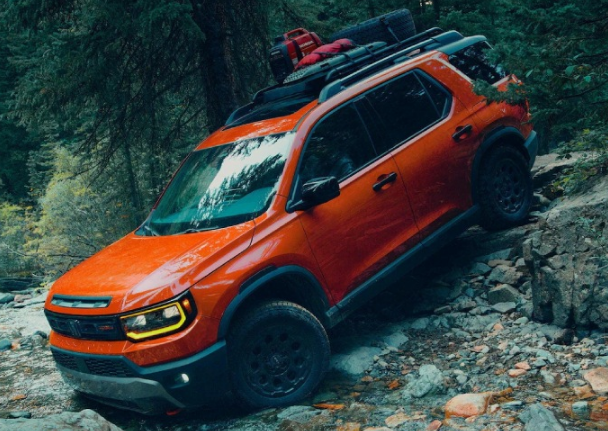
To separate the trail-rated truth from the showroom fiction, we gathered the freshest heavy hitters in the segment. We took the 2026 Subaru Outback Wilderness, the 2026 Honda Passport TrailSport Elite, and the 2026 Hyundai Santa Fe XRT out of the concrete jungle of New York City and drove them deep into the unforgiving Pennsylvania backcountry. If you are currently hunting for the best off-road SUVs 2026 has to offer, you need to know exactly how these rugged crossover SUVs perform when the safety of the asphalt is stripped away.
Meet the Contenders
2026 Subaru Outback Wilderness
Subaru practically invented the lifted all-wheel-drive station wagon in the 1990s, and they have spent decades perfecting the formula. The latest Outback Wilderness represents the pinnacle of their factory off-road efforts. Under the hood, it packs a turbocharged 2.4-liter flat-four engine generating 260 horsepower and 277 lb-ft of torque. That power is routed through Subaru’s continuously variable automatic transmission (CVT)—programmed to simulate eight gears—and managed by their highly touted X-Mode torque-vectoring system. Sitting on 17-inch wheels wrapped in meaty all-terrain rubber, it boasts a towering 9.5 inches of ground clearance.
2026 Honda Passport TrailSport Elite
Honda’s approach to the rugged crossover SUVs market has steadily evolved, culminating in this beautifully squared-off fourth-generation Passport. The TrailSport Elite trim brings 8.3 inches of ground clearance and rides on 18-inch wheels fitted with General Grabber all-terrain tires. More importantly, Honda redesigned the front and rear bumpers to drastically improve approach and departure angles, backing it up with serious steel underbody skid plates. Motivation comes from a naturally aspirated 3.5-liter V-6 engine pushing out 285 horsepower and 262 lb-ft of torque, mated to a lightning-fast 10-speed automatic transmission.
2026 Hyundai Santa Fe XRT
Hyundai leverages its highly adaptable platforms brilliantly, and the 2026 Santa Fe XRT stretches the boundaries of what a three-row family hauler can be. With its Land Rover-esque boxy styling, it features 8.3 inches of ground clearance and 18-inch wheels shod in Continental TerrainContact tires. It is the powerhouse of this trio, utilizing a turbocharged 2.5-liter inline-four that delivers 277 horsepower and a massive 311 lb-ft of torque. Thankfully, Hyundai ditched their finicky dual-clutch setup for a robust eight-speed torque-converter automatic transmission for the 2026 model year.
The Pavement Test: Commutes and Highways
Despite their aggressive styling, the harsh reality is that 99% of rugged crossover SUVs will spend their lives eating up highway miles, navigating the daily school drop-off, and waiting in drive-through lines. Therefore, on-road manners are critical.
Fleeing the crateral potholes of Brooklyn during rush hour proved that the Hyundai Santa Fe XRT is a remarkably comfortable appliance. Because it features the mildest off-road upgrades of the group, its street performance is exceptional. The steering is effortlessly light, the pedals require minimal input, and despite weighing 4,400 pounds, it dances through dense city traffic with an agile 37.9-foot turning radius. On the interstate, the Hyundai is whisper-quiet. The turbocharged engine provides effortless passing power without ever raising its voice, and the ride quality remains plush. It is a highly predictable, slightly sterile driving experience—perfect for long family road trips.
The Subaru Outback Wilderness, conversely, feels entirely different. Weighing just 3,973 pounds, it is the featherweight of the group. With its 9.5-inch lift and softer, long-travel suspension, the Outback feels incredibly nimble at low city speeds but slightly less planted than its heavier rivals at 75 mph on the highway. While the flat-four turbo provides solid thrust, it is occasionally hampered by a split-second of turbo lag compounded by the rubber-band sensation of the CVT. When you finally hit the twisty mountain roads of Pennsylvania, the Subaru leans and rolls through corners noticeably more than the others, though its car-like origins still make it relatively easy to pilot.
Then there is the Honda Passport TrailSport. In an era of downsized, hybridized powerplants, Honda’s old-school naturally aspirated V-6 is a revelation. It sounds phenomenal as it climbs to its 6,100 rpm peak, and the 10-speed automatic snaps off shifts with mathematical precision. Despite being the largest and heaviest vehicle here (4,700 pounds), the Honda felt the most mature and planted on the tarmac. Honda’s engineers achieved something magical here: they tuned the off-road suspension so it doesn’t punish you on the highway, and the aggressive tires don’t ruin the brand’s traditionally excellent steering feel. It simply feels like a premium, incredibly well-built machine.
Pushing the Limits Off-Road
We bypassed the highly regulated state parks of the Eastern Seaboard and headed straight for the 8,000-acre Anthracite Outdoor Adventure Area in Coal Township, Pennsylvania. Here, the trails are littered with jagged rocks, deep mud bogs, and steep, rutted inclines. Keep in mind, these rugged crossover SUVs do not feature traditional two-speed transfer cases or locking differentials; they rely on advanced clutch packs and brake-based traction algorithms.
Clearance is the first hurdle in the woods. The Subaru breezed over large rocks that had the others wincing, thanks to its 9.5-inch lift and short wheelbase. It only scraped its belly once during a steep, awkward descent. The Honda, with only 8.3 inches of clearance and a long 113.6-inch wheelbase, inevitably dragged its belly over ridges. However, Honda clearly planned for this: the thick steel skid plates absorbed the abuse without a hint of mechanical damage. The Hyundai, also sitting at 8.3 inches but lacking serious metal protection under the chassis, required much more careful spotting to avoid costly damage to its vulnerable underside components.
The real differentiator was the steep, deeply rutted hill climb. This is where all-wheel-drive systems are pushed to their absolute limits.
The Honda Passport TrailSport absolutely dominated this obstacle. Armed with a class-leading 23-degree approach angle and Honda’s brilliant i-VTM4 torque-vectoring AWD system, it scrambled up the loose dirt effortlessly. The system can send 70% of engine torque to the rear axle, and then 100% of that power to either the left or right rear wheel. It reacted instantaneously to wheel slip, keeping momentum entirely unbroken.
The Hyundai Santa Fe XRT managed the climb, but it lacked grace. Despite having the most torque on paper, the Hyundai’s H-Trac AWD system hesitated significantly. With wheels hanging in the air, the driver had to keep the throttle pinned for several agonizing seconds while the computer frantically tried to figure out where to send the power. Eventually, it figured it out and clawed its way to the top, but it didn’t inspire confidence.
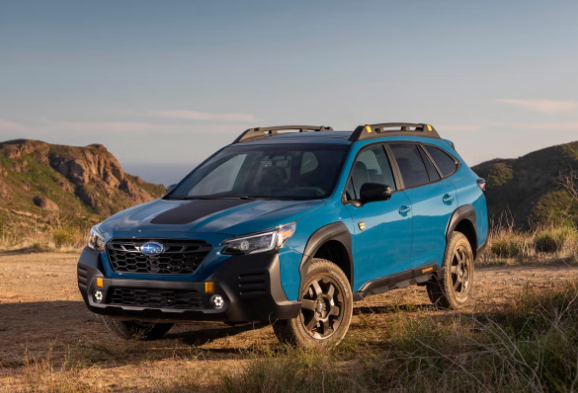
The Subaru Outback Wilderness was the biggest disappointment here. With the best clearance and a solid 20-degree approach angle, it should have danced up the hill. However, Subaru’s software is simply too conservative. As soon as the vehicle articulated and a wheel lifted, the traction control panicked and cut engine power. Even in the dedicated “Deep Snow/Mud” drive mode, it refused to spin the tires freely enough to gain momentum.
Furthermore, Subaru’s automatic Hill Descent Control (integrated into X-Mode) was incredibly intrusive, restricting downhill speed so aggressively that it became frustrating. The vehicle constantly beeped and chimed at every shadow and branch. By the end of the trail, we resorted to turning the off-road systems off just to get a natural feel for the terrain. Honda’s off-road modes, by contrast, optimized throttle and gearing silently in the background, making the driver look like an off-road hero.
The final nail in the coffin occurred during a deep water and mud crossing. The Honda glided through. The Subaru required heavy throttle and intense steering correction but made it. The Hyundai, however, became completely bewildered by the lack of traction underwater. The AWD system failed to route power to the rear wheels, leaving the front tires spinning helplessly. After five minutes of rocking back and forth, the Santa Fe finally freed itself, but it was clear the vehicle was far beyond its engineered capabilities.
Interior Comfort and Technology
When you are deep in the wilderness, cabin comfort becomes paramount.
Subaru has outfitted the Outback Wilderness with one of its best interiors in a decade. The vertically oriented 12.1-inch screen is sharp, and the cabin is filled with practical storage cubbies. The water-resistant StarTex upholstery is durable, though the optional Nappa leather adds a premium touch. The drawbacks? The driving position feels slightly awkward—you push down on the pedals rather than forward—and the cabin feels noticeably narrower and tighter in headroom than its competitors.
The Hyundai Santa Fe XRT leans heavily into the luxury aesthetic. Twin 12.3-inch displays dominate the dashboard, and the flawless Apple CarPlay integration makes navigation a breeze. It is remarkably roomy, features a usable third row, and offers a library-quiet ride. However, the column-mounted stalk shifter is unintuitive, and the digital gauge cluster can be difficult to read in direct sunlight.
Honda brings a masterclass in ergonomic restraint to the Passport TrailSport Elite. The standard 12.3-inch touchscreen is flanked by physical, tactile buttons and knobs for the climate control—a huge win for usability on a bumpy trail. The perforated leather seats feature both heating and ventilation, while the 12-speaker Bose audio system sounds phenomenal. While passenger space isn’t quite as vast as the Hyundai, the Honda’s cabin is exceptionally quiet, well-built, and free of gimmicks.
Pricing and Value in Today’s Market
Finding value in the modern auto market requires a sharp eye, especially if you are evaluating crossover SUV financing or hunting for the best SUV lease deals.
For buyers on a strict budget, the Hyundai Santa Fe XRT is the undeniable value king of these rugged crossover SUVs. Minus a $,1000 matte paint upcharge, our tester was essentially a base XRT, coming in nearly $9,000 cheaper than the top-tier Honda. If you need three rows, excellent on-road manners, and basic dirt-road capability, it is a tremendous financial proposition. Keep in mind, when calculating long-term costs, auto insurance for off-road vehicles heavily favors crossovers with advanced safety suites, which the Hyundai provides in spades.
The Subaru Outback Wilderness starts at a highly competitive price point, sitting very close to the Hyundai. However, to match the technology and comfort levels of the others, you must dive into the options list. Adding the upgraded multimedia display ($2,095) and leather upholstery ($4,090) quickly inflates the sticker price, diminishing its initial value advantage.
The Honda Passport TrailSport Elite is the most expensive vehicle here, ringing in at $54,145. It comes fully loaded with zero necessary options to check, featuring heated rear seats, premium audio, and a heated steering wheel. If the Elite’s price gives you sticker shock, dropping down to the standard TrailSport trim saves you roughly $4,000 while retaining 100% of the mechanical off-road capability.
The Final Verdict
Building capable rugged crossover SUVs requires a delicate balancing act. Automakers must project the rugged image buyers demand, preserve the on-road comfort they secretly require, and actually deliver mechanical grip when the pavement disappears.
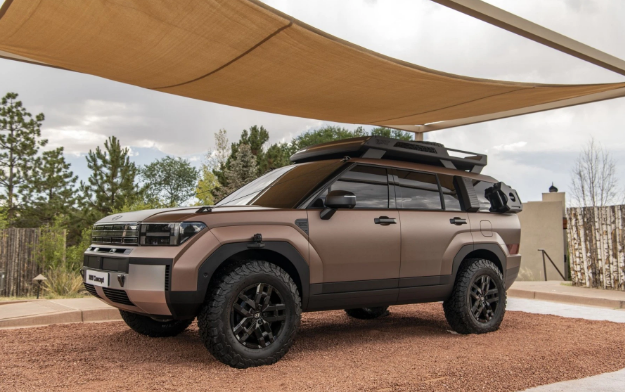
The Hyundai Santa Fe XRT is a phenomenal family SUV masquerading as a trail vehicle. It offers massive space, wonderful road manners, and an unbeatable price. But its reactive, easily confused AWD system means it should stick to graded gravel roads rather than rocky hill climbs.
The Subaru Outback Wilderness remains a quirky, highly capable machine. Its physical attributes—massive ground clearance and great approach angles—are top-tier. Unfortunately, it is severely held back by a whiny CVT and hyper-conservative traction software that refuses to let the driver carry momentum through difficult obstacles.
This brings us to the Honda Passport TrailSport. It is the undeniable winner of this test. Honda managed to combine an incredibly refined highway ride, a charismatic V-6 engine, and a torque-vectoring AWD system that reacts with mechanical brilliance on the trail. It absorbed heavy hits on its steel skid plates, conquered steep inclines effortlessly, and cocooned its passengers in quiet luxury on the drive home. It doesn’t just look the part; it actually goes the distance.
If you’re ready to upgrade your daily commute and weekend adventures, don’t just take our word for it. Head down to your local dealership, schedule a test drive of the 2026 Passport TrailSport, and feel the difference that proper engineering makes for yourself.