
The McLaren 788HS: The Definitive V-8 Supercar Evolution
Over the past decade of evaluating, analyzing, and driving the world’s most elite high-performance vehicles, I have witnessed countless trends come and go. We have seen the rise of heavy, electrified powertrains, the implementation of autonomous track driving aids, and the gradual silencing of the internal combustion engine. Yet, every so often, a manufacturer releases a machine that serves as a defiant reminder of what pure, unadulterated automotive engineering looks like. In 2026, that machine is the McLaren 788HS.
Limited to an incredibly exclusive production run of just 200 units worldwide, the McLaren 788HS represents the ultimate, final evolution of the legendary supercar lineage that began with the groundbreaking 720S. While the automotive world is currently buzzing with anticipation for the brand’s highly anticipated 1258-horsepower W1 hypercar, the McLaren 788HS caters to a different kind of purist. It is a strictly internal combustion, lightweight, rear-wheel-drive masterclass that inches tantalizingly close to the 800-horsepower benchmark without relying on a single battery pack or hybrid motor.
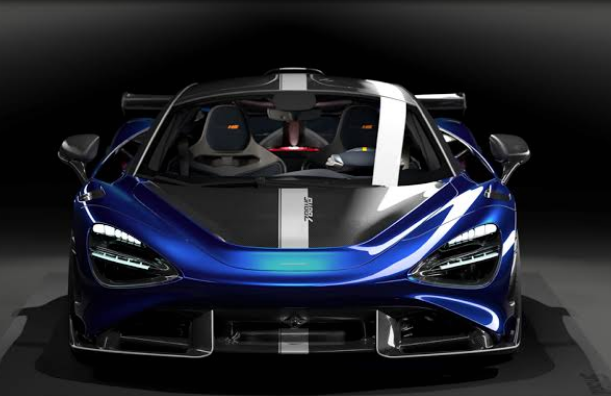
For driving purists and high-net-worth collectors alike, the McLaren 788HS is not just another limited-run exotic; it is the culmination of over a decade of continuous refinement, making it one of the most significant releases in modern British supercar history.
The Weight of the “High Sport” Designation
To truly understand the gravity of the McLaren 788HS, one must understand the nomenclature. McLaren is notoriously selective about the badges it affixes to its vehicles. While the “LT” (Longtail) moniker has been successfully utilized for track-focused variants like the 675LT and 765LT, the “HS” or “High Sport” designation is a different beast entirely. Prior to the McLaren 788HS, this badge had only been used twice in the company’s storied history.
The HS designation signifies a vehicle that blends the brutal track capability of an LT with a unique, bespoke aerodynamic profile and a highly limited production cap. It is reserved for cars that push the absolute limits of their respective platforms. By applying this badge to the final iteration of the 750S architecture, the manufacturer is signaling that the McLaren 788HS leaves absolutely zero performance potential on the table. It is the definitive word on this platform.
Powertrain and Performance: Engineering Perfection
At the beating heart of the McLaren 788HS is the brand’s familiar and highly celebrated 4.0-liter twin-turbocharged V-8 engine. However, to assume this is simply a carryover powertrain would be a massive disservice to the engineers in Woking. Through meticulous recalibration, enhanced cooling dynamics, and aggressive turbo tuning, the McLaren 788HS delivers a staggering 788 metric horsepower (equivalent to 777 imperial horsepower) and 590 lb-ft of torque.
When you pair that immense power output with a remarkably low dry weight of just 2,789 pounds, the resulting physics are mind-bending. The McLaren 788HS boasts a power-to-weight ratio of 279 horsepower per 1,000 pounds. In a modern 2026 market where many high-performance cars are pushing past the 3,800-pound mark due to heavy hybrid systems, this sub-2,800-pound dry weight is an absolute triumph of carbon-fiber engineering.
Out on the tarmac, this translates to savage, uninterrupted acceleration. The company claims the McLaren 788HS will sprint from 0 to 60 miles per hour in a blistering 2.8 seconds. Keep your foot pinned to the floor, and the digital speedometer will climb relentlessly until it hits a terminal velocity of 205 miles per hour. The power delivery is visceral, lacking the artificial torque-fill of a hybrid, demanding that the driver actively engage with the rev range to extract maximum velocity.
Chassis Dynamics and Track-Ready Upgrades
Power is nothing without control, and my years in the automotive industry have taught me that McLaren’s true genius lies in its suspension tuning. The McLaren 788HS features a unique, bespoke tuning of the brand’s signature linked-hydraulic suspension system. This Proactive Chassis Control system eliminates the need for traditional mechanical anti-roll bars, utilizing interlinked hydraulic dampers to provide a ride quality that is shockingly compliant on the street, yet incredibly stiff and responsive under heavy cornering loads on the track.
For the McLaren 788HS, the engineers have dropped the front ride height by two-tenths of an inch. While this may sound like a microscopic adjustment to the layman, in the realm of aerodynamic downforce and center of gravity, it is massive. This lowered aggressive stance improves front-end bite during turn-in, mitigating understeer and allowing the driver to carry significantly higher speeds through the apex of a corner.
Furthermore, the McLaren 788HS adopts center-lock wheels, a feature heavily derived from motorsport. Not only do these reduce unsprung mass—thereby improving steering feel and suspension reaction times—but they also allow for rapid wheel changes during track days. It is a clear indicator that while this car can be driven on the street, its soul belongs on a closed circuit.
Aerodynamics and the MSO Touch
Visually, the McLaren 788HS is an exercise in functional aggression. Every duct, dive plane, and carbon-fiber louver serves a distinct aerodynamic purpose. The active rear wing has been re-profiled to increase overall downforce without heavily penalizing straight-line drag. Cooling channels have been widened to feed the hungrier twin-turbo V-8, and the front splitter extends further to glue the nose to the pavement at triple-digit speeds.
Because production is capped at a mere 200 units globally—split evenly with 100 coupes and 100 retractable-roof convertibles—no two vehicles are likely to look the same. This is thanks to the heavy involvement of McLaren Special Operations (MSO). MSO is the brand’s elite in-house bespoke division, responsible for tailoring every visual and tactile element of the vehicle to the exact desires of the client.
Buyers securing an allocation for the McLaren 788HS are granted unparalleled access to the MSO palette. From exposed tinted carbon fiber weaves and custom paint-to-sample exterior colors to interior cabins draped in bespoke Alcantara and lightweight carbon bucket seats, the level of personalization is staggering. This transforms each McLaren 788HS from a mere production car into a unique, one-of-one piece of rolling automotive art.
Navigating the High-End Supercar Market
From an industry perspective, analyzing the launch of a car like the McLaren 788HS requires looking beyond just the spec sheet; it requires understanding the logistics and financial ecosystems of the ultra-luxury automotive market. Vehicles of this pedigree are not merely purchased; they are acquired, managed, and protected as highly appreciating asset classes.
For many buyers adding a 200-unit limited-edition supercar to their portfolio, navigating the financial logistics is part of the ownership experience. Savvy collectors often utilize specialized exotic car financing to maintain liquidity for other investments, leveraging the vehicle’s inherent residual value. Unlike standard auto loans, high-end exotic car financing allows collectors to structure terms that reflect the unique depreciation—and eventual appreciation—curves of a limited-run “High Sport” model.
Similarly, protecting a multimillion-dollar asset like the McLaren 788HS requires far more than a standard policy. Owners must secure bespoke luxury car insurance for supercars, ensuring that the agreed-value policies accurately reflect the vehicle’s rarity, the extensive MSO customizations, and the specific use cases, whether the car is being stored in a climate-controlled facility or driven aggressively at private track events.
The logistics of moving a vehicle with a lowered track-focused ride height and delicate aerodynamic carbon fiber components also require expert handling. Whether a client is relocating their McLaren 788HS to a winter residence in Miami, a private auto club in Los Angeles, or a high-profile concours event in Monterey, utilizing professional, enclosed high-end auto transport is non-negotiable. Specialized transport services ensure that the vehicle remains protected from road debris, weather elements, and unnecessary mileage, preserving its pristine MSO finish and investment grade.
For those who prefer to experience the thrill of the latest exotics without the long-term commitment of ownership, the secondary market occasionally sees premium sports car lease deals on similar high-tier vehicles, though a strictly limited allocation like the McLaren 788HS is overwhelmingly likely to be purchased outright by dedicated brand loyalists. Once in the garage, maintaining the aesthetic perfection of the car necessitates premium auto detailing services, often involving full-body paint protection film (PPF) and ceramic coatings to protect the bespoke MSO paintwork from track rubber and high-speed impacts.
The Evolution of a Dynasty
To fully appreciate the McLaren 788HS, we must look at the lineage it represents. The core carbon-fiber tub architecture and general design philosophy can trace its roots all the way back to the MP4-12C, the car that single-handedly relaunched McLaren Automotive’s road car operations in 2011. However, the most direct DNA comes from the 720S, a car that fundamentally disrupted the supercar hierarchy upon its debut in 2017.
The 720S was an absolute revelation, combining hypercar-level speed with grand-tourer visibility and comfort. It was so vastly superior to its competitors that it easily secured Performance Car of the Year awards globally. McLaren subsequently evolved that platform into the visceral, track-focused 765LT, and then refined it into the polished, comprehensively upgraded 750S.
The McLaren 788HS takes the collective knowledge from every single one of those milestones. It marries the raw, unhinged track capability of the 765LT with the refined, modern electronic architecture and daily usability of the 750S. It is the swan song of an incredibly successful era for the manufacturer. As the industry pivots heavily toward hybridization, the McLaren 788HS stands as the ultimate tribute to the pure, internal combustion V-8 supercar.
The Final Verdict
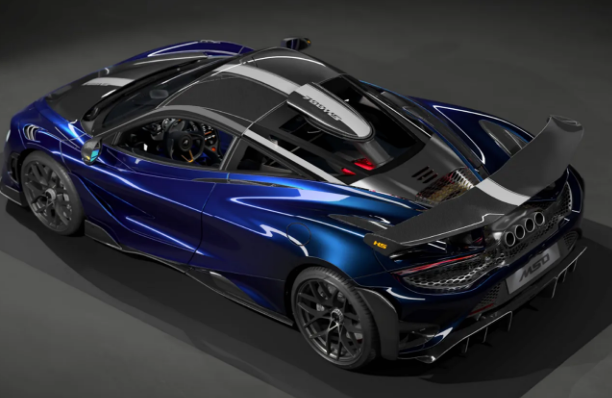
After a decade of evaluating the finest performance cars on the planet, I do not use the term “definitive” lightly. But McLaren’s own characterization of this car is entirely accurate. The McLaren 788HS is a masterstroke of lightweight engineering, aerodynamic precision, and raw mechanical grip. By keeping the car under 3,000 pounds and avoiding the complexity of a hybrid system, McLaren has ensured a massive point of differentiation between this model and the upcoming W1 hypercar.
The W1 will undoubtedly showcase the future of electrified performance, but the McLaren 788HS perfectly encapsulates the pinnacle of the combustion era. For the 200 fortunate individuals who have secured an allocation, they are not just buying a car; they are buying the final, perfected chapter of a legendary automotive dynasty.
If you are a discerning collector looking to elevate your portfolio, or an enthusiast seeking the ultimate expression of modern driving purity, now is the time to optimize your garage. Whether you need to arrange exotic car financing for your next major acquisition, or you are looking for trusted high-end auto transport to move your current stable across the country, connect with our network of premier luxury automotive specialists today to ensure your elite vehicles receive the world-class treatment they deserve.