



The Lotus Emira 420 Sport Redefines Lightweight Performance
For a decade behind the wheel testing world-class sports cars on track and road, I have watched the mid-engine sports car segment evolve rapidly. Yet, few releases carry the weight of expectations now sitting on the shoulders of the Lotus Emira 420 Sport. Designed explicitly to challenge established benchmarks like the Porsche Cayman GT4, this refined iteration takes Hethel’s flagship platform and elevates it into a laser-focused precision tool for driving enthusiasts.
At a base price starting around $138,000 (£105,900 in native markets), climbing to roughly $155,000 (£118,800) with the essential Handling Pack, the 420 Sport enters a highly competitive arena. It competes directly against premium alternatives, from high-end builds to luxury auto loan territory, where buyers frequently weigh luxury sports car financing options against pure track performance. What Lotus has created here is not merely an incremental update, but a definitive assertion of lightweight engineering excellence.
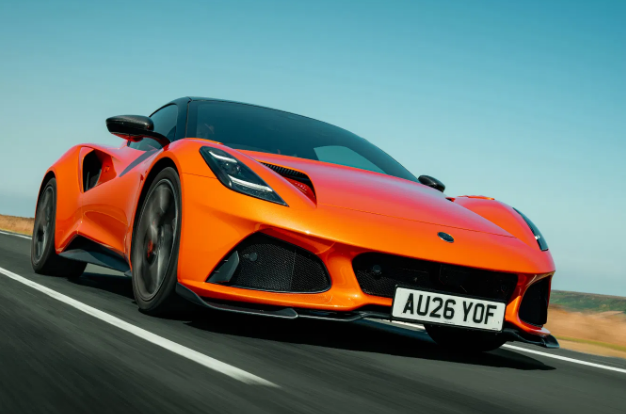
Technical Evolution: Aerodynamics and Structural Integrity
The transformation from the base platform to the 420 Sport relies heavily on functional dynamic engineering rather than cosmetic updates. Walking up to the vehicle, subtle aerodynamic refinements indicate a clear shift toward track-focused intent.
+———————————————————————–+
| Lotus Emira 420 Sport: Key Upgrades |
+————————————+———————————-+
| Dynamic Element | Engineering Impact |
+————————————+———————————-+
| Front Splitter & Arch Vents | +25 kg net downforce (zero drag) |
| Side Radiator Grilles | +15% cooling airflow capacity |
| Titanium Exhaust System | -9 kg rear mass; +30% gas flow |
| Lithium-ion 12V Battery | -10 kg overall curb weight |
| Carbon Fiber Engine Deck Lid | -5 kg unsprung upper mass |
| Forged Lightweight Alloy Wheels | -5 kg unsprung rotational mass |
+————————————+———————————-+
Beyond the numbers, high-speed stability is noticeably improved. The redesigned front splitters feed re-profiled brake ducts, significantly enhancing continuous heat dissipation under hard deceleration. The chassis architecture benefits from an upgraded, ultra-stiff aluminum rear subframe. Originally engineered around the turbocharged four-cylinder setup, this modular frame provides a structural foundation comparable to dedicated GT4-spec race machinery.
Inside the cabin, Lotus maintains its driver-centric ethos. The carbon-fiber interior accents, large carbon paddle shifters, and tactile controls create an purposeful environment. While the standard 12-way adjustable seats offer decent comfort on long road trips, dedicated track enthusiasts might miss the aggressive side bolstering of full carbon bucket seats. However, the overall ergonomic setup provides clear sightlines across the front fenders, making accurate turn-in placement effortless.
Powerhouse Engineering: AMG Motorsport Calibration
At the core of the Lotus Emira 420 Sport is a tuned variant of the Mercedes-AMG M139 2.0-liter turbocharged four-cylinder engine. Output rises to 416 horsepower and 369 lb-ft of torque, propelling the coupe from 0 to 60 mph in just 3.8 seconds before reaching a top speed of 186 mph.
Engine Power Curve & Throttle Response
[416 HP] ————————— (Peak Power 6,500 RPM)
/
/ <- Heavy Turbo Boost Build (2,000+ RPM)
/
[369 lb-ft] —————– (Flat Torque Band 3,000-5,500 RPM)
| | | |
1,000 3,000 5,000 7,000 RPM
The powertrain delivers performance with raw mechanical theater. The turbocharger—positioned just behind the driver’s left shoulder—draws air with an audible intake hiss, followed by distinct blow-off flutter when lifting off the throttle. Paired with the lightweight titanium exhaust system, high-RPM upshifts yield a sharp ignition-cut bark reminiscent of modern supercar powertrains.
While the dual-clutch transmission delivers brisk automatic shifts, dynamic testing shows that manual paddle inputs lack the instantaneous click of Porsche’s PDK setup. Nevertheless, the engine’s broad torque band ensures continuous acceleration without forcing constant gear changes, allowing drivers to focus entirely on maintaining momentum through technical corners.
Track Precision Meets Real-World Ride Quality
The defining upgrade of the 420 Sport lies in its chassis hardware. Equipping the optional Handling Pack adds race-derived Multimatic DSSV (Dynamic Suspension Spool Valve) dampers. These units feature 11-way manual adjustment for both bump and rebound at each corner, providing extreme calibration flexibility without oil cavitation issues under prolonged thermal stress.
Multimatic DSSV Damper Setup
+————————————–+
| Front Bump: 3 | Front Rebound: 4| <– ROAD CALIBRATION
| Rear Bump: 6 | Rear Rebound: 4|
+————————————–+
| Front Bump: 9 | Front Rebound: 8| <– TRACK CALIBRATION
| Rear Bump: 10 | Rear Rebound: 7|
+————————————–+
On challenging twisty roads, these spool-valve dampers absorb severe surface imperfections smoothly, suppressing harsh chassis roll while keeping the Michelin Pilot Sport Cup 2 tires planted. The hydraulic steering system provides detailed feedback through the steering wheel, translating road texture accurately without unwanted kickback.
On circuit sessions, switching to track settings reveals exceptional stability. High-speed directional changes through sweeping S-curves remain flat and controlled. The electronic differential manages engine torque evenly across the rear axle, allowing subtle throttle-steer adjustments through long apexes. Brake pedal feel remains firm and consistent, giving drivers full confidence when braking hard into slow corners.
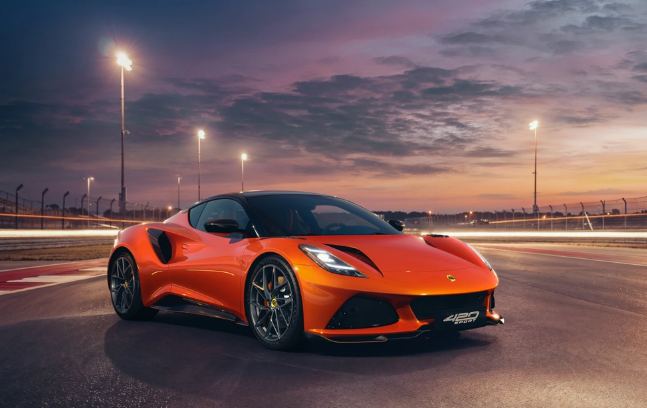
Competitive Landscape: Market Comparison
Navigating high-performance luxury auto sales requires looking beyond horsepower figures to examine real-world driving engagement, total cost of ownership, and overall value. The 420 Sport occupies a unique position alongside key mid-engine rivals:
| Vehicle Model | Power / Torque | Transmissions Offered | Chassis & Suspension Highlights | Key Differentiating Advantage |
|---|---|---|---|---|
| Lotus Emira 420 Sport | 416 hp / 369 lb-ft | 8-Speed DCT | Extruded Aluminum; Multimatic DSSV Dampers | Hydraulic steering feel & raw mechanical feedback |
| Porsche 718 Cayman GT4 | 414 hp / 309 lb-ft | 6-Speed Manual / 7-Speed PDK | Steel/Aluminum Hybrid; PASM Adaptive Suspension | High-revving naturally aspirated engine & quick transmission |
| Porsche 911 Carrera T | 379 hp / 331 lb-ft | 6-Speed Manual / 8-Speed PDK | Rear-Engine Aluminum Chassis; PASM Sport Setup | Daily usability, lower depreciation, premium cabin finish |
| Alpine A110 R | 296 hp / 251 lb-ft | 7-Speed DCT | Ultra-Light Aluminum; Manual Coilover Setup | Lowest curb weight and exceptional agility |
While the discontinued Porsche Cayman GT4 remains a high-water mark for track feedback, finding clean pre-owned examples often requires navigating inflated pre-owned exotic car market pricing. The Emira 420 Sport offers a brand-new factory alternative backed by modern aerodynamic updates, precise hydraulic steering, and full factory warranty coverage—making it an attractive choice for both collectors and track drivers.
Value Proposition and Final Verdict
For enthusiasts weighing high-value sports car investments, the Lotus Emira 420 Sport represents a highly focused entry point. Selecting the optional Handling Pack is essential to unlocking its full dynamic capability, delivering an authentic mechanical connection that modern digitalized sports cars rarely match.
It delivers sharpness, structural poise, and intuitive feedback across both demanding back roads and fast circuit sessions. By refining the core strengths of its mid-engine chassis, Lotus has crafted a compelling driver’s car that stands out in today’s performance landscape.
If you are ready to experience this level of lightweight performance firsthand, contact your local authorized Lotus dealership to schedule a personal track or road demonstration today.