



Porsche 992 GTS T-Hybrid vs 997 GTS: Engineering Genius Meets Analog Greatness
Over a decade ago, I stood on the showroom floor as the original Porsche 911 Carrera GTS hit the North American market. At the time, standard opinion framed it as a brilliantly marketed parts-bin special designed to clear out 997 inventory before the longer-wheelbase 991 arrived. Today, after ten years of reviewing sports cars, evaluating structural engineering shifts, and consulting on luxury automotive acquisitions, my perspective has evolved. What felt like a calculated commercial maneuver in 2010 has matured into one of the sweetest spots in modern automotive history.
Now, as the automotive landscape shifts toward high-voltage architectures, Porsche has flipped the script. The Porsche 992 GTS T-Hybrid isn’t an end-of-lifecycle send-off; it is the headline act for Zuffenhausen’s updated 992.2 generation. By introducing electric turbocharging and a permanent-magnet synchronous motor embedded directly into the PDK transmission, Porsche has elevated the GTS badge from a mid-spec option package into an absolute performance titan.
How does the tech-laden 532-horsepower Porsche 992 GTS T-Hybrid stack up against the analog pureness of the classic 997 GTS on real-world roads? Let’s look beneath the bodywork to analyze power delivery, chassis dynamics, ownership value, and driving engagement.
The Genesis of the Badge: What Made the 997 GTS Special?
To appreciate where we are in 2026, we have to look back at how the GTS ethos was born. In 2010, the champagne corks flew over Stuttgart as engineers pulled together a subtle send-off for the first water-cooled 911 platform. Porsche dusted off a moniker unused since the 928 GTS of the 1990s and the legendary 904 GTS of the 1960s.
The formula was deceptively simple: take a standard rear-wheel-drive Carrera S, widen the rear track by 44 millimeters (a widebody layout previously reserved primarily for all-wheel-drive models or ultra-exclusive specials like the Sport Classic and Speedster), and optimize the breathing.
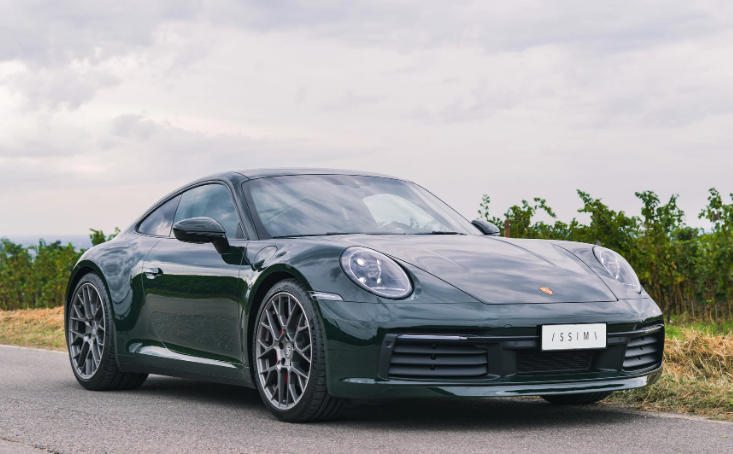
A Modest Factory Upgrade with Massive Impact
Instead of raiding the high-revving, motorsport-derived GT3 catalog, Porsche fitted the 997 GTS with the factory Powerkit intake. This included variable resonance intake plumbing and revised cylinder heads that bumped output from 385 to 408 horsepower. Porsche Active Suspension Management (PASM) and a standard sports exhaust rounded out the mechanical package.
Crucially, buyers received standard center-lock alloy wheels, a SportDesign front apron, side skirts, and interior cabin treatments wrapped in Alcantara. When buyers evaluated the original luxury auto financing packages or cash price walks, upgrading from a Carrera S to a GTS was an absolute bargain—costing just a few thousand dollars over a comparably equipped S model. It was a subtle upgrade on paper, but on tarmac, it created an instant classic.
Enter the 992 Carrera GTS T-Hybrid: A Paradigm Shift
If the 997 GTS was created via gentle fine-tuning, the Porsche 992 GTS T-Hybrid is a tour de force of modern powertrain engineering.
Rather than relying on a heavy plug-in hybrid battery setup that compromises cornering weight, Porsche developed the lightweight T-Hybrid system specifically for real-time energy harvesting and instant power fill.
The Engineering Behind the T-Hybrid Architecture
Under the rear engine deck sits an all-new 3.6-liter boxer six cylinder. It replaces the twin-turbo 3.0-liter engine from the previous 992.1 generation. Paired with an electrically assisted single turbocharger, the system uses an integrated electric motor sandwiched between the compressor and turbine wheel to spool the turbo instantly—eliminating turbo lag entirely.
A second electric motor is housed inside the revised 8-speed dual-clutch PDK transmission. Powered by a compact 400-volt, 1.9-kWh battery mounted under the front bonnet, this hybrid powertrain produces a massive combined output:
Engine Capacity: 3.6-Liter Single-Turbo Flat-6 with Electric Turbocharger
Total Output: 532 hp @ 6,500 RPM
Total Torque: 449 lb-ft from 1,950 to 6,000 RPM
0–60 MPH Time: 2.9 Seconds (Factory Claimed)
Starting MSRP: $164,900 (US Market Base)
The price jump from a standard 911 Carrera S to the Porsche 992 GTS T-Hybrid is more substantial than in previous decades. However, when you factor in standard rear-axle steering, active aerodynamic cooling louvers, and performance capabilities that rivals previous-generation Supercars, the value proposition remains formidable.
Performance Benchmark: Old vs. New
+——————————–+—————————-+—————————-+
| Feature / Metric | 997 Porsche 911 GTS | 992 GTS T-Hybrid |
+——————————–+—————————-+—————————-+
| Powertrain | 3.8L Naturally Aspirated | 3.6L Turbo Electric Hybrid |
| Horsepower | 408 hp @ 7,300 RPM | 532 hp @ 6,500 RPM |
| Torque | 310 lb-ft @ 4,200 RPM | 449 lb-ft @ 1,950 RPM |
| Transmission | 6-Speed Manual / 7-PDK | 8-Speed Dual-Clutch PDK |
| Curb Weight | 3,130 lbs (Coupe Manual) | 3,516 lbs (Coupe PDK) |
| Steering Setup | Hydraulic Power Steering | Electro-Mechanical + RAS |
| Top Track Speed | 190 MPH | 194 MPH |
+——————————–+—————————-+—————————-+
Behind the Wheel of the 997 GTS: Pure Analog Connection
Stepping out of a modern vehicle and dropping into the cockpit of an immaculate, low-mileage 997 GTS manual coupe is a grounding experience. The cabin design reflects early-2000s Zuffenhausen minimalism: a simple dash layout, thin A-pillars, five analog gauges sweeping across the instrument cluster, and a center console free of drive-mode toggles or touchscreen menus.
Turn the left-hand key, and the 3.8-liter naturally aspirated flat-six settles into a steady, mechanical idle. Depress the clutch pedal, slide the six-speed shifter into first, and roll out onto the road. The immediate takeaway isn’t sheer speed—it’s feedback.
Hydraulic Steering and Natural Aspiration
The 997’s hydraulic steering system remains a gold standard for tactile response. Every micro-texture on the asphalt, surface change, and front-tire slip angle communicates directly through the Alcantara steering rim.
Because the engine lacks forced induction, power builds linearly. Below 4,000 RPM, it moves with civil composure. Pass 5,000 RPM, and the intake plenums adjust, allowing the engine to sing up to its 7,300 RPM redline. You work for the speed, matching downshifts via heel-and-toe footwork, modulating throttle balance through long sweepers, and managing a chassis that weighs barely 3,130 pounds.
Driving the 992 GTS T-Hybrid: Devastating Real-World Speed
Switching to the Porsche 992 GTS T-Hybrid shifts the experience into high gear. Press the start button, twist the drive-mode dial to Sport Plus, and mash the accelerator pedal.
The launch isn’t just fast—it’s instantaneous. Because the electric motor inside the transmission supplies torque the moment your foot touches the pedal, the typical delay associated with turbo spool is completely eliminated. Off the line, this rear-wheel-drive machine pulls with a level of traction and ferocity that rivals the legendary 911 Turbo S.
Power Delivery Profile:
997 GTS: [Idle] —- Linear Ascent —-> [Peak HP at 7,300 RPM]
992 GTS: [Idle] == INSTANT TORQUE FILL ==> [Full Boost] ——–> [Constant Wave]
Versatility Meets Raw Power
On wide highway passes or demanding backroads, the Porsche 992 GTS T-Hybrid handles its extra mass with incredible composure. Standard rear-axle steering masks the car’s longer wheelbase, making turn-in sharp and precise. The dynamic engine mounts and updated PASM system allow the chassis to remain stable over dynamic road surfaces, maintaining high mid-corner speeds without disturbing the cabin balance.
The cabin reflects 2026 luxury automotive standards: HD digital displays, seamless smartphone integration, and advanced driver assistance systems that turn off easily via steering-mounted shortcut buttons. It serves as a comfortable long-distance tourer during the week, yet delivers track-level performance at the drop of a hat.
The Collector & Ownership Perspective: Buying, Financing, and Value Retention
Whether acquiring a high-end sports car as a daily driver or adding a classic to an investment portfolio, securing appropriate exotic car financing options or evaluating auto loan interest rates plays a pivotal role in total cost of ownership.
Understanding Market Values and Investment Potential
The Classic Asset (997 GTS): Clean, lower-mileage 997 GTS coupes—especially those fitted with the six-speed manual gearbox—have transitioned into collector territory. Thanks to low production numbers, hydraulic steering, and analog mechanical feel, depreciation on well-maintained models has leveled off. Buyers seeking used auto loans for luxury cars or collector car financing often find that strong residual values make these models a solid option.
The Modern Titan (992 GTS T-Hybrid): With base prices hovering near $165,000 before options, dealership ADMs (Adjusted Dealer Markups), or local taxes, the new hybrid variant represents a premium investment. For buyers using new car lease offers, corporate car leases, or competitive auto financing plans, the 992 GTS offers incredible performance per dollar compared to exotic alternatives costing twice as much.
When shopping across North American markets—whether browsing dealer inventories in Los Angeles, Miami, Chicago, or Dallas—evaluating warranty coverage, ceramic brake wear, and battery health certifications on modern hybrid systems ensures long-term peace of mind.
Comparative Dynamics: Tactical Precision vs. Pure Engagement
To understand how these two eras compare, consider how each vehicle approaches a challenging stretch of mountain road:
The 997 GTS experience is about participation. You spend time selecting gear ratios, monitoring engine revs, and managing weight transfer over the rear axle. You drive at 70 mph and feel completely engaged with the vehicle’s mechanics.
The 992 GTS T-Hybrid experience is about capability. You point the wheel, mash the throttle, and let the dual-clutch transmission, active aerodynamics, and vectoring systems calculate grip limits. You sweep through corners at blistering speeds with absolute stability.
The older car rewards driver finesse and mechanical empathy, while the new hybrid showcases how far engineering can expand performance limits without compromising real-world usability.
The Final Verdict: Analog Nostalgia or Hybrid Revolution?
Choosing between these two icons depends entirely on what you want from a luxury performance car.
If your ideal weekend involves clean gearshifts, mechanical feedback, compact proportions, and the classic mechanical exhaust note of a naturally aspirated flat-six, the 997 Porsche 911 GTS remains one of the finest driver’s cars ever built. It represents the peak of analog 911 evolution before electronic steering and digital interfaces took center stage.
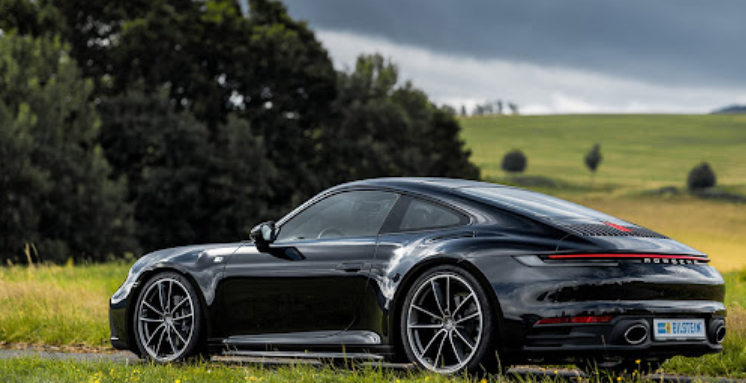
If you demand explosive acceleration, cutting-edge hybrid efficiency, daily usability, and incredible cornering grip, the Porsche 992 GTS T-Hybrid is a true masterclass in modern sports car engineering. Porsche has successfully integrated high-voltage tech into the 911 DNA without diluting what makes a GTS special.
Take the Next Step Toward Your Dream Drive
Are you ready to experience the evolution of Porsche performance firsthand? Whether you are looking to source an analog classic, order a brand-new Porsche 992 GTS T-Hybrid, or explore competitive auto financing solutions and customized lease rates tailored to your luxury portfolio, our team of automotive specialists is here to guide you.
Connect with our high-end automotive advisors today to schedule a private test drive, request a personalized trade valuation, or structure your custom vehicle delivery.