



The McLaren 788HS: The Ultimate Pure V8 Evolution of the Modern Supercar
When McLaren Automotive announced the 1258-horsepower W1 hypercar, the automotive world assumed the British marque was pivoting entirely toward ultra-high-output hybrid powertrains. However, sitting quietly behind the scenes was a farewell tribute to pure internal combustion engineering: the McLaren 788HS. Limited to a strictly capped production run of just 200 examples worldwide, the McLaren 788HS stands as the definitive, ultimate iteration of the twin-turbo V8 lineage that began over a decade ago with the MP4-12C and reached perfection through the 720S and 750S.
For collectors, track enthusiasts, and high-net-worth investors seeking unadulterated performance, the McLaren 788HS represents more than just a power bump. It is a masterclass in weight reduction, aerodynamic refinement, and dynamic purity. As an industry analyst who has logged hundreds of track laps across every generation of McLaren’s Super Series—from the raw 675LT to the blisteringly fast 765LT—I can confidently state that the McLaren 788HS represents the absolute peak of mid-engine, rear-wheel-drive supercar design before full electrification takes permanent hold.
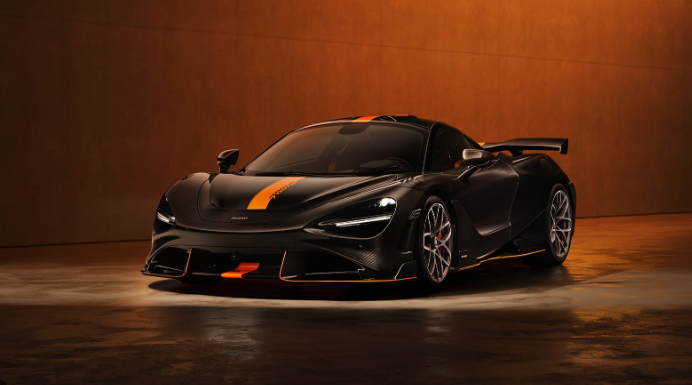
The “High Sport” Heritage: Legacy Meets Extreme Engineering
To understand the significance of the McLaren 788HS, one must understand the historic weight of those two letters: HS. Standing for “High Sport,” the HS badge is the rarest designation in Woking’s lexicon, previously reserved for ultra-exclusive models like the Special Operations 688HS. Unlike the LT (Longtail) models, which emphasize track-focused downforce and aggressive chassis stiffness, High Sport builds combine bespoke aerodynamic enhancements, ultimate mechanical tuning, and extreme MSO (McLaren Special Operations) personalization.
The McLaren 788HS acts as the grand finale for the platform that redefined the modern mid-engine layout. Beginning with the revolutionary carbon fiber Monocell chassis in the 12C, evolving through the game-changing 720S in 2017, and further honed into the 750S, this platform has dominated the supercar space for years. Where competitors relied on heavy all-wheel-drive systems or complex hybrid battery setups to break power records, McLaren focused relentlessly on structural rigidity, low mass, and hydraulic steering feedback.
With the McLaren 788HS, the engineering team in Woking has pushed this core philosophy to its absolute physical limits. By rejecting hybrid components for this final model, McLaren kept the vehicle’s dry weight at a astonishingly light 2,789 pounds (1,265 kg). This refusal to add electric motors or battery packs ensures that the McLaren 788HS maintains an unmatched power-to-weight ratio of 279 hp per 1,000 lbs, preserving the instant, telepathic turn-in that exotic car drivers demand.
Unpacking the Mechanical Powerhouse: 788 PS and 590 lb-ft of Torque
At the core of the McLaren 788HS lies the venerable M840T engine—a 4.0-liter twin-turbocharged flat-plane crank V8 that has been recalibrated to extract maximum efficiency and combustion output. Through refined ECU mapping, increased boost pressure from lightweight twin-scroll turbochargers, and an upgraded high-flow titanium sports exhaust system, output rises to 788 metric horsepower (777 brake horsepower) and 590 lb-ft of torque.
Key Performance Specifications
| Specification | McLaren 788HS | McLaren 750S | McLaren 765LT |
|---|---|---|---|
| Engine | 4.0L Twin-Turbo V8 | 4.0L Twin-Turbo V8 | 4.0L Twin-Turbo V8 |
| Horsepower | 788 PS (777 HP) | 750 PS (740 HP) | 765 PS (755 HP) |
| Torque | 590 lb-ft | 590 lb-ft | 590 lb-ft |
| Dry Weight | 2,789 lbs | 2,815 lbs | 2,709 lbs |
| 0–60 MPH | 2.8 Seconds | 2.7 Seconds | 2.7 Seconds |
| Top Speed | 205 MPH | 206 MPH | 205 MPH |
| Production Run | 200 Units | Series Production | 765 Units |
The power transfer in the McLaren 788HS is managed by an optimized 7-speed dual-clutch seamless shift gearbox (SSG) featuring shortened final drive gearing. This aggressive gear calibration transforms acceleration, enabling the McLaren 788HS to blast from 0 to 60 mph in just 2.8 seconds while reaching a top speed of 205 mph. More impressive than the standing-start sprint is the mid-range punch: rolling acceleration from 60 to 124 mph happens with hypercar-rivaling violence, making short work of long racetrack straights.
The lightweight titanium exhaust system not only sheds unsprung mass behind the rear axle but also generates a sharper, higher-frequency V8 exhaust note. This acoustic refinement resolves one of the minor criticisms of early 720S models, offering driver engagement that rivals high-revving naturally aspirated V8s.
Advanced Chassis Calibration and Aerodynamic Mastery
Raw power is meaningless without control, and it is in the chassis dynamics where the McLaren 788HS truly distinguishes itself from standard production models. McLaren’s chassis development engineers implemented three key mechanical updates to elevate handling precision:
Center-Lock Lightweight Wheels: Borrowing technology directly from motorsport applications and the Senna, the McLaren 788HS features ultra-lightweight forged alloy wheels secured by a single central locking nut. This design significantly reduces rotational inertia, improving acceleration response and braking stability.
Lowered Front Ride Height: The front suspension sits 0.2 inches (5mm) lower than the standard 750S. This subtle shift alters the rake angle of the carbon fiber Monocage chassis, forcing more air under the front splitter and increasing front-axle downforce without adding excessive aerodynamic drag.
Bespoke Proactive Chassis Control Tuning: The McLaren 788HS utilizes the latest iteration of McLaren’s linked-hydraulic suspension system (PCC III). Eliminating traditional mechanical anti-roll bars, the hydraulic system interconnects dampening circuits across all four corners. For the McLaren 788HS, hardware valving and software algorithms were recalibrated to deliver flatter cornering during high-G track loads while maintaining surprisingly supple compliance on uneven city streets.
Braking duties are handled by massive carbon-ceramic discs clamped by monobloc aluminum calipers derived from the track-focused 765LT. Combined with sticky, bespoke Pirelli P Zero Trofeo R tires engineered specifically for the McLaren 788HS, the car provides stopping distances and brake pedal modulation that rival dedicated GT3 race cars.
Exterior Design and MSO Tailored Personalization
Every single one of the 200 units of the McLaren 788HS will be built in collaboration with McLaren Special Operations (MSO), guaranteeing that no two cars leaving the Production Centre in Woking will be identical. The production allocation is divided symmetrically: 100 Coupes and 100 Spiders (retractable hardtop convertibles).
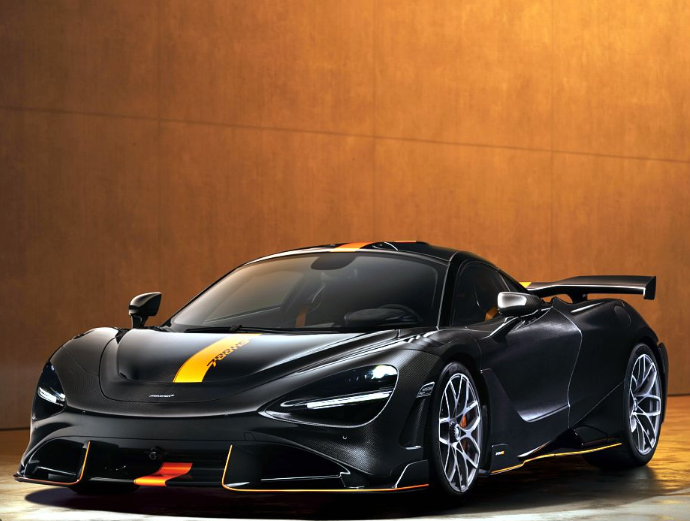
Visual identification for the McLaren 788HS includes subtle yet functional aerodynamic adjustments. The front fascia incorporates revised carbon fiber dive planes and extended front splitter blades that channel high-velocity air around the front wheel arches to relieve high-pressure turbulence. At the rear, an updated active carbon fiber wing features a modified Gurney flap to enhance high-speed rear stability under hard braking conditions.
Inside the cabin, the McLaren 788HS strikes an intentional balance between stripped-out race car functionalism and luxury craftsmanship:
Super-Lightweight Carbon Fiber Racing Seats: Formed using micro-thin carbon shells, these seats save substantial weight over standard comfort seats while locking the driver securely into position during high lateral acceleration.
Minimalist Alcantara and Leather Trims: Owners can select from ultra-lightweight Alcantara upholstery or custom-dyed semi-aniline leathers accented with MSO custom contrast stitching.
MSO Custom Identification Plates: Each McLaren 788HS features a dedicated carbon fiber plaque mounted on the door sills, denoting its specific build number out of the 200-unit global run.
Integrated McLaren Track Telemetry (MTT): An array of onboard cameras and lap-time logging software allows owners to analyze braking points, corner speeds, and sector times directly through the central high-definition infotainment screen.
Market Positioning, Valuations, and Exotic Auto Financing Trends
From an automotive market perspective, the McLaren 788HS arrives at a pivotal moment. With tightening global emissions regulations pushing exotic car manufacturers toward plug-in hybrid architecture (such as the Ferrari 296 GTB and McLaren Artura) or total battery electrification, collectors are placing an unprecedented premium on pure internal combustion sports cars.
Historical market data shows that limited-run “final edition” internal combustion models consistently hold higher resale values than their high-production counterparts. For example, the previous McLaren 675LT and 765LT models maintained exceptional residual values relative to base production models. Given the extremely low total cap of 200 units, the McLaren 788HS is structured to follow an ascending value curve, making it a prime candidate for high-end automotive investment portfolios.
Financing and Investment Considerations for Collector Vehicles
Purchasing an exclusive supercar of this caliber requires strategic financial planning. High-net-worth buyers frequently leverage specialized financial structures rather than liquidating investment portfolios to acquire limited-allocation vehicles:
Specialty Luxury Auto Financing: Securing a tailored luxury auto loan through specialized lenders allows buyers to finance exotic supercars with flexible terms, balloon payment options, and competitive fixed interest rates tailored to high-ticket assets.
Exotic Car Leasing Solutions: High-end exotic car lease structures offer tax advantages for corporate entities while preserving liquidity for other investment channels. Closed-end and open-end lease options provide flexibility for collectors who like to rotate vehicles periodically.
Collector Car Insurance Strategies: Standard auto policies are wholly insufficient for a $400,000+ limited-edition hypercar. Securing specialized exotic car insurance with an “Agreed Value” clause ensures full replacement coverage in the event of loss, covering specialized MSO carbon fiber repair costs and protecting total asset value without severe depreciation deductions.
When working with an authorized exotic car dealership, buyers holding early allocation slots for the McLaren 788HS are advised to pre-arrange structural financing and insurance locks to streamline delivery procedures as production units ship from Woking.
McLaren 788HS vs. The Competition: A Pure V8 Alternative
To fully appreciate the dynamic balance of the McLaren 788HS, it is helpful to compare its philosophy against key competitors in the current exotic vehicle landscape.
LIGHTWEIGHT PURE V8 PERFORMANCE MATRIX
┌─────────────────────────┬─────────────────────────┐
│ McLaren 788HS │ Ferrari 296 GTB │
│ • 788 PS (Pure V8) │ • 830 HP (V6 Hybrid) │
│ • Dry Weight: 2,789 lbs│ • Dry Weight: 3,241 lbs│
│ • Pure Rear-Wheel Drive│ • PHEV e4WD System │
│ • Hydraulic Steering │ • Electric Steering │
└─────────────────────────┴─────────────────────────┘
While competitor offerings rely on electric motors to achieve 800+ horsepower thresholds, they pay a heavy mass penalty—often adding 400 to 600 pounds of battery weight. The McLaren 788HS remains under 2,800 pounds, providing a significantly superior steering feel, immediate directional transitions, and reduced thermal stress on tires and brakes during extended track sessions.
Against McLaren’s own 1258-hp W1 hypercar, the McLaren 788HS fulfills a completely different operational role. Where the W1 represents the absolute outer limit of hybrid speed and downforce technology, the McLaren 788HS is an analog-feeling, driver-centric precision tool. It offers an intimate connection between driver, mechanical throttle, and rear wheels that complex computer-controlled hybrid systems simply cannot replicate.
Driving Dynamics: The Collector’s Ultimate Track Weapon
From a driver’s perspective, what makes the McLaren 788HS truly special is how its mechanical enhancements translate to high-speed track performance.
The hydraulic steering system—a hallmark of McLaren engineering that competitors abandoned long ago in favor of electric power steering—communicates every detail of the road surface directly to the driver’s hands. Entering high-speed sweepers, the dropped front ride height provides crisp, immediate turn-in response with zero front-end float.
The twin-scroll turbochargers build boost smoothly across the rev range, delivering relentless power past 8,000 RPM. On track, the recalibrated dual-clutch transmission delivers instantaneous, aggressive gear changes that kick through the chassis, adding to the visceral experience. Under heavy braking, the carbon-ceramic setup combined with the active rear airbrake anchors the vehicle with rock-solid rear-end stability, allowing drivers to trail-brake deep into apexes with total confidence.
The Final Verdict: Is the McLaren 788HS Worth the Allocation?
As the supercar industry enters a new era defined by hybrid power units, quiet electric modes, and digital driver aids, the McLaren 788HS serves as a triumph of pure internal combustion engineering. It distills fifteen years of road-car development into a light, powerful, and remarkably responsive mid-engine platform.
With only 200 units worldwide split evenly between Coupe and Spider variants, securing an allocation for the McLaren 788HS is a rare privilege. For driving purists who value precise hydraulic steering feedback, raw V8 power, low curb mass, and bespoke MSO craftsmanship, this car is not merely another supercar option—it is the definitive collector’s item marking the end of an iconic era in high-performance automotive history.
Experience Automotive Excellence
Securing a limited-production supercar like the McLaren 788HS requires expert guidance, preferential dealer network access, and custom asset protection strategies. Whether you are seeking to secure an elusive factory allocation, explore competitive exotic car financing options, or structure comprehensive collector vehicle insurance, our team of automotive specialists is here to guide you through every stage of high-value vehicle acquisition.
Contact our automotive advisory team today to explore allocation availability, tailored luxury auto loans, and bespoke vehicle customization options for your collection.