
Mastering the Track: A Comprehensive Review of the Lotus Emira 420 Sport
The automotive world has long debated what makes a true driver’s car, but few machines generate as much anticipation as a dedicated lightweight sports car designed to challenge established benchmarks. When reviewing the latest performance iterations, automotive enthusiasts and potential buyers constantly search for vehicles that deliver uncompromised agility. The Lotus Emira 420 Sport steps into this arena with a clear mission: to claim the crown as the definitive British alternative to Germany’s finest machinery. As engineering teams refine their craft to meet modern performance demands, understanding the true value of these vehicles requires looking past the spec sheet and diving straight into the driving dynamics.
Evolution and Engineering Intent
The journey of the Emira has experienced a few hurdles since its initial rollout, requiring engineers to continuously polish its mechanics to fully realize its chassis potential. The 420 Sport represents a massive leap forward in this evolution. Rather than merely relying on raw horsepower, Lotus has focused heavily on aerodynamic efficiency, weight reduction, and chassis tuning.
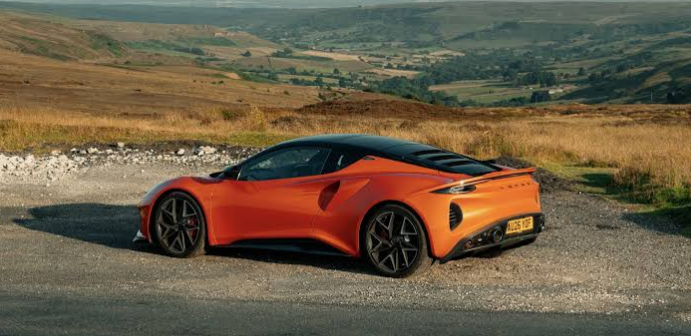
At first glance, the visual updates are subtle, rewarding those who take the time to inspect the bodywork. McLaren-esque side inlet trims, an aggressive front splitter, opened-up front vents, arch vents, a carbon-slatted deck lid, and titanium exhausts form a coherent, purposeful aero package. Crucially, these modifications increase downforce by 25 kilograms without introducing unwanted drag.
Furthermore, the vehicle’s cooling capacity has seen a dramatic improvement. The front architecture allows 15 percent more air to reach the side radiators and 14 percent more through the central intake. Such thermal management is vital for maintaining peak performance during aggressive driving sessions, ensuring that the Mercedes-AMG-sourced four-cylinder engine operates at maximum efficiency.
Suspension Mastery: The Multimatic Advantage
What truly sets the 420 Sport apart from its standard stablemates is the inclusion of the Handling Pack, which equips the car with manually adjustable Multimatic spool valve dampers. For drivers seeking absolute control, these dampers are 11-way adjustable by hand at each corner for both bump and rebound.
Adjusting your suspension settings for a weekend track day or a bumpy country road transforms how the car interacts with the asphalt. The handbook provides explicit, factory-recommended configurations:
Road Setting: Front bump 3, front rebound 4, rear bump 6, rear rebound 4.
Track Setting: Front bump 9, front rebound 8, rear bump 10, rear rebound 7.
These DSSV dampers offer predictable damping characteristics and remain remarkably resistant to extreme temperatures and fluid cavitation. Paired with a next-generation rear subframe—lighter and stiffer than the V6 variant—the 420 Sport provides an extraordinarily planted ride that absorbs harsh impacts while feeding precise surface details directly to the driver.
Powertrain Performance and Driving Dynamics
Propelling this British sports car is an enhanced version of the turbocharged inline-four engine, generating 416 horsepower and 369 lb-ft of torque. Power delivery is immediate, with the turbo spooling up cleanly from lower rev ranges to produce a visceral, industrial roar amplified by the optional titanium exhaust system.
On the road, the car accelerates from 0 to 62 mph in a brisk 3.9 seconds, pressing onward to a top speed of 186 mph. While the dual-clutch transmission shifts rapidly, some purists may note that its obedience does not quite match the instantaneous response of a Porsche PDK system. Nevertheless, the combination of hydraulic steering and optimized chassis geometry makes short work of twisting B-roads. The steering communicates road textures with absolute clarity, ensuring the driver feels intimately connected to the front tires.
On-Track Agility and Balance
Taking the 420 Sport onto a closed circuit reveals its true colors. Through high-speed direction changes, the car remains remarkably composed, inspiring confidence as speed builds. The brake pedal offers consistent, firm resistance, and the aerodynamic setup ensures the rear remains stable under heavy deceleration.
When pushing the limits, the chassis rewards progressive inputs. With the tires fully up to temperature, initiating controlled slides becomes remarkably intuitive thanks to the balanced weight distribution and communicative steering rack. While the standard seats could benefit from deeper lateral bolstering for heavy track work, the overall driving environment remains purposeful and driver-focused.
Value, Pricing, and Market Positioning
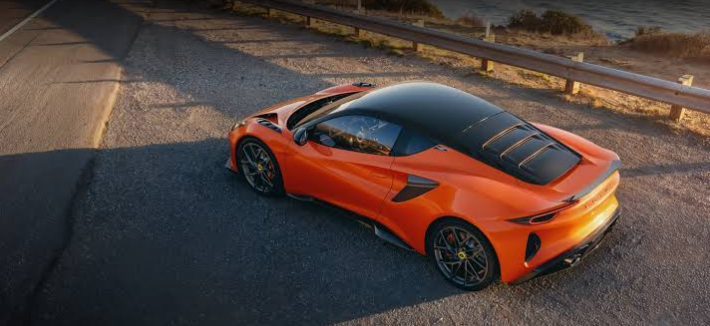
The Lotus Emira 420 Sport starts at £105,900, but unlocking its true dynamic capability requires the £12,900 Lightweight Handling Pack, bringing the total to £118,800. This price point places it in direct competition with high-performance sports cars and entry-level Porsche 911 variants. Yet, for buyers prioritizing mechanical purity and bespoke track engineering, the 420 Sport offers a distinct character that mass-produced alternatives often lack.
If you are looking to elevate your garage with a purist driver’s car that bridges the gap between everyday usability and track dominance, now is the time to explore your options. Contact your local Lotus specialist today to schedule a private viewing and experience the 420 Sport firsthand.