
The Ferrari 12Cilindri Manuale vs. The Classic 550 Maranello: A 2025 Market and Driving Analysis
For roughly $650,000—or around half a million pounds if you are tracking the European exchange rates—Ferrari is willing to sell you a front-engined V12 grand tourer equipped with a manual gearbox. Well, they will sell it to you assuming you have meticulously worked your way onto their highly exclusive VIP allocation list. In the modern exotic car market of 2025, getting the nod for a car like the Ferrari 12Cilindri Manuale usually means you already have a Purosangue SUV parked in your climate-controlled garage, a bespoke Amalfi on the water, and perhaps one or two other mainstream hybrid models on order that you don’t even particularly want. This is the reality of modern tier-based purchasing.
But there is a much larger elephant in the room regarding this highly anticipated release. The Ferrari 12Cilindri Manuale doesn’t actually feature a traditional manual gearbox. From an engineering standpoint, it is much more accurate to state that it features a manual gearshift interface. If you have been following automotive industry news, you likely already know the controversy surrounding this limited-edition marvel. The Ferrari 12Cilindri Manuale signals the highly publicized return of the exposed H-pattern manual shift to Maranello after a 14-year hiatus. During that long dry spell, top executives repeatedly assured the motoring press that a manual transmission would never return to their lineup.
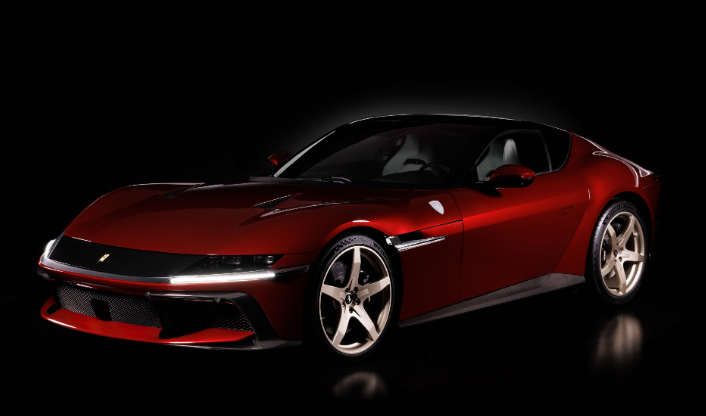
Technically, they kept their word. The Ferrari 12Cilindri Manuale does not use a traditional manual gearbox. Instead, it utilizes the standard model’s brilliant eight-speed dual-clutch transmission, intricately wired up to an electronic manual-style shift lever and a highly simulated clutch pedal. Through a marvel of modern software calibration, the driver physically moves the lever through a physical gate and operates a pedal to switch gears, but there is no direct mechanical linkage to a clutch plate.
Critics have immediately branded the Ferrari 12Cilindri Manuale as a fake manual, a gimmick, or essentially a high-end sim-racing gaming rig shoved into a bespoke Italian chassis. Some industry veterans have used even less charitable terms. But as someone who has spent the last decade evaluating the world’s most elite performance vehicles, I look at the Ferrari 12Cilindri Manuale through a slightly different lens. We must ask ourselves a pragmatic question: if the only options are this simulated system or no manual engagement at all, which is preferable? Furthermore, if the software and tactile feedback are so incredibly refined that you genuinely cannot tell the difference between the digital illusion of the Ferrari 12Cilindri Manuale and an actual, physical manual transmission, does the “smoke and mirrors” engineering actually detract from the driving joy?
I would argue that it doesn’t entirely ruin the experience, but it does change the philosophical nature of the car. The Ferrari 12Cilindri Manuale represents the absolute pinnacle of digital mimicry. The software simulates the bite point of the clutch, the engine braking, and even the potential to stall if you drop the clutch too fast at a red light in Beverly Hills or South Beach. It is a technological masterpiece, but for the purist, it will always carry an asterisk.
If you are a traditionalist who simply cannot get your head around the digitized nature of the Ferrari 12Cilindri Manuale, there is incredibly good news. The secondary exotic car market is robust, and there are numerous older, genuinely analog, manual Ferraris available today for a fraction of the cost. Best of all, you do not need to play dealership allocation games or order a controversial new electric vehicle just to be invited to purchase one. Were it my own capital being deployed today, I would bypass the digital complexities of the Ferrari 12Cilindri Manuale entirely. Instead, I would set out to find the absolute best 550 Maranello available on the global market, pocket the several hundred thousand dollars in savings, and free myself from worrying about simulated feedback loops and electronic clutch actuators.
When evaluating the engineering behind the new Ferrari 12Cilindri Manuale, I genuinely hope that Raffaele di Simone and his elite development drivers spent countless hours behind the wheel of a classic 550 Maranello. The 550 is, in spirit, the distant spiritual predecessor to this new vehicle. More importantly, the 550 happens to possess one of the finest, most deeply satisfying manual gearshifts you will ever come across in the history of the automobile. The heavy, metallic “clink-clack” of sliding the metal shaft through the aluminum H-pattern gate is a sensory experience that no line of computer code can ever truly replicate. The 550 Maranello serves as the perfect historical benchmark for everything the Ferrari 12Cilindri Manuale is attempting to achieve electronically.
Introduced to the world in 1996, the 550 Maranello is a vitally important vehicle in the historical canon of the prancing horse. It was historically significant for officially reigniting the two-seat, front-engined V12 berlinetta bloodline—a legendary configuration that had been unceremoniously culled following the final production run of the iconic 365 GTB/4 “Daytona” in 1973. For over two decades, Ferrari’s flagship models were strictly mid-engined flat-12s, such as the Berlinetta Boxer and the Testarossa. The 550 brought the V12 back to the front, where Enzo Ferrari originally believed it always belonged, and it is absolutely magnificent to drive.
Beyond its mechanical brilliance, the 550 Maranello was a fundamental, foundational element of Luca di Montezemolo’s sweeping renaissance of the brand in the 1990s. Alongside the V8-powered F355 and the 2+2 grand touring 456GT, the 550 marked the definitive end of a dark era of complacency at the factory. It banished the lingering memories of the dynamic missteps of the 1980s—most notably the woeful 348, which Montezemolo himself famously dubbed “the worst Ferrari” ever built. The 550 kickstarted a new era of tremendous prosperity, engineering focus, and dynamic superiority that paved the way for modern hyper-GTs like the Ferrari 12Cilindri Manuale today.
Driving a 550 Maranello today provides a masterclass in analog feedback. The 5.5-liter naturally aspirated V12 engine produces 478 horsepower, which is relatively modest by the 800-plus horsepower standards of the modern Ferrari 12Cilindri Manuale. However, on public roads, the 550’s power is remarkably accessible, linear, and usable. You command the powerband directly via a mechanical throttle cable. You feel the mechanical friction of the transaxle. You balance the car on the throttle through sweeping canyons with a chassis that communicates directly through a hydraulic steering rack, entirely free from the intervention of modern electronic slip-slip-angle control algorithms. It demands respect, skill, and genuine driver involvement.
When analyzing these two vehicles from an ownership and financial perspective, the contrast becomes even more striking. The Ferrari 12Cilindri Manuale, as a brand-new, ultra-limited release, represents a massive upfront capital expenditure. Buyers are navigating complex exotic car financing arrangements just to secure their allocations. Furthermore, securing comprehensive exotic car insurance for a brand-new, $650,000 limited-edition model requires specialized underwriting, often involving strict mileage limitations and agreed-value policies tailored specifically for ultra-high-net-worth individuals.
On the flip side, the classic 550 Maranello represents a mature, stable asset in the collector car market. While it has appreciated nicely, a concourse-quality example can still be acquired for roughly $250,000 to $350,000, depending on provenance, mileage, and color combination. From a wealth management vehicle assets perspective, the 550 is often viewed as a blue-chip investment. Proper classic car appraisal services consistently highlight the 550 as a vehicle with strong long-term retention value, precisely because it is a true, analog V12 manual.
Logistics for both vehicles require professional handling. Whether you are taking delivery of a fresh Ferrari 12Cilindri Manuale from the factory or acquiring a classic 550 from an elite auction house in Monterey, utilizing premium enclosed auto transport is non-negotiable. If you are moving a vehicle across the country—say, requiring Miami luxury auto transport to shift your collection down from New York for the winter season—you need specialized carriers who understand the low ground clearance, battery maintenance, and security protocols required for such high-end machinery. Similarly, securing climate-controlled Los Angeles exotic car storage is essential for preserving the sensitive electronics of the Ferrari 12Cilindri Manuale and the vintage leather and analog seals of the 550.
The debate ultimately centers on what you seek from your automotive experience in an increasingly digitized world. The Ferrari 12Cilindri Manuale is a marvel of the 2025 automotive landscape. It represents the absolute zenith of what software engineers and dynamic tuners can accomplish. By taking a lightning-fast dual-clutch transmission and mapping it to perfectly mimic a manual gearbox, Ferrari has created a bridge between two eras. The Ferrari 12Cilindri Manuale gives you the aesthetic and physical motion of shifting gears, while retaining the fail-safes, emissions compliance, and powertrain integration required of a modern 800-horsepower hyper-GT. For the collector who simply must have the latest, most cutting-edge, limited-run conversation piece, the Ferrari 12Cilindri Manuale is an undeniable triumph of modern engineering.
However, the illusion of mechanical connection can never fully replace the reality of it. The Ferrari 12Cilindri Manuale is playing a beautifully rendered video game; the 550 Maranello is playing a physical sport.
When you slide into the Daytona-style seats of a 550, turn the physical key, and hear the high-torque starter motor whine before the V12 catches with a deep, sonorous bark, you are engaging with a piece of history. The heavy clutch pedal requires genuine leg effort. The shifter demands patience when the gearbox oil is cold, actively resisting rapid shifts until the fluids warm to operating temperature. This is not an inconvenience; it is a mechanical dialogue. The car speaks to you, letting you know its condition, its limits, and its mechanical reality. The Ferrari 12Cilindri Manuale, for all its brilliant programming, will simply simulate the resistance it thinks you should feel based on a line of code written by an engineer in Maranello.
There is also the matter of maintenance and long-term viability. The Ferrari 12Cilindri Manuale is packed with proprietary software, complex mechatronics, and highly integrated hybrid-era systems (even if it lacks a hybrid battery, its electronic architecture is thoroughly modern). In thirty years, servicing the simulated manual mechanism of a Ferrari 12Cilindri Manuale will require specialized diagnostic computers that may or may not be readily available. The 550 Maranello, conversely, is a purely mechanical machine. While it requires the standard, expensive maintenance common to all vintage Italian exotics—belt services, valve adjustments, fluid flushes—it can be kept on the road indefinitely by any highly skilled analog mechanic with a proper set of tools and a thorough understanding of mechanical engineering.
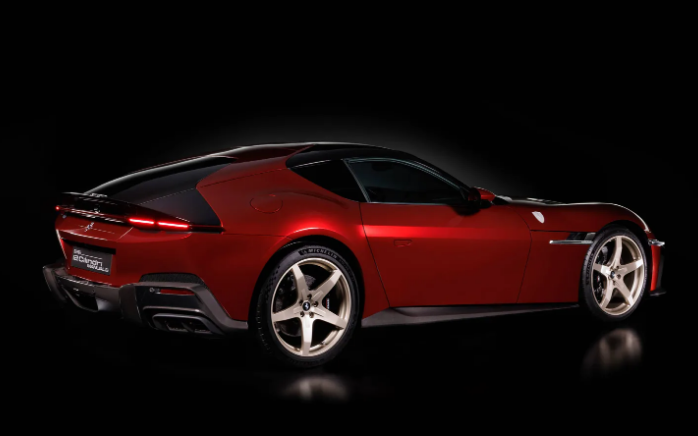
Ultimately, we should be thankful that vehicles like the Ferrari 12Cilindri Manuale exist. They prove that even in an era dominated by automation, electrification, and autonomous driving aids, the world’s premier automakers understand that human engagement is still a highly marketable commodity. The fact that they went through the immense financial and engineering effort to develop a simulated manual for the Ferrari 12Cilindri Manuale proves that the desire to row your own gears is alive and well among the motoring elite.
But for the true connoisseur—the driver who values authenticity over algorithmic perfection, and mechanical truth over digital mimicry—the classic V12 remains king. You can spend half a million pounds and play the modern allocation game to secure a Ferrari 12Cilindri Manuale, hoping the digital illusion satisfies your soul. Or, you can seek out a pristine 550 Maranello, invest in a true piece of Montezemolo-era history, and experience the unfiltered, uncompromised glory of a genuine gated manual V12.
If you are ready to elevate your portfolio and experience the visceral thrill of true automotive heritage, it’s time to take action. Whether you are hunting for a pristine 550 Maranello, looking to secure competitive exotic car financing, or need expert guidance on curating your high-end collection, connect with our premium automotive advisory team today to turn your ultimate driving dreams into reality in your own garage.