
The Complete Impact of the Polestar US Sales Ban: Geopolitics, Connected Cars, and the Shift to Europe
As an automotive industry analyst with over a decade of experience watching the evolution of the luxury electric vehicle market, I have witnessed countless regulatory shifts, tariff battles, and corporate restructuring efforts. Yet, few developments have been as dramatic, rapid, or highly consequential as the recent events surrounding the Polestar US sales ban. For American enthusiasts of sleek, Scandinavian-inspired design and sustainable performance, the dream of widespread adoption for this innovative brand has abruptly stalled. According to recent corporate confirmations, the Swedish EV maker—a corporate sibling of Volvo under the Geely umbrella—has officially abandoned plans to appeal the Polestar US sales ban. Instead, the company is pivoting its resources almost entirely toward the European market, signaling a massive geopolitical realignment in how vehicles are bought and sold globally.
The catalyst for this unprecedented restriction is not a lack of consumer demand, poor build quality, or an inability to scale manufacturing. Rather, the brand has been caught directly in the crosshairs of the Department of Commerce’s uncompromising new U.S. Connected Vehicles Rule. This sweeping regulation, which was finalized in early 2025 and officially comes into effect for the 2027 model year, strictly restricts the import and sale of internet-connected vehicles equipped with software or hardware linked to foreign adversaries, primarily China and Russia. For Polestar, heavily backed and majority-owned by China-based Geely Auto, this regulatory framework proved to be an insurmountable hurdle. In the following sections, we will dive deep into the specific mechanics of the Polestar US sales ban, explore why this regulatory hammer fell, and dissect what it ultimately means for consumers, dealerships, and the future of connected vehicle technology worldwide.
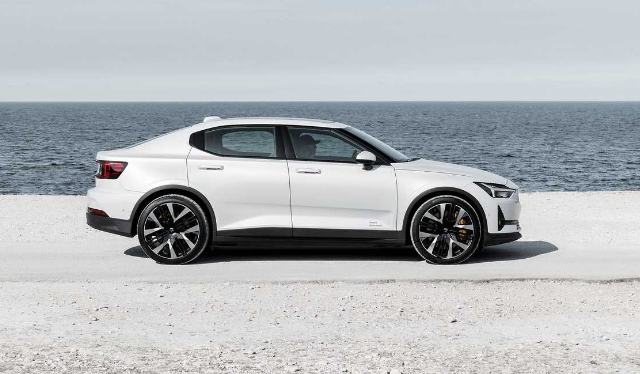
The automotive industry is no longer just about bending sheet metal, refining battery chemistry, or optimizing suspension geometry. Today, modern vehicles are essentially rolling data centers. As connected vehicle technology rapidly advances, cars continuously process massive amounts of highly sensitive data via external cameras, LiDAR systems, GPS modules, and sophisticated telematics systems. Consequently, governments and defense agencies have begun treating automotive software national security as a top-tier infrastructure priority. The U.S. Connected Vehicles Rule was established under this exact defensive premise. Intelligence agencies and policymakers successfully argued that foreign adversaries could exploit Vehicle Connectivity Systems (VCS) to covertly map critical infrastructure, intercept private cellular communications, or even execute mass disruptions by exploiting vulnerabilities in standard automotive cyber security solutions.
The strict implementation of this federal rule directly triggered the Polestar US sales ban. Because Geely Auto holds a massive controlling stake in Polestar, the brand’s underlying software architecture is subjected to the Department of Commerce’s outright prohibition on Chinese-developed code and telematics hardware. Interestingly, the physical manufacturing location of the cars did absolutely nothing to protect the brand from the Polestar US sales ban. For example, the luxurious Polestar 3 SUV is actively assembled at a state-of-the-art plant in Charleston, South Carolina, utilizing American labor. Similarly, the striking Polestar 4 SUV coupé is built in Busan, South Korea. Despite these non-Chinese physical assembly lines, the deep digital integration of Geely’s overarching software and hardware platforms rendered the vehicles non-compliant in the eyes of federal regulators. This highlights a brand-new era of trade policy compliance, proving that the national origin of lines of code now matters just as much as the origin of the steel and lithium.
One of the most frequent and complex questions surrounding this event is why its corporate sibling, Volvo, managed to escape the exact same fate. Both of these premium brands share Geely Auto as a parent company, and both frequently utilize shared vehicle architectures and common component bins. Yet, in May 2026, Volvo was officially granted formal authorization by the U.S. government to continue importing and selling its vehicles. The stark divergence between Volvo’s continued American success and the harsh reality of the Polestar US sales ban comes down to supply chain decoupling, legacy autonomy, and highly aggressive legal strategies.
Volvo, with its long-standing corporate history and deeper structural autonomy in Sweden, managed to convincingly satisfy U.S. regulators that its software ecosystems and internal automotive cyber security solutions were sufficiently ring-fenced from its Chinese parent company. Volvo Cars electrification efforts have been deeply embedded in Western supply chains and engineering hubs for decades, allowing the company to demonstrate a clear software bill of materials (SBOM) free from prohibited code. In stark contrast, Polestar—a much younger, digitally native brand heavily reliant on Geely’s rapid development platforms for its cutting-edge connected vehicle technology—faced a much steeper regulatory climb. Following what corporate executives described as “significant dialogue” with U.S. Commerce officials, Polestar’s leadership pragmatically concluded that a formal administrative appeal against the Polestar US sales ban would be a costly and fruitless endeavor. The engineering resources required to entirely decouple and redesign the brand’s software stack for a single geographic market simply did not make financial sense.
With the Polestar US sales ban now an undeniable operational reality, the automaker is executing a dramatic and highly calculated geographic pivot. Instead of pouring precious venture capital into an unwinnable regulatory battle in North America, Polestar is strategically doubling down on the European continent. From a pure macroeconomic perspective, conceding to the restriction and focusing intensely on Europe is a highly logical business maneuver that protects the company’s long-term viability.
Financial data from the first quarter of 2026 clearly validated this pivot, revealing that a staggering 94 percent of Polestar’s global deliveries occurred completely outside the United States. While the U.S. undeniably represents a massive space within the global luxury electric vehicle market, Europe offers a far more mature ecosystem for immediate EV adoption. Strict European Union emissions regulations, heavily subsidized public charging infrastructure, and favorable consumer tax structures make the continent highly receptive to the brand’s zero-emission portfolio. Furthermore, the commercial sector in Europe presents massive, multi-million dollar opportunities for advanced EV fleet management. Corporate buyers across Scandinavia, Germany, France, and the UK are rapidly transitioning their executive fleets to sustainable vehicles, offering Polestar a highly reliable revenue stream completely insulated from the geopolitical friction that caused the Polestar US sales ban.
By intelligently reallocating marketing, logistics, and distribution budgets away from the American market, Polestar can heavily optimize its European and Asian operations. The Polestar US sales ban, while undoubtedly a severe optical blow to its early global expansion narrative, ultimately allows the company to consolidate its financial strengths. This strategic retreat ensures that the brand can maintain its premium pricing power and focus entirely on delivering high-performance, design-forward electric vehicles to consumers who are not restricted by the intricacies of the U.S. Connected Vehicles Rule.
For current American owners and prospective buyers currently browsing remaining showroom inventory, the Polestar US sales ban naturally raises a host of practical, everyday concerns. What exactly happens to the thousands of cars already on the road? How does the withdrawal affect routine dealership maintenance, long-term resale value, and overall daily drivability over the next five to ten years?
Fortunately for early adopters, the legislation governing the Polestar US sales ban strictly targets the marketing, import, and sale of new vehicles starting specifically from the 2027 model year onward under the current regulatory framework. Polestar has been explicitly clear in its public reassurances: existing customers are fully financially and mechanically protected. The brand’s network of approximately 32 US EV dealerships will remain open and operational to responsibly wind down the existing, pre-approved inventory of the Polestar 3 and Polestar 4. More importantly for the consumer base, these physical retail locations will seamlessly transition into dedicated, long-term service hubs. Comprehensive EV warranty service support will continue completely uninterrupted, ensuring that current owners are never left stranded by the abruptness of the legal shift.
However, financial analysts warn that the secondary used-car market may experience notable volatility specifically due to the psychological impact of the Polestar US sales ban. Prospective buyers considering the heavily discounted remaining stock should carefully and meticulously evaluate their electric vehicle financing options, as tier-one lenders occasionally adjust their loan-to-value terms for “orphaned” brands exiting a primary regional market. Similarly, securing highly competitive auto insurance coverage could require slightly more diligence moving forward. While major national insurers will undoubtedly continue to write policies, the perceived long-term availability of specific OEM replacement parts might cause minor fluctuations in comprehensive premium costs over the next decade. Nevertheless, because Volvo shares countless underlying mechanical components with Polestar vehicles, physical parts availability should remain relatively stable and predictable despite the overarching Polestar US sales ban.
The economic ripple effects of the Polestar US sales ban will also be acutely felt across the broader, multi-billion dollar network of franchise owners and automotive retail groups. Dealership owners who invested heavily in constructing state-of-the-art, minimalist showrooms designed specifically to highlight Polestar’s Scandinavian aesthetic are now being forced to aggressively adapt their business models. The restriction effectively limits these gorgeous, high-overhead showrooms to functioning purely as warranty service centers and certified pre-owned used-car retailers, drastically altering their projected profit margins.
For the overarching luxury electric vehicle market as a whole, the Polestar US sales ban serves as a massive, industry-wide cautionary tale. Automotive dealership groups are becoming increasingly scrutinizing of the complex supply chains of the international brands they agree to represent. The catastrophic financial risk of sudden regulatory exclusion means that independent retailers must now forcefully demand total transparency regarding connected vehicle technology and foreign software origins before signing franchise agreements. The traditional days of simply looking at a vehicle’s final point of assembly on a Monroney sticker are officially over; forward-thinking dealers must now intimately understand the geopolitical footprint of a vehicle’s entire digital code base.
To truly understand the incredible magnitude and legacy of the Polestar US sales ban, industry professionals must look directly at the rapid evolution of the software-defined vehicle (SDV). Modern electric vehicles are heavily, sometimes entirely, reliant on continuous over-the-air (OTA) updates to subtly refine motor performance, enhance battery thermal efficiency, unlock new features, and critically patch automotive cyber security solutions. The Department of Commerce’s finalized rule targets this exact remote-access capability.
When an overseas automaker possesses the technical ability to remotely update the firmware governing a vehicle’s steering, regenerative braking, and autonomous navigation, the digital integrity of that cellular connection becomes an issue of national defense. The U.S. government’s firm stance is that any software supply chain tethered, however loosely, to a foreign adversary represents a completely unacceptable national vulnerability. The Polestar US sales ban is simply the most high-profile, consumer-facing casualty of this aggressive defensive posture. For the broader manufacturing industry, the Polestar US sales ban dramatically accelerates the ongoing push for highly localized software development. Automakers worldwide are now frantically scrambling to ensure their connected vehicle technology relies exclusively on code that is written, audited, compiled, and hosted safely within allied jurisdictions. In this regard, the new legislation has effectively rewritten the engineering playbook for global automotive development.
Perhaps the most visceral and emotional consequence of the Polestar US sales ban for passionate American driving enthusiasts is the tragic loss of the brand’s highly anticipated future lineup. The global automotive press had been eagerly anticipating the North American arrival of the stunning Polestar 5, a high-performance luxury grand tourer designed to rival Porsche, as well as the breathtaking Polestar 6 electric roadster concept that captured the public’s imagination. The finality of the regulatory block violently dashes any realistic, long-term hopes of ever seeing these striking, zero-emission vehicles cruising on American highways in the foreseeable future.
These expensive flagship models were widely expected to elevate the brand’s halo status within the ultra-competitive luxury electric vehicle market, allowing Polestar to compete directly and profitably with established German and American titans. With the Polestar US sales ban now firmly and legally in place, American luxury consumers are entirely, irreversibly cut off from purchasing these pinnacle products. While a handful of incredibly dedicated, deep-pocketed collectors might attempt complex, grey-market imports under the “Show or Display” exemption in the distant future, the strict software lockdowns deeply embedded in the vehicles’ connected vehicle technology will likely render such import efforts completely impossible. This is therefore not just a mundane corporate restriction; it is a genuine cultural loss for the incredibly diverse American automotive landscape.
As we look to the remainder of this volatile decade, the Polestar US sales ban will undoubtedly be remembered and heavily cited as a massive watershed moment in modern automotive history. It officially marks the definitive point in time where digital, software-defined borders became just as rigid and impenetrable as physical ones. The fallout proves beyond a shadow of a doubt that the global transition to clean, electric mobility is now inextricably linked to the complexities of global geopolitics.
For other foreign automakers eyeing the American market, the Polestar US sales ban is a glaring, unavoidable warning sign flashing in bright red. Ensuring absolute, foolproof trade policy compliance and proving the existence of transparent automotive cyber security solutions is no longer just a secondary legal function—it is the primary, non-negotiable prerequisite for market access. International companies must now invest heavily in rigorous supply chain audits, exhaustive software bill of materials (SBOM) tracking, and localized data centers to avoid a crippling fate. As connected vehicle technology continues to inevitably advance, the regulatory environment surrounding it will only become more treacherous and complex.
Ultimately, the Polestar US sales ban underscores a stark fundamental reality of the modern technological era: a car is only as welcome as the software that powers it. While Polestar will likely survive and potentially even thrive in Europe and other friendly global markets, its forced absence in the United States leaves a very noticeable void in the competitive luxury electric vehicle market. American consumers, stranded dealers, and expert industry watchers will be left analyzing the vast economic fallout for many years to come.
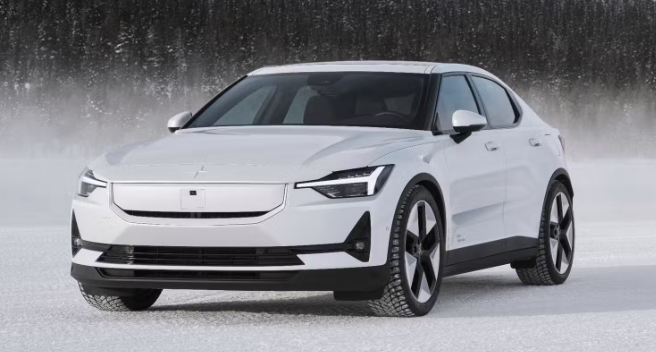
This development has fundamentally and permanently reshaped the trajectory of the American EV landscape. It highlights the undeniable, modern intersection of national security, connected vehicle technology, and international trade policy. While existing vehicle owners can certainly rest easy knowing that their essential EV warranty service support will continue unabated, the wider automotive industry is now operating under a brand-new, remarkably stricter set of rules. The Polestar US sales ban is not simply an isolated, unfortunate incident; rather, it is the strict new blueprint for how software governance and national security will completely dictate global automotive commerce moving forward.
Are you currently navigating the complexities of the modern EV market, or looking to understand how shifting international trade regulations might directly impact your next vehicle purchase? Subscribe to our exclusive industry newsletter today for expert, up-to-the-minute analysis on automotive cyber security solutions, breaking updates on the luxury electric vehicle market, and the absolute latest news shaping the roads of tomorrow.