
The Illusive Dream: Why Automakers Struggle to Dominate with French Luxury Cars
When analyzing the history of French luxury cars, a recurring automotive paradox emerges. France leads the globe in high fashion, fine dining, and boutique lifestyle brands, yet the market for French luxury cars remains incredibly turbulent. The recent debut of the electric DS No 8 from the Stellantis manufacturing group serves as a stark reminder of this dynamic. The ambition to rival German and American automotive titans in the premium auto market often exceeds the commercial reality.
The Historical Disconnect in the French Luxury Car Market
Before World War II, the landscape of French luxury cars looked entirely different. By 1929, Louis Renault introduced the Reinastella, a massive 17-foot, 7.1-liter straight-six luxury sedan engineered to compete directly with Rolls-Royce, Bentley, Hispano Suiza, and Cadillac. However, launching a 2.5-ton flagship vehicle at the dawn of the Great Depression proved economically disastrous. The project eventually evolved into the Nervastella and Suprastella before the entire premium division was scrapped in 1942.
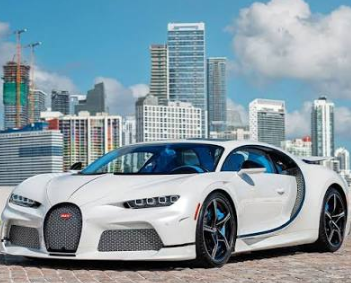
Fundamentally, Louis Renault was an industrialist heavily inspired by Henry Ford’s manufacturing efficiency. His empire was built on heavy volume—trucks, agricultural tractors, munitions, and commercial vans. Producing French luxury cars was a passion project rather than a core, sustainable business strategy. While Peugeot found niche success targeting the nation’s elite with the stunning 601 series and aerodynamic Eclipse models in the 1930s, the broader French automotive manufacturing infrastructure was optimized for mass-market utility rather than boutique opulence.
Engineering Triumphs vs. Market Realities
The post-war era decimated the traditional European luxury vehicles sector. The statist Pons Plan forcibly reorganized the French auto industry, favoring large conglomerates over independent coachbuilders. By imposing stringent taxes on large-displacement engines, historic high-end marques like Delahaye, Delage, Amilcar, and Bugatti were pushed into extinction by the 1960s. Consequently, the development of French luxury cars shifted away from sheer mechanical opulence and pivoted toward avant-garde engineering.
The 1955 Citroën DS—affectionately known as the déesse or “goddess”—exemplified this pivot. Featuring a revolutionary hydropneumatic suspension, the DS delivered an unprecedented ride quality that famously saved President Charles de Gaulle during a 1962 assassination attempt. Yet, despite selling over 1.45 million units globally, the original DS was marketed primarily as a technological marvel rather than a traditional premium sedan. It featured a pedestrian four-cylinder engine wrapped in futuristic aerodynamics, establishing a trend of sub-premium engineering that haunted subsequent models.
Attempts to capture the high-end auto market in the following decades routinely missed the mark:
Citroën CX and XM: Maintained a high-tech, futuristic aura but lacked the refined powertrains demanded by executive buyers.
Renault 21 and Safrane: Plagued by severe quality control issues in the 1990s, forcing Renault executives to publicly mandate aggressive internal quality overhauls.
Renault Vel Satis and Avantime: Early 2000s experiments costing over €550 million in development. They failed to disrupt the German monopoly, with the Avantime selling a mere 8,083 units before production permanently ceased.
The Modern Struggle: Stellantis and the DS Brand
In 2014, Stellantis CEO Carlos Tavares spun off DS into a standalone brand, aiming to capture the high-margin premium auto market where 38 percent of global automotive profits are generated. Fast forward to automotive industry trends 2025, and the results remain deeply polarized. While DS design executives confidently compare the brand to Louis Vuitton, the sales data reveals a severe disconnect. The bulk of their volume relies entirely on the mid-sized DS7 and the compact DS4.
The attempt to position French luxury cars as global competitors in the flagship segment continues to falter. In 2024, the outgoing DS9 sold just nine units in the UK. Even in affluent hubs like the Los Angeles luxury car market or New York auto showrooms, where consumers eagerly adopt new luxury electric SUVs, modern French luxury cars lack the legacy brand equity required to command high-end vehicle financing. Furthermore, the recent corporate “Do Not Drive” embargo involving legacy Takata airbags has actively stalled the brand’s momentum and degraded consumer trust.
Taxation and the Final Roadblock for High-End Vehicles
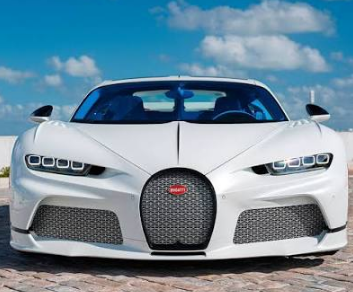
Domestic fiscal policy heavily restricts the organic growth of French luxury cars today. The French malus écologique (green tax) severely penalizes heavy, high-emission vehicles. As the government aggressively lowers emissions thresholds—targeting 113g/km today and scaling down to just 99g/km by 2027—the annual tax penalty on a heavy luxury SUV can easily reach up to €90,000.
This aggressive taxation creates an unsolvable paradox for domestic manufacturers. President Emmanuel Macron recently paraded down the Champs-Élysées in a custom midnight-blue electric DS No 8 for state commemorations, yet his administration’s tax policies actively price domestic buyers out of the premium automotive segment. If the domestic market cannot afford or justify purchasing French luxury cars, exporting that prestige to North America or Asia becomes nearly impossible. Without a strong local foundation, the future of French luxury cars remains highly uncertain.
If you are currently evaluating your next premium vehicle transition or exploring the most reliable luxury electric SUVs for 2025, reach out to our advisory team today to compare the industry’s top global performers and find the perfect match for your driving portfolio.