
The Ultimate Modern Era Supremacy: A Definitive Porsche 911 Comparison of the GT3 RS 4.0, 911 R, and S/T
As an automotive journalist and test driver with over a decade of experience evaluating the world’s most elite driver’s cars, I have had the privilege of pushing thousands of high-performance machines to their absolute limits. Yet, when we sit down in 2025 to discuss the pinnacle of Stuttgart’s water-cooled, naturally aspirated engineering, three distinct silhouettes invariably dominate the conversation. We are, of course, talking about the 997-generation GT3 RS 4.0, the 991-generation 911 R, and the stunning 992-generation 911 S/T. Attempting a comprehensive Porsche 911 comparison between these three legends is not just an exercise in automotive evaluation; it is a deep dive into the very soul of the sports car.
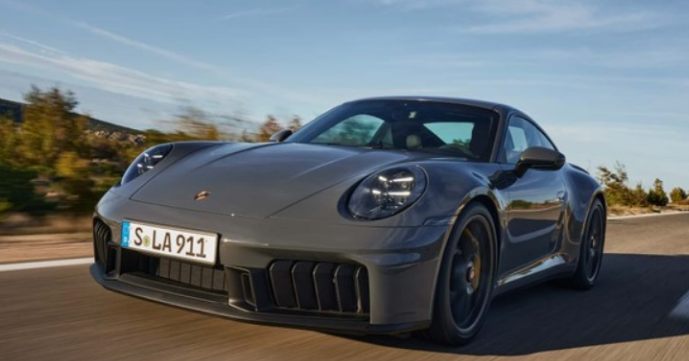
Over the years, as the automotive landscape shifts heavily toward electrification and automated transmissions, the demand for analog, three-pedal masterpieces has skyrocketed. These three vehicles are no longer just cars; they are blue-chip assets in the realm of luxury sports car investment. But beyond their staggering market valuations and the complex world of exotic car financing required to acquire them today, they remain moving, breathing mechanical instruments designed to conquer both the world’s most demanding circuits and the finest winding backroads. To truly understand which of these limited-edition icons reigns supreme, we must strip away the auction hype and get back to the tarmac. This comprehensive Porsche 911 comparison will break down their design philosophies, raw performance metrics, visceral driving dynamics, and everyday usability to determine the greatest water-cooled 911 of the modern era.
Setting the Stage for the Ultimate Porsche 911 Comparison
The catalyst for this ultimate Porsche 911 comparison was a spirited debate among industry veterans last year. When the 911 S/T was unleashed to commemorate the brand’s 60th anniversary, it was immediately heralded as a masterpiece. I vividly recall my first drive in the S/T on a humid morning last July. Navigating tight apexes, the car felt utterly untouchable. The damping was an absolute revelation, seemingly developed specifically for the uneven, cambered backroads I have been testing cars on for years. At the time, I firmly believed that no modern vehicle could eclipse its brilliance. It felt like the definitive answer to the enthusiast’s prayer.
However, bold statements in the automotive industry have a habit of aging poorly if not tested against historical benchmarks. Proclaiming the S/T as the undisputed king ignores the massive shadows cast by its two spiritual predecessors. Before the S/T, there was the 2016 Porsche 911 R—a car built as a love letter to purists frustrated by the temporary loss of the manual gearbox in the standard GT3. And before the R, there was the mythological 2011 GT3 RS 4.0, the glorious swan song for the legendary Mezger engine. To declare a true victor, we needed to bring all three together on the same stretch of asphalt, on the same day, on the same Michelin Cup 2 rubber.
By sheer luck and the grace of a highly dedicated collector operating deep within the Southern California Porsche culture, we secured pristine examples of the RS 4.0 and the 911 R. Porsche themselves graciously delayed defleeting their press S/T just long enough for us to orchestrate this unprecedented gathering. The stage was finally set for the most important Porsche 911 comparison of the decade.
Analyzing the Specifications: A Porsche 911 Comparison on Paper
Before we ignite the engines, any thorough Porsche 911 comparison requires a careful analysis of the underlying architecture. On paper, the similarities between these three titans are striking. All three are powered by naturally aspirated, 4.0-liter flat-six engines. All three demand the driver’s involvement through a glorious six-speed manual transmission. Yet, the engineering nuances reveal drastically different philosophies.
The 997 GT3 RS 4.0 utilizes the iconic “Mezger” block, featuring a slightly wider bore and a shorter stroke compared to the newer iterations. Born from Porsche’s Le Mans-winning GT1 race car, this engine is motorsport royalty. Moving to the 911 R and the S/T, we see the evolution of Porsche’s direct-injection 4.0-liter architecture, culminating in the S/T utilizing the exact powerplant from the 992 GT3 RS, complete with aggressively short gear ratios.
Perhaps the most astonishing takeaway from a dimensional Porsche 911 comparison is Porsche’s fanatical war on mass. Despite spanning nearly 15 years of evolving safety regulations, crash structures, and technological bloat, the 992-generation S/T weighs a mere 20 kilograms (about 44 pounds) more than the featherweight RS 4.0, with the 911 R sitting squarely in the middle. When you consider the sheer physical footprint of a modern 992 compared to a 997, managing this weight is a staggering feat of engineering.
However, the chassis dynamics tell a different story. The RS 4.0 was born for the track, complete with aggressive aero and a rigid setup. The 911 R and the S/T explicitly traded lap times for street purity, stripping away the massive rear wings to create stealthier, road-biased profiles. The generational leap from 997 to 991 also introduced a wheelbase extension of over 10 centimeters to improve high-speed stability. The 911 R combats this elongated footprint with complex rear-wheel steering. Conversely, the S/T intentionally ditched the rear-wheel steering to shed weight and maximize analog feedback—a crucial differentiator in our Porsche 911 comparison.
The Visceral King: Driving the GT3 RS 4.0
Stepping into the cabin of the 997 GT3 RS 4.0 is like stepping into a time capsule. By 2025 standards, the interior architecture feels distinctly vintage. The analog dials, the simplistic switchgear, and the liberal application of Alcantara harken back to an era before massive infotainment screens dominated dashboards. But you do not seek out the best Porsche 911 to buy for its Bluetooth connectivity; you seek it for the drive.
Twisting the key on the left side of the steering column ignites the 4.0-liter Mezger with a violent, metallic rasp. There is zero artificial sound enhancement here; it is pure, unadulterated mechanical combustion. The clutch pedal requires serious quadricep engagement, and the stubby Alcantara shifter demands authoritative, deliberate throws. Within the first mile of carving through the Angeles Crest Highway outside Los Angeles, the RS 4.0 makes its intentions blindingly clear.
The hydraulic steering rack is a masterpiece. In any modern Porsche 911 comparison, the steering feel of the RS 4.0 remains the gold standard. It chatters constantly, feeding every pebble, camber change, and tarmac imperfection directly into your palms. The suspension is undeniably stiff. It jiggles and tramlines over broken pavement, reminding you constantly of its motorsport DNA. It demands your absolute attention. But the reward is a level of telepathic connection that modern electric power steering systems simply cannot replicate.
Taking the Mezger engine past 6,000 RPM is a spiritual experience. The mechanical howl pierces the cabin, building to a frenetic crescendo at 8,600 RPM. Unlike the peaky 3.8-liter engines that preceded it, the 4.0-liter offers a massive swell of mid-range torque, allowing you to rocket out of tight canyon hairpins with terrifying urgency. It is an exhausting, demanding, and utterly sublime experience.
The Gentlemen’s Express: Unlocking the 911 R
Climbing out of the RS 4.0 and sliding into the 911 R provides the biggest shock of this entire Porsche 911 comparison. If the RS 4.0 is a raw nerve, the 911 R is a tailored tuxedo. As I fired it up and merged onto the highway, heading toward a local cars and coffee event deeply embedded in the Miami exotic car scene, the contrast was staggering.
The 911 R immediately feels significantly more modern. The cabin refinement is vastly improved, highlighted by a gorgeous steering wheel derived directly from the 918 Spyder hypercar. But the real revelation occurs in the chassis tuning. The 911 R glides over the road. The damping is remarkably compliant, absorbing mid-corner bumps that would unsettle the stiffly sprung RS 4.0. For individuals evaluating high-performance vehicle insurance and luxury sports car investment portfolios, the 911 R represents a vehicle you could comfortably drive across the country without needing a chiropractor upon arrival.
The clutch is noticeably lighter, the gearshift is slicker, and the inclusion of an auto-blip rev-matching feature (which can thankfully be disabled for purists) makes navigating heavy traffic a breeze. But do not mistake its compliance for a lack of capability. When you drop a gear and bury the throttle, the 911 R absolutely flies. The rear-wheel steering brilliantly masks the longer wheelbase, making the car feel agile and eager to rotate.
And then there is the engine. It may be automotive heresy in certain collector circles, but during this Porsche 911 comparison, I found myself captivated by the 911 R’s powerplant. It spins with a ferocious, frictionless freedom that feels slightly sharper than the legendary Mezger. It lacks the raw, mechanical clatter of the older block, replacing it with a refined, soaring exhaust note that is immensely addictive.
The Masterful Synthesis: Pushing the 911 S/T
As the sun began to dip, it was time to validate my initial, glowing impressions of the 911 S/T against its legendary ancestors. Has the relentless march of technology diluted the experience, or has Porsche perfected the recipe?
From the moment the S/T’s engine turns over, it is apparent that this car is an absolute weapon. While a paper-based Porsche 911 comparison shows similar horsepower figures across the trio, the reality on the tarmac is vastly different. The S/T features significantly shortened gear ratios combined with a lightweight clutch and single-mass flywheel borrowed directly from Porsche’s motorsport division. This combination results in throttle response so instantaneous it feels almost electric. The engine revs with a violent snap, and the car accelerates with an explosive urgency that leaves both the R and the RS 4.0 trailing in its wake.
The S/T benefits tremendously from the 992 generation’s double-wishbone front suspension. Despite lacking the rear-wheel steering of the 911 R, the S/T turns into corners with a razor-sharp precision that defies logic. The front end grip is seemingly infinite, allowing you to carry astonishing speeds into the apex.
Furthermore, Porsche’s engineers have struck a miraculous balance with the damping. It sits perfectly between the hardcore aggression of the RS 4.0 and the grand-touring compliance of the 911 R. It absorbs road imperfections brilliantly without ever feeling disconnected or floaty. As we evaluated the vehicles in this Porsche 911 comparison, it became glaringly obvious that from a purely objective standpoint, the S/T is the most dynamically capable and complete package ever to roll out of Weissach.
The Verdict: Crowning the Victor of the Ultimate Porsche 911 Comparison
Choosing a winner in a Porsche 911 comparison of this magnitude is a nearly impossible task, largely because any of these three cars represents the absolute zenith of automotive engineering. Your choice ultimately depends on what you seek from a high-performance manual sports car.
If we look through the lens of luxury sports car investment and daily usability, the 911 R is a magnificent proposition. It is a car you can drive for thousands of miles, enjoying its soaring flat-six and brilliant rear-wheel steering without enduring physical fatigue. It is the ultimate gentleman’s express.
If you want the objectively fastest, most technologically advanced, and perfectly polished analog driving experience, the 911 S/T is unmatched. It marries the savage drivetrain of a modern GT3 RS with the beautiful, understated bodywork of a touring model, wrapped around a bespoke suspension setup that flatters any driver. It is an undeniable triumph.
However, a true Porsche 911 comparison must account for the intangibles—the raw emotion, the lingering memories, and the sensory overload that defines a legendary sports car. And in that subjective arena, the 997 GT3 RS 4.0 remains undefeated.
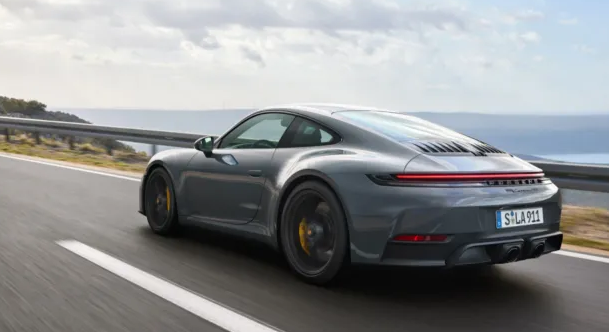
Yes, the heavy clutch is taxing in traffic. Yes, the suspension is jarring on poor roads. And yes, at current valuations, navigating exotic car financing to acquire one of the original 600 units is a monumental undertaking. But when the road opens up and you grip that Alcantara wheel, feeling the hydraulic steering chatter against your palms as the Mezger engine screams toward 8,600 RPM, you realize you are driving perfection. It demands more from you as a driver, but the emotional return on investment is unparalleled.
The S/T may be the best objectively engineered car here, and the 911 R may be the most usable, but the GT3 RS 4.0 is the greatest. It is a raw, uncompromising, mechanical masterpiece that etches itself into your soul.
If you are currently navigating the elite collector market, debating the best Porsche 911 to buy, or looking to add a true piece of automotive history to your garage, you cannot make a wrong choice here. However, to truly understand the nuances of these phenomenal machines and find the perfect fit for your driving style and investment portfolio, expert guidance is essential. Contact our team of exotic vehicle specialists today to schedule a private consultation and let us help you source, finance, and secure the keys to your ultimate dream Porsche.