
When High-Voltage EV Performance Meets Aerospace Precision: Inside the Porsche Cayenne Electric’s High-Speed Runway Benchmark
High-speed dynamic validation often takes automotive testing to extreme locations, from the freezing salt flats of Scandinavia to heat-scorched desert tracks. Yet, pushing an ultra-high-performance electric vehicle to its absolute operational threshold beside the world’s largest operational aircraft represents an entirely new benchmark for automotive engineering.
When a 1,139-horsepower battery-electric SUV aligns parallel with a six-engine, dual-fuselage aerospace testbed traveling down a runway at 160 mph, the objective extends far beyond visual spectacle. It demands absolute power delivery, zero-latency throttle modulation, thermal stability under continuous max-discharge loads, and precision high-speed directional control.
At the Mojave Air and Space Port, Porsche subjected the upcoming Cayenne Electric to an unconventional aerodynamic and dynamic test regime alongside Stratolaunch’s massive “Roc” carrier aircraft. The technical implications of this high-speed synchronization offer rare insights into modern EV powertrain engineering, thermal management architecture, and high-voltage platform stability under peak output.
The Engineering Realities of High-Speed EV Dynamic Testing
High-speed dynamic evaluation is fundamentally different for an electric powertrain than for an internal combustion engine (ICE). In a conventional performance vehicle, high-speed runs test top-end gear ratios, mechanical cooling capacities, and engine airflow. For a high-voltage electric platform, however, keeping pace with an accelerating aircraft at 160+ mph tests the core limits of electrical discharge efficiency, inverter switching speeds, and active thermal regulation.
When an EV accelerates toward triple-digit speeds, the electric motors demand continuous peak current from the battery pack. This massive current draw generates rapid internal heat within the lithium-ion cell chemistry, motor windings, and power electronics. Without an advanced heat dissipation system, high-voltage architectures trigger thermal throttling—a protective reduction in power output—within seconds of sustained wide-open throttle.

During the Mojave runway runs, the Cayenne Electric matched the acceleration curve and rotation speed of the six-engine Pratt & Whitney-powered Stratolaunch Roc, demanding uninterrupted multi-phase power delivery. Maintaining precise position beside a multi-ton aircraft accelerating past 160 mph requires:
Instantaneous Torque Vectoring: Microsecond adjustments to individual wheel torque to counteract high-speed air displacement and ground-effect turbulence.
Continuous High-Discharge Power: Delivering maximum kilowatt output without cell voltage sag or thermal derating.
Predictable Throttle Linearity: Ensuring that precise pedal inputs yield exact, immediate speed adjustments when aligning with an approaching aircraft.
+—————————————+
| High-Voltage Battery Pack |
| (800V+ Architecture / Liquid Cool) |
+——————-+——————-+
|
Direct DC Feed
|
v
+—————————————+
| Silicon Carbide Inverter |
| (High-Frequency Power Switching) |
+——————-+——————-+
|
3-Phase AC Current
|
v
+—————————————+
| Permanent Magnet Synchronous Motors |
| (Dual/Tri-Motor Vectoring System) |
+——————-+——————-+
|
Direct Drive
|
v
+—————————————+
| High-Speed Dynamic Acceleration |
| (Precision Runway Lineup) |
+—————————————+
Aerodynamic Turbulence and Ground-Effect Dynamics
Operating an automobile alongside an aircraft during takeoff and landing exposes the ground vehicle to complex fluid dynamic interactions. The Stratolaunch Roc features a dual-fuselage configuration with a wingspan stretching 385 feet. As its six turbofan engines generate tens of thousands of pounds of thrust, the slipstream behind and surrounding the aircraft creates intense atmospheric turbulence, crosswinds, and pressure waves.
Driving directly between or parallel to twin fuselages at 160 mph creates a localized pressure vortex. As air speeds up between the twin structures, localized static pressure drops—an effect governed by Bernoulli’s principle. For an electric SUV traveling at high velocity, this fluctuating pressure zone can induce aerodynamic lift or sudden lateral forces.
High-Speed Stability Factors
To maintain directional tracking through these complex airflow zones, the vehicle relies on active chassis control and aerodynamic balance:
Active Suspension Damping: Electronic air suspension with twin-valve active dampers compensates for sudden vertical load changes caused by aerodynamic downforce fluctuations.
Low Center of Gravity: Placing the heavy high-voltage battery floor-mounted between the axles lowers the center of mass, drastically reducing body roll and air-induced instability.
Rear-Axle Steering: High-speed active rear steering maintains linear track control, counteracting lateral aerodynamic buffeting from the aircraft’s turbofan wash.
Former factory driver Patrick Long noted that timing the landing sequence presented unique spatial challenges. Merging onto an active runway at 160 mph alongside a giant aircraft distorts standard visual depth cues. Maintaining safety required direct radio synchronization with aircrew chiefs inside the cabin to adjust velocity down to the exact millisecond.
Thermal Efficiency, Voltage Management, and Range Retention
A critical reveal from the Mojave test involved energy consumption. Across four full-throttle runway runs reaching speeds above 160 mph, the Cayenne Electric consumed only 13 percent of its total battery capacity.
For high-performance electric vehicles, sustained ultra-high-speed driving is historically energy-intensive. Energy consumption scales exponentially with speed due to aerodynamic drag ($Fd = \frac{1}{2} \rho v^2 Cd A$). Driving at 160 mph creates roughly four times the aerodynamic drag experienced at 80 mph.
+———————————————————————————–+
| Runway Test Performance Breakdown |
+——————————+—————————————————-+
| Peak Speed Achieved | Exceeding 160 mph (257 km/h) |
| Peak Output Capabilities | Up to 1,139 Horsepower |
| Energy Consumed (4 Runs) | 13% Total State of Charge (SoC) |
| Primary Thermal Challenge | High Continuous Current Discharge Thermal Build |
| Chassis Mitigation Strategy | Active Air Suspension & Torque Vectoring Control |
+——————————+—————————————————-+
Why Energy Drain Remained Minimal
800-Volt (or Higher) Electrical Architecture: Higher operating system voltage reduces current amperage ($I = \frac{P}{V}$) required to produce peak horsepower. Lower amperage directly reduces resistive heat losses ($P{loss} = I^2 R$), preserving pack energy.
Advanced Silicon Carbide (SiC) Inverters: Modern high-performance EVs use SiC power electronics that operate at elevated switching frequencies with higher efficiency, drastically reducing thermal losses during sustained full-throttle application.
Optimized Dynamic Regeneration: During decelerations between runway passes, high-capacity energy recovery systems feed kinetic energy back into the pack at rates exceeding 300 kW, recouping valuable state-of-charge.
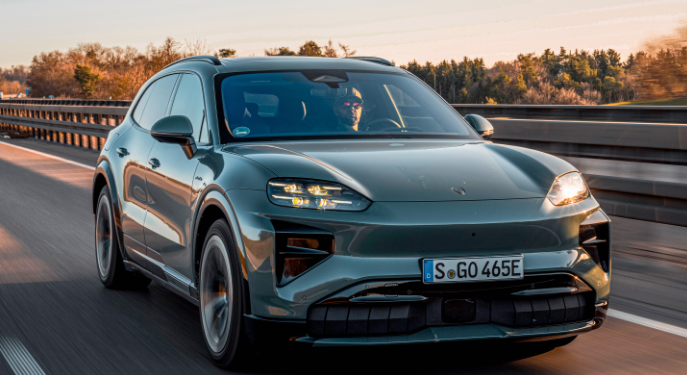
High-Performance EV Platforms vs. Aerospace Benchmarks
Synchronizing a high-output electric vehicle with an aerospace testbed illustrates how automotive performance engineering has evolved. Historically, automotive speed demonstrations relied on straight-line acceleration over fixed distances. Modern performance platforms, however, must prove continuous power delivery, multi-system integration, and rapid thermal recovery.
The aerospace industry relies on redundant communications, real-time sensor telematics, and precise mechanical tolerances. Implementing those same testing standards on a high-voltage production car platform bridges the gap between automotive manufacturing and aerospace engineering. Coordinated runs involving FAA monitoring, ground flight chiefs, and real-time telemetry showcase how advanced electric platforms maintain absolute operational reliability under high-stress conditions.
The Next Era of High-Voltage Performance Engineering
The intersection of extreme aerospace operations and high-output electric vehicle design signals a mature era for battery electric performance. Achieving over 1,100 horsepower while maintaining low thermal degradation, stable high-speed tracking, and efficient energy consumption proves that modern electric SUVs are capable of far more than quick zero-to-sixty sprints.
As high-voltage battery technologies continue to advance—bringing higher energy density, faster C-rates for charging and discharging, and lighter structural integration—the boundaries of what production performance vehicles can achieve will expand rapidly. Testing vehicles alongside experimental aircraft sets a clear benchmark: the future of performance engineering is quiet, immediate, and exceptionally powerful.
Are you ready to experience the next evolution of high-performance electric mobility? Connect with your local authorized performance specialist today to discover how cutting-edge electric architectures are transforming everyday driving dynamics, or schedule a tailored high-voltage test-drive experience to feel the instant response of advanced EV powertrains firsthand.