



Forgotten Royalty: The Underrated Legacy of the Ferrari 456 GT
There is a distinct, intoxicating romance to front-engined Maranello grand tourers that modern exotic machinery simply cannot replicate. Long before the era of razor-sharp aerodynamic diffusers, aggressive winglets, and hybrid powertrains, Ferrari built cars designed to cross continents at hyper-legal speeds with effortless grace.
Positioned historically right before the digital takeover, the Ferrari 456 GT remains one of the finest, most criminally overlooked V12 automobiles ever to emerge from the factory gates in Modena.
Today, as enthusiast interest pivots toward authentic driving experiences and raw mechanical feel, this 1990s icon stands out as an extraordinary entry point into top-tier Italian exotic ownership.
A Masterpiece Born from Economic Turbulence
To fully appreciate the 456 GT—designated internally as the F116—one must understand the high-stakes climate in which it was conceived. As the late 1980s gave way to the early 1990s, global economies faltered, and the luxury automotive market went into a tailspin. Ferrari found itself at a crossroads. The existing lineup was aging, factory operations were bloated, and the passing of Enzo Ferrari in 1988 had left a temporary vacuum in leadership.
Enter Luca di Montezemolo in 1991. Installed as chairman to revitalize the brand, Montezemolo recognized that Ferrari’s soul was bound to the classic front-engine V12 layout.
While cars like the 365 GT4 2+2, 400, and 412 had quietly carried the four-seat flag for decades, they lacked the romantic, head-turning elegance of legendary classics like the 365 GTB/4 Daytona.
The 456 GT was designed to bridge that exact divide.
+———————————————————————–+
| FERRARI 456 GT SNAPSHOT |
+———————————————————————–+
| Engine: 5.5-liter naturally aspirated 65° V12 (F116) |
| Power Output: 436 hp @ 6,250 RPM |
| Torque: 406 lb-ft @ 4,500 RPM |
| Transmission: 6-speed manual transaxle / 4-speed automatic |
| Top Speed: 192 mph |
| Layout: Front-engine, rear-wheel drive (Transaxle) |
+———————————————————————–+
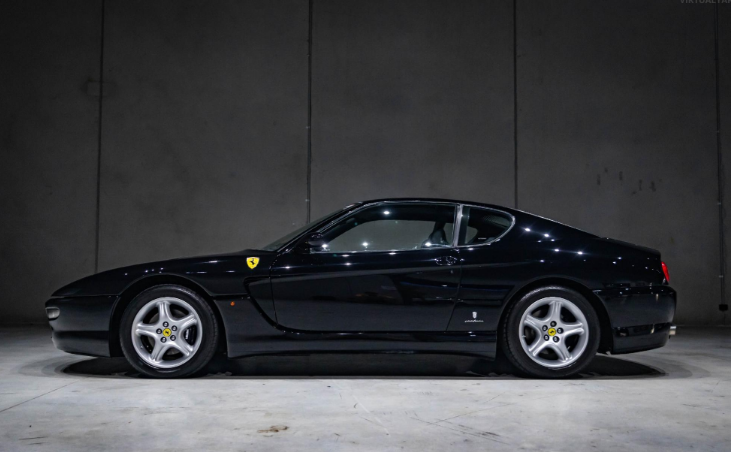
When it debuted at the 1992 Paris Motor Show, it stunned journalists and collectors alike. Lorenzo Ramaciotti, heading the legendary design team at Pininfarina, crafted a sleek, understated aluminum body that was bonded to a tubular steel spaceframe.
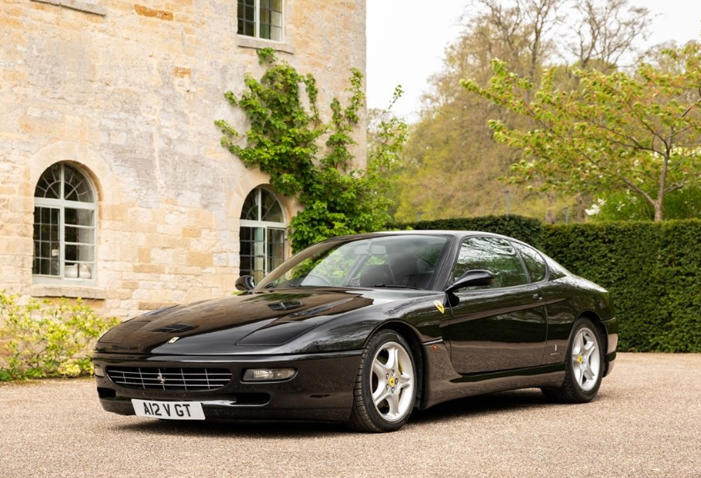
The aesthetic was masterfully clean: pop-up headlights, a low sweeping nose, subtle quarter-panel vents referencing the Daytona, and a neatly rounded tail with four modest exhaust tips. It didn’t shout; it whispered pure class.
Mechanical Ingenuity: The Heart of a True Grand Tourer
Underneath the minimalist, aerodynamic bodywork laid a engineering layout that laid the foundation for every modern V12 front-engined Ferrari that followed, up to today’s ultimate GT flagships.
The F116B Engine Architecture
The powerplant at the core of the Ferrari 456 GT was a clean-sheet design. Dubbed the F116B, this 5.5-liter (5,474 cc) naturally aspirated V12 featured an updated 65-degree angle between cylinder banks—a departure from the traditional 60-degree Maranello layout.
Bore & Stroke: 88mm x 75mm
Valvetrain: Double overhead camshafts (DOHC) per bank, 4 valves per cylinder
Lubrication: Dry-sump system to lower the engine’s center of gravity
Fuel Management: Bosch Motronic engine management system
Delivering 436 horsepower and 406 lb-ft of torque, the engine name signaled a return to Ferrari’s classic naming convention, where “456” represented the cubic displacement of a single cylinder ($5474 / 12 \approx 456$).
Power was routed via a carbon-fiber propshaft to a rear-mounted six-speed manual transaxle or, later, a four-speed torque-converter automatic (the 456 GTA). This transaxle layout achieved a near-perfect 50:50 weight distribution, delivering exceptional balance through high-speed sweepers.
Advanced Chassis Technology
For its time, the 456 was the most technologically advanced road car Ferrari had ever manufactured. The suspension utilized double wishbones front and rear, integrated with electronic adaptive dampers.
By analyzing steering angle, vehicle speed, and lateral acceleration, the system automatically adjusted stiffness to manage body roll without compromising long-distance compliance.
Behind the Wheel: Analog Supercar Dynamics
Opening the heavy driver’s door reveals an interior steeped in old-world charm, rich Connelly leather, and understated analog luxury.
Positioning yourself behind the three-spoke leather steering wheel, you are immediately greeted by two iconic design elements: classic round white-on-black gauges and the crowning jewel of 1990s sports cars—a gated six-speed manual shifter with a solid chrome ball.
[R] [2] [4] [6]
| | | |
+—-+—-+—-+—-+—-+
| | | |
[1] [3] [5]
The Driving Experience
Turning the key brings the 5.5-liter V12 to life with a refined, smooth idle. Unlike modern supercars with loud valved exhausts designed to draw immediate attention, the 456 GT starts with a subtle, mechanical hum.
Transmission Dynamics: When cold, the open-gate shifter requires a firm, deliberate hand—a classic trait of vintage Ferrari transmissions. Once the transaxle oil warms to operating temperature, moving through the metal gate provides an unmatched tactile satisfaction that modern dual-clutch paddle-shifter setups simply cannot match.
Torque Curve: The engine is astonishingly tractable. You can drop the speed in fifth gear to 25 mph and press the throttle; the V12 pulls smoothly from idle speeds without a shudder or hesitation.
Handling Balance: On winding secondary roads, the steering feels communicative and weighted. The long nose points accurately into turns, while the rear suspension keeps the car composed, absorbing mid-corner bumps with sophisticated poise.
It drives like a smaller, more focused sports car than its physical size suggests. The car feels lighter on its feet than its contemporary rivals, delivering high-speed confidence whether cruising down coastal highways or carving up mountain passes.
Market Analysis: Evolution, Values, and Buying Realities
Ferrari produced the original 456 GT and GTA from 1992 to 1997. In 1998, Maranello introduced the 456M (Modificato), which remained in production until 2003.
The updated ‘M’ model brought subtle cosmetic refinements, including an integrated front grille, a carbon-fiber hood, redesigned dashboard layout, and an updated ECU with improved traction control.
Original vs. Modificato: Key Differences
| Feature | Ferrari 456 GT / GTA (1992–1997) | Ferrari 456M GT / GTA (1998–2003) |
|---|---|---|
| Hood Construction | Composite | Carbon Fiber |
| Front Grille | Under-bumper intake | Broader integrated grille with fog lights |
| Interior Layout | Classic five-gauge dash cluster | Redesigned center console & modern HVAC |
| Traction Control | Primitive ABS-linked system | Advanced ASR system |
| Body Production | Pininfarina Factory | In-house at Maranello |
Current Valuations and Investment Potential
For years, the four-seat V12 models were overlooked by mainstream collectors who prioritized mid-engined, two-seater sports cars. As a result, the Ferrari 456 GT lingered in a value trough, offering remarkable performance for surprisingly low entry costs.
However, as analog manual transmission exotics continue to surge in popularity among serious enthusiasts, collector market dynamics are shifting.
Driver-Condition / Auto: $45,000 – $60,000
Well-Maintained Manual: $75,000 – $95,000
Pristine / Low-Mile GT: $110,000 – $140,000+
Manual-transmission cars command a significant premium—often $20,000 to $30,000 more than equivalent automatic models—due to the desirable driving engagement offered by the gated shifter.
Practical Ownership: Maintenance Costs and What to Inspect
While entry prices for a 456 GT appear attractive compared to a 550 Maranello or a Testarossa, prospective buyers must enter ownership with clear expectations. This is a hand-built, low-volume Italian exotic that cost over $220,000 when new (adjusted for inflation, well over $350,000 today). Maintenance costs remain relative to its original price tag.
Expert Insight: “There is no such thing as a cheap Ferrari. Buying a low-priced, neglected example is usually the most expensive way to own one. Proper pre-purchase inspections and dedicated maintenance schedules are vital.”
Essential Pre-Purchase Inspection Points
Timing Belt Replacement: The F116 V12 uses timing belts that must be replaced every 3 to 5 years. While engine-out service is not strictly required on the 456 (unlike some mid-engine V8 models), it requires a specialist who knows the engine inside and out.
Window Sealing & Regulator Mechanisms: Early 456 models used frameless glass windows that automatically drop slightly when opening the door. Over time, the electronic regulators wear out, leading to wind noise, water leaks, and expensive alignment fixes.
Self-Leveling Rear Suspension (Hydropneumatic): The rear suspension utilizes a hydraulic self-leveling system. Leaking shocks or failing spheres can cause harsh ride quality and require costly components to rectify.
Radiator & Cooling System: The V12 generates significant underhood heat. Aging radiators, heater cores, and deteriorating expansion tanks should be inspected closely during any PPI.
Interior Sticky Plastics: Like many Ferrari models from the 1990s and early 2000s, interior switchgear coating can break down over time, becoming tacky to the touch. Fortunately, specialized refinishing services can permanently correct this issue.
Why the 456 GT Remains an Automotive Icon
In today’s landscape dominated by digital interfaces, synthetic engine notes, and heavy battery packs, the Ferrari 456 GT offers something vanishingly rare: pure mechanical intimacy.
It balances everyday usability—featuring genuine rear seat capacity for children or short trips with adults, plus a surprisingly usable trunk—with the visceral thrills of a naturally aspirated 12-cylinder engine.
It stands as a testament to an era when Ferrari prioritized timeless elegance over sheer shock value. Whether cruising down a coastal highway or joining an exclusive rally, driving a well-sorted 456 GT is an experience that reminds you why classic Grand Tourers captured our imagination in the first place.
Ready to Experience Classic V12 Performance?
If you are considering adding a legendary Maranello grand tourer to your garage, having expert guidance makes all the difference. Connect with our team of vintage exotic specialists today to inspect pre-owned inventory, discuss market valuations, or schedule a comprehensive pre-purchase inspection for your prospective Ferrari.