



The Anatomy of a One-Truck Recall: What a Single Toyota Tundra Teaches Us About Federal Compliance, Fleet Payload, and Automotive Law
In my ten years working at the intersection of automotive fleet management, dealer logistics, and federal vehicle compliance, I have audited thousands of vehicle build sheets, inspected countless Gross Vehicle Weight Rating (GVWR) placards, and managed regulatory exposure across major dealership networks. Recalls are standard operating procedure in this business. We are accustomed to seeing headlines involving two million electric vehicles recalled for software updates, or hundreds of thousands of pickup trucks summoned back to regional service bays for steering shaft inspections.
What we almost never see is a recall population of exactly one.
In July 2026, National Highway Traffic Safety Administration (NHTSA) filings revealed that Southeast Toyota Distributors—the world’s largest independent distributor of Toyota vehicles—issued a formal safety recall covering a single 2026 Toyota Tundra pickup truck. The culprit was not a fractured axle shaft, a faulty twin-turbo powertrain, or a glitching infotainment interface. It was a silver-and-black stickered piece of vinyl: the load-carrying capacity modification label, mandated under Federal Motor Vehicle Safety Standard (FMVSS) No. 110.
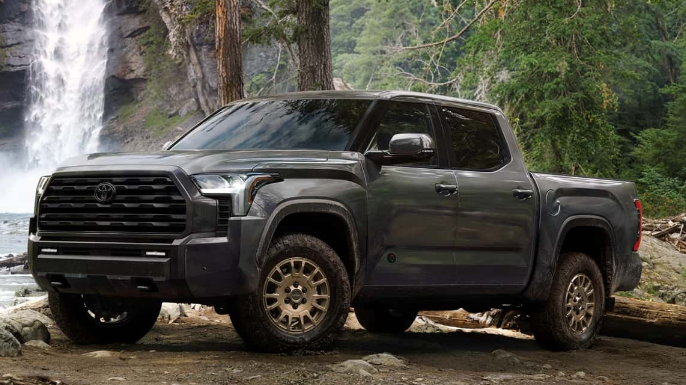
While the internet quickly seized on the humor of a solitary truck being recalled over a sticker math error, those of us who deal with automotive compliance, commercial vehicle liability insurance, and fleet operations recognize this incident as a fascinating masterclass in regulatory precision.
To understand how a single pickup truck triggered the full machinery of federal law, we must dive deep into port-installed accessories, vehicle weight certification, dealership liability, and the strict mathematical thresholds that protect everyday drivers from dangerous vehicle overloading.
Understanding FMVSS 110 and the Physics of Vehicle Payload Certification
To grasp why a label discrepancy warrants a formal safety recall, you must first understand how vehicle weight ratings are established, certified, and legally regulated in the United States.
Every light-duty vehicle sold in the American market carries two primary weight definitions established by the manufacturer:
Gross Vehicle Weight Rating (GVWR): The maximum operating weight of the vehicle as specified by the manufacturer, including the vehicle’s chassis, body, engine, fluids, fuel, accessories, driver, passengers, and cargo combined.
Curb Weight: The total weight of the vehicle with standard equipment, all necessary operating fluids (such as motor oil and coolant), a full tank of fuel, but without passengers or cargo.
The difference between your GVWR and your Curb Weight determines your total payload capacity:
$$\text{Payload Capacity} = \text{GVWR} – \text{Curb Weight}$$
When a half-ton pickup truck like the 2026 Toyota Tundra rolls off the assembly line at Toyota Motor Manufacturing Texas in San Antonio, it carries an original certification label on the driver’s side B-pillar. This placard dictates the factory-certified load capacity, tire pressures, and axle ratings.
However, modern auto retail rarely stops at the factory gate.
+——————————————————–+
| FACTORY ASSEMBLY LINE |
| Original Vehicle Weight Certified (FMVSS Standard) |
+—————————+—————————-+
|
v
+——————————————————–+
| DISTRIBUTOR / PORT ACCESSORY |
| Add-ons Installed: Side Steps, Bed Liners, Wheels |
+—————————+—————————-+
|
v
+——————————————————–+
| FMVSS 110 COMPLIANCE THRESHOLD |
| Weight Added > 1.5% of GVWR or > 100 lbs (45 kg)? |
+————-+—————————-+————-+
| |
[ YES ] v [ NO ] v
+————————+ +————————+
| MUST AFFIX MODIFIED | | No Supplemental Label |
| WEIGHT CAPACITY LABEL | | Required |
+————————+ +————————+
The 1% Rule and Port-Installed Accessories (PIO)
In the United States, thousands of vehicles pass through regional distribution hubs before reaching dealership showrooms. Southeast Toyota Distributors (SET), which supplies independent dealers across Florida, Georgia, Alabama, North Carolina, and South Carolina, operates massive processing facilities where vehicles receive Port-Installed Accessories (PIO). These items include heavy-duty running boards, bed liners, upgraded off-road wheels, skid plates, hard tonneau covers, and trailer hitches.
Every physical accessory added to a vehicle reduces its remaining payload capacity. If a distributor bolsters a Toyota Tundra with 180 pounds of steel sliders and utility racks, that truck can legally carry 180 fewer pounds of tools, camping gear, or tongue weight from a towed trailer.
Under FMVSS 110, if weight added to a vehicle between final factory certification and first retail sale exceeds 1.5% of the vehicle’s GVWR or 100 pounds (45 kg), whichever is less, the distributor or dealer must affix a supplemental “Load Carrying Capacity Reduced” label near the original certification placard. Furthermore, the weight listed on that label must be accurate within 1% of the actual added weight.
If the mathematical calculation on that small piece of vinyl deviates by more than 1%, the vehicle is legally deemed noncompliant with federal motor vehicle safety standards.
How a Single Toyota Tundra Triggered a Federal Recall
The paper trail behind this recall reveals a classical breakdown in administrative inventory tracking—a scenario that fleet operations managers and dealership compliance auditors know all too well.
+———————————————————————————–+
| CHRONOLOGY OF A RECALL |
+——————-+—————————————————————+
| April 2026 | Independent dealer identifies accessory discrepancy on a 2026 |
| | Toyota Tundra during pre-delivery inspection. |
+——————-+—————————————————————+
| May–June 2026 | Southeast Toyota Distributors initiates internal database |
| | audit to trace physical build sheets against digital records. |
+——————-+—————————————————————+
| July 6, 2026 | SET submits formal Part 573 Noncompliance Information Report |
| | to NHTSA. Total affected population: 1 vehicle. |
+——————-+—————————————————————+
| July 2026 Onward | Owner issued noncompliance notice and replacement label for |
| | direct installation or dealer application. |
+——————-+—————————————————————+
The Inadvertent Package Deletion
In April 2026, an attentive dealership technician performed a pre-delivery inspection on a newly arrived 2026 Toyota Tundra. The technician noticed physical accessories installed on the truck that were missing from the official digital build sheet and window sticker.
During the distribution process, an administrative error occurred: an accessory option package was mistakenly deleted from the digital management database, yet the physical installation crew on the staging floor added the physical parts to the vehicle chassis anyway.
Because the computer system believed the accessory package had been canceled, the automated labeling software printed a load modification sticker that accounted for only part of the added weight. The physical weight was attached to the truck, but the written record on the B-pillar failed the critical 1% precision requirement mandated by NHTSA.
Why SET Couldn’t Just Mail a Sticker Quietly
Laypeople often ask: “If it’s just one truck, why didn’t the distributor simply phone the owner, mail a corrected sticker in an envelope, and call it a day?”
The answer lies in federal statute and corporate legal risk. Under the National Traffic and Motor Vehicle Safety Act, auto manufacturers and equipment distributors are legally bound to notify the Department of Transportation within five business days of determining that a vehicle contains a safety-related defect or fails to comply with a federal standard.
Failing to submit a formal Part 573 report can result in millions of dollars in civil penalties from NHTSA, expose the company to massive automotive liability claims, and compromise commercial fleet compliance audits. Whether a compliance failure impacts 500,000 full-size pickup trucks or a single cab configuration, the statutory obligations remain absolute.
The Danger of Overloading: Why Label Precision Matters in the Real World
It is tempting to view a 1% sticker inaccuracy as bureaucratic overreach. However, as anyone who has managed a commercial truck fleet, operated heavy equipment, or analyzed rollover dynamics knows, payload calculations are fundamentally linked to vehicle stability, dynamic braking performance, and structural endurance.
+—————————————+
| EXCESSIVE VEHICLE PAYLOAD |
+——————-+——————-+
|
+—————————-+—————————-+
| |
v v
+———————————–+ +———————————–+
| MECHANICAL COMPRESSION | | DYNAMIC DRIVING RISKS |
+———————————–+ +———————————–+
| • Rear Suspension Bottoming Out | | • Extended Stopping Distance |
| • Overheated Wheel Bearings | | • High Center-of-Gravity Rollover |
| • Sidewall Tire Blowouts | | • ESC / ABS Sensor Calibration |
| • Frame & Axle Housing Fatigue | | Disruption |
+———————————–+ +———————————–+
When an owner relies on an inaccurate B-pillar placard to calculate cargo weight, towing tongue loads, or tool rack installations, the compounding error can push a truck past its structural thresholds.
Suspension and Drivetrain Degradation
Modern trucks like the third-generation Toyota Tundra utilize multi-link rear coil suspension setups (or optional adaptive air suspensions). Overloading compresses the shock absorbers beyond their design stroke, forcing the vehicle onto its bump stops. This compromises suspension articulation, wears out wheel bearings rapidly, and places severe shear stresses on the rear axle housing.
Thermal Stress on Braking Systems
Vehicle braking systems are engineered to dissipate kinetic energy based strictly on the certified GVWR limit. When a vehicle operates over its gross weight rating, heat dissipation rates drop precipitously during steep mountain descents or rapid highway braking maneuvers. This leads to severe brake fade, rotor warping, and significantly extended stopping distances.
Electronic Stability Control (ESC) Miscalibration
Today’s trucks rely heavily on advanced driver-assistance systems (ADAS) and yaw-rate sensors connected to the Electronic Stability Control. These algorithms calculate rollover risk based on pre-programmed vehicle mass assumptions. An incorrectly labeled vehicle carrying hundreds of pounds of uncalculated overhead equipment alters the center of gravity, potentially causing stability control systems to intervene too late—or improperly—during an emergency evasive maneuver.
Comparative Analysis: The Single-Unit Recall Club
While single-vehicle recalls are rare, the 2026 Toyota Tundra is not the first vehicle to join this exclusive club. Examining historical NHTSA data reveals that one-off recalls usually stem from highly specific quality-control exceptions or custom vehicle configurations.
| Year | Manufacturer | Model | Root Cause of Single-Vehicle Recall | Remedial Action |
|---|---|---|---|---|
| 2026 | Southeast Toyota / Toyota | Tundra Pickup | Inaccurate FMVSS 110 load-carrying capacity label due to deleted digital accessory entry | New corrected load modification label issued to owner |
| 2023 | Bugatti | Chiron Super Sport | Incorrect wheel design fitted during assembly, affecting high-speed balance | Set of factory-certified Super Sport wheels installed |
| 2021 | Lamborghini | Aventador SVJ | Unsecured bonnet hinge bolts due to assembly line torque wrench miscalibration | Technician dispatched to inspect and torque bolts |
| 2019 | Mercedes-Benz | CLA-Class | Passenger airbag housing material deviation affecting deployment speed | Complete replacement of front passenger airbag module |
| 2017 | Rolls-Royce | Phantom | Missing weld seam on front seat belt anchor assembly | Structural seat frame assembly replaced under warranty |
As demonstrated in the matrix above, single-vehicle recalls fall broadly into two categories: exotic low-volume supercars with hand-built components, or high-volume production trucks impacted by isolated distribution or accessory-labeling anomalies. In both cases, strict compliance tracking systems allow manufacturers to pinpoint the precise chassis VIN without issuing sweeping, costly regional recalls.
Fleet Management Lessons: Navigating Vehicle Weight Compliance
For commercial fleet managers, contractors, and aftermarket outfitters, the story of this solitary Toyota Tundra serves as an important reminder of legal liability and operational safety.
If you manage a business fleet, install custom utility boxes, or add aftermarket accessories to commercial pickups, here are three essential practices to ensure your fleet remains compliant and protected against legal exposure:
+———————————————————————————–+
| BEST PRACTICES FOR FLEET WEIGHT COMPLIANCE |
+———————————————————————————–+
| 1. ALWAYS WEIGH AFTER OUTFITTING |
| Never rely on estimated accessory weights. Run modified trucks over a |
| certified public scale (CAT scale) to verify actual curb weight. |
+———————————————————————————–+
| 2. UPDATE B-PILLAR PLACARDS FORMALLY |
| If installed accessories exceed 100 lbs or 1.5% of GVWR, purchase and affix |
| legitimate FMVSS-compliant weight modification decals immediately. |
+———————————————————————————–+
| 3. MAINTAIN DIGITAL AUDIT TRAILS |
| Keep comprehensive build sheets, accessory receipts, and certified weight |
| slips in each vehicle’s physical glovebox and digital fleet file. |
+———————————————————————————–+
The Legal and Insurance Implications
In the event of a highway collision involving a loaded commercial vehicle, forensic crash investigators and automotive liability attorneys routinely inspect B-pillar certification stickers, load modification tags, and CAT scale receipts.
If an outfitter or company adds 300 pounds of steel toolboxes and ladder racks to a half-ton pickup without updating the FMVSS 110 sticker, and that truck subsequently suffers a brake failure while carrying a heavy payload, the employer can face severe civil claims for negligent operation and noncompliant vehicle alteration. Accurate labeling is not just a regulatory chore; it is a primary line of legal defense.
The Remedy: How Toyota and SET Resolved the Issue
The resolution to this headline-making recall underscores how straightforward the fix is once a noncompliance issue is isolated.
Because the physical integrity of the 2026 Toyota Tundra was never compromised—the chassis, engine, suspension, and brakes were in perfect working order—no mechanical repairs were necessary. Southeast Toyota Distributors prepared a corrected load-carrying capacity modification label reflecting the exact added weight of the installed accessories within the mandated 1% tolerance.
+——————————————————–+
| IDENTIFICATION OF DISCREPANCY |
| Dealer flags accessory mismatch on single VIN |
+—————————+—————————-+
|
v
+——————————————————–+
| NHTSA PART 573 FILING SUBMITTED |
| SET files noncompliance report for 1 affected unit |
+—————————+—————————-+
|
v
+——————————————————–+
| REMEDY PACKAGE DISPATCHED |
| Corrected FMVSS 110 vinyl label & notice mailed to |
| owner for direct application or free dealer service |
+——————————————————–+
The vehicle owner received a formal notification letter detailing the discrepancy along with the updated adhesive placard. The owner could choose to peel and apply the new label directly over the incorrect placard or drop by any authorized Toyota dealership to have a service technician apply it free of charge. Once applied, the truck returned to full legal compliance under federal motor vehicle safety rules.
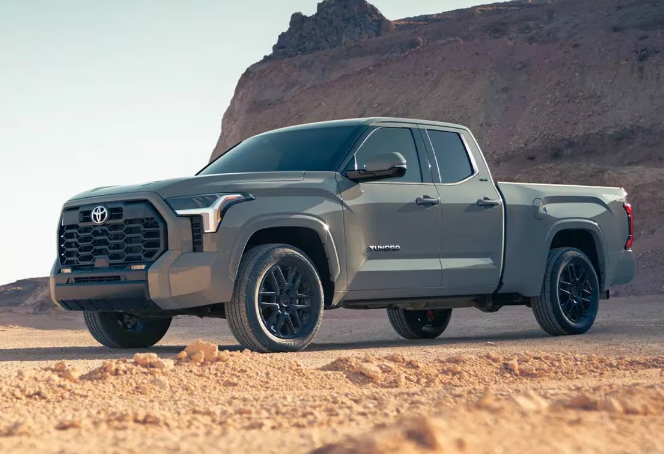
The Big Picture: Why Precision Matters in Modern Auto Manufacturing
It is easy to laugh at the idea of a multibillion-dollar automotive distribution network issuing a federal recall for a single sticker on a single pickup truck. But stepping back, this event offers profound reassurance about the rigor of the North American automotive regulatory system.
In an industry where millions of vehicles roll off assembly lines every year, tracing an isolated mathematical error down to a single VIN proves that modern digital tracking, pre-delivery dealer checks, and federal accountability frameworks are working exactly as designed. It shows that even the smallest administrative oversight is caught, documented, and corrected transparently.
Whether you drive a light-duty pickup for weekend runs to the home improvement store or manage a commercial fleet of heavy-duty work trucks, weight ratings, payload math, and certification labels are the unseen foundations of highway safety.
Is Your Fleet Fully Compliant and Protected?
Navigating the complexities of federal motor vehicle safety standards, payload management, and commercial fleet safety rules requires ongoing vigilance. Whether you are adding aftermarket gear to a single work truck or managing a multi-state fleet, staying compliant protects your team, your equipment, and your bottom line.
Take the next step in protecting your business: Schedule a comprehensive fleet compliance review or consult with our team of automotive logistics experts today to ensure your vehicles meet all current regulatory and safety standards.