
Engineering the Extreme: How the Porsche Cayenne Electric Paced the World’s Largest Aircraft
For over a century, the aerospace and automotive industries have operated on parallel but strictly divided trajectories. Airplanes and automobiles might share the same realm of motion for fleeting seconds—perhaps a brief visual overlap near a regional runway—but their engineering goals, aerodynamic profiles, and operational parameters rarely intersect. However, the boundaries defining high-performance engineering are shifting rapidly. In a groundbreaking demonstration of power, stability, and sheer audacity, the Porsche Cayenne Electric recently shattered these traditional barriers by running side-by-side with the world’s largest flying airplane.
This was not a gimmicky, made-for-television drag race pitting a jet against a car. It was a rigorous, meticulously coordinated stress test at the Mojave Air and Space Port in California. The objective was to evaluate the high-speed stability and dynamic response of the Porsche Cayenne Electric while it paced the gargantuan Stratolaunch Roc—a specialized, twin-fuselage testbed aircraft designed for hypersonic flight testing. As an automotive industry analyst and test driver with a decade of experience evaluating the evolution of the luxury electric SUV market, I view this event as a watershed moment. It serves as an ultimate validation of electric vehicle performance, battery thermal management, and high-speed aerodynamics.
Anatomy of a Titan: Understanding the Stratolaunch Roc
To fully appreciate the magnitude of this achievement, one must first understand the airborne half of this equation. The Stratolaunch Roc is not a conventional aircraft; it is a leviathan of the skies. Built with a distinctive twin-fuselage setup and boasting a wingspan of 385 feet—longer than a professional football field—the Roc is propelled by six immense Pratt & Whitney turbofan engines.
Operated by Stratolaunch, a premier hypersonic flight testing firm, the Roc is primarily utilized as a flying launchpad. It is engineered to carry and deploy rocket-powered, hypersonic test vehicles high above the earth’s surface. When an aircraft of this sheer mass and complexity undergoes takeoff and landing sequences, the atmospheric displacement and turbulent wake it generates are staggering. Trailing an aircraft like this on a runway is an exercise fraught with aerodynamic peril. Yet, the engineering team in Stuttgart deliberately chose this hostile environment to push the Porsche Cayenne Electric to its absolute dynamic limits.
Unleashing 1,139 Horsepower: The Porsche Cayenne Electric Powertrain
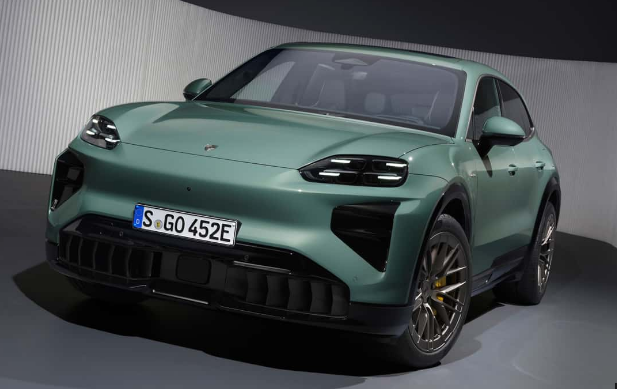
At the heart of this terrestrial feat is the Porsche Cayenne Electric. When evaluating the current landscape of high-performance electric vehicles, numbers often blur together, but the specifications of this specific machine demand reverence. Generating a monolithic 1,139 horsepower, this iteration of the SUV stands as the most powerful production-intent model Porsche has ever constructed.
The powertrain architecture of the Porsche Cayenne Electric represents the pinnacle of modern EV engineering. Unlike internal combustion engines that must spool up to reach peak power, the dual-motor setup in the Porsche Cayenne Electric delivers instantaneous, brutal torque the millisecond the accelerator is compressed. This immediate power delivery is heavily reliant on advanced battery technology and sophisticated torque vectoring systems. For consumers exploring premium EV financing or high-performance electric vehicle insurance, this level of power highlights why specialized coverage and financial structuring are becoming standard in the luxury electric SUV tier. The Porsche Cayenne Electric does not just accelerate; it violently redefines the physics of a large, luxury family vehicle, giving it the necessary thrust to keep up with a six-engine aerospace marvel.
Mojave Air and Space Port: The Ultimate American Proving Ground
Location plays a critical role in the validity of any high-speed automotive test. The Mojave Air and Space Port in California is hallowed ground for aerospace and experimental flight operations. Known for its punishing desert climate, high winds, and expansive runways, it provides an unforgiving but perfectly scaled canvas for extreme testing.
Executing a run here requires securing the airspace, managing intense logistical safety protocols, and coordinating with an on-site FAA coordinator. For the Porsche Cayenne Electric, the Mojave tarmac offered a high-friction, immensely long straightaway that allowed the vehicle to sustain velocities well in excess of standard highway limits. This setting is frequently used by aerospace contractors, but seeing a production-based luxury electric SUV dominating the same runway emphasizes the narrowing gap between terrestrial and aerial engineering tolerances.
The Choreography of Speed: Patrick Long Behind the Wheel
Raw power is useless without control, and for this highly sensitive operation, Porsche enlisted the expertise of former factory driver Patrick Long. Piloting the Porsche Cayenne Electric, Long was tasked with an incredibly dangerous and precise assignment: pacing the Stratolaunch Roc through two full takeoff runs and subsequently mirroring the aircraft as it descended for landing.
During the takeoff sequences, the Porsche Cayenne Electric effortlessly exceeded speeds of 160 mph. While achieving 160 mph is a standard benchmark for high-performance sports cars, doing so while perfectly matching the rotation speed and acceleration curve of a massive jet aircraft requires unparalleled throttle modulation. “I had no doubts about the power of the Cayenne, but I was a bit apprehensive regarding how reactive the car would be to inputs, especially at speed,” Long noted after the runs.
The true challenge, however, materialized during the aircraft’s descent. The Porsche Cayenne Electric had to thread the needle directly between the Roc’s massive twin fuselages as it touched down. Because of the aircraft’s unfathomable size, traditional visual reference points for merging onto the runway were effectively obliterated. Long could not rely solely on his mirrors or peripheral vision to time the merge; the scale of the Roc distorted spatial awareness.
To bridge this sensory gap, critical personnel were placed inside the Porsche Cayenne Electric. Shauntel Williams and John McKinney, crew chiefs for the six-engine airplane, rode in the cabin with Long. Operating advanced telemetry and maintaining constant, zero-latency radio communication with the flight crew, they effectively served as Long’s tactical spotters. This seamless human-machine integration ensured the Porsche Cayenne Electric neither undershot nor overshot the landing aircraft, maintaining a perfect, synchronized formation.
Aerodynamic Anomalies and the 160-MPH Merge
From an automotive engineering standpoint, the most fascinating revelation of this test involved aerodynamics. When driving at speeds exceeding 160 mph, a vehicle is battling immense atmospheric drag. Aerodynamic lift can compromise steering geometry, and crosswinds can easily unsettle a vehicle weighing over 5,000 pounds.
However, as the Porsche Cayenne Electric tucked itself perfectly between the twin fuselages of the Stratolaunch Roc during the landing phase, the engineering team recorded an unexpected phenomenon. The vehicle benefited from an aerodynamically “quiet area” generated by the aircraft’s immense structure. The twin fuselages effectively cleaved the turbulent air, creating a slipstream pocket of low pressure in the center.
By positioning the Porsche Cayenne Electric perfectly within this pocket, the vehicle experienced a dramatic reduction in wind resistance. This not only improved high-speed stability—allowing Long to make micro-adjustments to the steering without battling crosswinds—but it also demonstrated the phenomenal chassis tuning of the SUV. The active air suspension, rear-axle steering, and dynamic chassis control systems of the Porsche Cayenne Electric worked in perfect unison to keep the vehicle planted on the Mojave tarmac, proving its high-speed stability is on par with track-dedicated supercars.
Battery Thermal Management and High-Speed Efficiency
One of the most persistent criticisms surrounding high-performance electric vehicles is battery drain and thermal throttling under extreme loads. Sustaining 160 mph requires a colossal sustained discharge of electrical energy, which typically generates massive amounts of heat. In many EVs, this results in the battery management system deliberately cutting power to prevent catastrophic thermal runaway.
Remarkably, the Porsche Cayenne Electric exhibited zero thermal degradation throughout the grueling test. Even more astonishing was its energy consumption. Over the course of four flat-out, high-speed runs pacing the aircraft, the SUV consumed only 13 percent of its total battery capacity.
This metric is a monumental achievement in electric vehicle battery range and efficiency. It proves that Porsche’s high-voltage architecture and proprietary cooling circuits are vastly superior to conventional EV designs. For American consumers looking for a luxury electric SUV for long-distance travel or high-speed interstate commuting, this 13 percent consumption rate provides incredible peace of mind. It effectively dismantles range anxiety, proving that the Porsche Cayenne Electric can deploy hypercar-level performance without instantly draining its reserves. This efficiency data will undoubtedly influence the metrics used by underwriters calculating auto insurance for high-performance EVs, as the vehicle’s predictable battery stability reduces the risk of sudden power loss at speed.
The Broad Market Implications for Luxury Electric Vehicles
When an automotive manufacturer executes a stunt of this magnitude, it sends a profound shockwave through the entire automotive sector. The performance demonstrated by the Porsche Cayenne Electric at the Mojave Air and Space Port establishes a new benchmark for what consumers should expect from a luxury electric SUV.
Currently, the luxury vehicle market in the United States is undergoing a massive transition. Buyers are shifting away from forced-induction V8 engines and exploring the silent, relentless power of electrification. However, buyers in this demographic demand absolute perfection. They want the utility of an SUV, the interior refinement of an executive sedan, and the visceral acceleration of a dedicated sports car.
The Porsche Cayenne Electric proves that this trifecta is not just possible, but currently available. By seamlessly handling the dynamic loads required to pace a hypersonic launch platform, the vehicle proves its durability. For professionals seeking premium EV financing or competitive luxury SUV lease deals, the inherent value of the Porsche Cayenne Electric is clear. It is a vehicle that does not compromise. It marries everyday drivability with aerospace-grade performance testing.
Furthermore, this test heavily impacts the SEO landscape of electric vehicle search intent. When local consumers in cities like Los Angeles, Miami, or Dallas search for the best high-performance electric vehicle, they are looking for proven reliability. The imagery of a Porsche Cayenne Electric racing the Stratolaunch Roc provides undeniable, tangible proof of the vehicle’s engineering superiority. It is no longer just about 0-60 mph times on a pristine test track; it is about sustained, real-world capability under the most extreme conditions imaginable.
Pushing the Boundaries of Automotive Possibility
Ultimately, the significance of mixing an experimental, multi-million-dollar aircraft with a high-speed electric SUV goes far beyond a simple marketing exercise. It is a testament to human ingenuity. The internal combustion engine took over a century of refinement to reach its current apex. Electric vehicle technology, by comparison, is still in its relative infancy.
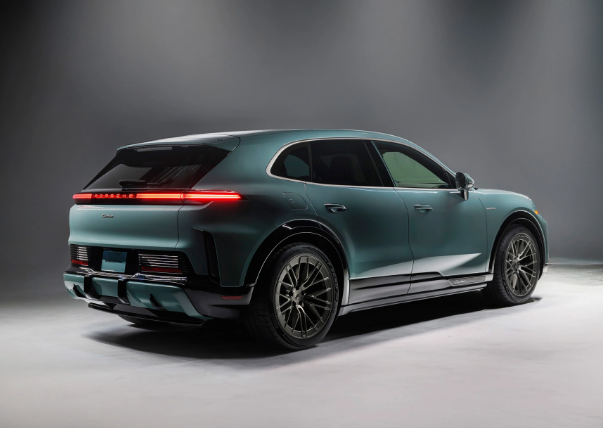
Yet, here we have the Porsche Cayenne Electric—a vehicle you can purchase from a dealership—performing flawlessly alongside the absolute bleeding edge of aerospace technology. With 1,139 horsepower, hyper-advanced torque vectoring, and a battery management system that barely broke a sweat during 160-mph sprints, the Porsche Cayenne Electric redefines the modern automobile. It gives automotive purists and tech enthusiasts alike immense hope for the future of driving. It proves that the transition to electric power does not mean the death of automotive passion; rather, it represents the dawn of a terrifyingly fast, highly capable new era.
Experience the Future of Driving Today
The engineering prowess required to pace the world’s largest aircraft is now available for your daily commute. You do not need an aerospace license or a private runway to feel the breathtaking acceleration and unparalleled stability of Porsche’s most powerful creation. If you are ready to transition into the absolute pinnacle of the luxury electric SUV market, the time to act is now. Contact your local Porsche center today to schedule a private test drive of the Porsche Cayenne Electric. Explore our exclusive premium EV financing options, discover tailored lease deals in your city, and get behind the wheel of a vehicle that truly conquered the skies from the ground. Elevate your driving experience and feel the future for yourself.