
The End of an Era: Final Bugatti Mistral Marks the Sunset of the Legendary Bugatti W-16 Engine
As an automotive industry analyst with over a decade spent evaluating high-performance exotic cars and tracking hypercar market trends, I have witnessed countless mechanical marvels come and go. However, few moments in automotive history feel as universally significant as the chapter we are witnessing right now. The legendary Bugatti W-16 engine era is officially coming to a close. Straight out of the historic Molsheim production facility, the final Bugatti Mistral has rolled off the assembly line, bringing a poignant conclusion to a powertrain lineage that redefined the absolute limits of automotive engineering.
This ultimate Bugatti Mistral, appropriately named “The last of its kind,” is vehicle number 99 in an extremely exclusive production run. For enthusiasts, collectors, and those involved in high-net-worth vehicle acquisition, this car represents the zenith of modern combustion technology. As the open-roof evolution of the Chiron, the Mistral is considerably rarer than its hardtop sibling, of which only 500 were built. It houses the world-renowned quad-turbo powertrain—the iconic Bugatti W-16 engine—and forever holds the title as the heart of the fastest open-roof production vehicle on the planet, an astonishing 282 mph record cemented in Papenburg in 2024.
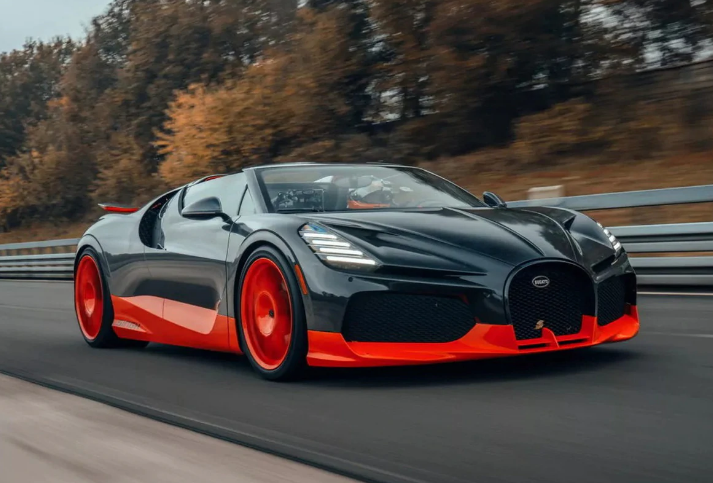
To fully understand the gravity of this final Mistral, we must look back at the incredible legacy of the Bugatti W-16 engine, evaluate the bespoke craftsmanship of this final edition, and look ahead at the naturally aspirated V-16 future that awaits us with the all-new Tourbillon.
The Genesis and Evolution of the Bugatti W-16 Engine
When the Bugatti W-16 engine first debuted nearly two decades ago in the Veyron, it was viewed by many as an impossible engineering feat. Packaging sixteen cylinders in a unique “W” configuration, strapping on four massive turbochargers, and generating over 1,000 horsepower required cooling systems and aerodynamic solutions that had never been applied to a road-legal passenger car. Over my ten years of testing and evaluating luxury vehicles, the Bugatti W-16 engine has remained the unquestioned benchmark for brute force refined into drivable art.
Through the lifecycle of the Veyron and into the era of the Chiron, the Bugatti W-16 engine evolved dynamically. Displacement held steady at 8.0 liters, but the output skyrocketed to an earth-shattering 1,578 horsepower in its final iterations. The engineering team in Molsheim constantly refined the thermodynamics, utilizing titanium, carbon fiber, and advanced 3D-printed alloys to shed weight and improve the breathing of this monolithic powerplant.
Bugatti representatives have officially stated that this final Mistral serves as the “closing chapter” to the “road-going story” of the Bugatti W-16 engine. While this specific phrasing leaves a sliver of hope that the Bugatti W-16 engine might reappear in a strictly track-only, non-road-legal application (perhaps a bespoke bolide for exclusive client racing series), it firmly marks the end of the line for the engine in standard production homologation. From a purely automotive perspective, this signifies a paradigm shift. We are closing the book on the most ambitious combustion engine ever designed for public roads.
Aerodynamics and Power: The Mistral’s Open-Top Supremacy
Taking the Bugatti W-16 engine and removing the roof entirely presents a unique set of aerodynamic and structural challenges. At speeds approaching 300 mph, a vehicle’s cabin becomes a high-pressure zone that can destabilize the chassis. The Mistral was not simply a Chiron with the top chopped off; it was radically re-engineered to ensure that the Bugatti W-16 engine could perform flawlessly without compromising the hypercar’s structural rigidity or driver safety.
The ram induction scoops situated directly behind the driver and passenger headrests are a masterclass in functional design. Not only do they feed the insatiable appetite of the Bugatti W-16 engine with thousands of liters of air per minute, but they are also crafted from a bespoke carbon-fiber structure strong enough to support the entire weight of the car in the event of a rollover. The auditory experience of having the Bugatti W-16 engine’s quad-turbochargers spooling mere inches from your ears, unfiltered by a glass roof, is a visceral thrill unmatched by any other vehicle on the market—whether you are cruising down the coast of Miami or carving through the canyons near Beverly Hills luxury car dealers.
The 282 mph top-speed run at the Papenburg testing facility in Germany solidified the Mistral’s place in the history books. It proved that the Bugatti W-16 engine could dominate not just in a streamlined coupe, but in an open-air roadster, successfully defending Bugatti’s honor in the hyper-competitive top-speed wars against rivals like Koenigsegg and Hennessey.
Inside the Final Mistral: Unmatched Craftsmanship and The Lalique Connection
Moving beyond the sheer mechanical supremacy of the Bugatti W-16 engine, the final Mistral is a showcase of unparalleled luxury and bespoke artistry. Bugatti announced that this specific chassis is finished in a highly complex two-tone paint scheme known as Pearl and Sparkle. While photographs often struggle to capture the minute differences in the shifting metallic flakes, seeing a Bugatti finish under natural sunlight reveals the exhaustive labor that goes into their paint correction and clear-coat applications.
Inside the cabin, the final Mistral is trimmed in an elegant Magnolia and Grey Carbon Matt combination. This provides a stark, sophisticated contrast to the aggressive nature of the Bugatti W-16 engine sitting just behind the firewall. Ettore Bugatti’s iconic signature is meticulously etched into the headrests, the heavy-duty aluminum door sills, and directly onto the engine cover, stamping this vehicle as a definitive piece of automotive history.
Perhaps the most culturally significant interior touch is the frozen crystal glass plate seamlessly integrated into the center armrest. Inscribed with the words “Spirit of the Wind,” this piece is a direct nod to Bugatti’s long-standing, historic relationship with the renowned French glassmaker, Lalique. While this final Mistral might lack the polarizing, hyper-extravagant porcelain-festooned aesthetics of the Blanc Eternal edition revealed earlier this month, it possesses a quiet, dignified confidence. It doesn’t need to shout to command respect; the presence of the ultimate Bugatti W-16 engine does all the talking.
The Economics of Hypercars: Investment, Finance, and High-Net-Worth Acquisition
From a market perspective, the retirement of the Bugatti W-16 engine creates a fascinating economic environment for collectors. As an industry expert, I closely monitor the financial mechanisms behind these acquisitions. We are no longer just talking about buying a car; we are discussing blue-chip asset allocation. The hypercar investment market has shown incredible resilience, often outperforming traditional stock indices during times of economic volatility.
When an elite collector acquires a final-edition vehicle like this Mistral, the financial structuring is often incredibly complex. High-net-worth vehicle acquisition frequently involves specialized premium auto loans and bespoke luxury car finance portfolios that allow buyers to maintain capital liquidity while securing a depreciating-proof asset. Because the Bugatti W-16 engine will never be manufactured for road use again, the secondary market value for Veyrons, Chirons, Divos, and Mistrals is projected to skyrocket over the next decade.
Furthermore, protecting an asset of this magnitude requires highly specialized exotic car insurance. Standard underwriters simply do not have the capacity or the actuarial data to cover a multi-million-dollar vehicle powered by a Bugatti W-16 engine that is capable of 282 mph. Policies for these vehicles must account for diminished value, specialized transport across international borders (such as shipping a car from a collection in Dubai to a concourse event in Monterey, California), and the sheer replacement cost of bespoke components like the Lalique crystal inserts. As the Bugatti W-16 engine moves from a current production model into the realm of historical artifact, the costs and complexities of insuring, maintaining, and trading these vehicles will only become more exclusive.
The Dawn of the V-16 Era: Enter the Bugatti Tourbillon
While the automotive world mourns the loss of the Bugatti W-16 engine, Molsheim is not resting on its laurels. The sunset of one era is simply the dawn of another. Arriving just days after this final Mistral completed production, Bugatti officially inaugurated its new manufacturing facility, known as La Manufacture. This state-of-the-art campus is the future home of the brand’s next technological leap: the Bugatti Tourbillon.
Replacing the Bugatti W-16 engine is an incredibly daunting task, but Bugatti’s solution is nothing short of revolutionary. Moving forward, the brand will be powered by an 8.3-liter, naturally aspirated V-16 engine, developed in partnership with Cosworth, and paired with a highly advanced hybrid powertrain. By stripping away the four turbochargers that defined the Bugatti W-16 engine, the new V-16 will offer an entirely different acoustic and dynamic profile—one that screams to a 9,000 RPM redline while utilizing electric motors for instantaneous torque fill.
La Manufacture represents a massive investment in the future of hyper-luxury manufacturing. While the Bugatti W-16 engine relied purely on brute-force combustion, the Tourbillon’s hybrid V-16 acknowledges the shifting landscape of automotive performance, proving that electrification and high-displacement internal combustion can coexist harmoniously to push the boundaries of physics even further.
A Legacy Set in Carbon and Aluminum
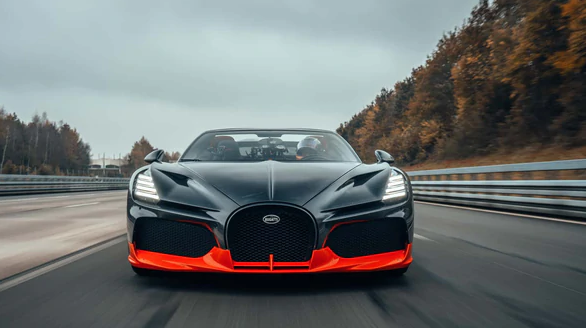
It is difficult to overstate the impact that the Bugatti W-16 engine has had on the automotive industry. It forced tire manufacturers like Michelin to invent entirely new rubber compounds capable of surviving the immense friction generated at 300 mph. It forced aerodynamicists to rethink fluid dynamics. Most importantly, it captured the imagination of an entire generation of car enthusiasts, proving that the theoretical limits of engineering are only temporary roadblocks.
The final Mistral, wearing its elegant Pearl and Sparkle paint and housing the last road-going Bugatti W-16 engine, is a masterpiece. It bridges the gap between the raw, analog ambition of the early 2000s and the sophisticated, electrified era we are entering today. For those who own a piece of this history, the Bugatti W-16 engine will remain the ultimate symbol of a time when top speed was the only metric that truly mattered.
Are you looking to navigate the highly exclusive world of hypercar investment, or simply want to stay ahead of the curve on the latest movements in the luxury automotive market? Subscribe to our exclusive automotive intelligence newsletter today for expert insights, private market acquisition strategies, and deep-dive analyses delivered straight to your inbox.