
The Elusive Dream: Why French Luxury Cars Keep Stalling in a High-Stakes Market
For over a decade analyzing the global automotive industry, I have watched automakers chase the ultimate prize: the prestige luxury market. It is a space where profit margins are vast, brand loyalty is generational, and the halo effect elevates everything else a manufacturer builds. Yet, whenever I look at the historical and current attempts by French automakers to crack this segment, I am reminded of a recurring theme—sheer, unadulterated hubris.
France is the undisputed global monarch of high-end consumer goods. From Louis Vuitton to Chanel, the nation defines prestige. But when it comes to French luxury cars, the narrative shifts from effortless elegance to repeated, spectacular commercial misfires. I recently spent some time behind the wheel of the new electric DS No 8, the latest flagship from the Stellantis manufacturing empire, positioned squarely to capture high-end auto buyers. By the time I handed the keys back, I found myself wishing I had simply observed it from afar.

To understand why modern French luxury cars struggle so profoundly, particularly in a landscape dominated by German, Japanese, and increasingly American luxury electric vehicles, we have to look in the rearview mirror. The story is a masterclass in brilliant engineering consistently derailed by catastrophic timing, government interference, and a fundamental misunderstanding of what premium car buyers actually want.
The Ghost of the Goddess
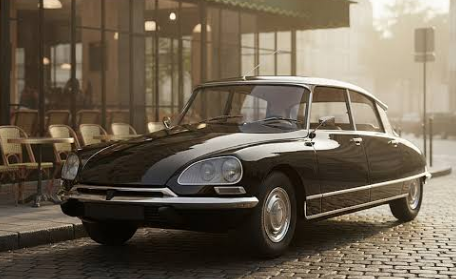
The current DS brand borrows its name—though curiously not its soul—from the original 1955 Citroën DS. Known as the “déesse” (goddess), this was a sedan penned by Flaminio Bertoni and engineered by André Lefèbvre. The 1955 DS was so far ahead of its time that the philosopher Roland Barthes famously likened it to a spacecraft, dubbing it the “new Nautilus.”
But here is the critical distinction: the original DS was never marketed strictly as a traditional prestige vehicle to compete with Rolls-Royce or Mercedes-Benz. Instead, it was a showcase of pure, avant-garde technological ingenuity. Its legendary hydropneumatic suspension delivered a ride quality that remains the benchmark for modern luxury air suspension systems today. That very suspension famously saved the life of French President Charles de Gaulle in 1962, allowing his chauffeur to maintain control of the vehicle after OAS assassins shot out its tires.
Despite selling over 1.45 million units before its retirement in 1975, the DS possessed a fatal flaw that foreshadowed the future of French luxury cars: under the hood. While it looked like a million-dollar concept car, it was powered by an asthmatic, ancient four-cylinder engine. Buyers looking to invest in premium auto sales expect effortless power, a metric the DS simply could not deliver.
Subsequent models like the Robert Opron-designed CX and the wedge-shaped XM tried to maintain this sub-premium, high-tech aura. But as competitors began heavily investing in high-displacement engines and refining the luxury sedan experience, French automakers found themselves continuously on the back foot. Even Citroën eventually surrendered its quirky identity; in 2008, they launched the C5 sedan with the advertising tagline “Unmistakably German – Made in France.” The ad campaign was brilliant. The car itself, however, was entirely forgettable.
Industrial Might vs. The Prestige Illusion
If you dig into the archives, you will find that Renault harbored ambitions of conquering the premium vehicle market long before World War II. Louis Renault, a man whose approach to manufacturing closely mirrored Henry Ford’s obsession with industrial scale, decided he wanted a piece of the high-end pie.
In 1929, Renault unleashed the Reinastella. This was no quaint Parisian runabout. It was a 17-foot-long, 2.5-ton behemoth powered by a massive 7.1-liter straight-six engine. The goal was to siphon affluent buyers away from Bentley, Rolls-Royce, Packard, and Hispano-Suiza. To ensure no one missed the point, Renault slapped a literal star emblem above their traditional diamond badge.
As any seasoned market analyst knows, timing dictates success. Launching a hyper-expensive luxury vehicle on the eve of the Great Depression was a masterclass in poor corporate strategy. Despite desperate rebrands to the Nervastella and Suprastella, the vehicles were commercial disasters. The entire prestige project was quietly shuttered by 1942.
The reality was that Renault’s genius lay in volume, not bespoke craftsmanship. While French luxury cars failed to gain traction, Renault’s sprawling Billancourt factories were successfully churning out everything from commercial trucks and buses to tractors and aviation engines. Renault had the infrastructure to dominate volume sales, but they lacked the meticulous, obsessive refinement required to build top-tier luxury European vehicles.
Peugeot, meanwhile, had a slightly better grasp on style. Their 1930s 601 models, particularly the custom Eclipse variants with electrically folding roofs designed by George Paulin, were genuine masterpieces. These cars catered to the Parisian elite and suggested a bright future for French luxury cars. Prior to the war, France had been Europe’s largest automaker for decades, and there was an arrogant assumption that this dominance was a permanent fixture.
The Pons Plan and the Death of True French Luxury
Everything changed after 1945. The French automotive landscape was left in absolute ruin, but it wasn’t just the war that killed French luxury cars—it was the post-war government.
Enter the Pons Plan, a statist and arbitrary restructuring of the French auto industry led by former civil servant Paul-Marie Pons. The plan heavily favored mass-market volume and penalized individualism. Automakers were forced into mandatory mergers. More devastatingly, the government implemented brutal displacement taxes on large engines, effectively outlawing the powertrains necessary for high-end auto brands to compete globally.
Before the war, France boasted an incredible stable of bespoke luxury automakers: Delahaye, Delage, Bugatti, and Facel Vega. Under the crushing weight of the Pons Plan and punitive tax structures, they were systematically wiped out. Delahaye and Delage ceased production in 1953. Bugatti folded in 1963. Facel Vega followed in 1964. The legendary French coachbuilding industry was destroyed, leaving a vacuum that German and British automakers gladly filled.
France was officially out of the luxury car business, though executives in Paris refused to accept the memo.
The Era of the Quirky and the Doomed
What followed from the 1970s through the early 2000s was a tragicomic series of attempts by volume brands to punch above their weight. While a few cars, like the Pininfarina-designed Peugeot 504 coupe, achieved cult classic status, the broader executive push was disastrous.
High labor costs, combative industrial relations, and catastrophic quality control doomed cars like the Renault 21, Safrane, and Laguna. Renault executives were known to drag middle management into stadiums to scream at them about abysmal reliability scores, yet the cars remained a tough sell for anyone comparing premium car lease deals against a bulletproof Lexus or Mercedes.
The absolute peak of this era of misguided French luxury cars was the early 2000s launch of the Renault Vel Satis and the Avantime. Designed by Patrick Le Quément, these vehicles were bold, bizarre, and entirely out of touch with market reality. Renault spent an eye-watering €550 million developing the Vel Satis executive hatchback, projecting 50,000 sales in its first year. It took them eight years to reach 62,000 units total.
The Avantime—a two-door, pillarless luxury minivan—was arguably an incredible piece of design, but a commercial nightmare. It managed a pathetic 8,083 sales in Europe before its manufacturer, Matra, became so disillusioned by the financial hemorrhage that they quit the car business entirely. You simply cannot convince buyers browsing for high-end auto brands in lucrative markets like Beverly Hills, Miami, or New York to spend premium money on a front-wheel-drive minivan, no matter how striking the glasshouse is.
Stellantis and the Modern Miscalculation
This brings us to the present day and the baffling existence of the modern DS brand. In 2014, Stellantis CEO Carlos Tavares spun DS off into a standalone marque. On a spreadsheet, the logic is sound: premium auto sales account for roughly 25% of the global market but generate a staggering 38% of total industry profits. If you want to survive the modern automotive bloodbath, you need a high-margin luxury division.
But you also have to actually sell cars.
Earlier this year, DS design chief Thierry Metroz proclaimed that DS was on track to become the “Louis Vuitton of the automotive world.” The sales data paints a vastly different, much bleaker picture. The brand is currently surviving almost entirely on domestic fleets and deep discounts. Half of their global volume comes from the DS7 (a mid-sized luxury SUV), while the rest is split between the smaller DS4 and the thoroughly underwhelming DS3.
If you want to understand the outright rejection of French luxury cars in the prestige market, look at the flagship DS9 sedan. Last year, in the entirety of the United Kingdom, DS sold exactly nine units of the DS9. You have better odds of winning a minor lottery than spotting someone who chose to buy a DS9 over a BMW 5 Series or a Porsche Panamera.
Compounding their image problem is the massive, ongoing Takata airbag recall that recently slapped a strict “Do Not Drive” order on thousands of older DS models across Europe. For a brand desperately trying to build equity and trust in the premium vehicle market, it is a catastrophic blow.
The Tax That Killed the Crown
Even if DS or Alpine managed to build a flawless, world-beating luxury sedan tomorrow, their own government has ensured it will fail.
In May 2024, French President Emmanuel Macron was photographed riding down the Champs-Élysées in a custom, midnight-blue DS No 8 to commemorate Armistice Day. It was a proud display of domestic manufacturing. Yet, the irony is thick enough to cut with a knife: Macron’s own legislative policies are the final nail in the coffin for French luxury cars.
Under the French malus écologique (green penalty tax), the government aggressively taxes vehicles based on CO2 emissions and vehicle weight. While initially designed to target heavy luxury SUV market entrants, the screws have been tightened so severely that almost any traditional premium vehicle is caught in the net.
The threshold for maximum taxation is plummeting aggressively. By 2027, the tax will hit cars producing just 99g of CO2 per kilometer. To put this in perspective for American buyers accustomed to heavy iron: a standard BMW X6 purchased in France today faces a penalty tax of roughly €70,000 (about $76,000 USD). By 2027, that penalty leaps to €90,000 ($98,000 USD)—on top of the purchase price of the vehicle itself.
While electric vehicles currently dodge the emissions penalty, the newly introduced weight taxes heavily penalize the massive battery packs required for luxury electric vehicles to achieve competitive range.
Decades ago, a French automotive PR executive confessed to me over drinks in Paris that even if the global export market rejected French luxury cars, they could always rely on the Énarques—the elite French civil servants—to buy them out of national pride. Today, that safety net is gone.
The harsh reality facing Stellantis and Renault is simple. If punitive domestic taxes prevent the affluent French from driving their own flagship vehicles, and buyers in global wealth hubs from Los Angeles to Dubai have zero brand awareness or desire for them, who exactly is the target demographic?
You cannot mandate prestige, and you cannot manufacture heritage overnight. Until French automakers accept that their strength lies in chic, accessible urban mobility rather than chasing the ghosts of Maybach and Bentley, we will continue to see billions wasted on doomed luxury experiments.
If you’re currently navigating the premium vehicle market and want to ensure you are investing in high-end auto brands that actually hold their value and deliver on their promises, don’t leave it to chance. Subscribe to our weekly automotive insights newsletter to get unfiltered, expert reviews and access to the best luxury car lease deals currently available in your market.