
The Ripple Effect of the Polestar US Sales Ban: Why the Swedish EV Maker is Pivoting to Europe and What it Means for the Automotive Industry
As an automotive industry analyst who has tracked the global electric vehicle market for over a decade, I have witnessed countless shifts in consumer trends, supply chain disruptions, and regulatory hurdles. However, the recent finalization of the Polestar US sales ban represents a watershed moment that will fundamentally alter the trajectory of international automotive trade. After months of speculation and intense dialogue with federal regulators, Polestar has officially decided not to appeal the Department of Commerce’s decision. This effectively brings the Swedish automaker’s stateside ambitions to an abrupt halt, forcing a massive strategic pivot back to the European continent.
For industry insiders, this is not just a story about one brand losing market access. The Polestar US sales ban serves as a massive bellwether for the future of connected mobility, data privacy, and international trade relations. Today, we are going to dissect the geopolitical mechanics behind this decision, explore what it means for current owners, and analyze how it reshapes the broader landscape of luxury electric cars.
The Anatomy of the Polestar US Sales Ban
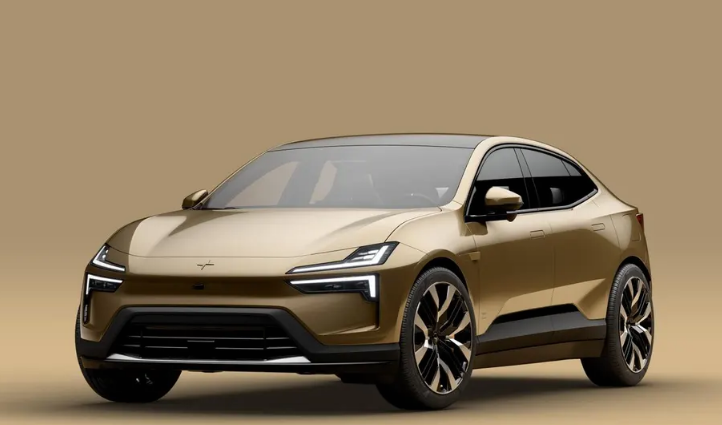
To understand how a highly praised luxury EV manufacturer found itself locked out of one of the world’s most lucrative retail markets, we have to look at the intersection of technology and national security. The Polestar US sales ban is the direct result of the newly implemented U.S. Connected Vehicles Rule. This sweeping regulatory framework was designed by the Department of Commerce to restrict the import, sale, and operation of internet-connected vehicles that have deep ties to specific foreign nations, primarily China and Russia.
Modern vehicles are no longer just mechanical machines; they are rolling supercomputers. They are equipped with outward-facing high-definition cameras, sophisticated GPS tracking, autonomous driving sensors, and constant cellular connectivity. Regulators argued that this data telemetry, if routed through servers controlled by foreign adversaries, poses a severe national security threat. Because Polestar is majority-owned by Geely Auto—a massive automotive conglomerate based in China—the brand fell squarely into the crosshairs of this legislation.
Consequently, the Polestar US sales ban was enacted, blocking the company from marketing and selling any vehicles from the 2027 model year onward under the current regulatory framework. While automotive cybersecurity regulations have been tightening for years, this level of total market exclusion is unprecedented. It sends a chilling message to any foreign automaker relying heavily on Chinese-developed software architecture or data management systems.
Why Volvo Survived While Polestar Was Exiled
One of the most fascinating aspects of the Polestar US sales ban is the stark contrast in regulatory treatment between Polestar and its corporate sibling, Volvo. Both brands trace their heritage to Sweden, and both are majority-owned by Geely Auto. Yet, in May, Volvo was quietly granted authorization by U.S. officials to continue importing and selling its vehicles. Why the double standard?
The answer lies in corporate structuring, supply chain localization, and legacy footprint. Volvo has spent decades building massive political and economic capital in the United States, including a sprawling manufacturing plant in South Carolina. Furthermore, Volvo has taken extensive steps to ring-fence its North American software ecosystems and data storage facilities from its Chinese parent company.
Polestar, on the other hand, was conceived as an asset-light, deeply integrated subsidiary that leaned heavily on Geely’s shared vehicle platforms and software stacks from day one. Despite engaging in significant dialogue with federal authorities, Polestar executives ultimately realized that the financial and architectural engineering required to comply with the U.S. Connected Vehicles Rule was insurmountable in the short term. The realization that an appeal would likely fail solidified the Polestar US sales ban as a permanent reality.
The Strategic Pivot: Doubling Down on the European EV Market
Faced with the immovable object of the Polestar US sales ban, the automaker’s leadership has made the pragmatic choice to redirect its capital and marketing muscle toward Europe. From a purely mathematical standpoint, this is a highly logical maneuver.
Even before the Department of Commerce brought down the hammer, America was not Polestar’s primary profit engine. Recent financial disclosures revealed that in the first quarter of 2026, a staggering 94 percent of Polestar’s global sales originated outside of the United States. Europe has always been the brand’s heartland. The European EV market boasts a more mature charging infrastructure, stringent emissions mandates that actively penalize internal combustion engines, and a consumer base that heavily favors the minimalist, sustainable design ethos that Polestar champions.
By abandoning the incredibly expensive and highly competitive American landscape, Polestar can optimize its cash flow. Launching a new car brand in the U.S. requires billions in marketing, establishing a sprawling physical dealership network, and heavily subsidizing luxury EV lease deals to pry buyers away from Tesla, BMW, and Mercedes-Benz. The Polestar US sales ban, ironically, frees the company from this massive financial burden. They can now focus on dominating markets in Scandinavia, Germany, and the UK, where brand recognition is already sky-high and automotive cybersecurity regulations align more closely with their existing software architecture.
What the Polestar US Sales Ban Means for Current American Owners
If you currently own or lease a Polestar 2 or Polestar 3, reading the headlines about the Polestar US sales ban has undoubtedly caused some anxiety. Will your car stop receiving over-the-air updates? Will it become impossible to service? Will your electric car insurance rates suddenly skyrocket?
Fortunately, the company has been crystal clear regarding its legacy obligations. A corporate spokesperson recently confirmed that supporting existing North American customers remains their highest priority. The Polestar US sales ban applies strictly to the marketing and sale of new vehicles from the 2027 model year forward.
For current drivers, it is business as usual. Existing Polestar owners and lease customers will continue to receive unrestricted access to authorized service centers. All active warranties remain in full effect and will be honored precisely according to their original terms and conditions. Furthermore, because these vehicles are already on the road, they are grandfathered past the immediate restrictions of the U.S. Connected Vehicles Rule.
However, from an industry expert’s perspective, there are long-term secondary market dynamics to consider. Whenever a brand exits a market—think of Suzuki or Saab in years past—resale values inevitably take a hit. Consumers actively searching for “EV dealerships near me” will realize the brand has no future stateside presence, which dampens demand in the used market. If you are currently locked into a luxury EV lease deal with Polestar, you are thoroughly protected; simply turn the keys in at the end of your term. But if you financed the vehicle via a traditional electric vehicle auto loan, you should brace for steeper-than-average depreciation curves over the next three to five years as the brand fades from the American consciousness.
The Broader Industry Implications: A New Era of Automotive Trade
The Polestar US sales ban is much larger than just one Swedish-Chinese brand; it is a blueprint for how global superpowers will manage the electric vehicle transition in the coming decades. We are entering an era of intense digital protectionism.
For years, the auto industry operated on a model of aggressive globalization. Parts were sourced from Mexico, software was written in India, batteries were manufactured in China, and final assembly happened in Michigan. The U.S. Connected Vehicles Rule effectively shatters that paradigm. The federal government has made it abundantly clear that any vehicle heavily reliant on Chinese telematics, regardless of the badge on the hood, will face existential regulatory hurdles.
This has massive implications for other automakers. Brands like Lotus (also owned by Geely) or emerging powerhouses like BYD and Nio, which have long harbored dreams of capturing the lucrative California EV market or expanding into American business fleet vehicle leasing, are now reading the writing on the wall. The Polestar US sales ban serves as a stark warning: the American market is closed to connected vehicles that cannot prove absolute data sovereignty.
We will likely see a rapid acceleration in automakers partnering with domestic tech giants—such as Google, Apple, and Amazon Web Services—to completely localize their data processing. The demand for localized automotive cybersecurity solutions will explode, driving up high-CPC advertising in the B2B sector as enterprise software firms race to offer “commerce-compliant” data architectures to nervous foreign automakers.
The Casualties of the Ban: Mourning the Polestar 6
As an enthusiast who has test-driven hundreds of cars over the last decade, the most painful casualty of the Polestar US sales ban is undoubtedly the loss of future product lines, specifically the highly anticipated Polestar 6.
The Polestar 6, a stunning hardtop convertible electric sports car, was poised to be a true halo vehicle for the electric era. Boasting a bespoke bonded aluminum chassis, a target output of nearly 900 horsepower, and a breathtaking exterior design that flawlessly blended aggressive aerodynamics with minimalist Scandinavian luxury, it was the exact type of vehicle the EV market desperately needs to prove that zero-emissions driving can evoke pure passion.
Sadly, the Polestar US sales ban means our chances of ever seeing the Polestar 6 carving through the canyons of Malibu or pulling up to a valet in Miami are effectively zero. American consumers will be left to watch from afar as European drivers get to experience one of the most exciting electric roadsters of the decade. The Polestar 4 SUV coupé—an innovative vehicle entirely lacking a rear window, utilizing high-definition camera feeds instead—will likely be the final curtain call for the marque on American soil.
Navigating the Future of the Electric Vehicle Market
The automotive industry is notoriously cyclical, but the tectonic plates shifting beneath us right now represent permanent geographic realignments. The Polestar US sales ban proves that the future of the automotive industry will be dictated just as much by software developers, cybersecurity analysts, and federal lawmakers as it is by chassis engineers and battery chemists.
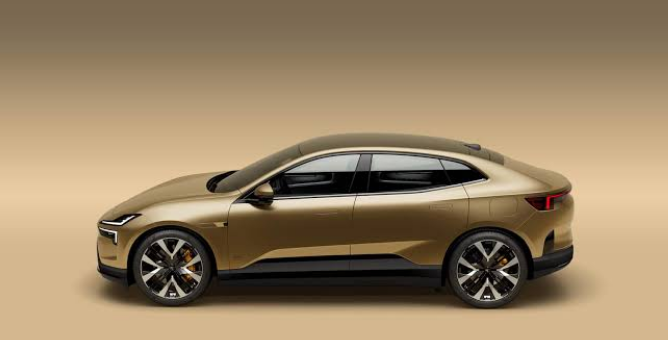
For Polestar, retreating to Europe is not a death sentence; it is a strategic retreat to a highly defensible, highly profitable stronghold. They will continue to innovate, producing incredible luxury electric cars tailored specifically for the EU and Asian markets. However, their departure leaves a noticeable void in the premium American EV sector—a void that domestic brands like Lucid and Rivian, alongside established German stalwarts, will aggressively rush to fill with aggressive zero-emission vehicle incentives and premium financing options.
The Polestar US sales ban has rewritten the rulebook. In an industry defined by motion, adaptability is the only currency that matters.
If you’re currently navigating this rapidly shifting landscape and want to ensure you’re making the smartest automotive investments—whether you are looking to secure the best luxury EV lease deals before market inventory shifts, or seeking expert advice on navigating electric car insurance rates for legacy brands—reach out to our team of automotive advisors today for a personalized consultation on the future of your garage.