
The Ultimate Water-Cooled Hierarchy: A Definitive Porsche 911 Comparison of the GT3 RS 4.0, 911 R, and S/T
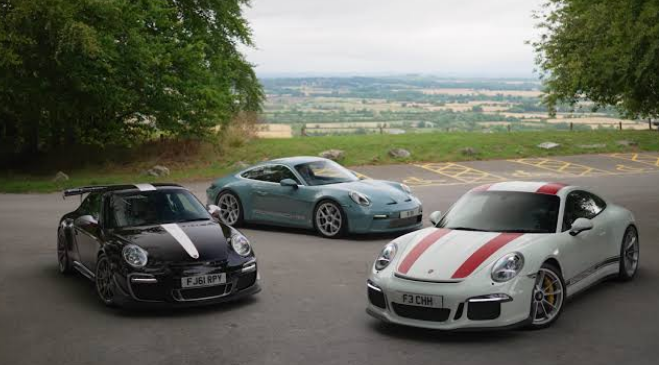
Three of the most revered water-cooled sports cars ever to emerge from Stuttgart—the 997-generation GT3 RS 4.0, the 991-generation 911 R, and the 992-generation 911 S/T—represent the absolute pinnacle of driver-centric engineering. For anyone passionate about high-performance sports cars, choosing between them is a near-impossible exercise. Each model delivers a masterclass in naturally aspirated flat-six power, manual gearbox purity, and lightweight philosophy. Yet, they execute their missions in radically different ways. The RS 4.0 brings raw, track-focused aggression; the 911 R champions road-going subtlety and fluidity; and the modern S/T attempts to perfectly synthesize the two.
Conducting a thorough Porsche 911 comparison of these three limited-edition icons is no small feat. It requires looking beyond the spec sheets and exploring the nuances of steering feel, chassis damping, and engine character. Drawing on a decade of testing, acquiring, and analyzing Zuffenhausen’s finest, this comprehensive Porsche 911 comparison breaks down exactly what separates these modern legends and determines which one truly captures the essence of the ultimate driver’s car in 2025.
The Catalyst for the Ultimate Evaluation
The motivation behind this specific Porsche 911 comparison started roughly a year ago, immediately after my first stint behind the wheel of the 992-generation 911 S/T. Pushing that car through the twisting tarmac of Southern California canyon roads, I was utterly mesmerized. The S/T felt untouched by the heavy-handed digital intervention that plagues so many modern sports cars. It was so spectacularly dialed in that I penned a review declaring it the absolute apex of current street-legal machines.
But hyperbole in the automotive industry is dangerous. As the months passed and I continued to advise clients on luxury sports car investment strategies, a nagging question surfaced: was the S/T genuinely untouchable? Was it strictly the best of the current era, or the greatest of all time? To answer that, a definitive Porsche 911 comparison was required. We needed to benchmark it against the two preceding limited-edition giants that previously held the “greatest of all time” title: the 997 GT3 RS 4.0 and the 991 911 R.
Sourcing these vehicles simultaneously is a logistical nightmare. Owners who buy limited edition Porsche models of this caliber rarely park them in the same vicinity, let alone hand over the keys for a no-holds-barred Porsche 911 comparison. Fortunately, through a trusted network of collectors, we secured flawless examples of the RS 4.0 and the 911 R. Porsche, recognizing the historic weight of this particular Porsche 911 comparison, graciously delayed the de-fleeting of their factory S/T press car just long enough for us to assemble all three on the same stretch of demanding asphalt.
Technical Specifications and Market Realities
On paper, the lineage connecting these three vehicles is unmistakable. When establishing the baseline for any serious Porsche 911 comparison, the mechanical throughline is striking. All three utilize a 4.0-liter naturally aspirated flat-six engine. All three transmit power exclusively through a six-speed manual gearbox to the rear wheels.
997 GT3 RS 4.0: Features the legendary “Mezger” engine block, renowned for its motorsport pedigree. It utilizes hydraulically assisted steering and standard MacPherson strut front suspension. Production was strictly capped at 600 units globally.
991 911 R: Transitioned to the newer MA1/MDG engine architecture. It introduced a longer wheelbase (by over 10cm compared to the 997) for stability, mitigated by the addition of rear-wheel steering. Production was limited to 991 units.
992 911 S/T: Leverages the screaming 518-horsepower powerplant from the current GT3 RS. It introduces double-wishbone front suspension for supreme turn-in accuracy but deliberately deletes the rear-wheel steering found on the R to save weight and maximize analog feel. Production sits at 1,963 units.
Remarkably, despite stringent global safety mandates and the physical footprint expansion of the 992 chassis, the S/T weighs only about 20 kilograms more than the RS 4.0 from over a decade prior. This steadfast commitment to mass reduction is a crucial factor in this Porsche 911 comparison.
In the 2025 market, these vehicles are no longer just weekend toys; they are blue-chip assets. For collectors exploring exotic car financing to acquire these models, the financial stakes are massive. The RS 4.0, due to its extreme scarcity and historical significance as the ultimate Mezger-powered car, demands the highest premiums. Securing premium auto insurance for these appreciating assets is a mandatory part of the ownership experience, as replacement values continue to climb well beyond their original sticker prices.
The 997 GT3 RS 4.0: Unfiltered Mechanical Aggression
Stepping into the cabin of the 997 GT3 RS 4.0 feels like stepping into a different century. In the context of a modern Porsche 911 comparison, the interior architecture is undeniably dated. The switchgear is analog, the infotainment is rudimentary, and the cabin is awash in motorsport-grade Alcantara. But you don’t buy an RS 4.0 for Apple CarPlay.
Turning the key initiates a mechanical, raspy bark that immediately signals intent. The clutch weight requires genuine leg effort, and the shifter moves through the gates with heavy, rifle-bolt precision. This is a car that demands physical participation.
On the road, the RS 4.0 establishes dominance instantly. The damping is unapologetically firm. You feel every ripple, camber change, and pebble through the carbon bucket seat. In this Porsche 911 comparison, the 997 is the only car equipped with hydraulic steering, and the difference is monumental. The steering wheel writhes in your hands, telegraphing the exact friction limits of the Michelin Pilot Sport Cup 2 tires. It builds a level of driver confidence that modern electric power-assisted steering (EPAS) systems simply cannot replicate.
Then there is the Mezger engine. While it generates similar peak torque to the newer cars, it delivers it lower in the rev range, making it incredibly tractable. But when you keep your foot pinned and let the tachometer sweep past 6,000 RPM toward the 8,500 RPM redline, the acoustic savagery is unparalleled. The RS 4.0 does not pamper you; it challenges you, rewards precision, and delivers a visceral high that sets a daunting benchmark for the rest of this Porsche 911 comparison.
The 991 911 R: The Master of Subtlety and Flow
Transitioning directly from the RS 4.0 into the 911 R provides the most jarring contrast of this entire Porsche 911 comparison. If the RS 4.0 is a race car forcibly fitted with license plates, the 911 R was explicitly engineered from day one to be the ultimate road car.
The immediate sensation is one of refinement. The clutch is dramatically lighter, the gearshift is slicker and faster, and the cabin feels thoroughly modern. The steering wheel, adopted from the 918 Spyder, feels perfect in the hands. But the true revelation of the 911 R in this Porsche 911 comparison is its ride quality. It breathes with the road rather than fighting it. You could comfortably drive the 911 R across the country without fatigue, a claim that would be laughable in the 997.
When you push the 911 R on a demanding backroad, it flows beautifully. The rear-wheel steering effectively shrinks the car’s longer wheelbase, allowing it to pivot gracefully through tight hairpins. The engine is an absolute masterpiece. While purists fiercely defend the Mezger, the 4.0-liter in the 911 R spins with a frantic, frictionless urgency that the older motor lacks. It revs faster, sounds slightly sweeter at the top end, and features auto-blip downshifts (which can be disabled) that make daily driving effortless.
However, in the context of a rigorous Porsche 911 comparison, the 911 R does concede some steering feedback to its predecessor. The EPAS system is brilliant by modern standards, but it lacks the granular, high-definition chatter of the RS 4.0’s hydraulic rack. It feels slightly synthesized—a beautiful simulation of the road rather than a direct mechanical link.
The 992 911 S/T: The Apex of Modern Synthesis
This brings us back to the 992 S/T, the car that sparked this entire Porsche 911 comparison. After experiencing the brutal engagement of the RS 4.0 and the flowing grace of the 911 R, the S/T’s mission becomes entirely clear: it seeks to bridge the gap.
Despite having similar on-paper power figures, the S/T feels aggressively faster than the other two. This is primarily due to its shortened gear ratios and the adoption of a lightweight clutch and single-mass flywheel. The engine revs with motorcycle-like ferocity, demanding rapid-fire upshifts. It features the powerplant straight out of the 992 GT3 RS, a true race-derived unit that dominates this Porsche 911 comparison in sheer explosive acceleration.
The deletion of rear-wheel steering was a calculated risk by Porsche, but it pays off handsomely. By relying entirely on the new double-wishbone front suspension geometry, the S/T bites into corners with terrifying accuracy. The front end is completely resolute, resisting dive under heavy braking and maintaining a perfect contact patch.
In terms of suspension tuning, the S/T occupies the exact middle ground of this Porsche 911 comparison. It is noticeably firmer and more tied-down than the 911 R, yet significantly more compliant and sophisticated over broken pavement than the RS 4.0. It is a technological triumph, taking the raw ingredients of a track weapon and calibrating them flawlessly for canyon carving and fast road touring.
Making the Final Call: Which Deserves the Crown?
Reaching a conclusion in a Porsche 911 comparison of this magnitude requires separating objective capability from subjective emotional resonance.
If we approach this Porsche 911 comparison through a lens of pure capability, breadth of ability, and modern engineering execution, the 992 911 S/T is the winner. It is the fastest, it features the most sophisticated front-end geometry, and its shortened gearing makes it feel incredibly alive at street-legal speeds. It is a masterpiece of modern automotive engineering.
If we approach this Porsche 911 comparison based on usability and grand touring excellence, the 911 R takes the trophy. It is the car you would choose if you intended to drive 10,000 miles a year. It is comfortable, perfectly damped for the real world, and possesses an engine that defines the term “free-revving.”
However, a luxury sports car investment of this caliber is rarely about logic, daily drivability, or standard metrics. It is about how the machine makes you feel when the conditions are perfect. It is about the sense of occasion, the mechanical intimacy, and the physical demands placed upon the driver.
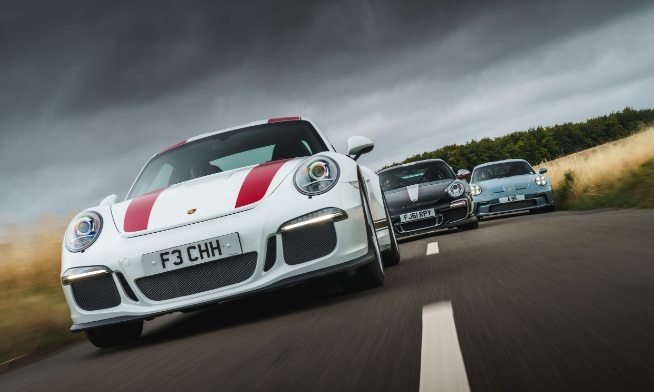
By those purely emotional metrics, the 997 GT3 RS 4.0 remains undefeated. In this ultimate Porsche 911 comparison, the RS 4.0 is the one that forces you to raise your game. It doesn’t flatter you with auto-rev matching or filter the road surface through complex digital algorithms. It requires perfect footwork, strong arms, and total concentration. When you reach the end of a demanding drive in the RS 4.0, the adrenaline spike is noticeably sharper than in the modern cars. You sit in the cabin, listening to the exhaust ping as it cools, replaying every shift and steering correction in your mind.
The S/T and the 911 R are undeniably spectacular, offering performance and refinement that the older car cannot match. But the GT3 RS 4.0 remains the high-water mark for pure, unfiltered automotive connection. It is not just the greatest car in this Porsche 911 comparison; it remains the greatest driver’s car produced in the 21st century.
If you are currently evaluating your portfolio and considering a luxury sports car investment, or if you simply want to discuss the intricacies of these legendary flat-six engines, the journey of automotive curation never truly ends. Reach out to our advisory team today to explore how we can help you source, finance, and secure the ultimate limited-edition centerpiece for your own collection.