
The Aftermath of the Polestar U.S. Sales Ban: Why the EV Innovator is Pivoting to Europe
In my ten years of analyzing the global automotive market, few regulatory shifts have been as abrupt and consequential as the recent restrictions placed on internet-connected vehicles. The landscape of American electric mobility is undergoing a massive transformation, and the most prominent casualty of this new era is now official. The Polestar U.S. sales ban will not be appealed.
For a brand that originally aimed to redefine luxury electric vehicles in America, the decision to abandon the market represents a stunning pivot. According to recent industry confirmations, the Swedish EV manufacturer, heavily backed by China’s Geely Auto, has conceded to the newly enacted Department of Commerce regulations. This effectively terminates the company’s ability to market and sell its vehicles stateside starting from the 2027 model year. The Polestar U.S. sales ban is a textbook example of how geopolitical tensions, cybersecurity concerns, and supply chain realities are colliding in the modern automotive sector.
Understanding the Root Cause of the Polestar U.S. Sales Ban
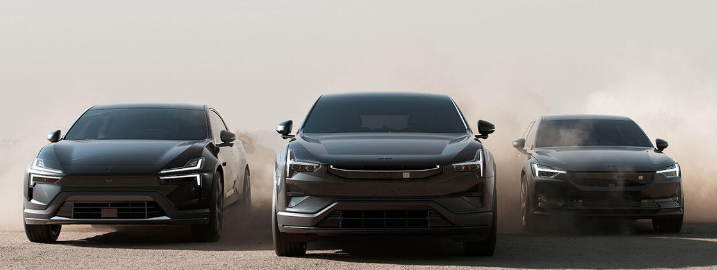
To understand why the Polestar U.S. sales ban is happening, we must look at the regulatory framework that triggered it. The Department of Commerce recently implemented the U.S. Connected Vehicles Rule, a stringent piece of legislation aimed at mitigating national security risks. Modern electric vehicles are essentially supercomputers on wheels. They are equipped with advanced telematics, high-definition cameras, LiDAR sensors, and continuous GPS tracking.
The federal government raised concerns that internet-connected vehicles linked to foreign adversaries—specifically China and Russia—could be weaponized for surveillance or disrupted via over-the-air (OTA) software updates. Because Polestar is majority-owned by Geely Auto, a massive automotive conglomerate based in China, it fell directly in the crosshairs of this legislation.
What makes the Polestar U.S. sales ban particularly fascinating from an industry perspective is the divergent fate of its corporate sibling, Volvo. Volvo is also majority-owned by Geely. However, Volvo managed to secure a special authorization from the U.S. government in May of 2026, allowing it to continue importing and selling its vehicles. Volvo’s deep, decades-long manufacturing footprint in the United States, notably its plant in South Carolina, and its distinct corporate data-handling restructuring likely played a role in this exemption.
Polestar, on the other hand, lacks that legacy U.S. infrastructure. Despite engaging in significant dialogue with federal regulators, company executives ultimately concluded that fighting the Polestar U.S. sales ban was a lost cause. The regulatory hurdles were simply too high, and the required software and hardware decoupling from Geely was financially unviable for a brand still fighting for global market share.
What This Means for Current Polestar Owners
Whenever a major automaker exits a market, consumer panic is inevitable. If you are currently driving a Polestar 2, you are likely wondering how the Polestar U.S. sales ban affects your daily life, your vehicle’s value, and your financial agreements.
Fortunately, the Department of Commerce rule primarily targets the marketing and sale of future model years (specifically 2027 and beyond). Existing drivers have been explicitly grandfathered in. A Polestar spokesperson recently confirmed that supporting the current customer base remains their highest priority. All existing warranties will remain in effect and will continue to be honored according to their original terms and conditions.
Whether you rely on Polestar service centers in Los Angeles, require routine EV maintenance in New York, or utilize charging networks across the tech hubs of Seattle and Austin, your physical service infrastructure remains intact. Volvo dealerships that currently service Polestar vehicles will continue to do so.
However, from a financial perspective, owners should be strategic. If you are currently locked into a luxury electric vehicle lease with Polestar, you can ride out your term without interruption. If you own the vehicle outright, be prepared for a potential shift in residual values. Market exits typically accelerate depreciation. Furthermore, you should consult with your provider regarding your electric vehicle insurance policies. While the cars are still road-legal and supported, specialized parts imported for repairs might see slight delays over the next few years, which can occasionally impact collision coverage rates and overall premium costs.
The Strategic Shift to the European Market
While the Polestar U.S. sales ban is a setback, it is far from a death knell for the company. In fact, from a purely financial standpoint, retreating from the United States allows Polestar to stop bleeding capital in a highly competitive, geographically sprawling market where they were struggling to gain a massive foothold.
Instead, Polestar is reallocating its resources to its home continent: Europe. The numbers justify this pivot. In the first quarter of 2026, a staggering 94 percent of Polestar’s global sales originated outside the United States. Europe has a much more mature EV infrastructure, stricter emissions regulations that artificially drive EV adoption, and a consumer base that is already highly loyal to Scandinavian automotive design.
By eliminating the marketing and logistical expenses associated with the U.S. market, Polestar can aggressively target key European battlegrounds like Norway, Germany, and the UK. The European market does not currently have the same stringent, blanket bans on Geely-backed software architecture, allowing Polestar to leverage its parent company’s immense scale to lower production costs. The Polestar U.S. sales ban, while publicly embarrassing, might inadvertently save the company’s balance sheet by forcing a more disciplined, localized sales strategy.
The Vehicles America Will Miss Out On
The most tragic casualty of the Polestar U.S. sales ban is the loss of automotive innovation for the American consumer. Polestar was just beginning to hit its stride in terms of bold, avant-garde design.
Take the Polestar 4 SUV coupé, for example. This vehicle made headlines globally for entirely eliminating the rear window, relying instead on a high-definition roof-mounted camera system linked to a digital rearview mirror. This controversial but innovative aerodynamic design choice offered unparalleled rear passenger headroom and a striking silhouette. The Polestar 4 was slated to be a major competitor in the mid-size luxury EV segment, but due to the Polestar U.S. sales ban, the models already on the ground may be the last of their kind sold on American soil.
Even more disappointing is the loss of the Polestar 6. Originally debuted as the O2 concept, the Polestar 6 is a breathtaking hardtop electric roadster designed to prove that zero-emission vehicles can possess the soul and striking proportions of a classic sports car. Packing over 800 horsepower and an 800-volt electrical architecture, it was meant to be the brand’s halo car. Because of the 2027 model year cutoff established by the Polestar U.S. sales ban, American driving enthusiasts will likely never see the Polestar 6 in their local showrooms.
How Competitors Will Capitalize on the Void
Nature abhors a vacuum, and the automotive industry is no different. The Polestar U.S. sales ban leaves a distinct gap in the premium, design-forward EV segment. Competitors are already positioning themselves to capture the buyers who are now forced to look elsewhere.
Brands like Lucid, Rivian, and Tesla stand to benefit from a purely domestic standpoint. Meanwhile, German titans—Porsche, BMW, and Audi—will happily absorb consumers looking for European driving dynamics combined with electric efficiency. If you are a buyer who was waiting for a 2027 Polestar, your pivot will likely involve looking into securing the best luxury EV to buy from these legacy automakers.
This shift also heavily impacts the automotive finance sector. Consumers who were researching auto loan rates for electric cars specifically tailored to Polestar’s unique pricing structure will now redirect that capital. We can expect to see aggressive financing incentives from competitors aiming to capture these orphaned buyers. BMW, for instance, has been highly competitive with its EV financing options, offering attractive lease rates on the i4 and iX to pull buyers away from startup brands. As the Polestar U.S. sales ban takes full effect, expect these conquest campaigns to intensify.
The Broader Implications for Global Auto Trade
Beyond the immediate impact on a single Swedish-Chinese brand, the Polestar U.S. sales ban serves as a massive warning shot across the bow of the global automotive industry. We are witnessing the end of the borderless, highly globalized auto market that dominated the 2010s.
Vehicles are no longer just mechanical objects; they are rolling nodes on a digital network. As long as vehicles rely on continuous data streams, cloud computing, and advanced AI mapping, national security will remain inextricably linked to automotive regulations. The Department of Commerce has set a precedent with the U.S. Connected Vehicles Rule. If you are an automaker relying on software, hardware, or telematics heavily rooted in a nation deemed a security risk, tariffs are no longer your biggest fear—total market exclusion is.
I predict that over the next five years, we will see a massive decoupling of automotive supply chains. Legacy automakers will be forced to create “sandboxed” software ecosystems specifically for the North American market, completely isolated from their global software divisions. This will drive up research and development costs significantly, which will ultimately be passed down to the consumer in the form of higher MSRPs. The Polestar U.S. sales ban is not an isolated incident; it is the blueprint for how digital trade wars will be fought in the automotive sector for the next decade.
Navigating the Future of the Luxury EV Market
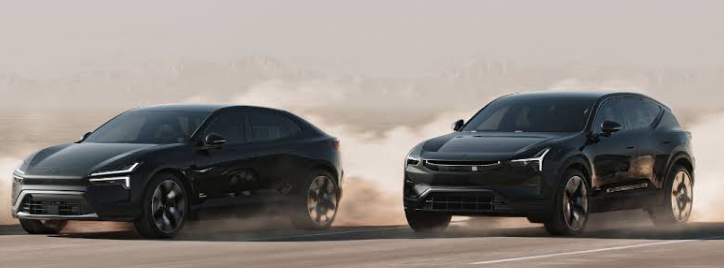
The sudden exit of a major player like Polestar forces a recalibration of how American consumers view electric vehicle ownership. It highlights the importance of understanding not just the battery range or the horsepower of a vehicle, but the corporate lineage and data architecture behind the dashboard.
For the American buyer, the EV market remains incredibly robust, even if it is slightly less diverse today than it was yesterday. The infrastructure is expanding, battery chemistry is improving, and the variety of domestic and allied-nation vehicles continues to grow. If you currently own a Polestar, enjoy the distinct, rare piece of automotive history you possess, secure in the knowledge that your service network remains intact. If you were planning on buying one in the future, it is time to pivot your research toward the excellent alternatives currently flooding the market.
Are you ready to explore the best alternatives in the premium EV space and find the perfect match for your lifestyle? Click here to subscribe to our weekly automotive insights, where we break down the latest luxury EV reviews, compare the top EV financing options, and help you navigate this rapidly changing industry with confidence.