
The Ultimate Purist’s Drop-Top: A Deep Dive into the 2026 Porsche 911 GT3 S/C
For over a quarter of a century, the periodic unveiling of a new track-focused 911 has been as predictable—and as eagerly anticipated—as a blockbuster action movie franchise. The formula has always been rigid and uncompromising: the new generation will be exactly like the outgoing one, just turned up to eleven. We expect more aerodynamic downforce, more lateral grip, more track-oriented thrills, and more explosive dynamic action. A fixed roof has always been central to that homologation-special ethos.
So, imagine the shockwaves when Weissach decided to do the unthinkable. What happens when a legendary track car loses its roof? It feels akin to a legendary rock band going on tour without their iconic frontman. Can the franchise survive the shift?
This is the exact existential question facing the highly controversial Porsche 911 GT3 S/C. Stripped of the very characteristic that has historically defined its existence—its rigid, track-centric closed cockpit—how can this vehicle possibly live up to the hallowed GT3 badge?
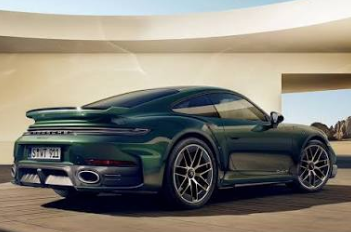
To find out, I packed my bags for Stuttgart, bringing a decade of automotive journalism experience and a healthy dose of skepticism. My mission was to answer three pivotal questions. First, is a track-focused convertible simply an oxymoron? Second, does the Porsche 911 GT3 S/C actually know what its purpose is? And finally, keeping an open mind for the ultimate heresy: could this roofless variant actually offer a better driving experience on the open road?
Addressing the Elephant in the Room: The GT Boss Speaks
When you sit down with Andreas Preuninger, the mastermind directing Porsche’s GT division, you don’t mince words. I immediately presented him with the purist’s primary grievance: a Porsche 911 GT3 S/C cannot possibly be a true GT product without a solid roof. Without missing a beat, Preuninger dismissed the notion entirely.
I will admit my own biases upfront. Historically, I have not been a fan of cabriolet versions of dedicated luxury sports cars. The engineering process of chopping off a roof usually introduces a cascade of compromises. You gain weight from structural bracing, you lose torsional rigidity resulting in cowl shake, and the car ultimately becomes less proficient at its core mission. Furthermore, when you aren’t tearing up the asphalt, the compromised packaging and excessive wind noise become grating. And from an aesthetic standpoint, high-performance convertibles rarely look as cohesive with the soft top up as their coupe counterparts—which, realistically, is how you will encounter the car 90 percent of the time whether you are navigating the rainy Pacific Northwest or parking at local US Porsche dealerships.
However, before diving into Preuninger’s meticulously calculated defense, we need to establish exactly what the Porsche 911 GT3 S/C is on paper. In the simplest terms possible, it is a GT3 Touring that has had its roof surgically removed. It utilizes the exact same 4.0-liter, 3996cc naturally aspirated flat-six engine. Purists will rejoice to hear that it is mated exclusively to a glorious six-speed manual gearbox—there is no PDK automatic option available here. Underneath, it boasts identical suspension hardware and aggressive geometry.
The raw metrics speak for themselves: 503 brake horsepower, a curb weight of 1,497 kilograms (roughly 3,300 lbs), a 0-62 mph sprint in just 3.9 seconds, and a terminal velocity of 194 mph. These performance figures are virtually identical to the manual Touring model, save for a microscopic weight penalty.
Frankly, I was astounded. How could a track-focused convertible with a fully automated roof mechanism—one that stows away in a mere 12 seconds—weigh just 36 kilograms more than the famously featherweight coupe? Initially, I suspected the Porsche 911 GT3 S/C was simply a cynical cash grab dreamt up by the marketing department to capitalize on the booming market for luxury sports cars. I was spectacularly wrong.
Engineering the Impossible: Weight Savings and Structural Integrity
Speaking with the engineering team revealed that the Porsche 911 GT3 S/C was born directly within the GT product division. However, Preuninger mandated two uncompromising conditions before green-lighting the project: the car had to weigh under 1,500 kilograms with all fluids aboard, and it had to meet the stringent dynamic standards of the GT department.
To conquer the weight challenge, Porsche’s engineers shamelessly raided the parts bin of the ultra-exclusive, lightweight 911 S/T. They integrated its carbon fiber doors, front fenders, frunk lid, rear anti-roll bar, and structural shear plate. They also bolted on a set of forged magnesium wheels. Carbon ceramic brakes (PCCB) are fitted as standard equipment, which is a massive unsprung weight saver, and large sections of the convertible roof mechanism are forged from magnesium rather than steel. These obsessive weight-saving measures successfully offset half of the mass gained by utilizing the heavier cabriolet body shell and the roof motors.
Solving the handling equation was equally complex. Retaining the double-wishbone front suspension was non-negotiable for steering precision. Therefore, the engineers took the wider, roofless Carrera 4 body-in-white and heavily modified it to accept the hardcore GT suspension mounting points. The result? The torsional stiffness of the Porsche 911 GT3 S/C is rated at a remarkable 27,000 Nm/degree. To put that in perspective, this is a 25 percent improvement over the previous generation 991 Speedster and puts it on par with dedicated closed-roof, bonded-aluminum sports cars.
Preuninger explained that the Carrera 4 shell was explicitly chosen over the rear-wheel-drive Carrera 2 because the vacant space normally occupied by the front differential allowed for an enlarged fuel tank—perfect for long-distance grand touring or spirited weekend blasts through California canyons. He confidently asserted that the chassis is profoundly rigid; so much so that he believes no driver could possibly detect any flex on public roads.
While the single-mass lightweight flywheel from the S/T was left on the shelf to give the Porsche 911 GT3 S/C a slightly more approachable and daily-drivable character, the aggressive aerodynamics remain. The car generates 16 kilograms of genuine downforce at high speeds, utilizing the exact same underbody aero strakes as the coupe, paired with an active Gurney flap on the rear deck to maintain high-speed stability. While 16kg might not sound like much compared to the massive wings of the standard RS models, Preuninger notes that it is a monumental advantage when you consider that traditional high-performance convertibles often generate between 150 and 200 kilograms of dangerous aerodynamic lift at autobahn speeds.
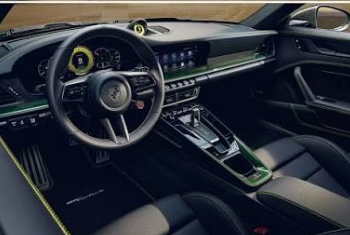
Furthermore, equipping the carbon fiber bucket seats is practically mandatory. The engineers specifically tuned the suspension damping to work harmoniously with the padding of these exact seats. In a car where tactile feedback through the chassis is paramount, these seats are the primary conduit for the famed GT3 experience. Interestingly, Preuninger also let slip that due to a slight rearward shift in weight distribution, the Porsche 911 GT3 S/C is actually the most drift-friendly vehicle in the current GT lineup.
Ultimately, Preuninger’s definition of the GT badge has evolved. It is no longer solely about lap times; it represents “the most connected, immersive driving experience for either road or track.”
First Impressions: The Brutal Reality of the Porsche 911 GT3 S/C
By the time the engineering deep-dive concluded, my preconceived notions were effectively shattered. On paper, the Porsche 911 GT3 S/C represents an absolute masterclass in automotive engineering, distilling everything a driving enthusiast desires into an open-air package. I was eager to grab the keys.
The following morning, I slid into our Slate Grey Neo test car. The interior is a masterclass in driver-focused ergonomics, as is expected from the brand. The tactile physical controls are perfectly placed, and the driving position is infinitely adjustable to suit any driver’s frame. Generally, a modern 911 is a car you can jump into and immediately feel comfortable pushing to the limit.
That was not my experience.
As I attempted to follow the photography car out of the hotel lot, I found myself completely out of sync. I struggled to coordinate the clutch and throttle, braking too aggressively and failing to shift with any semblance of grace. I couldn’t even seem to keep the steering dead center. To cap off my humiliation, I stalled the car while trying to pull out of a simple lay-by. I felt like a nervous teenager learning to drive a manual transmission sports car for the very first time.
Fortunately, the driving route took us an hour south of Stuttgart into the spectacular, sweeping A-roads of the German countryside—a perfect playground for luxury sports cars.
About an hour into the drive, I pulled into the opposite lane to overtake a slow-moving truck. Despite having a glorious 9,000-rpm redline at my disposal, I needed to grab third gear mid-maneuver. As my right hand left the steering wheel to shift, the Porsche 911 GT3 S/C encountered a slight camber change in the road. Because my left hand moved by a fraction of a millimeter without the stabilizing force of my right, the hyper-sensitive front axle darted aggressively, following the camber and causing the car to deviate sharply.
Make no mistake: despite its classic styling and open roof, the Porsche 911 GT3 S/C is astonishingly fast. The speeds at which you execute overtakes are serious, and any unintended deviation in your trajectory is heart-stopping. Once safely back in my lane, I took a deep breath. What was going wrong?
Finding the Rhythm: A Thoroughbred on the Open Road
Then, it clicked. I realized my muscle memory was completely calibrated to older, heavy classic cars where every input—steering, braking, shifting—requires immense physical force and wide movements.
The Porsche 911 GT3 S/C does not want to be manhandled. It is a finely tuned, razor-sharp precision instrument.
Navigating the tighter, twistier sections of the Schwäbische Alb region highlighted another crucial trait of this vehicle: it is not a cruiser. If you are looking for a relaxed convertible to casually roll down to the beach, there are plenty of standard Carrera models—and attractive exotic car lease deals—that will suit you better.
The Porsche 911 GT3 S/C is like a thoroughbred racehorse trapped in a starting gate. When forced to trundle along at civilian speeds behind local traffic, the car feels restless. The chassis feels taut, the suspension transmits every pebble, and the drivetrain hums with impatient energy. Every control is engineered to provide maximum bi-directional communication, meaning the inputs required from the driver are incredibly minute. If you drive this car at anything less than seven-tenths of its capability, there is a palpable tension between the machine, the asphalt, and the driver. The damping, steering, and that magnificent naturally aspirated flat-six only find their harmonious fluency when you start to genuinely push them.
It took a full day of driving to recalibrate my brain to the telepathic language of this chassis. By the late afternoon, with the roof down and the unmistakable howl of the flat-six echoing off the canyon walls, the experience transformed into pure magic.
Market Outlook and The Final Verdict
Looking at the 2026 Porsche 911 GT3 S/C price and specs, this vehicle occupies a fascinating niche in the ultra-competitive luxury sports car market. It is priced at a premium, requiring buyers to navigate premium auto financing or specialized Porsche sports car insurance, but what you receive is entirely peerless. While competitors are moving toward heavy, hybridized, turbocharged powertrains, this car stands as a glorious tribute to mechanical purity and atmospheric breathing.
Is a track-focused convertible an oxymoron? Perhaps historically. But Porsche has engineered their way around physics to create a machine that sacrifices none of the visceral GT3 dynamics while exponentially increasing the auditory and sensory thrill of the drive. The Porsche 911 GT3 S/C knows exactly what it is: an uncompromising, hyper-responsive canyon carver that rewards precision above all else.
As I drove the final stretch toward the airport, leaving a small village at 30 km/h, the car was once again pulling at its leash, quivering with anticipation. Ahead of me, the derestricted speed limit sign appeared, framing a wide, deserted ribbon of perfect tarmac.
If you truly value the lost art of driving, this is the machine you have been waiting for. Contact your local premium dealership today to explore allocation availability for the 2026 Porsche 911 GT3 S/C—because raw, naturally aspirated masterpieces like this will not be around forever.