Pushing the Limits: How the Porsche Cayenne Electric Paced the World’s Largest Aircraft
For decades, the realms of automotive engineering and aerospace technology have operated on parallel but strictly separated tracks. Cars and airplanes might share a brief, fleeting moment of synchronized motion on a runway, but these encounters rarely last more than a fraction of a minute. However, the rulebook for high-performance mobility is being rapidly rewritten. In a groundbreaking demonstration of power, stability, and sheer engineering audacity, the Porsche Cayenne Electric recently shattered conventional expectations by pacing alongside the Stratolaunch Roc—the world’s largest flying aircraft.
As an automotive industry professional who has spent the last decade analyzing the evolution of the luxury electric SUV market, I have witnessed countless manufacturer stunts. We are all familiar with the gimmicky plane-versus-car drag races designed for rapid social media consumption. But this event was entirely different. By taking the Porsche Cayenne Electric to the legendary Mojave Air and Space Port in California, engineers sought to gather critical telemetry on high-speed stability, aerodynamic disruption, and electric vehicle battery efficiency under extreme, sustained loads.
The Convergence of Automotive and Aerospace Engineering
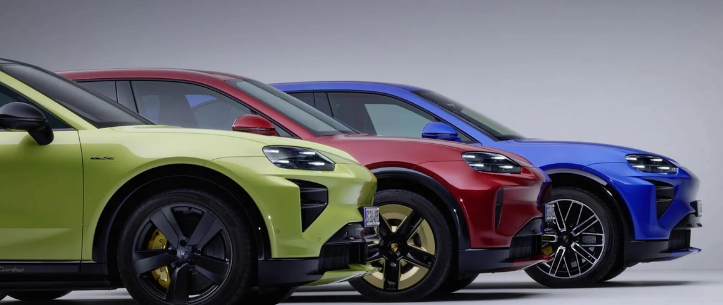
To truly appreciate the magnitude of this test, we have to look closely at the machines involved. The Porsche Cayenne Electric represents the absolute pinnacle of the modern high-performance EV. Generating a staggering 1139 horsepower, this electric SUV is not just about straight-line acceleration; it is an exercise in sophisticated thermal management, torque vectoring, and high-speed dynamic stability. As the luxury electric vehicle market continues to mature into 2026, the expectations placed on premium electric cars have skyrocketed. Consumers looking to buy a luxury EV demand more than just zero-emissions commuting; they expect uncompromising, track-ready performance.
On the other side of this high-speed equation is the Stratolaunch Roc. This is not a standard commercial airliner. The Roc is a colossal, twin-fuselage testbed aircraft utilized by one of the world’s leading hypersonic flight testing firms. Its primary mission is to carry and launch rocket-powered aerospace vehicles at high altitudes. Powered by six massive Pratt & Whitney engines, the aircraft commands the tarmac with a wingspan longer than a professional football field. The objective of this pairing was unprecedented: the engineers wanted to determine if the most powerful Porsche Cayenne Electric ever built could dynamically match the acceleration, rotation speed, and landing deceleration of this aerospace titan.
The Proving Grounds: Mojave Air and Space Port
Location is everything when testing the absolute limits of mechanical capability. The Mojave Air and Space Port serves as the premier hub for both experimental aerospace testing and advanced automotive aerodynamic testing. The arid climate, massive runways, and predictable atmospheric conditions make it the ideal environment for a luxury EV test in California. When testing a high-performance EV at speeds exceeding 160 mph, you need miles of unobstructed, perfectly graded tarmac.
The runway at Mojave provided the perfect canvas for the Porsche Cayenne Electric to stretch its legs. In the world of high-speed automotive testing, crosswinds, runway texture, and ambient temperature play massive roles in how a vehicle’s suspension and drivetrain behave. The Porsche Cayenne Electric was subjected to these variables while operating within mere feet of an aircraft generating immense jet blast and wake turbulence. This is exactly why the Mojave facility was chosen—it is an unforgiving environment where only the most robust engineering architectures survive.
Behind the Wheel: The Human Element of High-Speed Precision
Even with highly advanced driver-assistance systems and instantaneous electric torque, a machine is only as capable as the person behind the wheel. For this highly coordinated operation, former Porsche factory driver Patrick Long was placed in the driver’s seat of the Porsche Cayenne Electric. Piloting an SUV at 160 mph is demanding under normal circumstances; doing so while maintaining a precise formation with a six-engine aircraft requires nerves of steel and an intimate understanding of vehicle dynamics.
Long pushed the Porsche Cayenne Electric through two grueling takeoff runs. The objective was to pace the Stratolaunch Roc perfectly until it reached its rotation speed—the exact moment the aircraft lifts its nose to take flight. With 1139 horsepower on tap, the electric powertrain delivered relentless, linear acceleration, effortlessly matching the thrust of the Pratt & Whitney jet engines.
“I had no doubts about the power of the Cayenne, but I was a bit apprehensive regarding how reactive the car would be to inputs, especially at speed,” Long noted following the test. At speeds pushing beyond 160 mph, steering inputs become hyper-sensitive. A millimeter of movement on the steering wheel translates to significant lateral shifts on the tarmac. The fact that the Porsche Cayenne Electric remained profoundly stable while pushing through the turbulent air surrounding the Roc speaks volumes about the vehicle’s adaptive air suspension and active aerodynamic systems.
Threading the Needle: The Ultimate Aerodynamic Challenge
While the takeoff runs were a spectacular display of raw torque, the landing phase introduced an entirely different set of challenges. As the Stratolaunch Roc descended, Patrick Long had to pilot the Porsche Cayenne Electric in reverse order, pacing the aircraft as it touched down. Because of the Roc’s unique twin-fuselage design, the goal was to thread the Porsche Cayenne Electric directly beneath the center wing section, navigating between the two massive hulls.
This required flawless timing and unparalleled communication. According to Long, the sheer scale of the aircraft made visual references nearly impossible to gauge. “Surprisingly, the landings were a lot harder to time just right. The plane is so big that you don’t really have effective visual references for timing when to merge with the plane onto the runway,” he explained.
To bridge this communication gap, the automotive and aerospace teams integrated their operations. Shauntel Williams and John McKinney, the crew chiefs for the six-engine airplane, rode directly inside the cabin of the Porsche Cayenne Electric. Armed with live radio links to the flight crew, they provided Long with real-time telemetry, ensuring the electric SUV would neither overshoot nor undershoot the colossal aircraft. The cabin of the Porsche Cayenne Electric acted as a mobile command center, demonstrating incredible acoustic insulation as the crew communicated clearly despite the deafening roar of six jet engines operating just outside the windows.
Aerodynamic Synergy and Wake Turbulence Management
One of the most fascinating engineering discoveries of this test involved the aerodynamic interplay between the SUV and the aircraft. When a massive plane like the Roc moves through the air, it creates complex wake turbulence, high-pressure zones, and aggressive vortices. Driving any standard vehicle into this turbulent wake at 160 mph would typically result in severe instability, lift, or loss of traction.
However, engineers and FAA coordinators on-site observed a remarkable phenomenon. As the Porsche Cayenne Electric threaded the gap between the twin fuselages, it entered an aerodynamically “quiet area.” The specific design of the Stratolaunch Roc, combined with the active aerodynamics of the Porsche Cayenne Electric—which automatically adjusts its rear spoiler and ride height for optimal downforce—resulted in a stabilized slipstream. The electric SUV sliced through the air with minimal drag, allowing the suspension to remain settled and the tires to maintain a flawless contact patch with the runway.
Shattering Range Anxiety: Battery Efficiency Under Extreme Load
For years, critics of electric vehicles have pointed to high-speed driving as the ultimate Achilles’ heel for battery longevity. It is a well-documented physical law that aerodynamic drag increases with the square of velocity. Therefore, driving any EV at 160 mph typically results in a catastrophic depletion of battery charge. This is a primary concern for consumers researching premium electric SUVs or analyzing electric vehicle battery efficiency.
Yet, this rigorous test at the Mojave Air and Space Port delivered a masterclass in modern thermal management and energy deployment. Over the course of four high-speed, flat-out runs, the Porsche Cayenne Electric consumed a mere 13 percent of its battery capacity. This is an astonishing metric. To continuously deploy 1139 horsepower, overcome immense high-speed drag, and run heavy climate and communication systems inside the cabin—all while sipping just 13 percent of the battery—proves that the power-management algorithms in the Porsche Cayenne Electric are years ahead of the current industry standard.
For those tracking high-performance EV trends, this efficiency rating is a game-changer. It signals that high-end manufacturers have successfully decoupled extreme performance from severe range penalties. The battery architecture within the Porsche Cayenne Electric utilizes highly advanced cell chemistry and a robust cooling network that prevents thermal throttling, ensuring that the voltage remains consistent whether you are doing a grocery run or chasing a hypersonic launch platform down a runway.
What This Means for the Luxury Electric SUV Market
As we navigate the automotive landscape of 2026, the luxury electric SUV market is becoming increasingly fiercely competitive. Brands are no longer just competing on range and basic luxury appointments; they are fighting for supremacy in high-performance capability. The Porsche Cayenne Electric is setting a formidable benchmark. By proving its mettle against an aerospace giant, Porsche is sending a clear message to driving enthusiasts: the era of the electric vehicle requiring compromises is officially over.
When buyers look into premium electric cars, they are heavily evaluating long-term reliability and extreme capability. The engineering data gathered from the Mojave runway will directly influence the software updates and hardware configurations of consumer models. The suspension damping rates used to stabilize the Porsche Cayenne Electric at 160 mph will translate into safer, more refined highway driving for the everyday consumer. The thermal management that kept the battery cool during maximum discharge will equate to faster charging times and longer battery lifespans for the public.
Furthermore, this test highlights the shifting dynamics of automotive marketing and R&D. We are moving away from closed-circuit lap times as the sole metric of a vehicle’s worth. By operating the Porsche Cayenne Electric alongside the Stratolaunch Roc, we see a broader application of EV technology. It proves that electric SUVs can serve as reliable utility vehicles in extreme industrial and aerospace environments.
The Evolution of Performance and Reliability
With 1139 horsepower at its disposal, the Porsche Cayenne Electric is a marvel of power density. In traditional internal combustion engines, producing that level of power requires massive displacement, forced induction, and complex, heavy drivetrains. The electric motors in the Porsche Cayenne Electric achieve this with far fewer moving parts, delivering power with a microscopic reaction time that mechanical linkages simply cannot match. This allows the vehicle to make thousandth-of-a-second adjustments to power delivery at each individual wheel, a feature that was undoubtedly crucial for Patrick Long as he navigated the crosswinds and jet blast on the Mojave tarmac.
This event also paints a bright picture for the broader ecosystem of high-performance EVs. As the technology inside vehicles like the Porsche Cayenne Electric trickles down to more accessible market segments, we will see a widespread increase in automotive safety, efficiency, and driving dynamics. The luxury electric SUV is no longer just a status symbol; it is a rolling laboratory for the future of transportation.
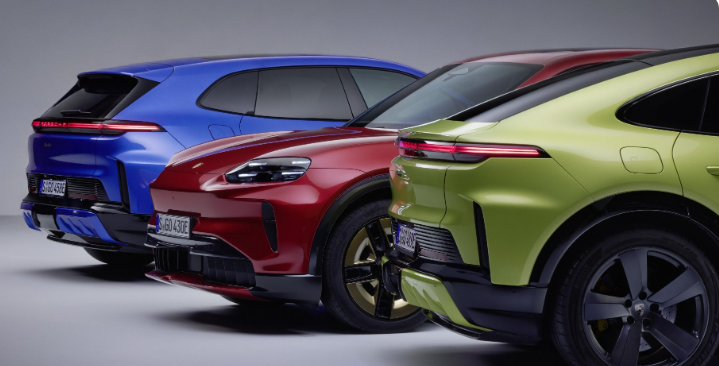
The successful integration of the Porsche Cayenne Electric into the highly regulated, high-stakes environment of experimental aerospace testing gives us immense hope for the future of the automotive industry. It bridges the gap between science fiction and driveway reality. It proves that the transition to electric mobility does not mean sacrificing the thrill, power, and awe-inspiring capabilities that have made us fall in love with cars in the first place.
The Road Ahead
To witness the Porsche Cayenne Electric operate in perfect harmony with the world’s largest flying aircraft is to witness the absolute leading edge of modern engineering. It is a testament to the meticulous design, relentless testing, and bold vision that continues to drive the high-performance automotive sector forward. The barriers between what a car can do and what an aircraft requires are blurring, and electric propulsion is the catalyst for this new frontier.
If you are captivated by the cutting-edge innovations shaping the future of driving, now is the time to experience this revolution firsthand. Whether you are exploring the luxury electric vehicle market, researching high-performance EVs, or simply want to feel the unmatched thrill of 1139 electric horsepower, I highly encourage you to get behind the wheel. Visit your local premium automotive dealer today to schedule a test drive, and discover how the groundbreaking engineering of the modern electric SUV can elevate your daily driving experience to aerospace levels of precision.