
Behind the Polestar US Sales Ban: An Expert’s Take on the Geely Exodus and the Future of Connected Cars
In my decade of navigating the labyrinth of global automotive regulations, manufacturing logistics, and supply chain dynamics, few federal actions have sent shockwaves through the industry quite like the impending Polestar US sales ban. After months of high-stakes, closed-door discussions with the U.S. Department of Commerce, the Swedish-born electric vehicle manufacturer—backed heavily by China’s Geely automotive group—has officially conceded. Polestar has confirmed they will not appeal the regulatory ruling. Consequently, by model year 2027, the brand will execute a formal, involuntary withdrawal from the domestic auto market.
For those of us who have closely monitored EV regulatory compliance and the tightening grip of national security policies on automotive technology, this Polestar US sales ban is a watershed moment. It represents a paradigm shift in how the United States evaluates the origin of a vehicle. Regulators are no longer just looking at where a car is assembled; they are forensically examining who writes the code and who controls the data. While the company technically had an avenue to take the fight to the federal courts, executives realized the futility of the battle. The reality of the Polestar US sales ban reflects a broader geopolitical fracturing of the global auto industry. In this comprehensive breakdown, I will unpack exactly how we got here, what it means for stranded dealerships, and why this regulatory hammer fell on Polestar while sparing its corporate sibling.
The Anatomy of the Polestar US Sales Ban
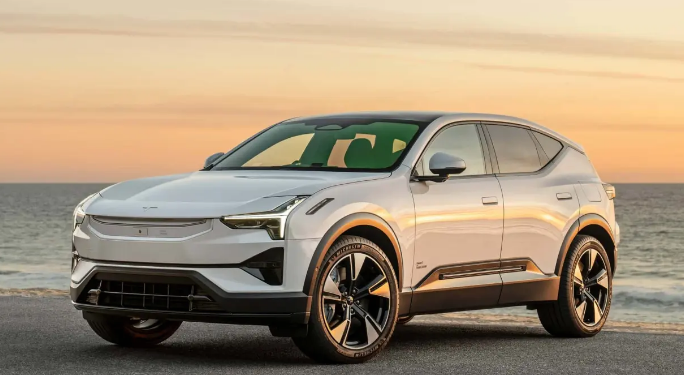
When the Bureau of Industry and Security (BIS) under the Department of Commerce finalized the Connected Vehicle Rule, it laid the unyielding groundwork for the Polestar US sales ban. This legislation essentially targets vehicles equipped with Chinese connected vehicle technology, specifically honing in on hardware and software that communicate with external networks. To fully grasp the severity of the Polestar US sales ban, we have to look at the phased regulatory deadlines established by the federal government.
Modern electric vehicles are, for all intents and purposes, rolling supercomputers. They rely on Vehicle Connectivity Systems (VCS) for cellular, Wi-Fi, and satellite communications, as well as Automated Driving Systems (ADS) that utilize high-definition cameras, LiDAR, and continuous data telemetry. The Department of Commerce connected vehicle rule dictates that any software linked to a “foreign adversary”—namely China or Russia—is strictly prohibited starting with model year 2027. Furthermore, a sweeping hardware ban will take effect for model year 2030. Because Polestar relies heavily on the engineering architecture and software stacks developed by its parent company, Geely, achieving compliance by the software deadline was virtually impossible, making the Polestar US sales ban an inevitability.
Regulators from both the Biden and Trump administrations have repeatedly cited automotive national security risks as the primary driver behind these aggressive measures. The inherent fear is that state-sponsored actors could exploit the cameras, microphones, and GPS tracking technology built into these connected vehicles to map American infrastructure or intercept sensitive consumer data. Despite Polestar’s arguments that their vehicles are secure and that the data is siloed, the deep-rooted corporate control exerted by Geely is what led directly to the Polestar US sales ban.
The Volvo Exception: Navigating Around the Polestar US Sales Ban
For industry analysts, the glaring contrast highlighted by the Polestar US sales ban is the treatment of Volvo Cars. Both Volvo and Polestar share the exact same Chinese parent company, Geely automotive group. They even share manufacturing facilities, with the Polestar 3 rolling off the exact same assembly line as Volvo models at the Charleston, South Carolina plant. So, why did Volvo receive a special pass while the Polestar US sales ban proceeded without mercy?
The answer lies in corporate governance and the nuanced application of EV regulatory compliance. In May 2026, Volvo successfully secured a rare Volvo Commerce Department exemption to continue selling connected cars in the United States from the Office of Information and Communications Technology and Services. Volvo managed to prove to regulators that despite its ownership structure, it operates with a highly independent governance model, a geographically distinct data security firewall, and a massive legacy U.S. operational footprint. Their shares trade independently of Geely, and they successfully demonstrated that their software management could be isolated from Chinese jurisdiction.
Polestar, on the other hand, is inextricably linked to Geely’s core engineering ecosystem. The brand relies on shared platforms and software architecture that spans across multiple Geely brands in Asia. During their extensive dialogue with U.S. authorities, Polestar could not sufficiently prove that they could sever these digital umbilical cords by the 2027 deadline. The regulators determined that a brand merely “invested in” by a Chinese entity could be managed, but a brand “controlled by” and technologically dependent on a Chinese entity posed an unacceptable risk, ultimately cementing the Polestar US sales ban.
Dealership Crisis: The Ground-Level Fallout of the Polestar US Sales Ban
Beyond the geopolitical theater, the 32 franchised Polestar dealerships across the United States are bearing the immediate, brutal brunt of the Polestar US sales ban. Establishing a premium EV dealership requires millions of dollars in capital investment for specialized charging infrastructure, boutique showroom build-outs, and highly trained service personnel. Now, these local American business owners find themselves financially stranded by the Polestar US sales ban.
In the U.S., stringent state franchise laws dictate that if an automaker departs the market—and is not facing bankruptcy—they are legally obligated to compensate their franchise networks. In my experience consulting with retail automotive networks, when a manufacturer abruptly exits, operators often have no choice but to consult a car dealership lawsuit lawyer to recoup their sunken investments and fight for the fair market value of the franchise. The liability for the automaker is staggering. Polestar has publicly stated they are not terminating their dealerships outright and are working to “manage this transition,” but the financial mechanics of unwinding a 32-store network will be incredibly complex.
Furthermore, holding unsellable, depreciating inventory drastically impacts the commercial auto insurance premiums for these lots. To mitigate the bleeding in the wake of the Polestar US sales ban, dealers are currently scrambling to offer the best electric vehicle lease deals to move existing inventory before the model year 2027 restrictions officially take hold. Dealership finance departments are rapidly restructuring their electric vehicle finance options, attempting to incentivize rapid liquidation of the Polestar 2 and Polestar 3 models currently sitting on American soil.
Tariffs and Supply Chain Precursors to the Polestar US Sales Ban
It is critical to note that the U.S. market was already becoming a hostile environment for the brand even before the Polestar US sales ban became official. The regulatory writing has been on the wall for several years. In a move that severely crippled their volume projections, the automaker was forced to discontinue U.S. sales of its most popular model, the Polestar 2 sedan, just last year.
The death of the Polestar 2 in America was driven by a punitive 100 percent tariff levied on Chinese-built electric vehicles. Because the Polestar 2 was sourced directly from manufacturing plants in mainland China, the import taxes made the vehicle completely uncompetitive from a pricing standpoint. To counter this, the company attempted to pivot by shifting production of the flagship Polestar 3 to the Volvo plant in South Carolina, and sourcing the upcoming Polestar 4 from a Renault-Korea facility in South Korea.
However, the Department of Commerce connected vehicle rule fundamentally altered the compliance landscape. The government established a new precedent: the origin of the software matters far more than the physical location of the final assembly line. Building the car in South Carolina offered no protection when the digital brain of the vehicle was traced back to Hangzhou. This rapid shift in automotive supply chain regulation made the sudden Polestar US sales ban the final nail in the coffin for their North American ambitions.
Strategic Pivot: Life After the Polestar US Sales Ban
For a brand that originally positioned the United States as a primary pillar of its global expansion strategy, surviving the Polestar US sales ban means aggressively pivoting to more receptive territories. Polestar executives have made it abundantly clear that they will now redirect their capital investments into regions where they maintain a strong brand position and a viable path to profitability.
Europe is now the undisputed focal point. To mitigate the financial sting of the Polestar US sales ban, the automaker is expanding its footprint in the EU, rolling out new models, and localizing its manufacturing base. For example, the upcoming Polestar 7—a premium compact SUV slated for 2028—will be produced at a new Volvo Cars facility currently under construction in Kosice, Slovakia. This European localization strategy insulates them from the U.S.-China trade war while catering to a market with aggressive EV adoption mandates.
Additionally, Polestar is expected to target Southeast Asia, Latin America, and the Middle East to recapture the volume lost in North America. In Europe, Polestar will lean heavily into B2B enterprise partnerships, outfitting their digital platforms with advanced ev fleet management software to attract massive commercial buyers and rental agencies. By capturing the European corporate fleet sector, they hope to offset the tremendous retail losses incurred by the Polestar US sales ban.
The Wider Industry Impact of the Polestar US Sales Ban
The shockwaves of this regulatory action extend far beyond a single Swedish-Chinese brand. For global automakers, the Polestar US sales ban serves as a massive warning shot regarding the future of smart car data privacy and international trade. Any automotive conglomerate with a Western badge but an Eastern owner is now forced to re-evaluate their entire software supply chain.
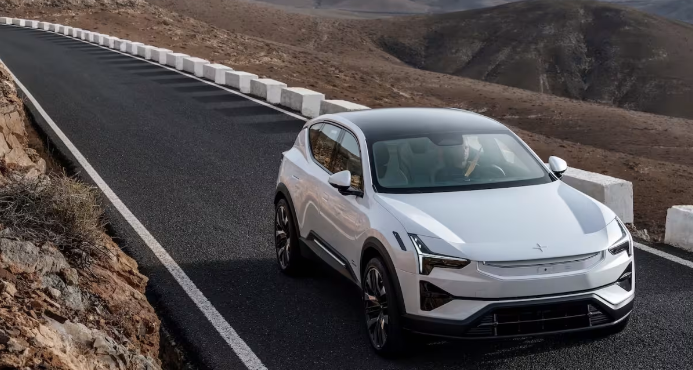
Other brands with ties to Chinese connected vehicle technology, such as Lotus (also owned by Geely), are now directly in the crosshairs of the Department of Commerce. Even legacy European titans are not entirely immune to this scrutiny. Consider that Geely’s founder personally holds a nearly 10% stake in the parent company of Mercedes-Benz. While Mercedes operates freely in the U.S. today, the evolving definition of “control versus investment” under the Commerce Department’s framework means every OEM must tread carefully.
As a result of this regulatory paradigm shift, we are seeing a massive spike in demand for automotive compliance consulting from other OEMs who fear they might be next. Manufacturers are racing to audit their proprietary software stacks, source non-Chinese telematics control units, and untangle their global engineering hubs to avoid a fate similar to the Polestar US sales ban.
Ultimately, the Polestar US sales ban is more than just a localized market exit; it is a defining moment in the modern history of the automotive industry. It officially marks the point where vehicle cybersecurity and national security concerns superseded free trade and traditional manufacturing footprints. For Polestar, the focus must now shift to surviving and thriving in Europe and emerging markets, leaving behind a fractured American dealership network and a cautionary tale for the rest of the sector. For the American consumer, this exit limits premium EV choices in a market that desperately needs competition to drive down prices. For the broader industry, it is a stark reminder that the digital architecture of a vehicle is now subject to the most rigorous geopolitical vetting in history.
Are you a dealership operator, automotive supply chain professional, or enterprise fleet manager trying to navigate this rapidly changing regulatory landscape? Do not wait until the next wave of compliance deadlines catches your business off guard—connect with my team today for exclusive, expert-level consulting on connected vehicle legislation and future-proofing your auto retail strategy.