
Engineering the Impossible: When the Porsche Cayenne Electric Met the Stratolaunch Roc
The realms of aviation and automotive engineering rarely intersect for more than a fleeting moment. An aircraft dominates the vertical space, while a high-performance vehicle commands the terrestrial. Yet, the history of mobility is punctuated by rare, defining instances where these two worlds travel side-by-side. As an industry analyst who has spent the last decade evaluating automotive performance limits, I have witnessed countless marketing stunts masquerading as engineering tests. However, the recent tandem testing of the Porsche Cayenne Electric alongside the Stratolaunch Roc at the Mojave Air and Space Port is a paradigm shift. This was not a gimmicky drag race engineered for a fleeting social media clip; it was a rigorous, high-speed stability validation that redefines the expectations for a high-performance electric SUV.
To understand the magnitude of this event, we must look beyond the spectacle. The Porsche Cayenne Electric is shouldering the immense legacy of Stuttgart’s premier SUV line, carrying it into a fully electrified era. By pitting this battery-electric SUV against the world’s largest flying plane, Porsche executed a masterclass in dynamic testing, proving that their most powerful model to date can sustain extreme velocities and aerodynamic anomalies without faltering.
The Anatomy of a High-Performance Electric SUV
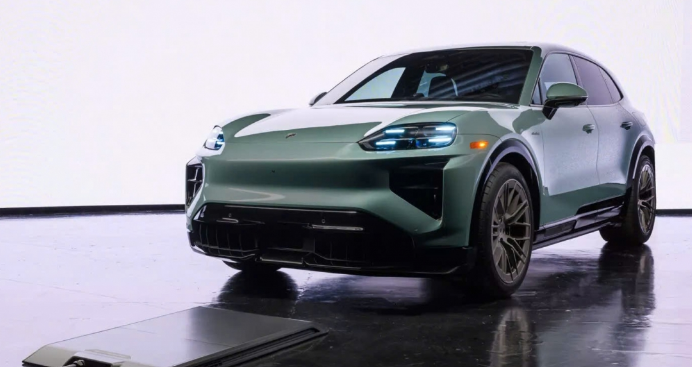
When evaluating the Porsche Cayenne Electric, the sheer numbers demand respect. With 1,139 horsepower on tap, this is not merely a luxury electric vehicle meant for comfortable suburban commutes. It is an engineering marvel designed to deploy massive amounts of torque instantaneously. In the burgeoning landscape of EV performance testing, generating peak horsepower is relatively straightforward; maintaining that power under extreme stress without catastrophic thermal degradation is the true hallmark of automotive mastery.
The Porsche Cayenne Electric utilizes a heavily optimized battery architecture and advanced thermal management systems to ensure that the electric motors deliver relentless power. During the Mojave tests, the goal was to pace the massive Stratolaunch aircraft all the way up to its rotation speed. In aviation terms, rotation speed (Vr) is the exact moment the nose gear leaves the runway, requiring the aircraft to achieve maximum ground velocity. To match this, the Porsche Cayenne Electric had to seamlessly accelerate beyond 160 mph.
For a vehicle of this footprint to exceed 160 mph while remaining utterly planted to the tarmac speaks volumes about its active aerodynamic suite and torque vectoring capabilities. In the competitive high-performance electric SUV market, buyers are increasingly scrutinizing sustained output. Whether consumers are looking to buy an electric SUV online or comparing luxury EV insurance rates for high-output models, the underlying metric of value is reliability under load. The Porsche Cayenne Electric demonstrated that it can endure the harshest acceleration profiles without triggering the power-limiting safety protocols that plague lesser electric drivetrains.
Mojave Air and Space Port: The Ultimate Proving Ground
The decision to execute this test at the Mojave Air and Space Port in California was entirely strategic. As a hub for commercial spaceflight and hypersonic flight testing, Mojave provides the necessary infrastructure for operations that sit on the bleeding edge of physics. The location is synonymous with aerospace innovation, making it the perfect backdrop for evaluating a flagship luxury electric vehicle that aims to rewrite the rulebook on terrestrial speed.
Testing in Mojave, California, offers unique environmental challenges. The high desert air, varying crosswinds, and extreme surface temperatures create a crucible for electric vehicle battery performance. For the Porsche Cayenne Electric to perform consistently here, its internal systems had to actively manage cell temperatures, ensuring the battery pack did not overheat during consecutive V-max runs. The integration of advanced driver assistance systems (ADAS) and chassis control in the Porsche Cayenne Electric was put to the ultimate test against the unpredictable aerodynamic wash generated by a multi-engine aircraft operating at full takeoff thrust.
The Stratolaunch Roc: A Colossus of the Skies
To truly appreciate the scale of this engineering exercise, one must understand the Stratolaunch Roc. This is not a standard commercial airliner. The Roc is a bespoke testbed aircraft utilized primarily by the hypersonic flight testing firm to launch rocket-powered vehicles from high altitudes. Featuring a staggering twin-fuselage design and powered by six Pratt & Whitney engines, the Roc holds the title of the world’s largest aircraft by wingspan.
When those six engines spool up, the sheer volume of displaced air creates localized weather systems on the runway. The jet wash, vortex generation, and acoustic violence are enough to unsettle most road vehicles. Porsche’s objective was to see if the Porsche Cayenne Electric could maintain high-speed stability when subjected to this chaotic environment. The luxury electric vehicle was essentially driving through a hurricane of jet exhaust and turbulent air. The fact that the Porsche Cayenne Electric tracked straight and true at 160 mph alongside this mechanical leviathan is a testament to its highly calibrated air suspension and active anti-roll stabilization.
Precision and Communication: The Human Element at 160 MPH
Hardware alone does not guarantee a successful test; the human element remains the most critical variable. Behind the wheel of the Porsche Cayenne Electric was former Porsche factory driver Patrick Long. A veteran of endurance racing, Long possesses the precise car control required to position a high-performance electric SUV mere yards away from a moving aerospace monument.
Interestingly, Long noted that keeping up with the aircraft during takeoff was not his primary concern. “I had no doubts about the power of the Cayenne, but I was a bit apprehensive regarding how reactive the car would be to inputs, especially at speed,” Long explained. The instantaneous torque delivery of the Porsche Cayenne Electric allowed it to match the Pratt & Whitney-powered aircraft effortlessly. The real challenge emerged during the landing sequences.
As the Stratolaunch Roc descended, Long was tasked with threading the Porsche Cayenne Electric directly beneath the aircraft, positioning the SUV between the twin-fuselage setup as the plane touched down. Long remarked, “Surprisingly, the landings were a lot harder to time just right. The plane is so big that you don’t really have effective visual references for timing when to merge with the plane onto the runway.”
This level of precision required military-grade coordination. To achieve this, Stratolaunch crew chiefs Shauntel Williams and John McKinney rode shotgun inside the Porsche Cayenne Electric. Operating as onboard tactical navigators, they maintained constant, real-time radio communication with the flight crew above. This ensured the Porsche Cayenne Electric would neither overshoot nor undershoot the immense aircraft. Having an FAA coordinator on site underscored the severity and highly regulated nature of this test. The seamless integration of automotive driving dynamics and aerospace communication protocols highlighted the advanced, interference-free cabin environment of the Porsche Cayenne Electric, proving its viability as a highly insulated luxury electric vehicle.
Aerodynamic Synergy and Battery Efficiency
One of the most fascinating discoveries from this joint exercise was the aerodynamic interaction between the two machines. As the Porsche Cayenne Electric threaded the needle between the two massive fuselages of the Roc during the landing phase, the SUV entered a highly unique aerodynamic zone. Porsche engineers reported that the Porsche Cayenne Electric actually benefited from an aerodynamically quiet area generated between the twin hulls. This slipstream effect essentially shielded the high-performance electric SUV from extreme aerodynamic drag, allowing it to maintain high speeds with less energy expenditure.
This brings us to the most crucial data point of the entire test: battery consumption. High-speed runs are notoriously brutal on electric vehicle range. Pushing a heavy, bluff-bodied SUV past 160 mph usually results in massive energy depletion due to the exponential increase in aerodynamic drag. Yet, after executing four grueling, flat-out runs pacing the Stratolaunch aircraft, the Porsche Cayenne Electric consumed a mere 13 percent of its battery charge.
This efficiency metric is nothing short of revolutionary. It completely dismantles the lingering anxiety surrounding electric vehicle battery performance under heavy loads. Consuming only 13 percent of capacity across four V-max sprints demonstrates the extraordinary energy density of the battery pack and the hyper-efficiency of the powertrain inverts and motors. For prospective buyers evaluating luxury EV financing options or seeking to buy an electric SUV online, this data provides immense peace of mind. It proves that the Porsche Cayenne Electric can deliver uncompromising, track-level performance without instantly draining its reserves, a vital consideration for anyone investing in a premium EV.
The Evolution of the High-Performance Electric SUV Market
The successful pairing of the Porsche Cayenne Electric and the Stratolaunch Roc is indicative of a broader shift in the automotive industry. We have moved past the era where electric vehicles were simply judged on their theoretical range or standard 0-60 mph sprint times. Today, the benchmark is sustained, repeatable, and stable performance in the most extreme conditions imaginable.
As an industry expert observing the trajectory of luxury mobility, it is clear that legacy automakers are no longer just competing with each other; they are competing with the very limits of physics. The Porsche Cayenne Electric is a prime example of this philosophy. By subjecting the vehicle to aerospace-level stress tests, Porsche is signaling to the market that their EVs are over-engineered. This has a profound impact on secondary market factors, such as luxury EV insurance models, which assess risk based on vehicle stability, safety systems, and predictable handling at high speeds. The active chassis management system demonstrated at Mojave Air and Space Port proves that this vehicle is intrinsically safe, even when pushed to its absolute limits.
Furthermore, this event highlights the rapid maturation of electric vehicle thermal management. A few short years ago, attempting four consecutive 160 mph runs in an electric SUV would have resulted in severe thermal throttling, where the vehicle’s computer limits power output to protect the battery cells. The fact that the Porsche Cayenne Electric maintained its 1,139 horsepower output flawlessly across all four runs indicates that Porsche has solved the thermal degradation puzzle that has long plagued high-performance EVs.
A Glimpse into the Future of Mobility
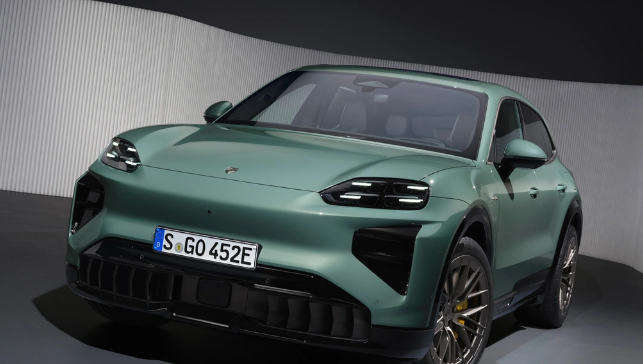
Mixing an experimental hypersonic testbed aircraft with a 1,139-horsepower luxury electric vehicle sounds like the premise of a blockbuster film, but in the hands of Porsche and Stratolaunch, it was a rigorous scientific endeavor. The Mojave test proved that the Porsche Cayenne Electric possesses the brute force, the aerodynamic stability, and the battery efficiency to comfortably run alongside the titans of the aerospace industry.
This unprecedented test dissolves the boundaries of what we thought a battery-electric SUV could achieve. It is no longer a question of whether electric power can match internal combustion; the question is now how far electric power can push the envelope of human engineering. The Porsche Cayenne Electric did not just keep pace with the world’s largest flying plane; it established a new gold standard for the high-performance electric SUV segment.
As we look toward the future of transportation, the innovations pioneered on the tarmac of the Mojave Air and Space Port will eventually trickle down to the broader consumer market. The thermal management, aerodynamic efficiency, and instantaneous power delivery showcased by the Porsche Cayenne Electric represent the pinnacle of modern automotive engineering.
If you are ready to experience the future of high-performance electric mobility for yourself, it is time to move beyond the theoretical. Explore the uncompromising power, luxury, and engineering brilliance of the latest electric drivetrains. Visit your local Porsche center today to schedule a comprehensive test drive, or configure your bespoke Porsche Cayenne Electric online to see how aerospace-grade engineering can transform your daily drive.