
Porsche 992 GTS T-Hybrid vs 997 GTS: Engineering Evolution and Track Performance
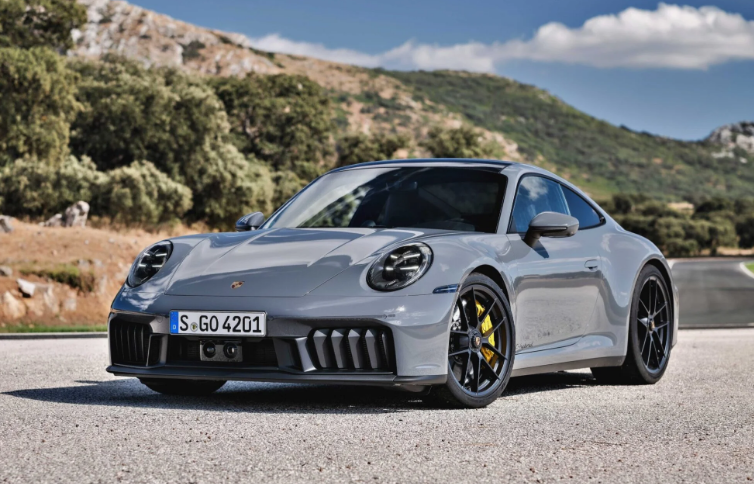
The arrival of the new Porsche 911 Carrera GTS T-Hybrid represents a pivotal juncture in the timeline of the legendary 911 chassis. Sitting at the intersection of high-voltage electrification, extreme mechanical precision, and raw motorsport heritage, this updated sports car challenges our fundamental understanding of what a daily-driver performance vehicle can achieve.
To measure how far Stuttgart’s engineering team has pushed the envelope, we brought the 992.2 GTS T-Hybrid face-to-face with its direct ancestral origin: the 2011 Porsche 997 Carrera GTS.
By analyzing telemetry, dynamic weight distribution, and tactile feedback, we examine whether modern hybrid assistance delivers an unmatched driver experience or if the analogue purity of a light, hydraulic-steering classic still reigns supreme for sports car enthusiasts.
What Made the Original Porsche 997 GTS Special?
When the Porsche 997 GTS debuted in late 2010, the model served as a strategic farewell to the first generation of water-cooled 911s. Porsche engineers aimed to consolidate the absolute best road-going components from the 996 and 997 eras before transitioning to the longer wheelbase and electromechanical steering setups of the 991 generation.
Rather than raiding the motorsport inventory assigned to the GT3 RS or GT2 RS, Porsche devised a recipe that blended usable road performance with subtle track-focused enhancements.
The Original Formula: RWD Meets Widebody Architecture
Prior to the release of the 997 GTS—outside of ultra-exclusive commissions like the Sport Classic and Speedster—buyers who wanted the wider rear track (an extra 44mm across the rear arches) were forced to accept all-wheel drive. The 997 GTS changed the narrative by combining the naturally aspirated 3.8-liter flat-six engine with rear-wheel drive and a widebody chassis.
Standard factory specification included crucial dynamic upgrades:
Porsche Active Suspension Management (PASM) with recalibrated damping algorithms
Sports Exhaust System tuned for enhanced acoustic resonance across mid-range RPMs
Factory Powerkit (X51) increasing power via modified intake manifolds, revised cylinder heads, and optimized ECU mapping
Center-Lock Lightweight Alloy Wheels derived from the 997.2 GT3
Interior Trim Package featuring Alcantara touchpoints and a SportDesign steering wheel
By incorporating these components into a unified factory package, Porsche established the GTS as the sweet spot in the lineup—delivering standard Carrera S comfort with elevated dynamic capabilities.
Enter the Porsche 992 GTS T-Hybrid: Hybrid Innovation
Fast forward to the current generation: the Porsche 992 GTS T-Hybrid represents an engineering leap forward. Rather than treating electrification as a mere compliance measure for emissions standards, Weissach engineered a high-performance system designed explicitly to increase throttle response and total system torque.
Unlike traditional plug-in hybrid systems that add hundreds of pounds of battery mass, the T-Hybrid architecture relies on a compact, lightweight 400-volt battery system coupled with a newly designed 3.6-liter boxer engine.
+———————————————————————————–+
| PORSCHE 992 GTS T-HYBRID ARCHITECTURE |
+———————————————————————————–+
| [ 3.6L Flat-Six Engine ] <—> [ Integrated Electric Motor ] —> [ 8-Speed PDK ]|
| ^ ^ |
| | | |
| [ Electric Turbocharger ] <—> [ 400V Lightweight Battery ] |
+———————————————————————————–+
Key Technical Specifications Comparison
| Engineering Attribute | Porsche 997 Carrera GTS (2011) | Porsche 992 GTS T-Hybrid (2025+) |
|---|---|---|
| Engine Displacement | 3.8-Liter Naturally Aspirated Flat-6 | 3.6-Liter Electrically Turbocharged Flat-6 |
| Peak Horsepower | 408 hp @ 7,300 RPM | 533 hp (Combined System Output) |
| Peak Torque | 310 lb-ft @ 4,200 RPM | 450 lb-ft (Combined System Output) |
| Transmission Options | 6-Speed Manual / 7-Speed PDK | 8-Speed Dual-Clutch PDK Only |
| Drivetrain Layout | Rear-Wheel Drive (Widebody Chassis) | Rear-Wheel Drive / All-Wheel Drive |
| 0–60 MPH Acceleration | 4.2 Seconds (Manual Coupé) | 2.9 Seconds (Launch Control Enabled) |
| Curb Weight (DIN) | 3,130 lbs (1,420 kg) | 3,516 lbs (1,595 kg) |
| Steering Mechanics | Hydraulic Power Steering | Electromechanical Steering (Rear-Steer Std) |
Power Dynamics: Mid-Spec Classification with Supercar Output
Step onto the accelerator of the 992 GTS T-Hybrid, and the immediate wallop of instant electric torque redefines modern acceleration parameters. The single electric turbocharger utilizes an integrated electric motor that spool-ups the turbine instantly, completely eliminating traditional turbo lag before exhaust gases build sufficient pressure.
Drivers exiting tight apexes report acceleration profiles that match—and in initial feet, outpace—the flagship Porsche 911 Turbo S.
0-60 MPH Acceleration Capability:
997 GTS Manual [4.2s]
992 Carrera S [3.3s]
992 GTS T-Hybrid [2.9s] <– Matches Previous Generation Supercars
992 Turbo S [2.6s]
With 533 combined horsepower routed through the rear wheels, the 992 GTS T-Hybrid delivers unrelenting thrust across the entire powerband.
High-Voltage Efficiency Meets Track Performance
The engineering rationale behind switching from a twin-turbo 3.0-liter engine to a single electric-turbo 3.6-liter engine lies in thermal efficiency and power density:
Integrated Electric Motor inside the Transmission: An e-motor mounted within the 8-speed PDK transmission contributes up to 110 lb-ft of supplemental torque directly to the crankshaft from zero RPM.
Exhaust Energy Recovery: The electric turbocharger works bidirectionally—it either uses battery power to build instant boost or extracts excess energy from the exhaust stream to send up to 11 kW back into the 1.9 kWh liquid-cooled battery.
Weight Mitigation Strategy: Because the electric motor assists with transient engine loads, engineers eliminated belt-driven accessories, reducing overall engine height and partially offsetting the battery pack’s weight penalty.
Versatility Meets Raw Speed: The Daily-Driver Dynamic
Beyond its track capability, the 992 GTS T-Hybrid continues to fulfill the fundamental mandate of the GTS badge: seamless daily usability paired with track-day resilience.
Digital Architecture and Cabin Usability
The modern cockpit incorporates an updated fully digital instrument cluster while retaining classic 911 ergonomic proportions. Essential vehicle settings, performance telemetry, and driver-assistance management are instantly accessible via standard steering wheel controls.
For enthusiasts seeking to dial back electronic intervention, turning the drive-mode dial to “Sport” or “Sport Plus” sharpens throttle mapping, firms the active anti-roll bars (PDCC), and alters PDK shift timing for aggressive downshifts under hard braking.
Dynamic Trade-Offs
To manage the additional output and mass, the 992 GTS utilizes wider rubber compounds, standard rear-axle steering, and stiffened chassis mounting points. When configured with carbon-fiber bucket seats and rear-seat delete options, the car behaves like a civilized road racer—stable at highway speeds, yet aggressively tied down when negotiating high-speed technical corners.
Behind the Wheel of the 997 GTS: Analogue Mechanical Purity
Transitioning directly from the high-tech cockpit of the 992 into the cabin of a pristine 2011 Porsche 997 GTS exposes the evolutionary leap of the last decade and a half.
[ 997 GTS Analogue Feedback Loop ]
Road Surface —> Tires —> Hydraulic Rack —> Driver’s Hands (Direct Mechanical Connection)
[ 992 GTS Electronic Feedback Loop ]
Road Surface —> Tires —> Sensor Array —> ECU Matrix —> Servo Assist (Calculated Precision)
Featuring a traditional ignition cylinder on the left side of the steering wheel, analogue instrument dials, and an unadorned Alcantara-wrapped steering wheel, the 997 cabin strips away secondary distractions to prioritize the mechanical relationship between driver and machine.
The Mechanical Engagement Factors
Hydraulic Steering Feedback: The hydraulic steering rack delivers continuous, unfiltered micro-vibrations from the pavement, providing clear communication regarding front-tire contact patch grip levels.
6-Speed Manual Transmission: The throw of the 6-speed manual box features an oily, positive tactile gate, allowing drivers to heel-and-toe downshift with exact throttle blips.
Linear Power Delivery: The naturally aspirated 3.8-liter flat-six engine demands RPMs to yield its full potential. While low-end torque is modest compared to turbocharged modern engines, the intake resonance change at 6,000 RPM creates a soaring top-end push up to the 7,300 RPM redline.
Performance Comparison: Old-School Agility vs. Modern Technology
Evaluating both vehicles back-to-back across challenging technical roads reveals two distinct philosophies regarding speed, chassis dynamics, and engagement.
+————————————————————————————+
| CHASSIS MASS VS. POWER RATIO |
+————————————————————————————+
| Model | Curb Weight (lbs) | Power (hp) | Power-to-Weight Ratio |
+———————+——————-+————+—————————–+
| Porsche 997 GTS | 3,130 lbs | 408 hp | 7.67 lbs per hp |
| Porsche 992 GTS | 3,516 lbs | 533 hp | 6.59 lbs per hp |
+————————————————————————————+
The Mass Factor: 175kg Differential
Despite the 992’s engineering feats in weight management, the modern hybrid sports car carries approximately 385 lbs (175 kg) of additional mass compared to its 997 equivalent. This added mass stems from safety structures, luxury features, larger braking systems, electro-hydraulic actuators, and the hybrid battery system.
On Tight, Technical B-Roads: The 997’s shorter wheelbase (100mm less than the 992) and lighter kerb weight yield a lithe, dancing chassis character. Drivers can adjust the car’s cornering attitude via minute throttle balance adjustments without reaching license-endangering speeds.
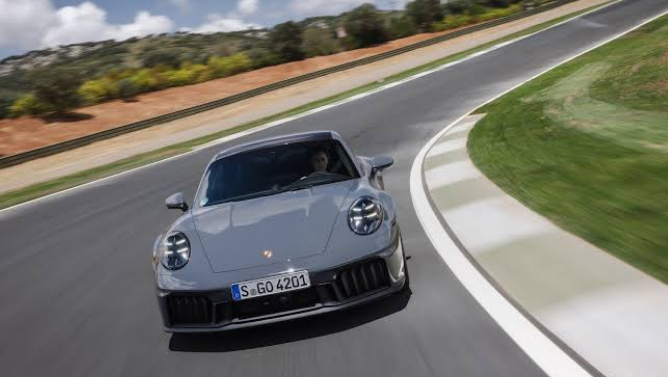
On High-Speed Circuits and Sweepers: The 992 GTS T-Hybrid utilizes its wider track, standard rear-axle steering, active aerodynamics, and instantaneous electric power to generate massive cornering speeds and exit traction that effortlessly pull away from older naturally aspirated models.
Driving the Porsche 911 S/T: The Ultimate Precision Benchmark
To calibrate our understanding of modern chassis dynamics, it is essential to contextualize where the 992 GTS sits relative to GT-department offerings like the limited-production Porsche 911 S/T.
Where the 992 GTS T-Hybrid embraces tech-forward hybrid torque for effortless road performance, the 911 S/T represents the pinnacle of modern lightweight engineering:
Atmospheric GT3 RS Engine: 518 hp naturally aspirated 4.0-liter engine revving to 9,000 RPM.
Custom Lightweight Clutch and Single-Mass Flywheel: Drops rotational mass for instantaneous, razor-sharp throttle response.
Focused Chassis Tuning: Strips away rear-axle steering to reduce weight, replacing it with ultra-direct mechanical steering geometry.
Lessons in Tire Compound Selection and Real-World Conditions
Driving track-focused vehicles like the 911 S/T or aggressive GT variants equipped with extreme semi-slick compounds (such as Michelin Pilot Sport Cup 2s) highlights a critical truth for road drivers: Grip peak versus progressive breakaway.
In damp or cold road conditions, track-oriented tire compounds reach their thermal operating limits slowly. Once break-away occurs at high lateral loads, traction loss can be abrupt.
For real-world driving environments, the broader operating window of high-performance street tires—such as those standard on the Carrera GTS—provides progressive breakaway characteristics, allowing drivers to comfortably explore the chassis balance on public roads.
Ownership Considerations: Financial Planning and Valuation Trends
Whether evaluating a brand-new factory order or acquiring a verified pre-owned classic, luxury sports car purchases require diligent financial planning.
Estimated Ownership Costs Breakdown:
+————————————————————————————+
| Porsche 997 GTS (Pre-Owned Investment) |
| – Acquisition Cost: Moderate-High (Appreciating Modern Classic) |
| – Maintenance: Classic Vehicle Service Intervals & Component Wear |
| – Depreciation Risk: Low to Negative (Strong Residual Value Retention) |
+————————————————————————————+
| Porsche 992 GTS T-Hybrid (New Purchase) |
| – Acquisition Cost: High Initial MSRP + Options |
| – Maintenance: Factory Warranty Coverage / Specialized Hybrid System Care |
| – Depreciation Risk: Standard New Luxury Vehicle Curves |
+————————————————————————————+
Prospective buyers researching vehicle acquisition should analyze financing options, exotic car insurance policies, auto loan rates, and asset appreciation trends.
Consulting with an experienced automotive financial consulting advisor or utilizing a dedicated auto loan calculator helps optimize cash flow strategies when adding high-value sports cars to a personal collection.
Conclusion: Evolution without Compromise
Comparing the Porsche 992 GTS T-Hybrid to the Porsche 997 GTS demonstrates how dramatically performance benchmarks have shifted over the last decade and a half.
The 997 GTS remains a celebrated modern classic—an analogue masterpiece that rewards smooth driver inputs, precision gear selection, and active mechanical engagement at road-legal speeds.
The 992 GTS T-Hybrid stands as a tour de force of modern sports car engineering—delivering supercar acceleration, high-voltage powertrain response, and daily usability without compromising classic 911 ergonomics.
Both vehicles succeed in fulfilling the core GTS promise: offering a precisely balanced bridge between daily road comfort and open-track performance.
Take the Next Step Toward Your Ultimate Driving Experience
Are you ready to discover which generation of Porsche performance aligns with your driving passion? Whether you’re exploring allocation opportunities for a new 992 GTS T-Hybrid, searching for a pristine pre-owned 997 Carrera GTS, or seeking professional advice on structuring auto financing for your next luxury vehicle, our expert team is here to guide you through every step of the process.
Contact our Porsche Specialists today to schedule a personalized consultation, arrange a track demo, or get a competitive trade-in valuation on your current sports car. Experience the pinnacle of automotive engineering firsthand!