


Beyond the Digital Mirage: Why the Ferrari 550 Maranello Remains the Ultimate Analog V12 Experience
When news broke that Maranello was reintroducing the gated shifter to its flagship front-engined V12 line, the automotive world collectively held its breath. The promise of a modern V12 paired with an exposed H-pattern transmission sounded like a love letter to purists. However, the reality of the £500,000 limited-run 12Cilindri Manuale revealed something far more complicated: an eight-speed dual-clutch transmission operated via an electronic “simulated” clutch pedal and physical shift lever. It is a masterclass in haptic feedback engineering, a brilliant piece of software wizardry, and an extraordinary gaming-style rig installed directly inside a world-class supercar.
Yet, for those who seek unadulterated automotive engagement, a fundamental question emerges: Why pay half a million pounds for simulated nostalgia—especially when getting on the VIP allocation list requires purchasing multiple mainstream models you may not even want—when the genuine article already exists in automotive history?
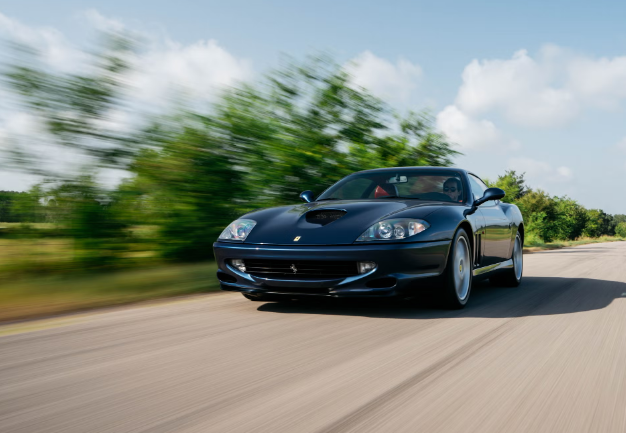
If you want an authentic, mechanical connection to a front-engined, twelve-cylinder Italian grand tourer, you do not need a multi-million-dollar modern garage portfolio or complex drive-by-wire trickery. Instead, you need to turn your attention back to 1996 and look closely at the Ferrari 550 Maranello.
The Illusion of Engagement in the Modern Supercar Era
Modern exotic vehicle manufacturing has reached an astounding performance peak. Dual-clutch gearboxes execute shifts in milliseconds, torque-vectoring systems defy physics, and adaptive dampers make 800-horsepower monsters approachable on everyday roads. Yet, as performance metrics have skyrocketed, driver involvement has steadily diminished.
+———————————————————————–+
| ANALOG VS. DIGITAL V12 |
+———————————–+———————————–+
| Modern Simulated Manual | Classic Ferrari 550 Maranello |
+———————————–+———————————–+
| Dual-Clutch Actuated by Software | Mechanical Linkage & Open Gate |
| Fly-by-Wire Clutch Pedal | Hydraulic Cable/Piston Engagement |
| Synthetic Rev-Matching Algorithms | Driver-Executed Heel-and-Toe |
| Artificial Haptic Resistance | Natural Mechanical Weight & Bite |
+———————————–+———————————–+
The introduction of simulated manual transmissions in hyper-exclusive supercars is a fascinating symptom of this shift. Engine-sound synthesis, fake gear shifts in electric vehicles, and drive-by-wire manual gearsticks prove that collectors desperately crave the mechanical intimacy of the past. The dynamic feedback, tactile resistance, and timing required to operate an open-gate manual gearbox cannot be fully replicated by algorithms, no matter how sophisticated the software engineers at Maranello are.
To truly understand what made open-gate driving legendary, one must evaluate the car that set the modern benchmark for front-engined V12 excellence.
The Genesis of the Ferrari 550 Maranello: A Historic Masterpiece
When the Ferrari 550 Maranello made its global debut at the Nürburgring in July 1996, it marked a monumental shift in philosophy for the Maranello brand. For more than two decades, mid-engined layouts dominated top-tier sports cars. Following the end of the 365 GTB/4 “Daytona” production in 1973, mid-engined flat-12 machines like the Berlinetta Boxer and Testarossa carried the flag.
However, under the vision of then-Chairman Luca di Montezemolo, Ferrari recognized the need to return to its grand touring roots. The early 1990s had been plagued by models that favored dramatic styling over everyday usable dynamics. Di Montezemolo famously described the earlier 348 as one of the worst products the company had built, initiating a complete overhaul of quality control, engineering standards, and vehicle dynamics.
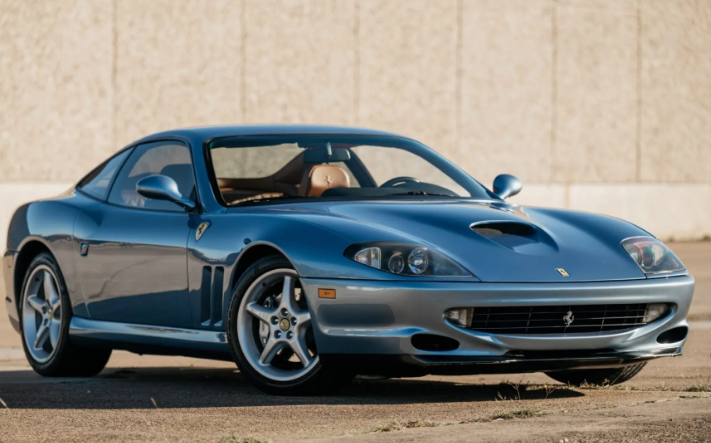
Alongside the brilliant F355 and the understated 456 GT, the 550 Maranello represented the triumph of this renaissance. It revived the classic layout: a naturally aspirated V12 up front, power sent rearward through a transaxle, and a tactile six-speed manual transmission smack in the middle of the cabin.
+———————————————————+
| FERRARI 550 MARANELLO AT A GLANCE |
+——————–+————————————+
| Engine | 5.5-Litre Atmospheric 65° V12 |
| Horsepower | 478 hp @ 7,000 RPM |
| Torque | 419 lb-ft @ 5,000 RPM |
| Transmission | 6-Speed Open-Gate Manual Transaxle |
| Top Speed | 199 mph (320 km/h) |
| Production Run | 1996–2002 (3,083 units) |
+——————–+————————————+
Anatomy of the Ultimate Manual Transmission
The centerpiece of the 550 Maranello driving experience is its open-gate gearshift. Machined from stainless steel, the gear lever rises out of a traditional slotted metal gate, topped with a cool, brushed aluminum sphere.
Operating this transmission is an art form that engages every sensory input:
Tactile Resistance: Moving through the gate requires deliberate, weighted effort. The mechanical click-clack as the lever slides from gear to gear offers tactile feedback that no electronic actuator can recreate.
Thermal Sensitivity: On cold mornings, the transaxle oil requires patient warming before second gear engages smoothly—a mechanical quirk that links the driver directly to the car’s temperature and mechanical health.
Precision Footwork: The pedal placement is perfectly calibrated for heel-and-toe downshifts. Without auto-rev-matching software, every smooth shift relies entirely on driver skill, blipping the throttle while modulating the firm, hydraulic clutch.
The engine paired with this transmission is the legendary F133 5.5-litre 65-degree atmospheric V12. Developing 478 horsepower and 419 lb-ft of torque, it delivers a linear, swelling powerband that encourages you to stretch every gear to the 7,500 RPM redline just to experience the mechanical symphony of intake roar and gated shifting.
Driving Dynamics: Pure Mechanical Harmony
Beyond its iconic powertrain, the 550 Maranello was engineered to be a true long-distance high-performance grand tourer. Pininfarina’s aerodynamic design delivered a clean drag coefficient of 0.33 while generating functional downforce at speed, eliminating the need for overly aggressive wings or spoilers.
The front-engine, rear-transaxle configuration achieved a near-perfect 50:50 weight distribution. Paired with independent double-wishbone suspension, adaptive dampening, and precise hydraulic power steering, the car delivers unfiltered road feel. It communicates grip levels, road texture, and chassis balance directly to your hands and seat without overwhelming digital interference.
Unlike modern supercars, where onboard electronics constantly intervene to manage traction and yaw, the 550 Maranello respects driver agency. It is approachable and forgiving at moderate speeds, yet deeply rewarding when pushed to its handling limits by a skilled operator.
Smart Investment: Analog Classics vs. Modern Depreciation
From an automotive investment perspective, comparing a classic manual GT to modern hyper-exclusive limited runs reveals a stark contrast in value, market stability, and ownership economics.
+———————————————————————————+
| FINANCIAL & OWNERSHIP BREAKDOWN |
+————————————+——————————————–+
| Metric | Details |
+————————————+——————————————–+
| Acquisition Barriers | No dealer allocation lists, trade-ins, or |
| | mandatory multi-car purchase requirements. |
| Value Trajectory | Solid appreciation backed by true scarcity |
| | and growing demand for pure analog cars. |
| Maintenance & Serviceability | Proven mechanicals; workable without |
| | proprietary software lockouts or digital |
| | system failures. |
| Authentic Driving Value | Genuine mechanical connection that |
| | software emulation cannot replicate. |
+————————————+——————————————–+
Securing an allocation for a contemporary limited-edition Ferrari often requires an extensive buying history, taking delivery of high-depreciation utility models, and accepting restrictive resale clauses. Conversely, the market for late-1990s analog classics operates with complete transparency.
With approximately 3,083 units produced globally during its six-year production run, the 550 Maranello offers genuine mechanical scarcity. As digital systems continue to dominate new car releases, well-documented, low-mileage manual V12 examples remain premier assets within classic car portfolios. They offer strong capital preservation alongside an unrepeatable driving experience.
Preserving and Maintaining an Analog V12 Legend
For prospective buyers and seasoned collectors, ownership of an analog V12 GT requires an informed, proactive approach to maintenance. While the F133 V12 engine and manual transaxle are exceptionally robust when properly cared for, long-term reliability hinges on consistent mechanical upkeep:
Timing Belt Service Interval: The 5.5-litre V12 utilizes timing belts that require replacement every 3 to 5 years (or 30,000 miles). Unlike mid-engined V8 models of the same era, this service can be completed with the engine remaining in the car, significantly reducing labor complexity.
Transaxle & Fluid Care: Smooth shifting through the gated transmission depends heavily on using high-grade gear oils. Regular fluid changes preserve synchros and ensure effortless gate engagement.
Sticky Interior Trim Restoration: Like many Italian sports cars of the late 1990s and early 2000s, interior buttons and switchgear are prone to developing a sticky residue over time. Refurbishing these components through specialized restoration services permanently resolves the issue.
Cooling System Inspection: Ensuring radiator hoses, water pumps, and coolant passages are clean and fully functional protects the aluminum V12 block against thermal stress during spirited driving.
By establishing a relationship with an experienced independent specialist, long-term ownership costs remain highly predictable while preserving the vehicle’s provenance and market value.
Experience the Pure Unfiltered Essence of Driving
Software emulation, dual-clutch versatility, and digital novelty have their place in modern automotive design. They allow manufacturers to push speed boundaries while offering a nod to past design language. But a simulated experience, no matter how seamlessly programmed, remains an imitation of reality.
The crisp tactile click of a steel lever gliding through a gated shifter, the firm resistance of a mechanical clutch, and the uninterrupted roar of a naturally aspirated 5.5-litre V12 reaching redline represent an era that cannot be recreated with code. The Ferrari 550 Maranello stands as a monument to that golden age of motoring—a true masterpiece of mechanical engineering, driver involvement, and timeless design.
If you are ready to elevate your collection with an authentic analog legend, explore the market for verified, highly documented classic V12 models today. Contact a trusted automotive specialist, schedule an inspection of a landmark GT, and experience firsthand what pure, unfiltered driving passion truly feels like.