
Ferrari 12Cilindri Manuale Review: Is Maranello’s Simulated H-Pattern Shift Worth the Hype?
Over the past decade of working intimately within the automotive industry, testing everything from stripped-out track specials to multi-million-dollar grand tourers, few announcements have caught my attention quite like Ferrari’s sudden change of heart regarding the manual transmission. For roughly half a million pounds, Ferrari will sell you a front-engined V12 GT that mimics a traditional stick shift. Of course, securing an allocation requires you to be on Maranello’s fiercely guarded preferred buyer list—meaning your garage likely already houses a Purosangue, an Amalfi, and perhaps a couple of mainstream models you barely touch.
Yet, the reality behind the badge is fascinating: the Ferrari 12Cilindri Manuale does not actually feature a true mechanical manual gearbox. Instead, it pairs the standard car’s sophisticated eight-speed dual-clutch transmission with a physical H-pattern lever and a clutch pedal. Purists are calling it a gimmick, a digital facade, or an expensive gaming rig wrapped in Italian leather. But having spent years evaluating how luxury automotive engineering balances emotion with modern performance constraints, I see this creation through a very different lens. Let us dive deep into what this car means for luxury car investment, high-performance driving, and whether the 12Cilindri Manuale deserves a place in your collection alongside timeless classics like the Ferrari 550 Maranello.
The Engineering Reality Behind the Ferrari 12Cilindri Manuale
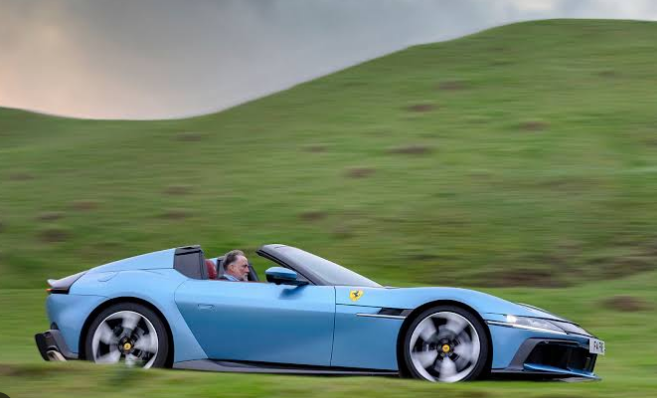
When news broke that Maranello was bringing back an exposed H-pattern shifter after a 14-year hiatus, the automotive community erupted. For over a decade, Ferrari executives insisted that automated dual-clutch setups were infinitely faster, more efficient, and structurally superior to traditional manual transmissions. They claimed the traditional stick shift was dead for good. So, why the sudden about-face?
The truth is that the 12Cilindri Manuale is an acoustic and tactile illusion. It is a dual-clutch transmission (DCT) wired up to a manual-style gate and clutch pedal. When you row through the gears, sensors translate your physical movements into electronic signals that direct the lightning-fast dual-clutch actuators.
Critics argue it is a fake manual—smoke and mirrors designed to capture nostalgic headlines and extract massive premiums from affluent collectors. But as an industry insider who has witnessed the progressive digitalization of the automobile, I ask a simple question: if it delivers 95 percent of the emotional engagement of a traditional manual without the inherent mechanical limitations of a physical gated box handling over 800 horsepower, does it really matter?
Modern V12 engines generate immense torque that would shred traditional manual clutches under aggressive track use, while modern emissions and safety regulations make certifying a brand-new mechanical manual transmission nearly impossible for low-volume supercar manufacturers. Ferrari found a clever engineering loophole to deliver the tactile ritual of driving a classic Ferrari while retaining the blistering performance and everyday drivability of their latest DCT architecture.
Benchmarking Against Legends: The Ferrari 550 Maranello Connection
If you truly cannot wrap your head around a simulated shift mechanism, the classic car market offers a compelling alternative. For a fraction of the price of a new flagship V12, you can seek out a pristine Ferrari 550 Maranello. You do not need to purchase a controversial new electric vehicle or jump through corporate hoops to buy one; you simply need an appreciation for analog automotive purity.
Having spent considerable time behind the wheel of various vintage front-engined V12s, I often hope that Raffaele di Simone and his team of development drivers spent countless hours studying the 550 Maranello while engineering the modern lineage. Launched in 1996, the 550 Maranello is a milestone machine. It successfully revived the iconic two-seat, front-engined V12 berlinetta bloodline that had been dormant since the legendary 365 GTB/4 Daytona went out of production in 1973.
More importantly, the 550 Maranello was a cornerstone of Luca di Montezemolo’s legendary 1990s Ferrari renaissance. Alongside the brilliant F355 and the sophisticated 456GT, it swept away the complacency of the Maranello boardrooms that had previously yielded the troubled 348—famously labeled by Luca himself as “the worst Ferrari.” The 550 injected fresh mechanical soul and commercial prosperity back into the brand, featuring one of the finest, most mechanical gated manual gearshifts ever bolted into a road car. Comparing its weighted, metallic clack against the digital actuators of the new 12Cilindri provides an incredible study in how driver engagement has evolved.
Luxury Car Investment and Market Impact
For high-net-worth buyers evaluating luxury car investment strategies, limited-edition Ferrari V12 models occupy a unique financial ecosystem. Vehicles carrying the Prancing Horse badge have historically proven to be resilient alternative asset classes, often outperforming traditional stock portfolios when purchased correctly.
However, buying a modern ultra-exclusive Ferrari requires navigating complex dealer relationships. High-end car financing, exotic car insurance, and depreciation curves play massive roles in total cost of ownership. While a standard production model might experience standard luxury depreciation, limited-run variants like the 12Cilindri Manuale are engineered from day one to be collector items.
Scarcity Factor: Low production numbers ensure long-term value retention.
Nostalgia Premium: The inclusion of an H-pattern aesthetic targets emotionally driven collectors willing to pay a heavy markup.
Maintenance & Ownership: Modern exotics require specialized care, making certified pre-owned or classic models like the 550 Maranello appealing alternatives for hands-on enthusiasts.
Whether you view the simulated manual as a stroke of marketing genius or an expensive novelty, its residual value is virtually guaranteed by the badge on the hood and the limited production run.
Driving Dynamics: Simulation vs. Purity
On the open road, how does the driving experience actually stack up? When you drop the clutch pedal of the 12Cilindri Manuale and slide the aluminum lever into first gear, the sensory feedback is astonishingly convincing. Software calibrators have dialed in resistance, spring tension, and mechanical clinks to mimic a genuine metal gate.
Yet, purists who daily drive older analog supercars will immediately notice the absence of mechanical drivetrain lash. A true manual connects your right hand and left foot directly to spinning steel gears and synchronizers via physical linkage cables or rods. The modern setup filters that connection through a computer.
Is this a dealbreaker? For die-hard traditionalists, absolutely. But for modern supercar owners who want the thunderous soundtrack of a naturally aspirated V12 combined with the stop-and-traffic civility of an automatic transmission, it bridges two worlds that were previously thought to be mutually exclusive.
Making Your Next Automotive Investment Decision
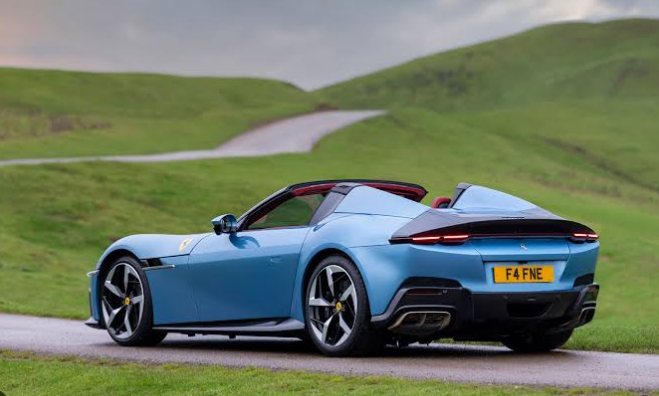
Navigating the upper echelons of automotive collecting requires expert guidance, market foresight, and a clear understanding of what drives true driving passion. Whether you are looking to secure an allocation for Maranello’s latest technological experiments or searching for a pristine analog masterpiece from the golden era of the 1990s, making the right choice is paramount.
If you are ready to elevate your collection, optimize your exotic car portfolio, or discuss bespoke acquisition strategies for rare front-engined V12 masterpieces, reach out to our team of automotive advisors today to schedule your private consultation.