
Polestar Abandons U.S. Market After Sales Ban: Strategic Shift Toward Europe and Future EV Industry Impacts
Over the past decade working as an automotive industry analyst and electric vehicle market consultant, I have witnessed countless regulatory shifts, supply chain reorganizations, and geopolitical trade dynamics reshape the global mobility landscape. However, the recent strategic retreat by Polestar from the United States market stands out as one of the most consequential turning points for the international luxury electric vehicle sector. Following the enforcement of strict federal regulations regarding connected vehicle infrastructure, Polestar has confirmed it will not appeal its American sales ban, opting instead to pivot its capital, engineering focus, and sales operations entirely toward Europe and other international territories.
For industry watchers, supply chain executives, and eco-conscious consumers alike, this development offers a profound look at how modern automotive trade policies intersect with national security, corporate ownership structures, and global business strategy. In this comprehensive analysis, we examine the drivers behind Polestar’s U.S. exit, the regulatory framework governing connected cars, and what this means for the broader electric vehicle market moving forward.
The Regulatory Catalyst: Understanding the U.S. Connected Vehicles Rule
To comprehend why a major premium electric vehicle manufacturer would walk away from the lucrative American automotive market without a legal fight, one must look closely at the regulatory machinery introduced by the United States Department of Commerce. The cornerstone of this policy shift is the U.S. Connected Vehicles Rule, a sweeping federal regulation designed to safeguard national infrastructure against potential vulnerabilities embedded in modern automotive software and hardware.
Modern electric vehicles are essentially computers on wheels. They rely heavily on sophisticated internet connectivity, high-definition exterior cameras, advanced GPS tracking systems, cloud-based navigation, and over-the-air update capabilities. Under the Department of Commerce framework, the federal government has placed strict prohibitions on the import, distribution, and sale of internet-connected vehicles that maintain hardware or software links to foreign adversaries, specifically targeting entities connected to China or Russia.
While federal regulators cite legitimate national security concerns regarding data privacy, telemetry transmission, and critical infrastructure protection, the enforcement mechanism creates complex compliance hurdles for multinational automakers. Because automotive supply chains are deeply globalized, tracing every software line, sensor component, and ownership tier requires rigorous auditing. For Polestar, these regulatory parameters created an insurmountable barrier to long-term commercial viability stateside.
Ownership Complexities: Geely, Volvo, and Regulatory Divergence
The crux of Polestar’s regulatory exclusion lies in its corporate lineage and ownership structure. Polestar operates as a Swedish electric vehicle manufacturer and maintains historical corporate ties to Volvo Cars. However, both brands share a deep corporate connection with China-based Geely Holding Group, which holds a controlling, majority stake in Polestar.
When the Department of Commerce finalized its connected vehicle restrictions, automotive analysts quickly realized that brands with intricate cross-border ownership models would face intense scrutiny. Interestingly, Volvo—despite also being majority-owned by Geely—navigated a different path through extensive dialogue with federal regulators. Following months of intensive regulatory engagement, Volvo secured authorization to import and sell its vehicles in May, successfully satisfying compliance criteria.
Polestar, however, faced a fundamentally different calculus. After conducting what company representatives described as “significant dialogue” with U.S. officials, Polestar leadership concluded that pursuing a formal legal appeal against the sales ban was unlikely to succeed under the current regulatory framework. Rather than expending massive financial resources on an uphill legal battle with uncertain odds, the board opted for strategic pragmatism.
A company spokesperson confirmed in official statements to industry media that the current regulatory structure prevents Polestar from marketing and selling its vehicles from the 2027 model year onward. Consequently, the brand is willingly stepping away from a market it entered earlier this decade, concluding that its capital is better deployed in regions where regulatory alignment is more favorable.
Reassuring Existing Owners: Warranties, Service, and Support
Whenever an automotive brand alters its market footprint or withdraws from a region entirely, consumer anxiety spikes. Questions regarding vehicle depreciation, resale value, software updates, maintenance infrastructure, and warranty fulfillment immediately take center stage. Recognizing these concerns, Polestar leadership has moved quickly to reassure its existing American customer base.
If you currently own or lease a Polestar vehicle in the United States, company executives emphasize that your ownership experience will remain fully supported.
Warranty Protection: All existing vehicle warranties remain fully active and will continue to be honored strictly in accordance with their original terms and conditions.
Service Network Access: Owners will retain uninterrupted access to certified service centers, authorized repair facilities, and genuine replacement parts.
Software Updates: Over-the-air software updates, digital maintenance logs, and connected app services will continue to function normally.
While new car sales and future model rollouts are coming to a halt, honoring the commitments made to early adopters is vital for preserving brand reputation and protecting consumer trust during this transition.
Strategic Pivoting: Why Europe Remains Polestar’s Safe Haven
While losing access to the American consumer market represents a substantial commercial hurdle, industry financial analysts note that this move should not prove crippling to Polestar’s overarching global business model. A deep dive into recent sales data reveals that the brand’s global revenue streams are already heavily diversified outside North America.
Data from early 2026 underscored this geographic distribution, showing that approximately 94 percent of total Polestar sales originated from international markets outside the United States. With the American chapter closing, Polestar is officially shifting its primary strategic focus back to its home continent, where regulatory frameworks are more accommodating and the brand enjoys strong consumer recognition.
Europe’s advanced electric vehicle adoption rates, robust charging infrastructure networks, and supportive green mobility policies make it an ideal stronghold for the Swedish automaker. By concentrating marketing budgets, retail investments, and supply chain logistics in European nations, Polestar can streamline operations and improve its path toward sustainable long-term profitability.
The Human Cost: Missing Out on the Polestar 6 and Future Lineups
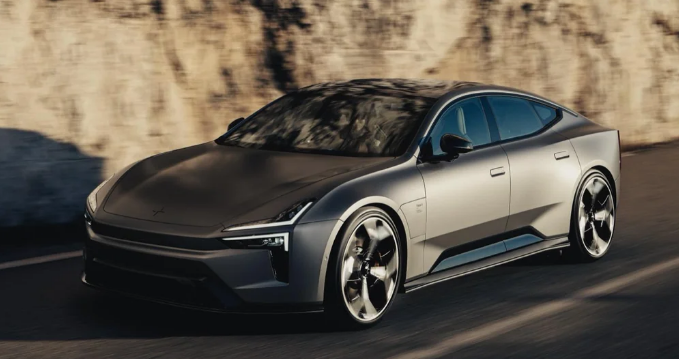
For automotive enthusiasts and design aficionados, Polestar’s withdrawal leaves a bittersweet legacy in the United States. Over the past few years, the brand established a reputation for crafting Scandinavian minimalism paired with blistering electric performance. Vehicles like the Polestar 2 carved out a distinct niche in the premium fastback segment, while the sleek Polestar 4 SUV coupé showcased bold aerodynamic styling and cutting-edge cabin tech.
However, the most painful casualty of this geopolitical trade friction is the fate of the Polestar 6. The stunning electric roadster, which drew immense critical acclaim upon its concept reveal, was widely anticipated as a halo car capable of challenging established supercar and luxury EV benchmarks. With sales operations winding down, any realistic prospects of seeing the Polestar 6 on American asphalt in the foreseeable future have been effectively dashed.
Similarly, future iterations of luxury electric crossovers and performance sedans developed by the automaker will bypass American showrooms entirely, redirecting their journey straight to European and Asian capitals.
Broader Implications for the Global EV Industry
Polestar’s exit from the U.S. market serves as a bellwether for the broader automotive ecosystem. As nations increasingly prioritize domestic technology standards, data sovereignty, and supply chain localization, international automakers face a fragmented regulatory landscape.
Key takeaways for the future of the electric vehicle industry include:
Software Governance is King: Regulators are shifting focus away from traditional metrics like tailpipe emissions and crash safety, placing equal emphasis on where vehicle software is compiled, who controls telemetry data, and how connected hardware communicates.
Corporate Restructuring: Automakers with multi-national ownership webs may need to establish independent regional subsidiaries, localized software development hubs, and transparent supply chains to bypass trade restrictions.
Market Diversification: Brands that rely too heavily on a single geographic region risk sudden vulnerability to regulatory policy changes, making balanced global distribution essential for survival.
Conclusion
Polestar’s decision not to appeal its U.S. sales ban marks the end of an ambitious chapter for the brand in North America. While losing access to the world’s second-largest vehicle market is undeniably a setback, it clears a path for the company to concentrate its energy on European strongholds where regulatory conditions support its growth. For current U.S. owners, vehicle support remains secure, but automotive enthusiasts will have to watch from afar as Polestar charts its next chapter overseas.
Are you interested in learning how international trade regulations are reshaping the electric vehicle market, or would you like to explore alternative luxury EV options currently available in your region? Take the next step by reaching out to discuss your automotive needs today.