Porsche Cayenne Electric vs. Stratolaunch Roc: High-Speed Runway Testing Redefines Electric SUV Limits
When the worlds of aerospace engineering and high-performance automotive development collide, the results usually stay confined to textbook aerodynamics or the occasional controlled drag race on an abandoned airstrip. Rarely do we witness a production-intent battery-electric vehicle operating in direct tandem with the largest flying aircraft on Earth.
Yet, during a recent high-stakes evaluation at the Mojave Air and Space Port, Porsche shattered conventional automotive benchmarking. The upcoming Porsche Cayenne Electric was deployed not for a simple marketing stunt, but to test its extreme high-speed stability, powertrain responsiveness, and aerodynamic envelope alongside the colossal Stratolaunch Roc twin-fuselage testbed.
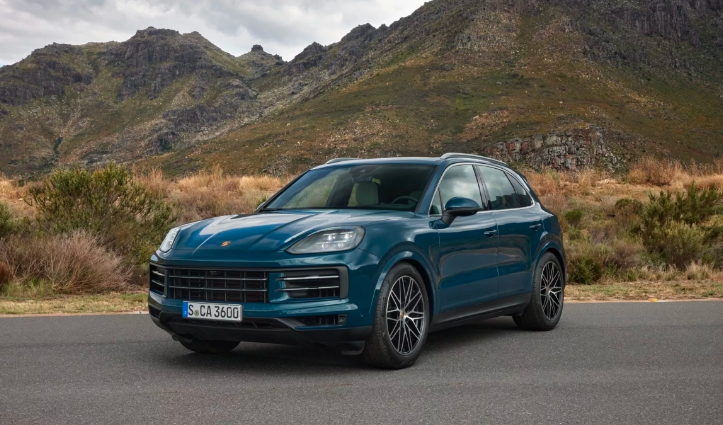
As an automotive engineer and long-term industry evaluator who has tracked high-performance electrification over the past decade, this test represents a fascinating intersection of thermal management, torque delivery, and high-speed aerodynamics. Let us dive deep into what this runway showdown reveals about the future of ultra-performance electric vehicles (EVs).
The Engineering Challenge: Porsche Cayenne Electric Meets Stratolaunch Roc
For decades, automotive development has relied on wind tunnels, closed-circuit test tracks like the Nürburgring, and computer-aided fluid dynamics (CFD). However, validating real-world stability alongside a six-engine, 385-foot wingspan carrier aircraft introduces unpredictable wake turbulence, crosswinds, and extreme velocity demands that no standard dynamometer can replicate.
The Stratolaunch Roc serves as a mobile airborne launch platform for hypersonic vehicles. When this massive aircraft accelerates down the runway or settles back onto the tarmac, it generates immense aerodynamic displacement. Porsche engineers sought to analyze how the Porsche Cayenne Electric handles these turbulent wake conditions at velocities exceeding 160 mph.
Behind the wheel was former Porsche factory driver Patrick Long, whose precision driving ensured the heavy EV maintained a locked-in position relative to the aircraft. With a jaw-dropping 1,139 horsepower on tap, the electric SUV possessed more than enough raw acceleration to match the Pratt & Whitney-powered giant all the way up to its rotation speed.
Powertrain Mastery and Instant Torque Delivery
In high-speed pacing scenarios, traditional internal combustion engines face inherent limitations: turbo lag, gear-shifting interruptions, and power curves that peak within specific RPM bands. By contrast, the Porsche Cayenne Electric leverages a multi-motor electric architecture capable of delivering instantaneous torque vectoring.
Long noted that while he never doubted the raw output of the platform, the primary concern was steering reactivity and throttle modulation at high velocities. In a vehicle pushing over a thousand horsepower, micro-corrections dictate whether the chassis remains stable or induces oscillation.
Key performance takeaways from the runway trials include:
Instantaneous Throttle Mapping: The electric powertrain eliminated any latency, allowing Long to mirror the acceleration profile of the Roc aircraft seamlessly.
Chassis Stability at Velocity: High-speed aerodynamic downforce kept the heavy battery pack planted, neutralizing the lift forces typically experienced by large SUVs at 160+ mph.
Exceptional Energy Efficiency: Despite completing four intense high-speed flat runs down the runway, the vehicle consumed a mere 13 percent of its total battery capacity. This underscores the efficiency and advanced thermal management of Porsche’s next-generation electrical architecture.
Aerodynamic Synergy and Real-World Integration
One of the most surprising insights from the Mojave test involved the aerodynamic interaction between the vehicle and the aircraft. Operating in the narrow corridor between the twin fuselages of the Roc, Long reported entering an “aerodynamically quiet area.”
While tracking a massive aircraft sounds like driving through a hurricane of jet wash, the laminar flow established in the dead center between the dual hulls provided a surprisingly stable pocket. Nevertheless, timing the merge was no small feat. Because the Roc is so vast, normal visual depth perception cues fail the driver, making it nearly impossible to gauge closure rates without specialized communication.
To solve this, Stratolaunch crew chiefs Shauntel Williams and John McKinney rode shotgun inside the Porsche Cayenne Electric, maintaining direct radio telemetry with the flight deck. Their coordination ensured the SUV neither overshot nor lagged behind the aircraft during critical takeoff and landing phases, with an FAA coordinator overseeing safety compliance from the sidelines.
What This Means for the Future of High-Performance EVs
As the luxury automotive market transitions toward full electrification, skeptics often question whether battery-powered SUVs can truly deliver authentic driver engagement, endurance, and track-ready resilience. Stunts like this go far beyond mere marketing spectacle—they are rigorous stress tests for battery longevity, inverter durability, and electronic stability control systems.
The ability to sustain repeated high-speed acceleration runs without thermal throttling proves that modern high-voltage architectures are maturing rapidly. For buyers looking into luxury EV performance investments, insurance considerations, or high-end vehicle financing, knowing that a family-sized utility vehicle can keep pace with an aerospace giant highlights an unprecedented engineering leap.
Conclusion
The joint evaluation between the Porsche Cayenne Electric and the Stratolaunch Roc proves that the boundaries of electric mobility are expanding faster than ever. By conquering extreme runway velocities, managing complex aerodynamic wake turbulence, and demonstrating remarkable battery efficiency, Porsche has reinforced its engineering dominance.
If you are looking to explore the latest advancements in luxury EV engineering, schedule a test drive at your local Porsche center today and experience the future of performance firsthand.