
2026 Porsche 911 GT3 S/C Review: The Ultimate Drop-Top Track Weapon?
As an automotive journalist with over a decade of experience testing high-performance vehicles, I have seen my fair share of controversial industry moves. Over the past 25 years, the launch of any new GT product from Weissach has followed a predictable, almost sacred formula. The recipe is always the same: reduce weight, increase downforce, stiffen the chassis, and deliver an uncompromising, track-focused thrill ride. So, when rumors began circulating that the 2026 Porsche 911 GT3 S/C was going to be a convertible, purists scoffed.
Removing the roof from a track-bred homologation special feels a bit like ordering a legendary bourbon and mixing it with diet cola. It goes against the very ethos of the badge. Stripped of its rigid canopy—the structural cornerstone of its race-derived focus—how could the Porsche 911 GT3 S/C possibly live up to its legendary moniker?
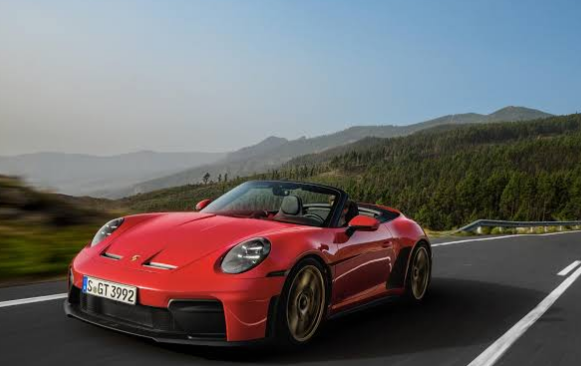
To answer that question, I packed my bags and headed straight to Stuttgart, Germany. I had three burning questions on my mind. First, is a drop-top GT car fundamentally an oxymoron? Second, does the Porsche 911 GT3 S/C actually know what kind of car it wants to be? And finally, the most heretical question of all: could chopping the roof off actually make the driving experience better?
The Philosophy Behind the Open-Air GT
When I sat down with Andreas Preuninger, the visionary director of Porsche’s GT division, I didn’t mince words. I told him bluntly that many hardcore enthusiasts believe the Porsche 911 GT3 S/C cannot genuinely wear the GT3 badge without a fixed roof. Preuninger didn’t blink. He dismissed the skepticism instantly.
I must confess my own biases here. I generally despise convertible variants of dedicated sports cars. Historically, taking a coupe and turning it into a cabriolet introduces a laundry list of dynamic compromises. You gain significant weight from the roof mechanism, you lose torsional rigidity resulting in cowl shake, and you often ruin the vehicle’s aerodynamic profile. Furthermore, from a purely aesthetic standpoint, soft-tops rarely look as striking as their coupe siblings when the roof is up—which, depending on whether you live near the rainy Pacific Northwest or are navigating the sunny Los Angeles car scene, might be the majority of the time.
But before we dive into how the Porsche 911 GT3 S/C handles on the tarmac, we need to understand exactly what this vehicle is. Stripped to its core, the Porsche 911 GT3 S/C is essentially a GT3 Touring without a roof. Sitting at the heart of this beast is the glorious 4.0-liter naturally aspirated flat-six engine. It delivers a staggering 503 horsepower straight to the rear wheels. Splendidly, in a nod to pure driving enthusiasts, there is no PDK automatic option available; you get a crisp, short-throw six-speed manual transmission, or you buy a different car.
The performance metrics speak for themselves. The Porsche 911 GT3 S/C rockets from 0-60 mph in just 3.9 seconds and tops out at a blistering 194 mph. What shocked me the most, however, was the curb weight. Tipping the scales at roughly 3,300 lbs (1,497 kg), this drop-top is only 79 lbs heavier than the famously lightweight manual Touring coupe. The fact that Porsche integrated a fully automatic roof mechanism—one that stows away in a mere 12 seconds—while keeping the weight penalty practically non-existent is an engineering marvel.
Engineering the Impossible
When the press release first crossed my desk, I assumed the Porsche 911 GT3 S/C was a gimmick cooked up by the marketing department to capitalize on affluent buyers seeking weekend cruisers. I was wrong. The concept originated entirely within the GT product engineering team, and it only received the green light because Preuninger laid down two non-negotiable mandates. First, the car had to weigh under 1,500 kilograms with a full tank of gas. Second, it had to deliver the exact same razor-sharp dynamic standards as the fixed-roof models.
To achieve this obsessive weight target, Weissach engineers raided the parts bin of the ultra-exclusive 911 S/T. The Porsche 911 GT3 S/C features the S/T’s carbon fiber doors, carbon front wings, carbon frunk lid, lightweight rear anti-roll bar, and specialized shear plate. They even bolted on the S/T’s forged magnesium wheels. Carbon ceramic brakes (PCCB) come as standard equipment, rather than a pricey option, and large sections of the folding roof structure are crafted from magnesium. These extreme weight-saving measures completely offset the mass gained from reinforcing the cabriolet body shell.
In terms of chassis dynamics, the double-wishbone front suspension was an absolute necessity. To make this work, engineers took the roofless Carrera 4 body-in-white and heavily modified it to accept the aggressive GT3 suspension hardware. They chose the wider Carrera 4 shell over the standard Carrera 2 because the space normally reserved for the front differential allowed them to install a larger fuel tank. Torsional stiffness is rated at an impressive 27,000 Nm/degree. To put that into perspective, that is a 25 percent improvement over the older 991 Speedster, making the chassis just as rigid as many modern fixed-roof sports cars.
Aerodynamically, the Porsche 911 GT3 S/C is a masterclass in airflow management. While it lacks a massive rear wing, it retains the intricate underbody strakes of the standard GT3, paired with a subtle Gurney flap on the active rear spoiler. At high speeds, the Porsche 911 GT3 S/C generates 35 lbs of actual downforce. While that might not sound like a lot compared to an RS model, it is a massive engineering triumph considering most convertibles generate up to 400 lbs of dangerous aerodynamic lift at Autobahn speeds.
For buyers factoring a machine like this into their portfolio, the Porsche 911 GT3 S/C represents a highly compelling sports car investment. Given its limited production run, unique manual-only configuration, and specialized parts, residual values are expected to remain incredibly strong. Consequently, whether you are exploring luxury auto financing or looking for premium sports car leasing, this vehicle demands attention. Keep in mind, however, that securing favorable exotic car insurance quotes will require a pristine driving record, as insurers are well aware of what a 500-horsepower rear-wheel-drive convertible is capable of in the wrong hands.
The First Drive: Taming the Beast
Fast forward to the morning of our test drive. The sun was just peeking over the horizon as I walked up to our Slate Grey Neo test vehicle. Dropping into the optional carbon bucket seats—which are essential, as the car’s suspension damping was explicitly tuned to match the resonance and stiffness of these exact seats—I felt immediately at home. The cabin ergonomics are flawless. You can dial in the perfect driving position regardless of your height, and the analog tachometer sitting front and center is a welcome sight in our increasingly digitized world.
I twisted the starter, the flat-six barked to life, and I slotted the shifter into first gear to follow the camera car. But within five minutes, my confidence shattered.
I found myself struggling to shift smoothly. I couldn’t modulate the brakes with any grace, and the throttle response felt almost aggressively spiky. To make matters worse, as I attempted to pull out of a tight lay-by, I stalled the car. Here I am, a veteran automotive journalist, kangarooing down a German B-road like a teenager learning to drive in a high school parking lot.
The realization hit me hard. I had spent the last week driving a restored 1980s classic, a car that required massive, heavy-handed inputs to coax it around a corner. My muscle memory was completely out of sync with the Porsche 911 GT3 S/C. This modern marvel does not want to be manhandled. It is a finely tuned precision instrument honed to within a millimeter of perfection.
As we navigated the tight, twisty sections of the Schwäbische Alb region, stuck behind local traffic moving at a bucolic pace, another truth emerged. Do not let the lack of a roof fool you. The Porsche 911 GT3 S/C is not a casual boulevard cruiser designed for idle Sunday drives down the Miami coastal highway. It is a highly strung athlete. At low speeds, the car feels restless. The chassis quivers with pent-up energy, the suspension feels unyielding, and the engine begs to be unleashed. At anything below seven-tenths of its capability, there is a palpable tension between the car, the road, and the driver.
Finding the Rhythm at 9,000 RPM
It took me several hours of driving to finally rewire my brain to the specific dynamic language of the Porsche 911 GT3 S/C. The controls demand tiny, deliberate inputs. The steering is telepathically quick, transmitting every single pebble and camber change directly to your palms.
Later that afternoon, the roads finally opened up. I saw the derestricted speed limit sign, dropped the manual gearbox into second, and pinned the throttle.
The transformation was nothing short of violent. When the naturally aspirated flat-six crosses 6,000 RPM, the mechanical symphony that floods the open cabin is absolutely intoxicating. By the time you hit the 9,000 RPM redline, the wail of the engine bouncing off the surrounding trees creates a sensory experience that no fixed-roof coupe can ever replicate. Removing the barrier between your ears and the exhaust fundamentally amplifies the sensation of speed.
Through sweeping, high-speed corners, the Porsche 911 GT3 S/C demonstrates a level of mechanical grip that defies logic. The double-wishbone front axle pins the nose to the apex with ruthless efficiency. Fascinatingly, Preuninger revealed that because of a slight rearward shift in weight distribution due to the roof mechanism, the Porsche 911 GT3 S/C is actually the most drift-happy variant in the current GT lineup. Feed in the power early upon corner exit, and the rear end breaks traction with a beautifully progressive, predictable slide.
Suddenly, Preuninger’s definition of the GT badge made perfect sense. He stated that the badge stands for “the most connected, immersive driving experience for either road or track.” By stripping away the roof, Porsche hasn’t compromised the GT3; they have amplified its emotional resonance. The wind rushing past the windows, the unadulterated shriek of the flat-six, the tactile feedback of the manual shifter—it all forces you to be entirely present in the moment.
If your weekend routine involves carving up California canyon roads or attending exclusive cars and coffee events, the Porsche 911 GT3 S/C is arguably the ultimate weapon of choice. It bridges the gap between hardcore track rat and visceral road car better than anything else on the market in 2026. Yes, exotic car insurance premiums will be steep, and yes, high-performance vehicle leasing rates will reflect its exclusivity, but the driving purity it offers is genuinely unmatched.
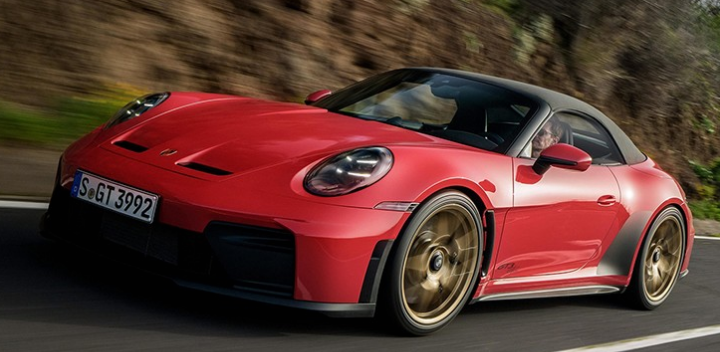
After spending a full day wringing its neck, all of my preconceived baggage regarding convertible sports cars had completely vanished. The Porsche 911 GT3 S/C is not a compromised track car; it is a distillation of everything that makes driving an analog joy in an increasingly automated era. It commands your respect, demands your full attention, and rewards your skill with an unforgettable rush of adrenaline.
Are you ready to experience the ultimate naturally aspirated thrill for yourself? Contact your local Porsche dealership today to inquire about allocations, and discover how this open-air masterpiece can redefine your understanding of performance driving.