
The 2026 Toyota Land Cruiser Commercial: A Masterclass in Off-Road Utility and Business Tax Strategy
Venture into the most unforgiving, desolate regions on earth, and you will quickly realize that one vehicle reigns absolute supreme over the wilderness. Unmatched strength, durability, and relentless reliability have cemented this platform’s legendary status in environments where a mechanical failure isn’t just an inconvenience—it is a matter of survival. From the sprawling expanse of the Australian Outback to the shifting sands of the Sahara Desert, the badge commands respect. I recently spent time in Morocco testing modern electric platforms, and witnessing dozens of trail-hardened, expedition-ready rigs dominating the terrain reinforced a universal truth: when the pavement ends permanently, you want a Toyota.
But today, we are looking at a highly specific, fascinating oddball born from this prestigious dynasty. Enter the 2026 Toyota Land Cruiser Commercial.
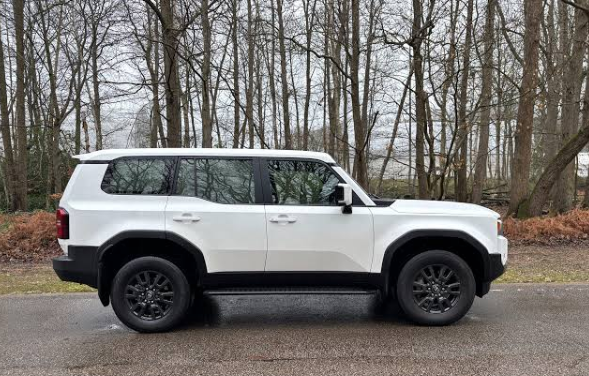
This is not the luxury-lined, family-hauling J250 you might see navigating suburban America. The Toyota Land Cruiser Commercial is a dedicated two-seat cargo van conversion built specifically for the European market. By stripping out the second and third-row seating to create a massive, flat load area, Toyota has engineered a vehicle that blurs the line between a heavy-duty 4×4 and a dedicated fleet management asset. Strangely enough, this transformation does not happen on the factory floor in Japan. Instead, these vehicles arrive in the United Kingdom as standard passenger SUVs before being meticulously adapted at Toyota’s Derbyshire facility—the exact same plant responsible for building U.S.-bound GR Corollas.
Currently sold in the U.K., the Republic of Ireland, and select European markets, the Toyota Land Cruiser Commercial exists to serve a very specific buyer. But is it the ultimate off-road cargo van, or just a clever accounting loophole? After a decade in the automotive testing and commercial fleet industry, here is my definitive breakdown.
The Financial Engine: Why the Toyota Land Cruiser Commercial Exists
To understand the Toyota Land Cruiser Commercial, you have to look past the rugged exterior and look directly at the tax code. While this rig can undeniably haul larger, more awkwardly shaped equipment than the standard SUV, the primary catalyst for its existence is aggressive commercial vehicle tax deduction benefits rather than pure cubic cargo capacity.
In the U.K. and Europe, business owners and fleet operators driving registered commercial vehicles pay substantially less tax for incidental “private” use compared to conventional passenger cars. Furthermore, dedicated vans are subject to significantly lower purchase taxes. To put this in perspective, the Vehicle Excise Duty (VED) for the Toyota Land Cruiser Commercial is a mere £345 (roughly $460). If a buyer opts for the standard passenger Land Cruiser, they are hit with a staggering £5,490 ($7,340) VED charge.
For business owners evaluating fleet vehicle financing and commercial auto insurance rates, these numbers drastically alter the total cost of ownership. It is the European equivalent of leveraging Section 179 business vehicle tax deductions in the United States. This massive financial incentive is exactly why van conversions of premium SUVs represent a rapidly expanding niche. If you look at the current market, heavy-duty 4×4 trucks for business are evolving, with rivals like Land Rover and Ineos offering similar commercial conversions of the Defender and Grenadier. The Toyota Land Cruiser Commercial, however, undercuts its passenger counterpart’s pre-tax price by nearly $12,000, bringing its base cost to a highly competitive $67,800.
Exterior and Interior Engineering: A Purpose-Built Transformation
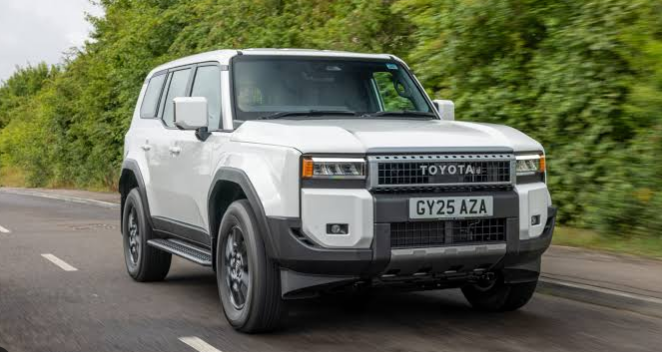
When you inspect the Toyota Land Cruiser Commercial up close, the ghosts of its passenger-car origins are visible, but the execution of the cargo conversion is strictly business. The exterior retains glass in the rear doors to maintain the vehicle’s visual proportions, but these windows are entirely fixed. Heavy-duty protective hard covers are installed directly behind the glass to prevent shifting cargo from shattering the panes from the inside.
Inside the cabin, the engineering adaptations are fascinating. The window motors remain housed inside the side doors, but custom blanking plates cover the switches to prevent operation. The driver’s door switch cluster is similarly modified, with hard plastic blocking out the rear window controls. In the cargo hold, all grab handles and safety belts have been completely stripped. Yet, in a quirky nod to its origins, the Toyota Land Cruiser Commercial retains the third-row cupholders molded into the rear side panels.
Toyota’s engineering team was well aware that enterprising buyers might try to purchase the Toyota Land Cruiser Commercial to capitalize on the business vehicle tax deduction, only to illegally reinstall rear seats later. To prevent this, the factory mounting points for the rear seats are violently and permanently cut away. A rugged, perfectly flat load floor is then bolted over the heavily modified chassis.
Cargo Area Specs: 66.4 inches long, 50.6 inches wide, and 42.9 inches tall.
Safety Features: A full-height, heavy-duty steel mesh bulkhead separates the cabin from the payload area.
Tie-Downs: Multiple reinforced lashing points allow operators to secure heavy equipment safely.
Despite its utilitarian mission, because the Toyota Land Cruiser Commercial is based on the high-specification European J250 platform, it boasts a bizarrely luxurious cabin. Operators get power-adjustable front seats with both active heating and ventilation, a premium high-fidelity audio system, and advanced radar-guided cruise control. It even retains the power-operated tailgate with a separately opening upper glass hatch. (Though, without a traditional trunk floor, dropping items through the upper glass means they plummet straight down to the lowered cargo bed).
Powertrain and Performance: The Diesel Hybrid Advantage
One of the most compelling reasons to drive this European-market rig is experiencing the forbidden-fruit powertrain that North American buyers are desperately clamoring for. Under the hood sits a 2.8-liter turbocharged inline-four diesel engine, widely considered the holy grail for overlanding and remote-location commercial work.
This robust diesel power plant produces 202 horsepower and a stump-pulling 369 lb-ft of torque, augmented seamlessly by a 48-volt mild-hybrid system. On paper, those figures might not sound earth-shattering for a vehicle with a staggered unladen weight of 5,200 pounds. However, peak torque is delivered at an incredibly low 1,600 rpm. Paired with an incredibly intuitive eight-speed automatic transmission, the Toyota Land Cruiser Commercial never feels sluggish off the line.
That said, as an industry veteran, I must note that this gruff diesel powertrain prioritizes durability over refinement. Compared to the ultra-smooth inline-six diesels found in the commercial variants of the Defender or Grenadier, the Toyota engine produces noticeable vibration at idle and a booming mechanical soundtrack under heavy throttle. It also exhibits a distinct aversion to high revs. If you leave the transmission in standard drive, it will aggressively upshift by 3,800 rpm, flatly refusing to approach the digital tachometer’s 4,400-rpm redline unless you force it into manual shifting mode.
But once you reach highway cruising speeds, the powertrain settles into a comfortable, quiet rhythm that easily outclasses standard commercial fleet vans. Toyota claims a 0-62 mph sprint of 10.2 seconds, a metric that fleet operators will likely never test. Under hard acceleration, the rear suspension squats dramatically, raising the nose in classic truck fashion. Above 75 mph, the steering requires minor corrections to stay centered on highway lanes, a symptom of its aggressive Dunlop AT23 Grandtrek tires, and the windshield wipers begin to fight against the wind resistance of the upright windshield.
Payload, Towing, and Off-Road Dynamics
Like most heavy-duty commercial vehicles, the Toyota Land Cruiser Commercial handles exponentially better when carrying weight. Driven completely empty, the rear suspension feels noticeably underdamped over broken pavement, translating jagged impacts directly into the cabin. But once you introduce a substantial payload—during my testing, a 220-pound industrial pump strapped securely in the rear—the suspension settles beautifully. Undulations and harsh potholes are absorbed with the legendary composure you expect from the Land Cruiser badge.
When it comes to off-road capability, this van compromises absolutely nothing. It retains the exact same trail-conquering hardware as the passenger model:
A robust two-speed transfer case for low-range crawling.
A manually locking center differential.
Toyota’s world-class traction-management software designed to maximize grip in mud, sand, and snow.
During off-road testing, the vehicle easily scrambled through deep, sunbaked ruts and dried mud tracks without breaking a sweat. It is an unstoppable force in rural or construction environments.
As a commercial hauling asset, the numbers command respect. The Toyota Land Cruiser Commercial boasts a maximum rear bed payload capacity of 1,780 pounds. More impressively, it can tow up to 7,700 pounds—the absolute maximum legal limit for a vehicle of its class under European regulations.
The Cargo Reality: Utility vs. Compromise
As a dedicated business vehicle, the Toyota Land Cruiser Commercial does have one glaring weakness: it is not a traditional van. While it excels as an off-road cargo van, its physical architecture presents daily logistical challenges.
The primary issue is the load floor height. Because it sits on a high-clearance off-road chassis, lifting heavy, awkwardly shaped cargo into the back requires serious physical effort. While opening the rear side doors helps with forward access, it does not solve the vertical lift requirement. Additionally, the massive, top-hinged rear tailgate demands significant clearance. If you are parked in a tight urban loading zone or backed up against a wall, opening the tailgate is nearly impossible—a scenario where the dual side-hinged doors of a standard Ford Transit easily win out.
Nobody in the fleet management space is cross-shopping the Toyota Land Cruiser Commercial with a standard city delivery van. This is a highly specialized tool built for specialized industries—mining surveyors, agricultural managers, remote utility crews, and business owners who need to transport gear across inhospitable terrain while maximizing their commercial vehicle tax deduction.
The Final Verdict
The 2026 Toyota Land Cruiser Commercial is a brilliant, highly capable anomaly. It transforms one of the most reliable 4×4 platforms in automotive history into a rugged commercial asset that saves European buyers a small fortune in taxes. While the lack of seating limits its daily versatility, and the high load floor makes loading heavy cargo a workout, the financial savings and unstoppable off-road prowess make it an undeniable triumph for the right business owner. It is significantly cheaper than the passenger model, remarkably capable, and built to outlast almost everything else on the road.
If you are a business owner or fleet manager looking to optimize your commercial vehicle financing while securing a rugged, go-anywhere asset, assessing your local tax codes for commercial conversions is a crucial next step. Ready to rethink your fleet strategy and see if a heavy-duty 4×4 conversion makes financial sense for your operation? Connect with a commercial fleet specialist today to explore how these unique vehicles can cut your tax bill and elevate your business capability.