
The Definitive Lotus Emira 420 Sport Review: Britain’s Precision Strike Against the Porsche Cayman GT4
For the better part of the last decade, Stuttgart has held an undisputed monopoly on the mid-engine, track-focused sports car segment. If you wanted a surgical, razor-sharp coupe that could dominate a weekend track day and still comfortably navigate the drive home, the answer was always the same: Porsche Cayman GT4. But the automotive landscape in 2025 is shifting. With the GT4 stepping out of the spotlight, a massive vacuum has opened up in the high-performance coupe market. Enter the Lotus Emira 420 Sport.
As someone who has spent the last ten years testing, pushing, and dissecting premium sports cars on both public roads and international circuits, I can tell you that building a true GT4 rival is a monumental task. It requires more than just dialing up the boost and slapping on a fixed wing; it demands an absolute obsession with chassis dynamics, unsprung weight, and driver connection. Lotus has always understood the assignment on paper, but the early years of the Emira were admittedly a mixed bag. The base models were excellent grand tourers but left hardcore driving purists searching for that legendary, razor’s-edge Lotus DNA.
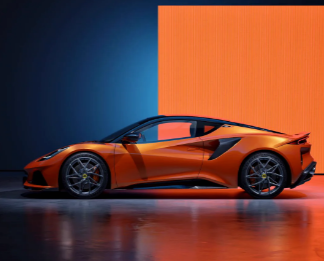
The Lotus Emira 420 Sport is the course correction we have all been waiting for. It is a highly focused, meticulously engineered weapon that realizes the platform’s full potential. But in an era where best luxury sports cars 2025 lists are dominated by hybridized heavyweights and digital interfaces, does this analog-feeling, British-built track star have what it takes to justify its six-figure price tag? Let’s dive deep into the engineering, the aerodynamics, and the sheer driving thrills of the ultimate Emira.
Aggressive Aerodynamics and Purpose-Driven Design
At first glance from across the paddock, the visual separation between the standard Emira and the Lotus Emira 420 Sport might seem subtle, but true automotive design is all about the details. Walk closer, and the aggressive re-engineering becomes apparent. Lotus hasn’t just added aesthetic flair; every single carbon fiber weave and vented duct serves a measurable aerodynamic or thermal purpose.
The front fascia features an expanded, honeycomb-grilled intake maw capable of swallowing 15 percent more air for the side radiators and 14 percent more through the center. This is flanked by a prominent front splitter and aggressively re-profiled brake ducts that channel high-velocity air to cool the rotors, dramatically increasing braking endurance during punishing track sessions. Moving along the profile, you’ll notice pronounced side skirts, carbon-slatted arch vents, and a McLaren-esque side inlet trim that instantly elevates the car’s exotic presence.
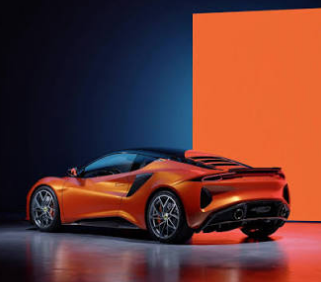
Around the back, a subtle but highly effective boot lip spoiler and a stunning symmetrical herringbone carbon deck lid replace the standard glass. Paired with a titanium exhaust system, these changes aren’t just for show. The aerodynamic tweaks generate a moderate but crucial 55 pounds (25kg) of extra downforce without adding a penalty in drag. The Lotus Emira 420 Sport sits 5mm lower on its bespoke forged alloy wheels, which collectively shed 11 pounds (5kg) of critical unsprung weight. In the high-end automotive market, reducing unsprung mass is the holy grail of suspension responsiveness.
The Cockpit: High-End Materials Meet a Missed Opportunity
Dropping into the cabin of the Lotus Emira 420 Sport, you are greeted by an interior that feels remarkably premium—a massive leap from the Spartan Lotus models of the past. The carbon interior pack and perforated Alcantara steering wheel feel superb in the hands, offering the tactile grip necessary for high-G cornering. The sightlines are exceptional; the classic “Becker points” over the front fenders allow you to position the nose of the car with telepathic accuracy.
However, as a seasoned industry expert, I have to call a spade a spade: the seating is a missed opportunity. The 420 Sport retains the standard 12-way adjustable sport seats. While they are incredibly comfortable for long highway stints and feature beautiful bespoke Alcantara inserts, they simply mount too high in the cabin. When you are piloting a track-ready sports car capable of this level of lateral grip, you want to sit entirely in the chassis, not on it. A set of aggressive, fixed-back carbon bucket seats—like the ones you’d spec when looking at exotic car lease deals for a Porsche GT RS model—would have transformed the driving position from very good to absolute perfection. Lotus cites the harsh economic realities of crash homologation for low-volume production, which is understandable, but hardcore enthusiasts will likely turn to the aftermarket to solve this.
Powertrain: AMG Brawn Meets British Tuning
Let’s talk firepower. Mounted mid-ship is the spectacular Mercedes-AMG sourced M139 2.0-liter turbocharged four-cylinder engine. For the Lotus Emira 420 Sport, Lotus engineers have liberated 416 horsepower and 369 lb-ft of torque, routing it all to the rear wheels through an eight-speed dual-clutch transmission (DCT).
Firing up the engine via the Lamborghini-style flip-up starter button doesn’t produce an exotic, multi-cylinder wail, but rather a purposeful, industrial snarl. Thanks to the lightweight titanium exhaust—which flows 30 percent better than the standard setup and saves 20 pounds (9kg) off the tail—the soundtrack is aggressive and highly engaging. Because the turbocharger sits just inches behind the driver’s left shoulder, the cabin is filled with a glorious symphony of induction noise. You hear the turbo spooling fiercely from 2,000 RPM, followed by a violent, juvenile flutter of the wastegate every time you lift off the throttle. It brings to mind the raw, visceral acoustics of a McLaren 675LT.
The thrust is relentless. The Lotus Emira 420 Sport completely eradicates the turbo lag found in older V8 platforms, surfing a massive wave of mid-range torque that flings you out of corners. The 0 to 60 mph sprint is dispatched in a blistering 3.9 seconds, with a top speed of 186 mph.
If there is a weak link in the powertrain, it is the DCT calibration. While the enlarged, beautifully machined carbon fiber paddle shifters feel great to the touch, the gearbox itself lacks the violent snap and telepathic obedience of Porsche’s PDK. Downshifts require a split-second of patience, and the paddle action could use a bit more mechanical resistance. It is a highly effective transmission, but in a Porsche Cayman GT4 alternative, every millisecond of engagement counts.
Multimatic DSSV Suspension: The Crown Jewel
The true defining feature of the Lotus Emira 420 Sport—and the main reason you are paying a premium—is the optional Lightweight Handling Pack. If you take anything away from this review, let it be this: if you buy this car, you must option the Handling Pack.
This package ditches the standard fixed-rate dampers for a set of Multimatic DSSV (Dynamic Suspension Spool Valve) dampers. If you know suspension engineering, you know DSSV is the absolute gold standard. Found on Le Mans prototypes, Formula 1 cars, and hypercars, these spool-valve dampers are infinitely configurable, brutally resistant to heat, and virtually immune to cavitation (the fluid bubbling that degrades shock performance during heavy track use).
They are manually adjustable for both bump and rebound at all four corners, offering 11 distinct clicks of adjustment. Lotus provides a cheat sheet in the owner’s manual. For spirited street driving, the setup is Front Bump 3, Rebound 4; Rear Bump 6, Rebound 4. For full track attack, you stiffen it up to Front Bump 9, Rebound 8; Rear Bump 10, Rebound 7.
Out on acne-scarred, undulating country roads, the DSSV dampers in their road setting perform black magic. The Lotus Emira 420 Sport manages to transmit every vital ounce of surface texture through the steering column while simultaneously soaking up harsh, mid-corner impacts that would send lesser cars skipping into the ditch. The chassis feels tied down, taut, and perfectly controlled. There is a distinct lack of body roll, yet the suspension compliance is so good that you never feel beaten up. It strikes a balance that rivals the legendary Alpine A110 R, making it one of the most competent real-world performance coupes money can buy.
On-Track Dynamics: Dancing on the Limit
To truly test a vehicle bearing the “Sport” moniker, you have to take it off the public highway and onto the circuit. Taking the Lotus Emira 420 Sport to the Hethel test track allowed me to push the bespoke Michelin Pilot Sport Cup 2 tires (LTS compound) to their absolute thermal limits.
With the Multimatic dampers dialed to their aggressive track settings, the car transforms. The hydraulic steering—a rarity in 2025 and a massive selling point for purists—is heavy, silky, and bursting with feedback. Turn-in is incredibly sharp. While the standard Emira can occasionally feel a bit aloof right off center, the 420 Sport leans on its stiffer spring rates and bespoke geometry to bite into the apex instantly.
During high-speed transitions, the chassis is unflappable. The lighter, stiffer rear subframe (a massive upgrade over the V6 models) keeps the rear axle planted, allowing for aggressive trail braking into tight hairpins. The car rotates beautifully on the brakes, allowing you to squareThe Ultimate Lotus Emira 420 Sport Review: Engineering a True Cayman GT4 Assassin
Over the past decade of my career evaluating and pushing high-performance vehicles to their absolute limits, few modern machines have carried the sheer weight of expectation quite like the Lotus Emira 420 Sport. The automotive landscape in 2025 and 2026 has been a turbulent one, marked by electrification mandates and the quiet retirement of legendary internal combustion engines. Yet, out of Hethel comes a defiant roar. The Lotus Emira 420 Sport arrives not just as a swan song for British petrol-powered ingenuity, but as a hyper-focused, precision-engineered assassin aimed squarely at the undisputed king of the mid-engine sports car segment: the Porsche Cayman GT4.
For years, Stuttgart’s dominance seemed unshakeable. Gavan Kershaw, the Director of Attributes and Product Integrity at Lotus, has never been shy about naming Porsche as the benchmark. While the standard Emira configurations—the Turbo, Turbo SE, and the V6—were designed to trade blows with the standard Cayman and Cayman S, they always left purists craving a sharper edge. The base models offered a beautiful silhouette and commendable poise, but they lacked that final degree of aggressive telemetry required to dominate a circuit. Enter the Lotus Emira 420 Sport. Armed with radical suspension upgrades, bespoke aerodynamics, and an uprated powertrain, the Lotus Emira 420 Sport is the realization of this platform’s true potential, built specifically for driving purists who demand uncompromising feedback.
Aerodynamics and Exterior Evolution: Form Driven by Relentless Function
Approach the Lotus Emira 420 Sport from a distance, and the visual differences from the standard car might seem subtle to the untrained eye. However, step closer, and the aggressive aerodynamic rework becomes undeniably clear. The design parallels with Woking’s finest are obvious; the side inlet trim, especially when finished in exposed carbon fiber, evokes a distinct McLaren-esque visual drama. But for the Lotus Emira 420 Sport, every curve and slash serves a strict thermodynamic or aerodynamic purpose.
The comprehensive exterior package includes an extended front splitter, significantly opened-up front intake vents, hyper-aggressive side skirts, specialized wheel arch louvers, and a prominent boot lip spoiler. The slatted carbon fiber deck lid, woven in a stunning symmetrical herringbone pattern, sits above a bespoke titanium exhaust system. Sitting five millimeters lower on forged alloy wheels, the Lotus Emira 420 Sport projects a menacing, track-ready stance. Whether it is parked outside Miami exotic car dealerships or carving through the technical canyons of Malibu, the Lotus Emira 420 Sport commands profound respect.
Crucially, these aerodynamic modifications yield a tangible 25kg increase in downforce without adding any straight-line aerodynamic drag. The re-engineered honeycomb front grille increases airflow to the side radiators by 15 percent and to the central cooling matrix by 14 percent. This enhanced thermal management is critical for prolonged track sessions, feeding dense, cool air to both the engine and the re-profiled brake ducts to ensure fade-free stopping power. For buyers investing heavily in carbon fiber performance parts, this car proves that factory integration will always outclass aftermarket bolt-ons.
Powertrain Dynamics: AMG Firepower Tuned by Hethel
At the heart of the Lotus Emira 420 Sport lies the formidable Mercedes-AMG M139 turbocharged 2.0-liter four-cylinder engine. While traditionalists may mourn the gradual phasing out of the supercharged 3.8-liter V6, the four-cylinder is undeniably the superior weapon for this specific chassis. It is lighter, sits lower, and utilizes a next-generation rear subframe that is remarkably stiffer than the V6 variant—effectively matching GT4 racing specifications.
Thanks to a 30 percent improvement in exhaust valve gas flow courtesy of the new titanium exhaust, power has been bumped to a potent 416 brake horsepower and 369 lb-ft of torque. When evaluating luxury sports car financing options for a vehicle in this six-figure bracket, buyers expect visceral thrills, and the Lotus Emira 420 Sport absolutely delivers. The engine characteristics are industrial, purposeful, and immensely aggressive. Building boost from 2,000 rpm, the twin-scroll turbocharger inhales vast quantities of air right behind your left shoulder. Lifting off the throttle produces an almighty turbo flutter that is pure juvenile joy, highly reminiscent of a baby McLaren P1.
Performance figures are appropriately blistering. The 0-62 mph sprint is dispatched in a scant 3.9 seconds, pressing on to a top speed of 186 mph. Unlike the older V6, which required the driver to chase the tachometer past 4,000 rpm to find real thrust, the Lotus Emira 420 Sport delivers a relentless wave of torque that flattens you into the seat almost instantly. The standard eight-speed dual-clutch transmission (DCT) operates via larger, re-engineered carbon fiber paddle shifters. While I personally wish the paddles offered a heavier, more mechanical race-car resistance, the gear changes are violently quick at the redline. The distinct ignition-cut crack from the titanium pipes on upshifts ensures the Lotus Emira 420 Sport never feels synthesized or artificial.
The Handling Pack: The Magic of Multimatic DSSV Dampers
If there is one absolute non-negotiable option when specifying the Lotus Emira 420 Sport, it is the Lightweight Handling Pack. This package is the singular element that transforms the car from a great road car into an elite track weapon. While the standard fixed-rate dampers are a noticeable step up from the base models, the Handling Pack introduces manually adjustable Multimatic Spool Valve (DSSV) dampers.
For the uninitiated, DSSV dampers are the holy grail of suspension technology, utilized in top-tier motorsport and hypercars. Unlike traditional shim-based dampers that can suffer from fluid cavitation (the buildup of microscopic bubbles that ruin damping consistency under extreme heat), spool valves offer almost infinite configurability and indestructible consistency. The Lotus Emira 420 Sport allows for 11-way manual adjustment at each corner for both bump and rebound. Lotus generously provides a handbook with baseline setups: a softer setting for road compliance and a radically stiffened geometry for circuit duty.
This level of suspension sophistication justifies the premium price tag of the Handling Pack. When paired with the 10kg weight saving from a lithium-ion battery, a 5kg reduction from the carbon deck lid, a 9kg saving from the titanium exhaust, and 5kg of critical unsprung weight saved by the forged wheels wrapped in ‘LTS’ bespoke Michelin Pilot Sport Cup 2 tires, the Lotus Emira 420 Sport becomes an entirely different animal. For enthusiasts setting up track day insurance for high-speed events at demanding circuits like COTA in Texas, these dampers provide the granular control necessary to shave tenths off lap times while managing tire temperatures perfectly.
Road and Track Performance: Precision, Poise, and Playfulness
Driving the Lotus Emira 420 Sport on unpredictable public roads reveals the true genius of the Hethel engineering team. My initial fear, given the aggressive track focus and reduced ride height, was that the Lotus Emira 420 Sport would be dynamically frenetic and punishing over broken pavement. Thankfully, that is entirely untrue. With the DSSV dampers set to their recommended road parameters, the chassis strikes a miraculous balance. It transmits every vital texture of the road surface through the steering column while smoothly rounding off harsh impacts. You can attack acne-addled, undulating country roads with absolute confidence; the body control is iron-fisted, ensuring an errant mid-corner bump will never send you spiraling off the tarmac.
The hydraulic steering is a masterclass in calibration. In Track mode, it is silky, perfectly weighted, and deeply communicative. While it naturally gently spasms as the aggressive Cup 2 tires deflect across aggressive cambers, it provides an authentic, unfiltered connection to the front axle. However, if there is one minor dynamic critique of the Lotus Emira 420 Sport, it is a slight, occasional aloofness on initial turn-in at lower speeds. While a current generation Porsche 911 GT3 communicates load transfer with surgical consistency, the Lotus Emira 420 Sport requires the driver to consciously push heat into the front tires and utilize trail-braking to get the nose to bite aggressively. Once loaded up, however, it nips into the apex beautifully.
Transitioning to a proper racing circuit transforms the experience. Testing the Lotus Emira 420 Sport on the Hethel test track with the dampers locked into their aggressive track geometry showcases an immensely capable platform. The chassis forgives minor driver errors, allowing you to back off the throttle mid-corner to tuck the nose back onto the racing line seamlessly. High-speed direction changes are dispatched with cool, flat, minimal roll. Under heavy braking from triple-digit speeds, the Lotus Emira 420 Sport remains perfectly squat and stable, the upgraded brake ducts managing thermal loads exceptionally well. And when the mood strikes, the electronic differential (E-diff) proves incredibly willing to accommodate 50 mph powerslides. The car is putty in your hands, allowing you to intuitively balance slip angles with throttle inputs.
Interior Ergonomics: The Daily Driver Compromise
Despite the hardcore mechanicals, the interior of the Lotus Emira 420 Sport reveals its dual mandate as both a track toy and a grand tourer. The cabin offers a brilliant, almost McLaren-like panoramic view out over the low front scuttle, utilizing classic ‘Becker points’ over the front fenders to help you position the car perfectly through tight apexes.
However, there is a notable omission that drivers of my experience level will immediately lament: there is no ultra-aggressive, fixed-back carbon bucket seat option. According to Lotus management, harsh economic homologation realities and the fact that the Lotus Emira 420 Sport is still primarily a road car dictated the retention of the standard 12-way adjustable seats. While they can be beautifully trimmed in perforated, bespoke-colored Alcantara, you sit fundamentally too high in the cabin. In high-G corners on the track, I found myself bracing my core and back muscles to stay centered behind the wheel, compensating for the lack of pronounced lateral shoulder and thigh support. For a car with such elevated dynamic billing, an optional track-focused seat would elevate the driver-machine interface from excellent to flawless.
Pricing, Rivals, and the High-Performance Market Landscape
In the current premium automotive market, the Lotus Emira 420 Sport occupies a fascinating and fiercely competitive space. The base price sits at approximately $135,000 (translating from the £105,900 UK base). However, to unlock the true capability of the Lotus Emira 420 Sport, the Lightweight Handling Pack is mandatory, bringing the total closer to the $150,000 threshold.
At this price point, buyers are actively analyzing premium auto lease deals and cross-shopping against heavy hitters. With the Porsche Cayman GT4 officially out of production, the Lotus Emira 420 Sport effectively fills the void for a mid-engine, track-focused scalpel. Its closest current rival is the Porsche 911 Carrera T, a phenomenal machine equipped with a manual gearbox, but one that lacks the bespoke, exotic mid-engine drama of the Lotus. Buyers looking to buy luxury sports cars in Los Angeles or Miami will find the Lotus Emira 420 Sport offers significantly more street presence and exclusivity than a standard 911.
Furthermore, the ownership experience in 2026 requires consideration of modern logistics. Securing favorable exotic car insurance for a limited-production Lotus is generally straightforward given the brand’s enthusiast demographic, and the reliability of the Mercedes-AMG powertrain eases long-term maintenance anxieties compared to historical boutique British sports cars.
The Final Verdict
After years of development, setbacks, and endless anticipation, the Lotus Emira 420 Sport has finally arrived as the heightened, razor-sharp variant we always knew this chassis deserved. It is not just a cosmetic upgrade; it is a profound engineering achievement that leverages elite damper technology and functional aerodynamics to deliver a driving experience that genuinely rivals, and in some emotional aspects surpasses, Stuttgart’s legendary GT products. It blends visceral turbocharged aggression with analog hydraulic steering in a beautifully sculpted package. For the dedicated driver willing to master its nuances, the Lotus Emira 420 Sport is a masterpiece of modern automotive engineering.
If you are ready to experience the pinnacle of British sports car dynamics and secure an allocation for this exceptional machine, reach out to your local Lotus specialist today to discuss bespoke configurations, current luxury auto financing rates, and to schedule your private track-day demonstration.