
The Evolution of the Porsche 911 Carrera GTS: 992 T-Hybrid vs. 997 Classic
As an automotive journalist and test driver with over a decade of experience evaluating Zuffenhausen’s finest, I have witnessed first-hand the shifting tectonic plates of the performance car industry. The sports car landscape has transformed drastically over the last fifteen years, moving from tactile, analog machines to highly computerized, electrified weapons. Nowhere is this paradigm shift more evident than in the lineage of the Porsche 911 Carrera GTS.
When you compare the original 997-generation GTS with the cutting-edge 992 T-Hybrid, you are not just comparing two cars; you are analyzing two completely different eras of automotive engineering. One represents the ultimate refinement of a classic formula, while the other serves as the tip of the spear for a digital revolution. For enthusiasts navigating the market of luxury sports cars today, understanding the duality of the Porsche 911 Carrera GTS is essential. Let’s break down exactly what happens when a modern classic meets a contemporary icon on the twisting canyon roads of America.
The Genesis: Why the 997 Porsche 911 Carrera GTS Remains a Masterpiece
To understand where we are, we must first look at where we started. Back in 2010, the champagne corks must have been flying in Stuttgart when the product planning team finalized the original Porsche 911 Carrera GTS. The 997 generation—the first truly modernized water-cooled 911 platform—was reaching the end of its life cycle. Porsche needed a graceful way to sunset this beloved chassis before the heavily revised 991 generation, complete with its controversial longer wheelbase and electro-mechanical steering, took over the showroom floors.
While there were highly exclusive, low-volume specials like the GT2 RS, the legendary GT3 RS 4.0, and the ultra-rare Sport Classic dominating magazine covers, Porsche needed a high-volume bridge. They needed a car that would keep eager buyers walking into dealerships without incurring massive research and development costs. So, they dusted off the legendary “GTS” moniker—a badge historically tied to the iconic 904 GTS racer of the 1960s and the grand touring 928 GTS of the 1990s—and went rummaging through their own engineering toy box.
What they created was nothing short of brilliant. The original Porsche 911 Carrera GTS was essentially a carefully curated “greatest hits” album of the 997 generation. Porsche wisely left the hardcore GT3 motorsport components alone. Instead, the Porsche 911 Carrera GTS became the first non-motorsport 911 to pair the aggressive wide-body shell (normally reserved for all-wheel-drive Carrera 4 models) with a purist rear-wheel-drive layout.
The heart of the car was a naturally aspirated 3.8-liter flat-six engine, borrowed directly from the Sport Classic, featuring the coveted “Powerkit.” This bumped output to a highly respectable 408 horsepower. Porsche Active Suspension Management (PASM) adaptive dampers and a throatier sports exhaust system were made standard equipment. Buyers also received a revised front splitter, gorgeous center-lock alloy wheels, a Sport Design steering wheel wrapped in Alcantara, and bespoke GTS badging.
In hindsight, what made the 997 Porsche 911 Carrera GTS so remarkable was the pricing strategy. The cost to upgrade from a standard Carrera S to a GTS was astonishingly low by today’s standards—a modest premium that made it the undeniable bargain of the luxury sports cars segment. You received enhanced performance, a wider track, and aggressive styling for practically pennies on the dollar.
Enter the Future: The 992 Porsche 911 Carrera GTS T-Hybrid
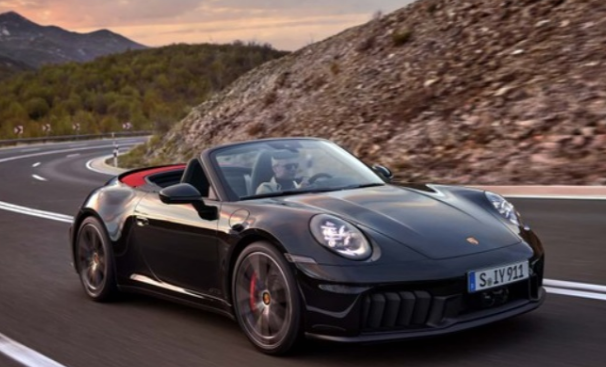
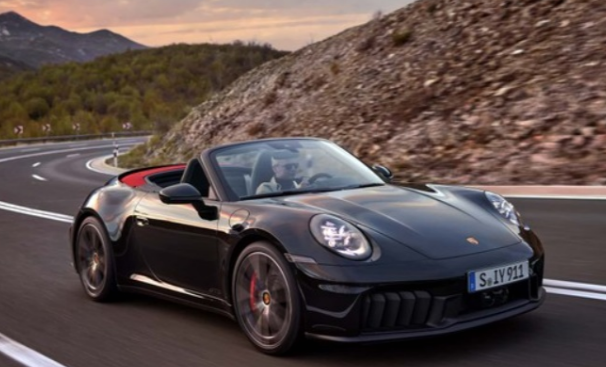
Fast forward to the present day, and the philosophy behind the GTS badge has fundamentally shifted. Take one look at the new 992-generation Porsche 911 Carrera GTS T-Hybrid, and you instantly realize this is no longer a parts-bin special designed to see out the end of a generation. Instead, the new Porsche 911 Carrera GTS is the technological trailblazer for the entire brand.
While the modern standard Carrera retains the familiar 3.0-liter twin-turbo engine, the 992 GTS boasts a completely bespoke, freshly developed 3.6-liter flat-six engine equipped with a cutting-edge T-Hybrid system. This isn’t a heavy plug-in hybrid designed for electric-only commutes; it is a performance-focused hybrid system derived straight from motorsport applications. A compact electric motor is integrated seamlessly into the 8-speed PDK transmission, while an electrically driven turbocharger (e-turbo) eliminates turbo lag completely.
The resulting numbers are staggering. The 992 Porsche 911 Carrera GTS delivers a crushing 533 horsepower and 450 lb-ft of torque. It annihilates the 0-60 mph sprint 0.3 seconds faster than its predecessor, a margin that feels massive from behind the wheel. In the traction-limited world of rear-wheel-drive sports cars, this level of instant, brutal acceleration changes the entire dynamic of the vehicle.
However, this immense leap in performance comes at a cost. The Porsche 911 price structure has shifted significantly over the last decade. The financial walk from a base model to a modern Porsche 911 Carrera GTS requires a substantial premium, reflecting the immense R&D invested in the hybrid architecture. Standard rear-axle steering is now included to manage the vehicle’s footprint, but one crucial element has been lost to progress: the manual transmission. Because the hybrid motor is housed within the PDK gearbox, a three-pedal setup is physically impossible. While from an engineering standpoint, the decision is flawlessly logical, for driving purists, it remains a bitter pill to swallow.
A Mid-Spec Model with Supercar Power
Whenever a fellow journalist or a prospective buyer gets out of the new 992 Porsche 911 Carrera GTS for the first time, their reaction is universally identical: absolute disbelief at the sheer velocity of the machine. During my initial test drives on the sun-baked highways of Southern California, I was genuinely taken aback by the viciousness of its launch. Because the T-Hybrid system provides instant electrical torque the millisecond you brush the throttle, the new Porsche 911 Carrera GTS is actually quicker off the line in the first fifty feet than a modern 911 Turbo S.
The immediate follow-up question everyone asks is, “If the GTS is this fast, what on earth is the next Turbo going to feel like?” But honestly, during my entire week carving through the Malibu canyons and navigating the Pacific Coast Highway, I never once wished for a single additional horsepower. The modern Porsche 911 Carrera GTS makes more power today than the 997 Turbo S did a decade ago. It may occupy the “mid-spec” position in the current 911 hierarchy, but it offers performance that embarrasses dedicated exotic supercars.
You can still order your Porsche 911 Carrera GTS with either rear-wheel or all-wheel drive, and in coupe, cabriolet, or Targa body styles. It features a fully digital dashboard, endless infotainment app integrations, and sophisticated driver-assistance systems. In its most comfortable drive modes, it is a remarkably docile grand tourer, easily capable of handling a daily commute through Los Angeles traffic. But when you rotate the steering wheel dial to ‘Sport Plus,’ the powertrain sharpens to a razor’s edge. The torque delivery is relentless. The acceleration is violent. The 992 Porsche 911 Carrera GTS is a true dual-purpose weapon, blending everyday versatility with raw, unadulterated speed.
Behind the Wheel of the 997: Analog Perfection
What defense could a fifteen-year-old, naturally aspirated sports car possibly mount against such a technological juggernaut? To find out, I spent an afternoon piloting a pristine, low-mileage 997 Porsche 911 Carrera GTS. Configured in the holy trinity of enthusiast specs—rear-wheel drive, slick manual gearbox, and solid roof coupe—this car represents the 997 generation at its absolute, uncorrupted peak.
Visually, the 997 has aged into a beautiful modern classic. Its compact proportions are a stark contrast to the massive footprint of today’s luxury sports cars. Slipping into the cabin is a journey back to a simpler time. The interior is refreshingly devoid of massive haptic screens. You are greeted by a simple, Alcantara-wrapped steering wheel lacking a dozen distracting buttons. Ahead of you sits the iconic five-dial instrument cluster with a physical tachometer proudly taking center stage. You start the engine not by pressing a plastic button, but by inserting a physical key into the ignition on the left side of the steering column and twisting it.
The moment you roll away, the 997 Porsche 911 Carrera GTS reminds you of everything the automotive industry has sacrificed in the pursuit of lap times. The hydraulic steering chatters constantly, feeding high-fidelity information about the road surface directly into your palms. The six-speed manual transmission possesses a mechanical, oily precision that feels like racking the bolt of a precision rifle.
The 3.8-liter engine operates on a completely different wavelength than the modern hybrid. It is incredibly smooth, lacking the low-end brute force of the 992, but building a beautiful, linear crescendo of power. Below 5,000 RPM, the 997 Porsche 911 Carrera GTS feels no faster than a standard Carrera S of its era. But as you cross the 6,000 RPM threshold, special resonance flaps in the intake manifold open wide. The engine tone hardens into a metallic howl, and the car surges forward enthusiastically toward its 7,300 RPM redline.
The Weight of Progress: Old vs. New
When evaluating these two machines on tight, technical switchbacks—the kind you find deep in the Appalachian Mountains or the Angeles Crest—the differences become profound. The 992 Porsche 911 Carrera GTS is a masterclass in grip and execution, but its sheer speed means you can only deploy full throttle for mere fractions of a second before reaching socially unacceptable, and highly illegal, velocities. It feels incredibly capable, yet occasionally constrained by the limits of public roads.
The 997 Porsche 911 Carrera GTS, however, comes alive in these environments. The defining factor here isn’t horsepower; it is mass. The original GTS weighs roughly 385 pounds (175 kg) less than the new T-Hybrid. Considering the 992 carries a battery pack, an electric motor, heavy 400-volt wiring, massive brakes, and a vastly larger chassis, Porsche’s engineers did an admirable job keeping the weight penalty under 400 pounds. Yet, physics cannot be entirely cheated.
Combined with a shorter wheelbase and that communicative hydraulic steering, the 997 feels remarkably lithe. It dances over road imperfections rather than attempting to pummel them into submission. If the 992 Porsche 911 Carrera GTS is an F-35 fighter jet—relying on immense thrust and advanced computing to dominate the skies—the 997 is a World War II Spitfire: analog, highly communicative, and dependent entirely on the skill and input of its pilot. On a twisting road, the older car allows you to use a much higher percentage of its potential, creating a deeper, more rewarding emotional connection.
The Reality of Modern Performance: Tires and Usability
This comparison also brings up a critical discussion about modern sports car philosophy. Recently, I had the privilege of driving the highly exclusive Porsche 911 S/T—a lightweight, manual-transmission special edition designed purely for driving pleasure. Visually, with its heritage-inspired cabin, it promised to be the ultimate modern analog experience.
However, my test drive took place on damp, cold roads in the Pacific Northwest. Porsche had fitted the S/T with aggressive, track-focused Michelin Cup 2 tires. In these conditions, the tires simply could not generate sufficient heat to provide safe mechanical grip. The car’s breakaway characteristics became sudden and spiky, transforming what should have been a joyful drive into a deeply stressful exercise in traction management.
This highlights a vital consideration when you buy a Porsche 911 today. Manufacturers are increasingly pushing the limits of road cars by equipping them with high-performance tires designed for the racetrack. For the average buyer shopping for luxury sports cars for sale, it is imperative to match your equipment to your environment. If you live in a region with heavy rainfall, swapping out track rubber for a premium high-performance street tire (like a Michelin Pilot Sport 4S) will sacrifice a fraction of ultimate track grip but yield a infinitely more confident and enjoyable experience on real-world roads.
The Market Reality: Values and Investment
From a market perspective, the trajectory of the Porsche 911 Carrera GTS is fascinating. If you are exploring exotic car financing to add one of these to your garage, you are looking at two very different asset classes. The original 997 GTS has firmly established itself as a modern classic. Because it represents the end of the hydraulic steering and naturally aspirated era for the non-GT 911, its depreciation curve has flattened, and pristine manual examples are commanding premium prices.
Conversely, the 992 Porsche 911 Carrera GTS commands a steep entry price, reflecting the current luxury market dynamics. The Porsche 911 price tag has crept upward, and buyers must also factor in comprehensive performance car insurance to cover the immense value and power of these hybrid powertrains. However, for those who want the absolute pinnacle of daily-drivable performance, the 992 GTS has no equal. It successfully blends the rapid response of an EV with the visceral thrill of a high-revving flat-six.
The Verdict
The evolution from 997 to 992 is a perfect encapsulation of automotive progress. The 997 Porsche 911 Carrera GTS remains one of the greatest driver’s cars ever produced—a tactile, engaging, perfectly sized machine that prioritizes the journey over the destination. The 992 Porsche 911 Carrera GTS T-Hybrid, meanwhile, is an astonishing technological achievement, redefining what is physically possible for a street-legal sports car. It is brutally fast, immensely capable, and undeniably the future of the brand.
Whether you find yourself drawn to the mechanical purity of the past or the electrified dominance of the future, there has never been a better time to experience the magic of Zuffenhausen. If you are ready to feel this incredible engineering lineage for yourself, reach out to your local Porsche Center today to explore current luxury sports cars for sale, schedule an exclusive test drive, and discover which era of the GTS truly speaks to your soul.