
2026 Toyota Land Cruiser Commercial: The Ultimate Tax-Busting 4×4 Cargo Van
Venture into the most unforgiving, desolate regions of the globe, and you will inevitably cross paths with a Toyota Land Cruiser. From the sun-scorched trails of the Australian Outback to the jagged dunes of the Sahara, the nameplate has built an impenetrable reputation. In environments where a mechanical failure equates to a genuine survival situation, operators trust Toyota.
Yet, the 2026 Toyota Land Cruiser Commercial represents a highly specialized, somewhat bizarre offshoot of this legendary lineage. Built specifically for the European market, this two-seat cargo conversion of the highly anticipated J250-generation SUV strips away passenger capacity in favor of raw utility and massive financial advantages. It is a premium 4×4 cargo van designed not just to conquer mud and rock, but to navigate the equally treacherous landscape of commercial vehicle taxation.
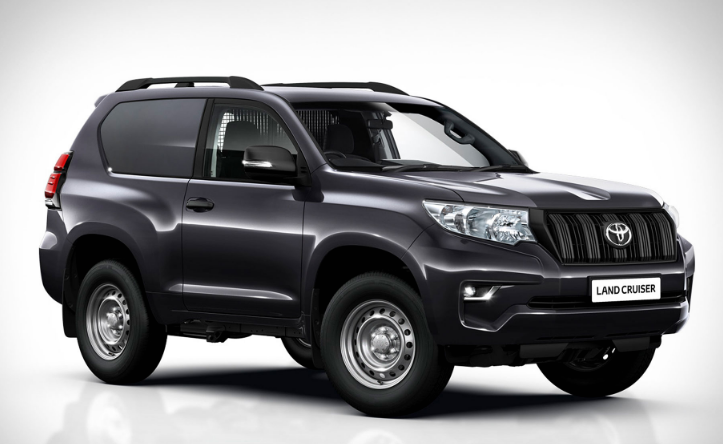
For fleet managers, agricultural contractors, and remote utility workers, the Toyota Land Cruiser Commercial is a fascinating proposition. It blends heavy-duty off-road capability with the robust business tax benefits typically reserved for traditional panel vans.
The Economics of the Commercial SUV Conversion
To understand the existence of the Toyota Land Cruiser Commercial, you have to understand the financial mechanics of European vehicle taxation. Up close, it is abundantly clear that the J250 platform was originally engineered as a passenger-hauling family SUV. The transformation into a commercial vehicle is a calculated move to secure favorable business vehicle tax deductions.
In the United Kingdom, the Republic of Ireland, and several other European markets, classifying a vehicle as a commercial van triggers a cascade of financial incentives. Drivers utilizing these vehicles for work face drastically reduced tax burdens for private use compared to standard passenger cars. Furthermore, the initial purchase taxes are significantly lower.
For a standard passenger-spec Land Cruiser in the UK, a buyer is saddled with a Vehicle Excise Duty (VED) of roughly £5,490 ($7,340). By choosing the Toyota Land Cruiser Commercial, that tax burden plummets to a flat commercial rate of just £345 ($460). This aggressive tax loophole makes commercial SUV conversions a rapidly expanding niche, directly competing with similar models like the Land Rover Defender Hard Top and the Ineos Grenadier Commercial. While US buyers often look to Section 179 tax deductions for heavy SUVs, the European market relies on physical vehicle classifications to secure these vital business tax write-offs and lower commercial auto insurance premiums.
The Derbyshire Conversion Process
The Toyota Land Cruiser Commercial does not roll off the assembly line in Japan in this configuration. Instead, it ships to the United Kingdom as a standard, fully outfitted passenger SUV. The transformation takes place at Toyota’s manufacturing facility in Derbyshire—the same plant responsible for prepping US-bound GR Corollas.
The physical modifications are extensive and permanent. The second and third-row seats are entirely extracted to make way for a completely flat, heavy-duty load floor. To satisfy strict government compliance standards and prevent rogue owners from converting the van back into a tax-dodging passenger car, the factory mounting points for the rear seats are physically cut away and welded over.
While the rear doors retain their exterior glass to maintain the SUV’s original aesthetic, the windows are fixed in place. Solid protective bulkheads are installed behind the glass to prevent shifting cargo from shattering the panes from the inside. The internal window motors remain hidden inside the door panels, but the physical switches are completely plated over. The driver’s door switchgear receives the same treatment, with plastic blanks covering where the rear window controls used to be.
A heavy-duty, full-height steel mesh bulkhead is bolted in immediately behind the front seats, protecting occupants from loose equipment in the event of a sudden stop. Strangely, a few ghosts of its passenger-car past remain: the factory third-row cupholders are still molded into the rear cargo plastics, serving as a slightly absurd resting place for loose hardware or tools.
Fleet Utility Meets Executive Luxury
Because the Toyota Land Cruiser Commercial is built upon the well-equipped European-spec J250 chassis, the cabin presents a sharp juxtaposition. Behind the steel bulkhead is a utilitarian void; in front of it is an executive-tier mobile office.
Most traditional commercial off-road vehicles force operators to endure spartan interiors, but this model retains power-operated front seats complete with both heating and ventilation. Drivers benefit from the standard model’s premium high-spec audio system, advanced radar cruise control, and modern fleet management telematics integration. For long-haul utility workers or site managers who spend hours behind the wheel, the cabin ergonomics and tech suite significantly reduce driver fatigue.
The exterior also holds onto its premium features, including the power-operated rear tailgate with an independently opening upper glass section. However, in a commercial context, this feature highlights a functional anomaly. Without the raised floor of a standard trunk, the separate glass hatch is practically useless for loading; anything dropped through the window falls straight down to the new, lowered cargo floor.
Powertrain Dynamics: Turbodiesel Torque
Under the hood lies a forbidden fruit for the North American market: a 2.8-liter turbocharged inline-four diesel engine augmented by a 48-volt mild-hybrid system. This is the powertrain of choice for global operators venturing far beyond mobile cell service, prioritizing low-end grunt and durability over high-end horsepower.
The turbodiesel engine generates 202 horsepower and a robust 369 lb-ft of torque. While 202 horsepower might seem underwhelming for a vehicle with an unladen mass of 5,200 pounds, the sheer pulling power tells a different story. Maximum torque is available from just 1,600 rpm. Mated to an intelligently calibrated eight-speed automatic transmission, the Toyota Land Cruiser Commercial easily conquers the inertia of heavy payloads.
From a refinement standpoint, this is a gruff, unapologetic commercial engine. It does not possess the inherent smoothness of the six-cylinder diesels found in the European Defender or Grenadier. The cabin experiences noticeable vibration at idle, and the engine note under heavy acceleration is distinctly industrial. The transmission is tuned heavily for efficiency and low-end torque retention; left in standard drive modes, the eight-speed gearbox refuses to cross 3,800 rpm before upshifting, well short of the 4,400-rpm redline. Accessing the upper rev range requires engaging the transmission’s manual mode, though the diesel’s architecture heavily discourages high-rpm driving.
Once at highway speeds, the powertrain settles into a comfortable, muted rhythm. While Toyota claims a 10.2-second 0-62 mph time, the reality of driving a commercial 4×4 cargo van makes sprint times irrelevant. Hard acceleration causes the heavy chassis to squat noticeably on its rear axle, lifting the nose. Outfitted with aggressive Dunlop AT23 Grandtrek tires, the vehicle is susceptible to minor wandering in highway lanes at speeds exceeding 75 mph, reinforcing that its natural habitat is a muddy job site, not the fast lane.
Ride, Handling, and Off-Road Prowess
Like traditional heavy-duty trucks, the Toyota Land Cruiser Commercial boasts a suspension tuned for payload, meaning it rides significantly better when put to work. Unladen, the rear suspension feels underdamped over broken pavement, translating jagged impacts directly into the cabin.
However, load the rear cargo bay to capacity, and the chassis dynamics transform. During field testing with a 220-pound cast-iron industrial pump strapped to the lashing points, the suspension settled. Bumps, deep ruts, and severe undulations were absorbed with the composed, tank-like stability that Land Cruiser loyalists expect.
When the pavement ends, the Toyota Land Cruiser Commercial truly separates itself from standard fleet vans. It retains the exact same hardcore off-road componentry as the passenger version. Drivers have access to a true two-speed transfer case for low-range crawling, a manually locking center differential, and an advanced electronic traction-management suite designed to maintain forward momentum in zero-grip scenarios. Whether traversing deeply rutted, sun-baked mud tracks or navigating flooded agricultural sites, the vehicle remains virtually unstoppable.
Cargo Capacity and Practicality
As an off-road weapon, the vehicle is flawless. As a dedicated cargo van, the Toyota Land Cruiser Commercial has inherent limitations due to its SUV architecture.
The physical load space measures 66.4 inches in length, 50.6 inches in width, and 42.9 inches in height. While substantial, it cannot rival the sheer volumetric capacity of a purpose-built commercial vehicle like a Ford Transit. The primary physical drawback is the vehicle’s high ground clearance. The elevated load floor forces operators to lift heavy, awkwardly shaped cargo significantly higher than they would in a traditional van, increasing the risk of strain.
Furthermore, the top-hinged tailgate is less practical in tight loading bays or urban job sites than standard side-hinged barn doors. A massive single tailgate requires considerable rearward clearance to open fully, which can be frustrating when backed up close to loading docks or other equipment.
Despite the ergonomic challenges, the raw capability numbers are highly competitive for the commercial 4×4 sector. Toyota officially rates the rear cargo bed for a maximum payload of 1,780 pounds. Additionally, the chassis is homologated to tow up to 7,700 pounds—the absolute maximum legal limit for a vehicle of this footprint under current European towing regulations.
The Commercial Market Verdict
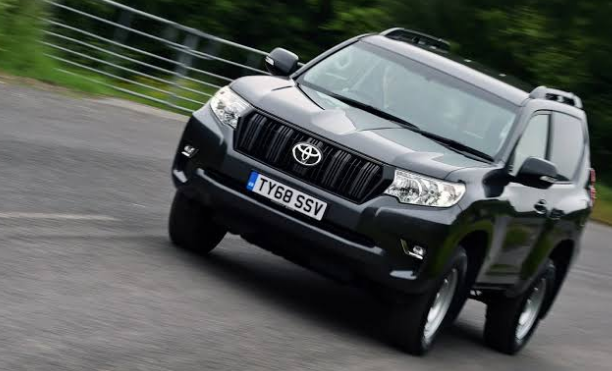
The 2026 Toyota Land Cruiser Commercial is a brilliant, highly capable oddity. It is not designed to replace the standard panel vans that handle last-mile delivery logistics. Instead, it is built for a highly specific operator: the surveyor, the remote utility technician, or the agricultural manager who requires uncompromised off-road capability, premium cabin tech, and aggressive commercial vehicle tax benefits.
At a pre-tax price of roughly £50,640 ($67,800), the commercial variant undercuts the entry-level passenger Land Cruiser by nearly £9,000 ($12,000). For businesses managing fleet vehicle leasing budgets, that immediate capital savings—combined with rock-bottom VED tax rates and potentially lower commercial auto insurance premiums—makes the financial case impossible to ignore.
You trade passenger capacity and the loading ease of a low-floor van for supreme durability and go-anywhere confidence. It is a highly specialized tool, but for the professionals who operate at the very edge of the map, it is exactly the tool required.
If you are currently evaluating your fleet management strategy or looking to maximize your business vehicle tax deductions with a capable 4×4 cargo van, reach out to our commercial fleet consulting team today to structure the most tax-efficient lease for your operations.