
Pushing the Limits: How the Porsche Cayenne Electric Matched the World’s Largest Aircraft
The intersection of high-speed automotive engineering and cutting-edge aerospace innovation is a place few vehicles will ever reach. For decades, the automotive industry has relied on airstrips merely as proving grounds for straight-line speed, pitting supercars against fighter jets in gimmicky, made-for-television drag races. However, in the high-stakes world of modern zero-emission vehicles, the goalposts have shifted. Today, it is no longer just about off-the-line acceleration; it is about sustained high-speed stability, advanced aerodynamic efficiency, and relentless thermal management. To prove its mettle in this demanding new era, the engineers at Stuttgart brought the highly anticipated Porsche Cayenne Electric to the Mojave Air and Space Port for an unprecedented engineering exercise.
This was not a race to the finish line. Instead, it was a highly coordinated, data-driven synchronization test between the Porsche Cayenne Electric and the Stratolaunch Roc—a behemoth that currently holds the title of the world’s largest flying plane. Operating in tandem with the hypersonic flight testing firm’s six-engine aircraft, the luxury electric vehicle demonstrated exactly why the future of the high-performance EV market is so incredibly promising.
The Ultimate Runway Rendezvous at Mojave
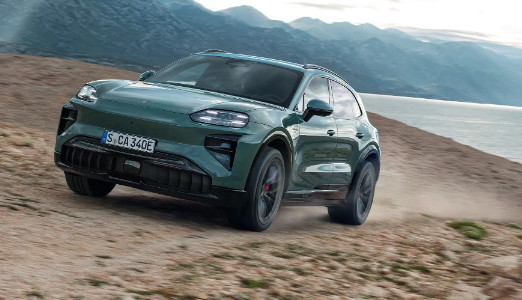
To truly understand the magnitude of this tandem test, one must first understand the environment. The Mojave Air and Space Port in California is legendary within aerospace engineering circles. It is a proving ground where experimental aircraft and civilian spaceflight ventures test the absolute limits of physics. It was here that Porsche decided to validate the high-speed dynamics of its most powerful electric SUV to date.
When you introduce a high-end electric SUV to a live runway operating a massive testbed aircraft, the margin for error is effectively zero. The Stratolaunch Roc is not a standard commercial airliner; it is a purpose-built twin-fuselage leviathan utilized to carry and launch rocket-powered aircraft into the upper atmosphere for hypersonic flight testing. Porsche wanted to see if the Porsche Cayenne Electric could maintain pace with this leviathan during its critical takeoff and landing phases.
The coordination required the presence of an FAA coordinator on-site to ensure strict safety protocols were met. This was a synchronized dance of heavy machinery, requiring the Porsche Cayenne Electric to shadow the aircraft perfectly. As the aerospace and automotive sectors increasingly overlap in their pursuit of advanced battery technologies and aerodynamic perfection, tests like this provide invaluable data that trickles down to consumer models.
Under the Hood: Unpacking the Porsche Cayenne Electric Powertrain
From an engineering perspective, maintaining pace with an accelerating aerospace vehicle demands an immense, uninterrupted delivery of power. The Porsche Cayenne Electric utilized for this test was not holding back, boasting a staggering 1139 horsepower on tap. For buyers exploring the luxury electric vehicle market, this figure is a testament to how far EV battery technology and electric motor efficiency have evolved.
Unlike internal combustion engines that must spool up to reach their peak torque band, the electric SUV powertrain delivers instantaneous, brutal force to all four wheels. However, the true challenge of pushing an EV beyond the 150-mph mark is not just power generation—it is thermal management. High-speed runs place immense strain on both the battery cells and the inverters. In the past, sustaining such speeds would cause electric vehicles to artificially limit their power to prevent overheating.
The thermal management system inside the Porsche Cayenne Electric is designed to mitigate exactly this. It ensures that the high-performance EV can continuously discharge massive amounts of energy without triggering thermal throttling. For consumers evaluating a luxury electric car lease or pricing out high-end electric vehicle insurance, the reliability and safety implied by this level of extreme testing are crucial factors. When a manufacturer proves its battery architecture can comfortably sustain 160 mph alongside an aircraft, it provides peace of mind regarding the vehicle’s everyday durability and long-term residual value.
The Stratolaunch Roc: A Titan of the Skies
Pacing any aircraft is a feat, but pacing the Stratolaunch Roc is an entirely different caliber of challenge. Powered by six massive Pratt & Whitney engines, the Roc boasts a wingspan of 385 feet—longer than a professional football field. Its unique twin-fuselage setup allows it to carry experimental hypersonic payloads in the center, acting as a high-altitude launchpad.
As the Pratt & Whitney engines throttle up, they generate a hurricane of thrust, noise, and turbulent air. A vehicle attempting to drive alongside this aircraft is immediately subjected to intense crosswinds and volatile aerodynamic pressures. The Porsche Cayenne Electric had to navigate this chaotic environment while maintaining a precise trajectory. The sheer size of the Roc means that it accelerates with a relentless, gathering momentum, requiring the pacing vehicle to possess an incredibly deep reserve of passing power to stay aligned with the aircraft’s cockpit all the way up to rotation speed—the exact moment the aircraft’s nose lifts off the tarmac.
Precision Driving at 160 MPH: The Human Element
Technology and horsepower are only half of the equation; the other half is the human element. To execute this high-stakes maneuver, Porsche enlisted former factory driver Patrick Long. With a career built on navigating high-pressure endurance races, Long’s expertise was vital in managing the Porsche Cayenne Electric at the ragged edge of its performance envelope.
During the test, Long piloted the Porsche Cayenne Electric through two full takeoff runs, pushing the luxury electric vehicle past speeds of 160 mph to match the Roc’s rotation speed. But the most visually stunning and technically demanding portion of the day came during the landing phase. Long was tasked with pacing the massive aircraft as it descended, precisely threading the electric SUV between the Roc’s twin-fuselage setup as it touched down on the Mojave runway.
“I had no doubts about the power of the Cayenne, but I was a bit apprehensive regarding how reactive the car would be to inputs, especially at speed,” Long remarked following the runs.
At 160 mph, even the slightest steering input translates into massive lateral movement. The suspension geometry and torque-vectoring systems of the Porsche Cayenne Electric had to work overtime to keep the heavy SUV planted on the tarmac. Long noted that the landing phase presented a unique set of challenges. “Surprisingly, the landings were a lot harder to time just right. The plane is so big that you don’t really have effective visual references for timing when to merge with the plane onto the runway,” he explained.
To solve the complex communication puzzle, the Porsche Cayenne Electric essentially became a mobile air traffic control tower. The crew chiefs of the six-engined airplane, Shauntel Williams and John McKinney, rode inside the cabin of the Porsche. From the passenger seats of the luxury electric vehicle, they maintained constant, real-time radio communication with the Stratolaunch flight crew, feeding speed and trajectory data back and forth to ensure Long did not under- or over-shoot the massive aircraft.
Aerodynamics, Efficiency, and the Slipstream Effect
One of the most fascinating data points to emerge from this exercise involved the aerodynamic interaction between the two vehicles. As the Stratolaunch Roc traveled down the runway, its massive twin fuselages effectively carved a channel through the air. Porsche engineers noted that the Porsche Cayenne Electric actually benefited from this phenomenon, operating within an “aerodynamically quiet area” between the two fuselages.
This slipstream effect temporarily reduced the aerodynamic drag coefficient on the electric SUV, allowing it to maintain its extreme speeds with slightly less energy expenditure. In the broader scope of EV performance testing, understanding how air flows around and over a vehicle at extreme velocities is critical to maximizing highway range and high-speed stability.
Even more impressive than the top speed was the energy consumption data. Over the course of four intense, flat-out runway runs—accelerating a massive luxury SUV to 160 mph and back—the Porsche Cayenne Electric utilized only 13 percent of its total battery charge. This statistic highlights a massive leap forward in the efficiency of high-performance electric motors.
In the early days of zero-emission vehicles, a few hard launches would severely deplete the battery pack and trigger thermal warnings. Today, the energy density and intelligent power distribution within the Porsche Cayenne Electric allow for repeated, extreme high-load cycles with minimal drain. For daily drivers navigating urban highways or embarking on cross-country road trips, this translates directly to reliable, anxiety-free range, cementing the vehicle’s status as a leader in the premium EV space.
Setting the Benchmark for the Luxury Electric Vehicle Market
Why go to such extreme lengths? In today’s hyper-competitive automotive landscape, legacy automakers must prove that their transition to battery power does not dilute their brand’s core DNA. For a company historically rooted in motorsport, the Porsche Cayenne Electric had to prove that it is not merely a practical family hauler, but a true performance machine capable of astonishing feats of engineering.
This Mojave runway test serves as a definitive statement of intent. It proves that the era of the compromised electric vehicle is entirely behind us. Modern consumers shopping for a premium electric SUV expect zero sacrifices. They demand the towing capacity of a traditional combustion engine, the luxurious refinement of an executive sedan, and the blistering acceleration of a track-day supercar. By pacing the world’s largest flying plane, the Porsche Cayenne Electric demonstrated that it can effortlessly check all these boxes.
Furthermore, this test validates the heavy investments being made across the automotive sector into solid-state battery research, advanced aerodynamics, and high-voltage architectures. The data collected from the 160-mph runs alongside the Stratolaunch Roc will undoubtedly influence the next generation of electric vehicle stability control systems, making tomorrow’s cars safer, faster, and more efficient.
The Road Ahead for High-Performance EVs
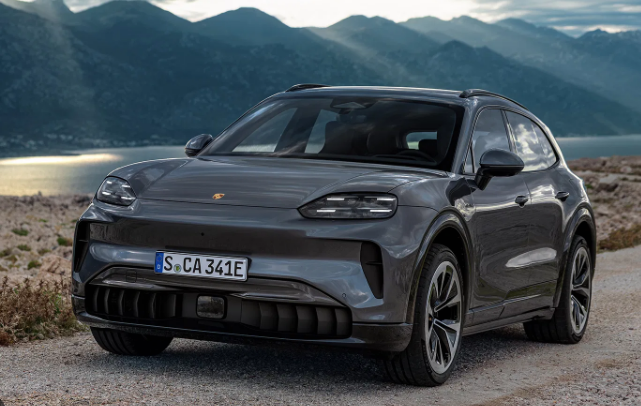
The spectacle of a sleek, silent electric SUV seamlessly tracking alongside a roaring, six-engine aerospace titan is the kind of image that defines a technological generation. It shatters the preconceived limitations of what heavy, battery-powered vehicles can achieve dynamically.
As we look toward the future of transportation, the lines between automotive engineering and aerospace technology will only continue to blur. The lessons learned on the tarmac at Mojave will find their way into the consumer market, improving everything from the efficiency of regenerative braking systems to the premium rates of electric vehicle insurance—which increasingly rely on vehicle safety and stability metrics to determine risk.
The Porsche Cayenne Electric has set a formidable new benchmark, not just for other automakers, but for the wider engineering community. It stands as proof that with the right combination of power, intelligent software, and daring human skill, the boundaries of physics are meant to be pushed.
Are you ready to experience the pinnacle of zero-emission performance for yourself? The future of driving isn’t just about getting from point A to point B—it’s about the thrill of the journey. Visit your local luxury dealership today to schedule a test drive, explore customized electric car lease options, and discover how the groundbreaking engineering behind the Porsche Cayenne Electric can elevate your everyday drive.