
The Return of the Gated Shifter: Decoding the Ferrari 12Cilindri Manual and the Legacy of the 550 Maranello
For the better part of a decade and a half, the official corporate line from Maranello was as rigid as a carbon-fiber chassis: the manual transmission was dead, buried by the relentless pursuit of millisecond shift times and lap records. Yet, in a move that has sent shockwaves through the upper echelons of the automotive market in 2025, the brand has resurrected the iconic exposed H-pattern shifter. For roughly half a million dollars, the legendary Italian marque will now sell you a front-engined V12 GT complete with a three-pedal setup. But getting your hands on the new Ferrari 12Cilindri manual requires a lot more than just deep pockets; it requires navigating an incredibly complex ecosystem of VIP allocations, simulated engineering, and automotive philosophy.
To even be considered for an allocation of the Ferrari 12Cilindri manual, you must have successfully worked your way onto the manufacturer’s ultra-exclusive ‘preferred client’ list. In today’s hyper-competitive luxury market, this essentially implies that your climate-controlled garage already houses a Purosangue SUV, an Amalfi cruiser, and perhaps a couple of other mainstream models on order—including cars you might not genuinely desire, simply to maintain your top-tier purchasing status. This allocation game is a well-known hurdle for collectors, but many are willing to play it for the sheer privilege of owning a naturally aspirated V12 equipped with a gated shifter. However, the true controversy surrounding the Ferrari 12Cilindri manual isn’t the price tag or the VIP hoops you have to jump through. The controversy lies in the fact that it doesn’t actually feature a traditional manual gearbox at all.
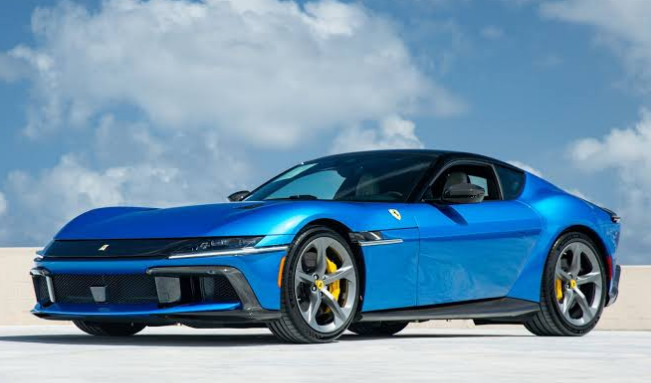
From an engineering perspective, it is much more accurate to describe the system in the Ferrari 12Cilindri manual as a highly sophisticated manual gearshift interface. Underneath the meticulously crafted cabin, the vehicle relies on the standard car’s lightning-fast eight-speed dual-clutch transmission (DCT). What the engineers have done is wire this cutting-edge DCT up to a traditional-style gear lever and a physical clutch pedal, allowing the driver to manually dictate gear changes. By using complex software algorithms and highly calibrated haptic feedback actuators, the car simulates the mechanical resistance, the clutch bite point, and even the potential for an engine stall if the driver mismanages the pedal work.
Critics have been quick to label the Ferrari 12Cilindri manual as a “fake manual,” equating it to a high-end sim-racing gaming rig awkwardly shoved into an actual half-million-dollar grand tourer. Some purists view it as an uncharitable sleight of hand, a digital parlor trick masquerading as analog heritage. As an industry analyst with over ten years of experience evaluating high-end performance vehicles, I understand the cynicism. When you are operating in the upper stratosphere of exotic car investment, authenticity is usually the primary driver of long-term value. However, the execution of the Ferrari 12Cilindri manual forces us to ask a difficult, philosophical question: If the tactile feedback, the emotional engagement, and the physical requirements placed on the driver are virtually indistinguishable from a traditional transmission, does the underlying digital architecture actually matter?
In a modern era dominated by heavy battery packs, silent electric motors, and autonomous driving aids, the fact that a manufacturer is dedicating massive R&D budgets to enhance driver engagement should be applauded. If the choice is between the simulated setup of the Ferrari 12Cilindri manual and no manual option whatsoever, I will gladly take the former. The sheer theater of clicking a metal lever through an aluminum gate while a naturally aspirated V12 screams toward its redline is an intoxicating experience, regardless of whether the actuation is mechanical or by-wire.
Yet, for a specific subset of automotive enthusiasts, this digital smoke-and-mirrors approach simply will not suffice. If you find yourself entirely unable to reconcile the simulated nature of the new Ferrari 12Cilindri manual, there is a silver lining that requires looking into the brand’s storied past. The secondary market is rich with older, genuinely analog, and mechanically pure grand tourers available for a mere fraction of the cost of today’s limited-run hypercars. You do not need to play the dealership allocation game, nor do you need to purchase the year’s most polarizing new EV just to earn the right to buy one. If it were my capital being deployed today, I would bypass the modern allocations entirely. Instead, I would set out to find the finest, lowest-mileage Ferrari 550 Maranello in existence, pocket the several hundred thousand dollars in savings, and never spend a single second worrying about simulated bite points or fake mechanical feedback.
I sincerely hope that Raffaele di Simone and his team of brilliant development drivers at Fiorano spent hundreds of hours behind the wheel of a classic 550 Maranello while calibrating the software for the new Ferrari 12Cilindri manual. The 550 is the direct spiritual, if distant, predecessor to the modern front-engined V12 lineage, and it arguably possesses one of the finest, most satisfying mechanical gearshifts ever fitted to a production automobile. Its gated six-speed transaxle provides a robust, metallic, and deeply rewarding shift action that serves as the ultimate benchmark for tactile automotive engagement. If the modern Ferrari 12Cilindri manual can capture even seventy percent of the 550’s authentic mechanical magic, it will be a monumental triumph of software engineering.
To understand why the 550 Maranello remains the gold standard, we must look at its historical significance. Introduced to the world in 1996, the 550 was not just another fast car; it was a desperately needed savior for the brand. It marked the triumphant return of the two-seat, front-engined V12 berlinetta bloodline—a glorious layout that had been abruptly culled in 1973 following the final production run of the legendary 365 GTB/4 Daytona. For over two decades, the company had relied on mid-mounted flat-12s for its flagship models, starting with the Berlinetta Boxer and culminating in the Testarossa and F512 M. The 550 Maranello changed the paradigm back to the classic grand touring proportions: a long hood, a naturally aspirated 5.5-liter F133 V12 engine pushed far back against the firewall, and a rear-mounted manual transaxle for perfect weight distribution.
Beyond its spectacular driving dynamics, the 550 Maranello played a foundational role in Luca di Montezemolo’s incredible corporate renaissance of the 1990s. When Montezemolo took the reins, he inherited a lineup that was rapidly losing its dynamic edge against rivals like Honda’s NSX and Porsche’s 911. Alongside the screaming F355 and the elegant 456GT, the 550 Maranello aggressively eradicated the years of complacency that had plagued the factory. That dark era of complacency was most infamously characterized by the dynamic shortcomings of the 348—a car that Montezemolo himself notoriously labeled “the worst Ferrari” ever built. The 550 Maranello permanently closed the chapter on those dark days, kickstarting a golden era of tremendous prosperity, unparalleled motorsport dominance, and engineering excellence that paved the way for every front-engined V12 that followed, right up to the modern Ferrari 12Cilindri manual.
From a financial perspective, choosing between the simulated brilliance of a 2025 model and the analog purity of a 1990s classic involves a complex web of market variables. Navigating the modern exotic car investment landscape requires an understanding of how distinct these two value propositions truly are. The Ferrari 12Cilindri manual represents the peak of contemporary exclusivity. Because of its limited production numbers and the sheer difficulty of securing an allocation, it is almost guaranteed to trade at a massive premium over its MSRP on the secondary market immediately upon delivery. Wealthy buyers who missed out on the VIP list will eagerly pay a premium to classic car brokers in Los Angeles or search exotic car dealerships in Miami to bypass the factory waiting lines.
Conversely, the 550 Maranello represents a mature, blue-chip asset in the classic car market. While it experienced its natural depreciation curve decades ago, pristine examples have been steadily appreciating as younger generations of collectors seek out analog driving experiences. When adding a vehicle of this caliber to your portfolio, securing the right financial framework is just as critical as the pre-purchase mechanical inspection. Savvy collectors often utilize premium auto financing options, which allow them to leverage their capital elsewhere while enjoying the asset. Furthermore, because the replacement parts for a 1990s V12 can be astronomically expensive, working with specialized underwriters to secure robust luxury sports car insurance is an absolute necessity. Whether you are insuring the complex software algorithms of the Ferrari 12Cilindri manual or the irreplaceable physical components of a 550 Maranello, ensuring your exotic car investment is protected against physical and market volatility is the mark of an experienced collector.
Ultimately, the choice between these two distinct eras of V12 grand touring comes down to what you fundamentally value as a driver and an owner. The Ferrari 12Cilindri manual is a breathtaking technological achievement, seamlessly blending the brutal efficiency of a modern dual-clutch transmission with the romantic, nostalgic theater of a gated shifter. It proves that even in an era of stringent emissions and hybridization, manufacturers still recognize the profound emotional connection that a clutch pedal and a physical lever provide. It is a masterpiece of simulation, offering a modern, highly reliable, and ferociously fast package that refuses to let the joy of the shift die out entirely.
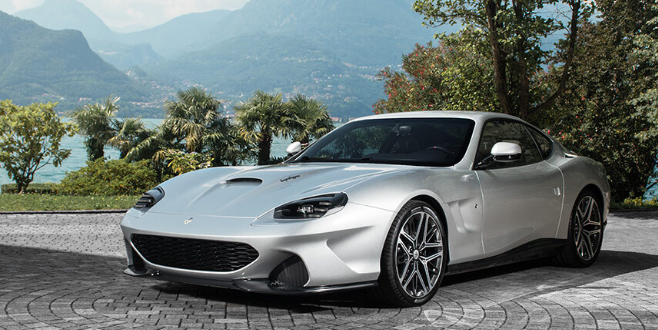
On the other hand, the 550 Maranello offers an unfiltered, unapologetic connection to the mechanical reality of the machine. There is no software mapping your throttle inputs, no digital actuator smoothing out your clumsy clutch releases, and no safety net if you miss a downshift. It demands respect, patience, and a level of skill that the modern Ferrari 12Cilindri manual artificially replicates. The 550 is a rolling testament to a pivotal moment in automotive history, a car that resurrected a legendary lineage and helped save the world’s most famous sports car manufacturer from mediocrity.
Both vehicles offer an extraordinary V12 soundtrack, breathtaking styling, and a gated shifter that clinks with every gear change. One looks to the future by digitally recreating the past, while the other proudly stands as the genuine article, forever anchored in a golden era of analog performance.
Are you ready to experience the visceral thrill of a front-engined V12 and decide for yourself whether modern simulation or analog purity reigns supreme? Connect with our network of specialized automotive consultants today to explore exclusive financing options, review comprehensive market analytics, and schedule a private viewing of the world’s finest grand tourers.