
The Ultimate Send-Off: How the Final Bugatti Mistral Closes the Chapter on the Bugatti W-16 Engine
As an automotive analyst and exotic vehicle specialist with over a decade of hands-on experience in the hypercar industry, I have witnessed countless engineering milestones and technological breakthroughs. Yet, few moments in modern automotive history carry the emotional and mechanical weight of the recent news out of Molsheim, France. The era of the legendary Bugatti W-16 engine is officially drawing to a close. With the production of the very last Bugatti Mistral now complete, the automotive world is forced to bid farewell to an engineering marvel that fundamentally redefined the limits of speed, power, and prestige.
For nearly two decades, the Bugatti W-16 engine has been the beating heart of the world’s most exclusive luxury sports cars. It has shattered top-speed records, revolutionized thermal management in passenger vehicles, and captured the imaginations of high-net-worth vehicle collectors globally. As we transition into a new era of naturally-aspirated V-16 hybrid powertrains, it is vital to examine not only the exquisite details of this final Bugatti Mistral but also the legacy of the Bugatti W-16 engine, the complex exotic car market surrounding it, and what the future holds for the historic French marque.
The Crown Jewel: Decoding the Final Bugatti Mistral
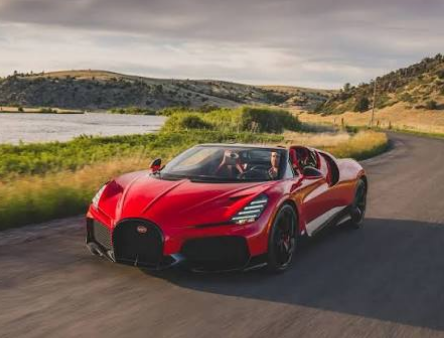
Bugatti has never been a brand to exit quietly, and the final iteration of the Bugatti W-16 engine is wrapped in a profoundly bespoke package. This specific vehicle, an open-roof masterpiece named “The last of its kind,” represents unit number 99 in the strictly limited Mistral production run. When you consider that the factory built 500 units of the hardtop Chiron, the Mistral instantly becomes a considerably rarer commodity in the luxury vehicle investment space.
Housing the final road-going iteration of the quad-turbo Bugatti W-16 engine, this Mistral is far more than a cosmetic special edition. The Mistral holds the undisputed title of the fastest open-roof production vehicle on the planet, having achieved a staggering top speed of 282 mph at the Papenburg testing facility in 2024. Pushing an open-cockpit vehicle to that velocity requires more than just aerodynamic wizardry; it requires the relentless, brute force of the Bugatti W-16 engine operating at absolute peak efficiency.
Visually, this final 99th Mistral is a testament to bespoke craftsmanship. Finished in a highly complex two-tone Pearl and Sparkle exterior paint scheme, the visual depth of the carbon fiber bodywork plays beautifully in natural light, even if photographs struggle to capture the nuanced transition between the two shades. Stepping into the cabin reveals an interior painstakingly appointed in Magnolia and Grey Carbon Matt. Every detail speaks to the heritage of the brand. Ettore Bugatti’s signature is elegantly etched into the headrests, the bespoke aluminum door sills, and directly onto the cover of the Bugatti W-16 engine itself.
Perhaps the most breathtaking detail is the frozen crystal glass plate seamlessly integrated into the center armrest. Bearing the inscription “Spirit of the Wind,” this intricate glasswork highlights Bugatti’s long-standing, historic relationship with the renowned French glassmaker Lalique. It is these uncompromising touches that elevate the car from a mere mode of transportation to a piece of rolling, high-net-worth art.
The Engineering Feat of the Bugatti W-16 Engine
To truly appreciate the final Mistral, one must understand the sheer audacity of the Bugatti W-16 engine. When it was first introduced during the development of the Veyron in the early 2000s, automotive purists and rival engineers alike declared the concept impossible. Creating an 8.0-liter, quad-turbocharged, 16-cylinder engine that could produce over 1,000 horsepower—while remaining reliable enough for everyday driving—was considered an insurmountable task. Yet, Bugatti triumphed.
Over the years, the Bugatti W-16 engine evolved magnificently. By the time it found its way into the Chiron and eventually the Mistral, extensive re-engineering, larger turbochargers, and optimized intake manifolds pushed the output to an astonishing 1,600 horsepower. The cooling requirements for the Bugatti W-16 engine are so immense that the vehicle requires a highly complex network of ten separate radiators pumping hundreds of liters of coolant and oil through the block every minute.
From a thermodynamic standpoint, the Bugatti W-16 engine is a standalone achievement in combustion history. The quad-turbo layout operates in a two-stage sequential setup, virtually eliminating turbo lag and providing a tidal wave of torque that peaks at 1,180 lb-ft. The sound of the Bugatti W-16 engine—a deep, mechanical symphony of sixteen cylinders firing perfectly in sync, underscored by the aggressive hiss of the wastegates—is a visceral experience that cannot be replicated by any modern electric powertrain. It is the pinnacle of internal combustion, a mechanical leviathan that operates with the precision of a Swiss watch.
The Economics of Hypercars: Investment, Finance, and Preservation
As a professional in the high-end automotive sector, I frequently consult with clients regarding the financial mechanics of hypercar ownership. A vehicle housing the final Bugatti W-16 engine is not merely a purchase; it is a blue-chip asset. In prominent luxury markets, from Beverly Hills exotic car collectors to the booming Miami luxury auto market, the demand for “end-of-an-era” combustion vehicles is driving valuations to unprecedented heights.
Acquiring a masterpiece like the final Mistral often involves sophisticated capital structuring. Exotic car financing has evolved significantly over the last decade, allowing ultra-high-net-worth individuals to leverage their capital rather than liquidating assets for a multi-million dollar purchase. Specialized exotic car financing firms offer tailored, open-ended lease agreements and balloon structures specifically designed for appreciating assets like those powered by the Bugatti W-16 engine. By keeping their liquidity tied to higher-yield market investments, collectors can secure these rare vehicles through highly optimized luxury auto loans.
Furthermore, protecting an asset of this magnitude requires specialized infrastructure. Standard policies do not apply here. High-end luxury car insurance is a bespoke financial product involving strict underwriting parameters, agreed-value clauses, and specialized clauses for track use or global transit. For a car featuring the historic Bugatti W-16 engine, specialized luxury car insurance providers often require detailed storage security audits and strictly limit annual mileage to preserve the vehicle’s pristine condition and provenance.
When owners wish to showcase these vehicles at prestigious events like the Pebble Beach Concours d’Elegance or the Goodwood Festival of Speed, logistics become a vital consideration. Moving a vehicle with a Bugatti W-16 engine requires premium auto transport services. These elite transport companies utilize specialized enclosed trailers with hydraulic lift gates that keep the vehicle perfectly level, climate-controlled environments to protect the Lalique crystal and bespoke leather, and GPS-tracked, bonded logistics teams to ensure the asset arrives flawlessly. The ecosystem supporting vehicles equipped with the Bugatti W-16 engine is a massive, highly specialized industry of its own.
The Transition: From Quad-Turbo to Naturally Aspirated Hybrid
Bugatti’s official statement refers to this final Mistral as the “closing chapter” of the Bugatti W-16 engine’s “road-going story.” While corporate language often leaves a backdoor open for track-only or highly specialized non-road-going applications, from a normal production standpoint, this is the definitive end of the line.
So, what replaces the irreplaceable? The answer lies in the newly inaugurated facility in Molsheim known as La Manufacture, the birthplace of the brand’s next generation. Bugatti is transitioning away from the forced induction of the Bugatti W-16 engine to an entirely new philosophy: an 8.3-liter, naturally-aspirated V-16 engine paired with a highly advanced hybrid electric system.
This new powertrain will make its debut in the upcoming Bugatti Tourbillon. By stripping away the four turbochargers that defined the Bugatti W-16 engine, the engineers in Molsheim are promising a dramatic shift in character. The new naturally-aspirated V-16 will rev to a staggering 9,000 RPM, offering a sharper, more immediate throttle response and a high-pitched, screaming exhaust note that sharply contrasts the deep, thunderous roar of the outgoing Bugatti W-16 engine.
While the new hybrid V-16 will undoubtedly produce more horsepower and faster acceleration metrics, the historical significance of the Bugatti W-16 engine remains completely untouched. The W-16 was a pioneer. It was the engine that resurrected the Bugatti brand under Volkswagen Group’s ownership and proved that extreme luxury and record-breaking top speeds could coexist in a single, reliable chassis.
The Legacy of the Bugatti W-16 Engine in Modern Car Culture
To fully grasp why the departure of the Bugatti W-16 engine is causing such a stir among industry experts, we have to look at the current automotive landscape. The industry is rapidly downsizing, relying heavily on electrification, turbo-V6s, and homogenized EV platforms. The Bugatti W-16 engine stands as a monolithic rebellion against compromise. It is an engine built purely for the sake of pushing the boundaries of physics, economics, and design.
The Mistral, serving as the vessel for the final road-going Bugatti W-16 engine, is the perfect send-off. Unlike the enclosed Chiron, the open-roof architecture of the Mistral removes the physical barrier between the driver and the massive air intakes positioned just behind the headrests. At full throttle, the driver is immersed in the auditory violence of the Bugatti W-16 engine sucking in tens of thousands of liters of air per minute. It is an automotive experience that engages every sense, an unrepeatable mechanical theater.
In the collector market, we are already seeing the ripple effects of this transition. Historically, whenever a legendary engine architecture ceases production, the values of its finest iterations skyrocket. The Bugatti W-16 engine is highly likely to follow the trajectory of the legendary naturally-aspirated V12s of the late 20th century. High-net-worth vehicle investments are increasingly shifting toward “analog” or “final-run” combustion hypercars. Wealth management advisors and exotic car financing brokers are actively steering clients toward securing models equipped with the Bugatti W-16 engine, recognizing them not just as cars, but as highly liquid, appreciating cultural artifacts.
The Dawn of a New Hypercar Era
As La Manufacture ramps up production for the V-16 Tourbillon, the Molsheim factory will fundamentally change. The tooling, the assembly stations, and the rigorous testing protocols that were developed specifically for the Bugatti W-16 engine will be retired or repurposed. The dedicated technicians who spent thousands of hours meticulously hand-assembling the sixteen-cylinder blocks will pivot to a new architecture.
Yet, the shadow of the Bugatti W-16 engine will always loom large over Molsheim. It set a benchmark that took competitors decades to even approach, let alone match. The sheer exclusivity of the final 99 Mistrals ensures that the swan song of the Bugatti W-16 engine will be preserved in climate-controlled garages, displayed at exclusive international concours events, and occasionally unleashed on derestricted autobahns or private test tracks.
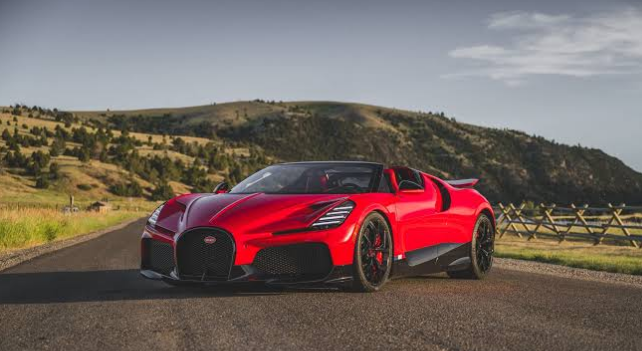
The Bugatti W-16 engine proved that human ingenuity, when freed from financial and practical constraints, can achieve the seemingly impossible. It was a 20-year run of absolute automotive dominance. While we eagerly anticipate the 9,000 RPM symphony of the upcoming naturally-aspirated V-16, we must take a moment to tip our hats to the W-16. It changed the definition of a hypercar, forced tire manufacturers to invent new compounds, and redefined the limits of speed.
If you are a serious collector looking to navigate the transition between these historic hypercar eras, or if you are seeking to optimize your luxury vehicle portfolio with tailored exotic car financing, comprehensive luxury car insurance, or secure premium auto transport for your acquisitions, the time to act is now. The market for combustion-era masterpieces is moving faster than ever. Connect with our expert advisory team today to discuss high-net-worth vehicle investments, secure exclusive allocations, and ensure your exotic car portfolio is positioned for unparalleled future growth.