
Engineering the Impossible: How the Porsche Cayenne Electric Mastered the Stratolaunch Roc at Mojave
For decades, the intersection of aerospace engineering and automotive performance has been a playground for PR stunts. We have all seen the classic television tropes where a high-powered supercar lines up against a fighter jet on a sterile runway. Typically, these are momentary spectacles lasting less than a minute, designed purely for visual thrills rather than empirical data. However, having spent the last ten years analyzing the evolution of automotive engineering and electric vehicle architecture, I can confidently state that what recently transpired at the Mojave Air and Space Port was fundamentally different. This was not a mere drag race. It was a rigorous, high-speed stability test that saw the Porsche Cayenne Electric coordinate side-by-side with the world’s largest flying aircraft.
In a groundbreaking demonstration of dynamic capability, Porsche brought its most formidable SUV to the iconic California aerospace hub. The mission was to test the high-speed aerodynamic stability and battery discharge rates of the Porsche Cayenne Electric while pacing the gargantuan Stratolaunch Roc. For those unfamiliar with the aviation side, the Stratolaunch Roc is a bespoke twin-fuselage testbed aircraft utilizing six Pratt & Whitney engines, designed specifically by the hypersonic flight testing firm to launch rocket-powered vehicles into the upper atmosphere. Porsche’s objective was to see if their flagship electric vehicle could maintain sustained proximity, match rotation speeds, and handle the immense aerodynamic wake of a colossal aircraft taking off and landing.
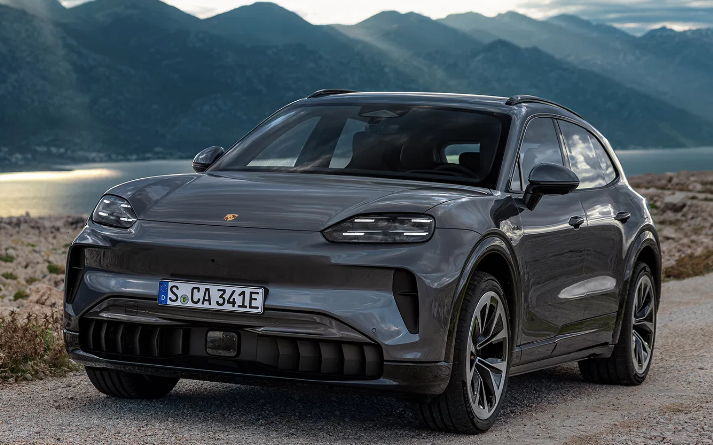
To truly understand the magnitude of this achievement, we must first break down the engineering marvel that is the Porsche Cayenne Electric. When you examine the current landscape of the premium electric SUV market, manufacturers are constantly battling the laws of physics. High-capacity battery packs inherently add weight, and masking that mass at speeds exceeding 150 mph requires a symphony of advanced torque vectoring, active aerodynamic surfaces, and sophisticated adaptive air suspension systems. The Porsche Cayenne Electric arrives with a staggering 1139 horsepower on tap. This level of output places it at the absolute pinnacle of high-performance EVs, directly competing for the title of the best luxury electric SUV of the decade.
For buyers looking to invest in a premium electric vehicle, the headline horsepower figure is always enticing, but as an industry insider, I look at how that power is deployed. High-speed EV testing usually reveals thermal throttling—a scenario where the battery management system reduces power to prevent overheating during sustained maximum discharge. Yet, the Porsche Cayenne Electric was tasked with pacing a six-engine aerospace behemoth, requiring immense, sustained electrical draw without a hint of performance degradation.
Behind the wheel of the Porsche Cayenne Electric for this high-stakes orchestration was Patrick Long, a celebrated former Porsche factory driver whose resume is steeped in precision under pressure. Driving the Porsche Cayenne Electric, Long paced the Stratolaunch Roc through two grueling takeoff runs, pushing the SUV well beyond speeds of 160 mph. Matching the acceleration curve of a multi-engine aircraft is a complex mathematical challenge. The torque delivery of the Porsche Cayenne Electric had to be modulated perfectly to match the thrust of the Roc’s Pratt & Whitney engines. The electric SUV had absolutely no problem keeping pace all the way up to the aircraft’s rotation speed, the critical moment when the plane’s nose lifts from the tarmac.
But the takeoff was arguably the easier half of the equation. The true test of the Porsche Cayenne Electric and its pilot came during the landing phase. Long was required to pace the aircraft as it descended, eventually threading the electric SUV precisely between the Stratolaunch Roc’s massive twin-fuselage setup. This is where the realms of automotive chassis tuning and aerodynamic drag intersect violently.
“I had no doubts about the power of the Cayenne, but I was a bit apprehensive regarding how reactive the car would be to inputs, especially at speed,” Long explained following the test. In the world of high-speed automotive testing, steering input at 160 mph must be razor-sharp yet forgiving enough to prevent catastrophic instability. The Porsche Cayenne Electric proved to be incredibly composed, though Long noted that the sheer scale of the aircraft created an unprecedented challenge. “Surprisingly, the landings were a lot harder to time just right. The plane is so big that you don’t really have effective visual references for timing when to merge with the plane onto the runway.”
To mitigate the immense risks of this coordinated maneuver, the test required flawless communication. The crew chiefs of the six-engine airplane, Shauntel Williams and John McKinney, were strapped into the passenger seats of the Porsche Cayenne Electric. Throughout the runs, they maintained constant, real-time radio communication with the aircraft’s flight crew. This integration of aerospace personnel inside a luxury electric vehicle underscores the serious nature of the event. An FAA coordinator was also present on-site in the Mojave desert to oversee the strict regulatory and safety compliance of these flat runs.
From an aerodynamic standpoint, the data gathered during these runs is fascinating. The engineering teams discovered that the Porsche Cayenne Electric actually benefited from a unique aerodynamic phenomenon. By threading the needle between the two massive fuselages of the Stratolaunch Roc, the SUV entered an aerodynamically quiet area—a slipstream void created by the aircraft’s forward momentum and twin-hull design. Understanding how luxury electric vehicles interact with complex wake turbulence is crucial as automakers refine active aero components to maximize highway range and high-speed stability.
One of the most remarkable takeaways from this entire exercise, especially for consumers analyzing EV battery technology, is the energy consumption data. Despite executing four maximum-acceleration flat runs, sustaining speeds over 160 mph, and battling the crosswinds of the Mojave Air and Space Port, the Porsche Cayenne Electric utilized only 13 percent of its battery charge. Let that sink in. In the early days of electric vehicle performance testing, a few heavy launches would dramatically deplete the battery and trigger thermal safety limits. The fact that the Porsche Cayenne Electric could execute this aerospace-level stunt while barely sipping its energy reserves is a testament to the immense leaps made in high-density battery chemistry and thermal management systems.
For those analyzing the total cost of ownership or exploring EV financing options for high-end models, this efficiency is the ultimate proof of concept. The Porsche Cayenne Electric isn’t just a straight-line bruiser; it possesses a robust, repeatable electrical architecture that does not fall apart under extreme stress. This level of battery endurance translates directly to real-world benefits, effectively eliminating range anxiety for daily driving and ensuring that the vehicle’s immense power is always accessible, regardless of the battery’s state of charge.
As we look toward the future of the automotive industry, the boundaries between different disciplines of engineering continue to blur. The lessons learned from pushing the Porsche Cayenne Electric to its absolute limits alongside a hypersonic testbed aircraft will inevitably trickle down into the consumer market. We will see enhancements in highway stability, more resilient battery cooling solutions, and smarter traction control systems that can react to sudden environmental changes in milliseconds.
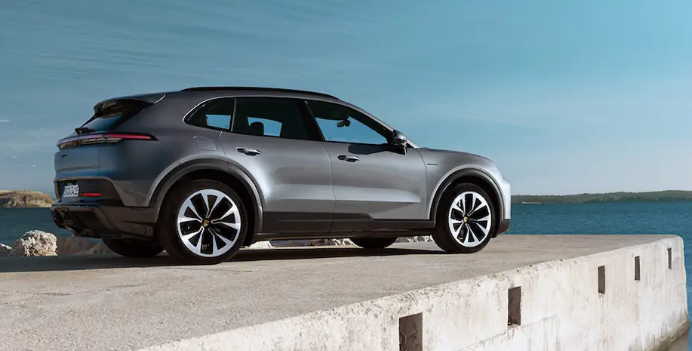
The successful synchronization of the Porsche Cayenne Electric and the Stratolaunch Roc is more than just a spectacular visual for a YouTube video. It is a definitive statement that the era of electric vehicles compromising on sustained high-speed performance is officially over. The Porsche Cayenne Electric has proven that modern EV architecture can stand shoulder-to-shoulder with the most extreme machines engineered by human hands, all while offering the refinement, luxury, and reliability expected from a premium brand.
If you are ready to experience this unparalleled blend of aerospace-grade engineering and everyday driving refinement for yourself, I highly recommend visiting your local Porsche center to schedule a personalized test drive of the Porsche Cayenne Electric and feel the future of automotive performance firsthand.