



The End of an Epoch: How the Final Bugatti Mistral Closes the Legendary Bugatti W-16 Engine Era
Automotive history is punctuated by distinct, earth-shattering milestones that redefine our understanding of physics, engineering, and sheer opulence. Over the past two decades, no single powertrain has commanded as much respect, awe, and sheer engineering disbelief as the Bugatti W-16 engine. As an automotive industry analyst and hypercar specialist with ten years of experience navigating the ultra-high-end exotic vehicle market, I have witnessed countless trends ebb and flow. Yet, the monumental impact of Molsheim’s quad-turbocharged masterpiece remains utterly unmatched. Today, we stand at the precipice of a monumental shift in the automotive landscape. The era of the Bugatti W-16 engine is slowly but definitively coming to a close, beautifully punctuated by the completion of the final Bugatti Mistral, which recently rolled off the production line in Molsheim, France.
This final Bugatti Mistral, aptly and affectionately designated as “The last of its kind,” represents the absolute pinnacle of internal combustion evolution. As the 99th and concluding unit in the highly exclusive Mistral production run, it serves as a triumphant swan song for a powertrain that changed the world. The Mistral, essentially the ultimate open-roof iteration of the Chiron architecture, commands a unique position in the pantheon of exclusive performance vehicles. Considering Bugatti manufactured a total of 500 Chirons, the Mistral’s 99-unit allocation makes it considerably rarer and, consequently, a highly coveted asset in the realm of luxury hypercar investment. The beating heart of this ultra-exclusive roadster is, of course, the legendary Bugatti W-16 engine, a marvel of modern engineering that still proudly holds the world record for the fastest open-roof production vehicle, achieving a blistering 282 mph top speed at the Papenburg test track in 2024.
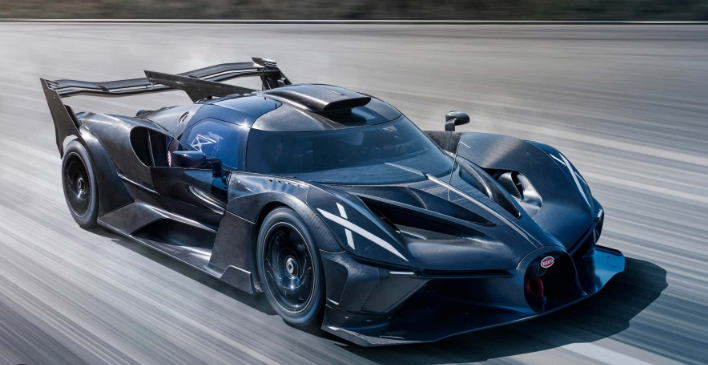
A Masterclass in Bespoke Craftsmanship and Design
When you evaluate a vehicle of this magnitude, you must look beyond the raw performance metrics and appreciate the bespoke craftsmanship that goes into its creation. The final Bugatti Mistral is not merely a car; it is a rolling piece of haute couture. According to the artisans at Bugatti, this ultimate edition is finished in a breathtaking two-tone Pearl and Sparkle exterior. While high-resolution photographs may struggle to capture the nuanced, shimmering contrast between these two exquisite shades, seeing this paintwork under the natural sunlight reveals a depth of finish that standard automotive manufacturing simply cannot replicate.
Stepping into the cabin of the final Bugatti Mistral, one is immediately enveloped in an environment that bridges the gap between grand touring luxury and aerospace-grade performance. The interior is meticulously appointed in a striking combination of Magnolia leather and Grey Carbon Matt trim. Every stitch, every carbon weave, and every metallic accent is subjected to microscopic quality control. As a nod to the brand’s deep historical roots, you will find the signature of founder Ettore Bugatti elegantly etched into the headrests, the bespoke aluminum door sills, and directly onto the carbon fiber engine cover that houses the mighty Bugatti W-16 engine.
Perhaps the most culturally significant interior touch is the intricately designed frozen crystal glass plate situated on the center armrest. Inscribed with the words “Spirit of the Wind,” this exquisite detail pays homage to the Mistral name—a powerful wind that blows through the Rhone valley in Southern France. Furthermore, this crystal integration celebrates Bugatti’s long-standing, historic relationship with the renowned French glassmaker, Lalique. While this final Bugatti Mistral might not be as visually ostentatious as the porcelain-festooned Blanc Eternal edition revealed earlier this month, its understated elegance and profound historical significance make it the ultimate collector’s dream. It is a milestone vehicle that brings a poetic conclusion to the long, triumphant era of the Bugatti W-16 engine.
The Heart of the Beast: The Legacy of the Bugatti W-16 Engine
To truly understand the gravity of the final Bugatti Mistral, we must delve deep into the mechanical marvel that propels it. The Bugatti W-16 engine is not just an engine; it is a declaration of automotive supremacy. First introduced to the world in the Bugatti Veyron in 2005, the Bugatti W-16 engine shattered the long-standing illusion that a 1,000-horsepower, daily-drivable production car was impossible to build. Over the years, the Bugatti W-16 engine underwent relentless refinement, continuous technological upgrades, and immense fortification to handle ever-increasing power outputs.
In its final iteration, as seen in the final Bugatti Mistral, the 8.0-liter quad-turbocharged Bugatti W-16 engine produces a staggering 1,578 horsepower. The engineering required to achieve this output while maintaining reliability is staggering. The Bugatti W-16 engine requires an incredibly complex thermal management system, utilizing a network of radiators to keep the oil, transmission fluid, and engine coolant at optimal temperatures even when the vehicle is consuming immense amounts of air and fuel at wide-open throttle. It is a symphony of controlled explosions, managed by advanced engine control units and heavily reinforced internal components.
From an engineering perspective, the Bugatti W-16 engine is arguably the most ambitious powertrain ever fitted to a road-legal vehicle. It defied the downsizing trends of the industry, standing tall as a monolithic tribute to the limitless potential of internal combustion. For automotive purists, the sound of the Bugatti W-16 engine—a deep, resonant mechanical bellow punctuated by the sharp hiss of four massive turbochargers spooling—is entirely unmistakable. The final Bugatti Mistral captures this auditory experience perfectly, allowing the driver to hear the Bugatti W-16 engine in all its glory without the barrier of a hardtop roof. Bugatti has officially stated that this specific car represents the “closing chapter” to the Bugatti W-16 engine’s “road-going story.” While this careful phrasing leaves the door slightly ajar for the Bugatti W-16 engine to potentially appear in a track-only, non-road-going capacity in the future, it is undoubtedly the end of the line for this magnificent powertrain in street-legal production cars.
Open-Air Supremacy: Analyzing the 282 MPH Record
The final Bugatti Mistral does not just rely on its bespoke aesthetics and the emotional weight of its engine to make headlines; it backs up its heritage with undisputed, record-breaking performance. Setting a top speed record is an incredibly complex endeavor, but doing so without a roof introduces a myriad of aerodynamic nightmares. When you remove the roof from a vehicle, you disrupt the smooth flow of air over the body, creating extreme turbulence and drag that can destabilize the car at high speeds.
Yet, Bugatti’s aerodynamicists and engineers managed to sculpt the Mistral in a way that effortlessly manipulates the air around the open cabin. By routing air through specialized channels, over the aggressive front splitter, and past the unique horseshoe grille, the vehicle remains planted. In 2024, at the high-speed Papenburg testing facility in Germany, a Bugatti Mistral equipped with the ultimate iteration of the Bugatti W-16 engine shattered expectations by hitting 282 mph. This feat firmly established the Mistral as the fastest open-roof production vehicle in history. The sheer force required to push an open-cockpit vehicle to 282 mph is a testament to the brute strength of the Bugatti W-16 engine. It requires not just immense horsepower, but relentless, sustained torque delivery and a bespoke Michelin tire compound capable of surviving immense rotational forces and heat generation.
Luxury Hypercar Investment and Hypercar Market Trends
From the perspective of a seasoned industry professional, the completion of the final Bugatti Mistral is a massive event not just for automotive enthusiasts, but for the global elite engaged in luxury hypercar investment. The ultra-high-net-worth individuals who collect exclusive performance vehicles do not just buy cars; they acquire rolling historical artifacts. Because the final Bugatti Mistral officially closes the chapter on the road-going Bugatti W-16 engine, its appreciation potential in the secondary market is astronomical.
We are currently seeing significant shifts in hypercar market trends. As the automotive industry pivots aggressively toward electrification and hybrid powertrains, large-displacement, multi-cylinder internal combustion engines are becoming the ultimate luxury commodity. Collectors are heavily prioritizing “last-of-the-line” models. Consequently, anyone fortunate enough to secure an allocation for a Mistral—let alone the final Bugatti Mistral—possesses a highly liquid, rapidly appreciating asset. When high-end collectors look to buy luxury cars online or through elite private brokerages in 2025 and 2026, providence, rarity, and historical significance drive the pricing.
Of course, maintaining and protecting such assets requires specialized financial infrastructure. Securing exotic car insurance for a multi-million-dollar vehicle like the final Bugatti Mistral is a highly bespoke process. Standard insurance algorithms do not apply to a vehicle powered by a Bugatti W-16 engine that appreciates by hundreds of thousands of dollars annually. Specialized underwriters must account for agreed-value policies, transit insurance for international car shows, and the astronomical costs of replacing bespoke components like the Lalique crystal armrest or the carbon-fiber quad-turbo intake housings. The ecosystem surrounding exclusive performance vehicles is an industry unto itself, driven by the absolute peak of automotive engineering that the Bugatti W-16 engine represents.
The Dawn of a New Era: The Bugatti Tourbillon and the V-16
While the automotive world sheds a tear for the departure of the Bugatti W-16 engine, Molsheim is not resting on its laurels. The delivery of the final Bugatti Mistral arrives perfectly synchronized with Bugatti inaugurating its brand-new, state-of-the-art production facility, La Manufacture. This heavily upgraded campus will serve as the birthplace for the brand’s highly anticipated next chapter.
If the Bugatti W-16 engine defined the brand’s first two decades of the 21st century, the all-new 8.3-liter naturally-aspirated V-16 engine will define its future. This breathtaking new powertrain will find its first home in the Bugatti Tourbillon. By moving away from forced induction (the four turbochargers that characterized the Bugatti W-16 engine) and embracing a naturally aspirated, high-revving V-16 combined with advanced hybrid electric technology, Bugatti is promising an entirely new sensory experience. The Tourbillon aims to deliver instantaneous throttle response, an ear-splitting naturally aspirated exhaust note, and combined power outputs that push the boundaries of physics once again.
The transition from the Bugatti W-16 engine to the hybrid V-16 is a masterstroke in brand evolution. It honors the brand’s commitment to excessive, multi-cylinder internal combustion while integrating the instantaneous torque benefits of modern electrification. La Manufacture in Molsheim is currently gearing up for Tourbillon production, ensuring that the void left by the final Bugatti Mistral will be quickly filled by a machine equally dedicated to the pursuit of automotive perfection.
The Enduring Legacy of Molsheim’s Masterpiece
Reflecting on the past 10 years of my career analyzing exclusive performance vehicles, it is clear that we will never see anything quite like the Bugatti W-16 engine again. It was a product of a specific era—a time when an automaker possessed the financial backing, the engineering hubris, and the sheer willpower to create an engine that the world deemed impossible.
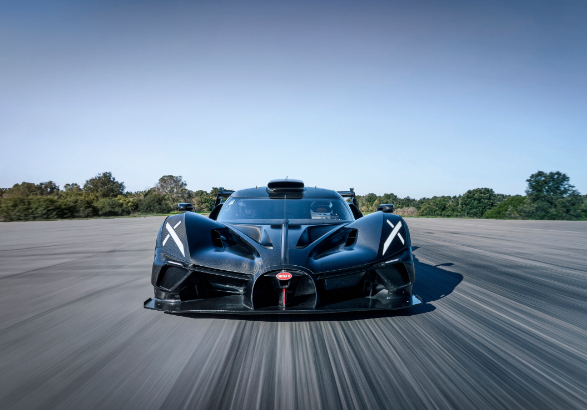
The final Bugatti Mistral is the perfect vessel for the Bugatti W-16 engine’s final road-going journey. It strips away the roof, allowing the driver to fully immerse themselves in the mechanical symphony of those 16 cylinders and four turbochargers one last time. From its 282 mph open-air speed record to its bespoke Pearl and Sparkle exterior, the 99th Mistral encapsulates everything that makes Bugatti the undisputed king of the hypercar world. As it takes its place in a climate-controlled garage of a discerning collector, it cements the Bugatti W-16 engine’s legacy as the most iconic powertrain of our generation.
The hypercar landscape is rapidly evolving, and navigating the complexities of luxury hypercar investment, acquiring exclusive performance vehicles, and understanding future market trends requires deep industry expertise. If you found this deep-dive into the final Bugatti Mistral and the legendary Bugatti W-16 engine valuable, and you want to stay ahead of the curve in the exotic car market, subscribe to our premium newsletter below. Join our community of collectors and enthusiasts today to receive exclusive market analyses, early acquisition opportunities, and expert insights sent directly to your inbox.