
Pushing the Limits of Physics: How the Porsche Cayenne Electric Paced the World’s Largest Aircraft
For those of us who have spent the last decade analyzing the evolution of automotive engineering, there are moments that completely redefine the parameters of performance testing. Historically, airplanes and automobiles occupy the same realm of motion for no more than a fleeting minute—a brief intersection of terrestrial and aerial dominance. Even rarer is the occasion when a production-ready luxury electric SUV is tasked with traveling side-by-side with an experimental aerospace titan. However, during a recent high-stakes evaluation, the Porsche Cayenne Electric shattered conventional testing methodologies, proving that the gap between aerospace technology and high-performance EV engineering is rapidly closing.
This was not your typical, gimmicky plane-versus-car drag race orchestrated purely for social media clicks. Instead, it was a rigorous, highly coordinated engineering stress test. In a compelling showcase of speed and stability, Porsche took the Porsche Cayenne Electric to the legendary Mojave Air and Space Port in California. The mission? To test the vehicle’s high-speed aerodynamic stability and continuous power delivery while the Stratolaunch aerospace team performed a grueling series of takeoffs and landings with its Roc aircraft.
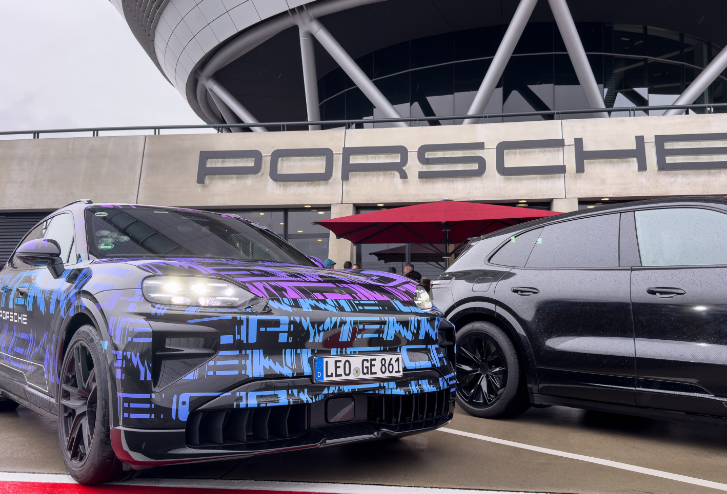
As a testbed aircraft utilized by one of the world’s premier hypersonic flight testing firms to launch rocket-powered vehicles, the Stratolaunch Roc is an absolute goliath of the skies. Porsche, engineering its most powerful consumer model to date, wanted to definitively answer a question that pushes the boundaries of modern physics: Could the Porsche Cayenne Electric maintain pace with a six-engine aviation behemoth under real-world, high-stress conditions?
The Ultimate Proving Ground: Mojave Air and Space Port
To truly appreciate the magnitude of this achievement, you have to understand the testing environment. The Mojave Air and Space Port is not just a stretch of tarmac; it is hallowed ground for aerospace innovation and extreme automotive testing in Southern California. Whether you are analyzing experimental propulsion systems or evaluating high-performance EV dynamics, the atmospheric conditions and massive runways of Mojave provide the ultimate canvas.
When the Porsche Cayenne Electric rolled onto the tarmac, it brought an astounding 1139 horsepower to the equation. Electric vehicle architecture has fundamentally changed how we measure torque and acceleration, but raw power is only half the battle. When you are piloting a heavy luxury electric SUV at speeds exceeding 160 mph, aerodynamic lift, battery thermal management, and chassis stability become matters of life and death. The Stratolaunch Roc, powered by six massive Pratt & Whitney engines, creates a localized weather system of wake turbulence and drag. Pacing such a machine requires an automobile with flawlessly calibrated active aerodynamics and an unflappable suspension geometry.
Behind the Wheel: Precision Timing at 160 MPH
To execute this high-wire act, Porsche tapped former factory driver Patrick Long, a veteran who understands the nuanced language of high-speed vehicle dynamics better than almost anyone in the industry. With Long at the helm, the Porsche Cayenne Electric paced the Stratolaunch Roc through two blistering takeoff runs.
The immediate delivery of EV torque allowed the Porsche Cayenne Electric to have no problem matching the aircraft’s acceleration profile all the way up to its critical rotation speed. It is one thing to accelerate quickly; it is an entirely different engineering marvel to sustain output above 160 mph without the electric motors derating due to heat buildup—a common flaw in lesser electric SUVs.
However, accelerating alongside the aircraft was only phase one. The true test of nerves and vehicle responsiveness came when Long had to pace the Stratolaunch Roc as it descended for landing. The mission required threading the Porsche Cayenne Electric perfectly between the aircraft’s massive twin-fuselage setup as it touched down.
“I had no doubts about the power of the Cayenne, but I was a bit apprehensive regarding how reactive the car would be to inputs, especially at speed,” Long reported after the runs. The sheer scale of the Roc created unforeseen challenges for the veteran driver. “Surprisingly, the landings were a lot harder to time just right. The plane is so big that you don’t really have effective visual references for timing when to merge with the plane onto the runway.”
Aerodynamics and Communications: The Human Element of High-Speed Testing
To mitigate the immense risks of this coordinated testing stunt, communication had to be flawless. It required the crew chiefs of the six-engined airplane, Shauntel Williams and John McKinney, to ride along inside the cabin of the Porsche Cayenne Electric. Operating from the passenger seats of the luxury EV, they maintained constant, real-time radio communication with the flight crew above.
“I’m grateful that we had the crew chiefs ride along and communicate directly with the flight crew so we wouldn’t under- or over-shoot the plane,” Long noted. This integration of aerospace personnel within a passenger vehicle highlights a fascinating cross-pollination of industries. Furthermore, the presence of an on-site FAA coordinator during the test runs underscored the gravity and official nature of the event.
From an aerodynamic standpoint, the Porsche Cayenne Electric performed flawlessly. Interestingly, Porsche engineers discovered that the vehicle benefited from an “aerodynamically quiet” pocket of air nestled directly between the aircraft’s twin fuselages. At 160 mph, minimizing drag is crucial for stability. The active aero components on the Porsche Cayenne Electric seamlessly adapted to the unique pressure zones created by the Stratolaunch Roc, keeping the luxury electric SUV firmly planted to the California tarmac.
Battery Efficiency and Thermal Management: A Triumph of EV Engineering
As an industry analyst, the most staggering data point from this event wasn’t the top speed—it was the energy consumption. After completing four grueling, flat-out high-speed runs pacing a six-engine aircraft, the Porsche Cayenne Electric consumed a mere 13 percent of its battery charge.
Let that sink in. Pushing an 1139-horsepower, aerodynamically large vehicle past 160 mph multiple times requires massive, continuous energy draws that typically decimate an EV’s range and send battery cells into thermal preservation mode. The fact that the Porsche Cayenne Electric retained 87 percent of its battery capacity after this extreme duty cycle is a testament to the brand’s next-generation battery chemistry, high-voltage architecture, and advanced thermal management systems.
For the everyday consumer, this translates directly to exceptional highway efficiency and reduced range anxiety. If the Porsche Cayenne Electric can survive aerospace pacing duties without severe battery degradation, its performance during a standard cross-country road trip will be effortlessly reliable. This level of engineering reliability is exactly why consumers exploring electric vehicle financing are increasingly gravitating toward premium heritage brands. When you buy a luxury SUV in this tier, you are paying for the peace of mind that comes from over-engineered components capable of withstanding extremes.
The Economics of High-Performance EVs in 2026
The automotive landscape has shifted dramatically, and vehicles like the Porsche Cayenne Electric sit at the apex of a highly lucrative market segment. The intersection of hyper-performance and sustainable energy has created a new paradigm for luxury automotive consumers. Whether buyers are seeking high-performance auto loans to secure the latest EV tech or comparing luxury EV insurance premiums, the data proves that high-end electric platforms hold exceptional residual value.
When a manufacturer proves their vehicle’s worth on a runway alongside the world’s largest flying plane, it drastically elevates the vehicle’s market authority. This isn’t just about selling cars; it’s about establishing a legacy of trust and capability. Dealerships—from the heart of Los Angeles luxury showrooms to exclusive European boutiques—leverage these high-stress testing validations to justify premium pricing and comprehensive premium electric vehicle warranty packages. Buyers want to know that their daily driver possesses the structural and electrical fortitude to keep pace with an aerospace testbed, even if their most rigorous daily task is a spirited highway commute.
Chassis Dynamics: Managing Mass at Rotation Speeds
Let’s delve into the mechanical grit of what makes this possible. The Porsche Cayenne Electric is not a stripped-down, lightweight track car; it is a fully appointed luxury electric SUV. To maintain composure at 160 mph while being buffeted by the wake turbulence of a hypersonic launch aircraft requires an incredibly sophisticated chassis.
Porsche’s adaptive air suspension, coupled with an ultra-responsive torque vectoring system, works in milliseconds to calculate individual wheel slip and aerodynamic load. As the Stratolaunch Roc generated massive downward and outward air displacement during its landing phase, the sensors inside the Porsche Cayenne Electric had to instantaneously adjust damper stiffness and power distribution to keep the vehicle tracking perfectly straight. A fraction of a second of latency in the vehicle’s onboard processing could have resulted in catastrophic instability.
This is the true measure of modern automotive engineering. It is the invisible, relentless processing of data happening beneath the floorboards that keeps a vehicle weighing over two tons as nimble and stable as a purpose-built race car. The Porsche Cayenne Electric serves as a masterclass in software-defined vehicle dynamics, proving that the digital nervous system of a modern EV is just as vital as the raw output of its electric motors.
The Synergy of Aerospace and Automotive Futures
Mixing an experimental aircraft with a high-speed run in an electric SUV is the kind of audacious stunt that gives us profound hope for the future of transportation. It proves that the transition to electrification does not require a sacrifice of soul, excitement, or extreme performance. By placing the Porsche Cayenne Electric in the crucible of aerospace testing, Porsche has drawn a definitive line in the sand for the rest of the automotive industry.
The learnings from this Mojave Air and Space Port session will undoubtedly trickle down into the wider consumer market. The thermal management strategies that kept the battery cool during 160 mph sprints will eventually improve the charging speeds and longevity of commuter EVs. The aerodynamic active-aero algorithms that stabilized the SUV between the aircraft’s twin fuselages will refine the highway efficiency of tomorrow’s family vehicles.
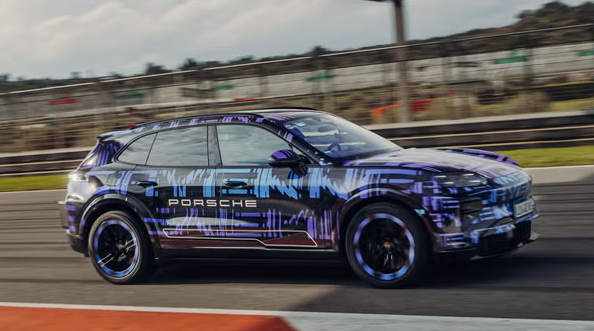
In the grand timeline of transportation, we are currently living in a golden era of cross-disciplinary innovation. The Stratolaunch Roc and the Porsche Cayenne Electric, while designed for vastly different atmospheres, share a fundamental DNA of pushing the limits of what battery power, aerodynamics, and human ingenuity can achieve.
Experience the Future of Performance Today
Reading about the 1139-horsepower capabilities of the Porsche Cayenne Electric is one thing, but feeling the relentless, instant torque of next-generation EV engineering is an experience that defies description. If you are ready to elevate your driving experience and pilot the same engineering marvel that comfortably kept pace with the world’s largest aircraft, it is time to get behind the wheel. Visit your local authorized luxury dealership today to schedule an exclusive test drive, explore competitive electric vehicle financing options, and discover how the Porsche Cayenne Electric is rewriting the rules of high-performance SUVs. Don’t just read about history being made—drive it.