
The Ultimate Vauxhall Mokka GSE Review: Can Driving Purists Finally Embrace the Electric Crossover?
When you first lay eyes on it, you might find yourself doing a double-take. Do I spy a carbon fiber hood? Well, not quite. But that contrasting black hood is just the first in a series of very deliberate visual cues suggesting that you are ogling no ordinary family grocery-getter. Your gaze inevitably drops to the striking, bright yellow brake calipers peering out from behind enormous 20-inch alloy wheels. And if you consider yourself a true automotive aficionado—a keen observer of vehicle dynamics—you will undoubtedly notice that this specific model sits a full 10 millimeters lower on its tuned springs, boasting a newly dialed-in negative camber on its front wheels.
Welcome to the Vauxhall Mokka GSE. In a rapidly shifting 2025 automotive landscape where nearly every manufacturer is frantically trying to figure out how to make heavy battery packs feel light on their feet, this vehicle represents a fascinating gamble. But who exactly is the target audience for a performance-oriented, front-wheel-drive electric crossover? To understand that, we have to look at the corporate strategy behind the badge. Behind closed doors, executives admitted that their current lineup heavily “under-indexes on passion.” Translated from corporate boardroom speak into plain English: the brand desperately needed a shot of adrenaline. They needed a vehicle that brings some genuine bounce to their bungee cord. The Vauxhall Mokka GSE is their answer to that existential crisis.
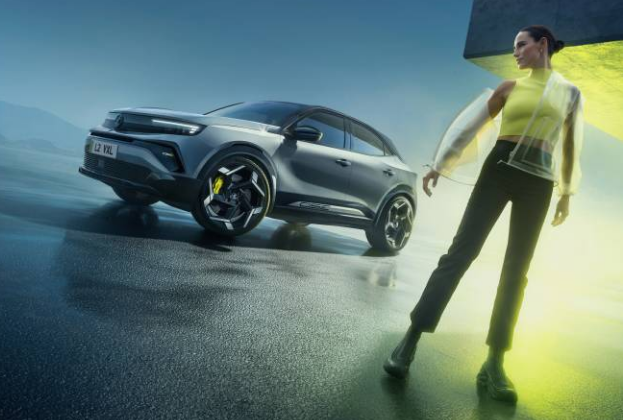
So, what exactly does the GSE badge signify in this modern era? Automotive historians will immediately recognize the vague, nostalgic assonance to the legendary GTE and GSI badges of the late 20th century, which adorned some of the most raw and entertaining hot hatches ever to grace a winding backroad. Today, however, those three letters stand for Grand Sport Electric. It represents a bold bridge between the analog past and the digital future.
The Vauxhall Mokka GSE draws every ounce of its propulsive force from a plug. Beneath the floorboards lies a 54kWh battery pack—with 51kWh of that being usable capacity—which feeds a single, front-mounted electric motor. The output is a highly respectable 276 brake horsepower, delivering the kind of instantaneous, neck-snapping torque that EV drivers have come to love. The performance metrics are genuinely potent for this class, with a claimed 0-62 mph sprint dispatched in a brisk 5.9 seconds and a top speed electronically capped at 124 mph.
But as any seasoned EV owner knows, performance in the electric era is intimately tied to efficiency. The official range figure for the Vauxhall Mokka GSE peaks at 201 miles when rolling on its standard-issue Michelin Pilot Sport EV tires. Interestingly, you can squeeze out a bit more distance—creeping up to 209 miles—if you opt to spend an extra £100 on the optional Goodyear Eagle F1 rubber. Of course, all these numbers hinge on your ability to achieve Vauxhall’s officially claimed efficiency rating of 3.4 miles per kilowatt-hour. In the real world, physics remains undefeated. If you decide to drive enthusiastically on your favorite twisting canyon road or challenging country lane, you can easily drag that efficiency down to around 2.0 mi/kWh. Decide to take the Vauxhall Mokka GSE to a track day, and you will slice that efficiency in half yet again.
Wait, a compact crossover on a race track? It sounds like a recipe for chronic understeer and melted tire blocks, but the underlying componentry tells a completely different story. The Vauxhall Mokka GSE shares much of its DNA with its Stellantis corporate cousins—namely the aggressive Abarth 600e, the Alfa Romeo Junior, and the hotly anticipated Peugeot E-208 GTI. To make this chassis work under duress, engineers executed a highly successful raid on some top-tier automotive cupboards. The stopping power is provided by Alcon—the exact same brake manufacturer trusted by hypercars like the Aston Martin Valkyrie. The front axle is fitted with massive 380mm brake discs that offer relentless, fade-free deceleration.
Furthermore, to manage the electric motor’s instantly available torque, the Vauxhall Mokka GSE is equipped with a mechanical Torsen limited-slip differential. This is a game-changer for front-wheel-drive EV dynamics, helping to translate power cleanly to the pavement without torque-steering you into the nearest hedgerow. Combine this with heavily revised steering knuckles and a significantly quicker steering rack, and you have a crossover with turn-in response that rivals dedicated sports cars.
On paper, the suspension geometry represents a monumental step forward for the brand. The setup claims significantly increased structural stiffness across all four corners, perching the driver lower to the ground for an optimized center of gravity. Detractors will quickly point out that lowering a crossover essentially defeats the entire purpose of buying a high-riding vehicle in the first place. This criticism holds water, especially considering that the exact same battery architecture, motor, and track-ready components will very soon be scooped out and slotted into the lower, inherently tauter Vauxhall Corsa GSE.
But judging a vehicle solely on its spec sheet is a rookie mistake. The real question is: how does the Vauxhall Mokka GSE actually drive in the real world?
Having initially tested the Vauxhall Mokka GSE on both smooth coastal roads and a demanding circuit under the blazing sun of southern Spain, automotive journalists flew home quietly enamored with its capabilities. But the true litmus test for any performance suspension is how it handles battered, undulating, and unpredictable tarmac. Taking the Vauxhall Mokka GSE across notoriously rough urban streets and pothole-ridden country lanes reveals the mastery of its damping. The short answer to whether it rides well in real-world conditions is a resounding yes.
That said, the physics of enormous wheels combined with a relatively short wheelbase ensure that the Vauxhall Mokka GSE always feels a touch busy over broken surfaces. You will find yourself subconsciously scanning the road ahead for deep ruts, bracing yourself slightly against the bolstering of the fabulous, standard-fit sports seats. Yet, it is no more punishing than any of the premium German rivals dominating the best electric SUV market today. The chassis engineers have clearly worked black magic to manage the vehicle’s 1.6-tonne curb weight. That is certainly not a slim figure for a compact footprint, but they have disguised the mass brilliantly. The tightened springs keep lateral body movements strictly in check, yet the Vauxhall Mokka GSE still allows just enough pitch and roll at higher cornering speeds to ensure the driver feels organically involved in the physical process of driving, rather than insulated from it.
Does this comfort come at the cost of outright handling? Thankfully, the answer is no. The Torsen limited-slip differential is the unsung hero of the Vauxhall Mokka GSE. It allows you to aggressively tip the nose into an apex before eagerly jumping back on the throttle. Instead of washing out wide, the differential bites down, hooking you out of the corner and hauling you onto the next straight with astonishing precision, while the rear axle obediently follows the prescribed arc. If you are bold enough to take it on a track—throwing considerable entry speed and absolute commitment at the chassis—the Vauxhall Mokka GSE reveals a surprising flamboyance. It demonstrates a genuine willingness to rotate off-throttle, playfully stepping the rear out in a manner reminiscent of the legendary hot hatchbacks of the 1990s.
It never goes full hooligan, however. The electronic stability program (ESP) maintains a vigilant, unyielding grasp on the proceedings. Your only real option for loosening the electronic reins lies within the vehicle’s Sport mode, where the calibration engineers have dialed the intervention back just a fraction of a millimeter. It allows for slip, but never genuine slides.
Engaging Sport mode in the Vauxhall Mokka GSE also fundamentally alters the braking dynamics by decoupling the regenerative braking system. This is done to provide a purer, more analog response through the brake pedal during hard, performance-oriented driving. In theory, this is a fabulous idea for track enthusiasts who rely on exact pedal modulation. In practice, on public roads, it feels like a knife in the back of any attempt to claw back battery efficiency. When you are trying to keep those modest EV range claims in sight, you rely heavily on regen. You can manually toggle the regenerative braking back on via a minuscule ‘B’ button located next to the gear selector, but the system severely lacks adjustability. Most disappointingly for a driver-focused vehicle, there are no tactile steering wheel paddles to adjust regeneration levels on the fly.
Speaking of missing paddles, you will find no simulated, virtual gearshifts here either. The engineering team behind the Vauxhall Mokka GSE clearly does not sing from the same hymn sheet as the developers at Hyundai, Honda, and Porsche, who have invested heavily in software that mimics the visceral sensation of a dual-clutch transmission. During the development phase, Vauxhall benchmarked purely electric rivals, noting that none of the direct European competitors utilized virtual shift technology. The ‘E’ in GSE stands proudly and unequivocally for Electric. According to the brand, this means there is absolutely no need for the vehicle to artificially pretend it has internal combustion tendencies.
While purists might respect this honest approach, it does mean the driving experience can occasionally feel a bit binary when pushing hard. The combination of instant, seamless torque and highly dutiful handling makes for a vehicle that can cover ground with devastating, unrelenting pace. Because this level of performance is happening in a Vauxhall Mokka GSE, it provides a sense of genuine, laugh-out-loud amusement. However, we would welcome just a mite more interactive driver engagement—a way to manipulate the powertrain’s delivery rather than simply mashing the go-pedal.
Despite the digital nature of the powertrain, there is undeniable motorsport DNA lurking beneath the sheet metal. One only needs to look at the brand’s current exploits in the ADAC GSE Rally Cup, where young motorsport hopefuls are already securing victories in stripped-out rally variants that look reassuringly similar to the road-going Vauxhall Mokka GSE. The engineering team has ensured that you only need to scratch the surface lightly to uncover a chassis built by people who genuinely love driving.
But will rallying pedigree and track-day braking components actually convince the general public to buy one? Directly? Probably not. The hardcore motorsport enthusiasts who spend their weekends meticulously polishing a prized Mitsubishi Lancer Evolution VI Tommi Makinen Edition likely harbor zero desire to transition into a small, battery-powered crossover. They will either stick to internal combustion or, at the very least, hold out for the lower-slung Corsa variant.
However, when we shift the conversation from track dynamics to modern personal finance, the appeal of the Vauxhall Mokka GSE skyrockets. The fiscal reality of 2025 means that automotive purchases are heavily driven by smart money management. The financial department at Vauxhall clearly pulled an all-nighter running the algorithms, positioning the vehicle with an aggressive starting price of £36,995. When you factor in the immediate benefit of a £1,500 taxpayer EV grant, the effective entry point drops to a highly competitive £35,495.
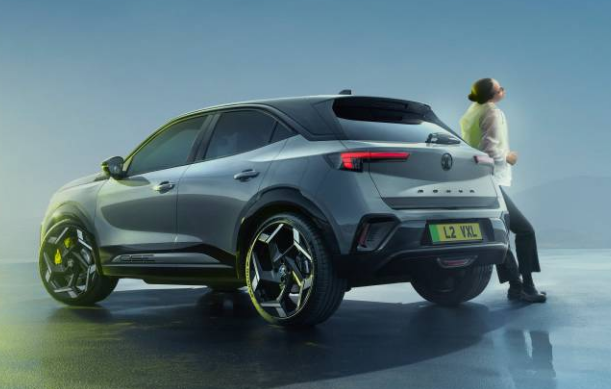
For consumers navigating the current economic climate, the outright purchase price is only half the story. A quick scour of modern automotive financing platforms reveals an abundance of highly attractive EV lease deals, with monthly payments routinely dropping below the £300 mark. When you combine low monthly electric vehicle financing with the inherent tax advantages for fleet buyers, it is incredibly easy to see how the Vauxhall Mokka GSE will dominate company car lists. Furthermore, savvy buyers looking to buy electric cars online will appreciate that safety features like the advanced ADAS suite help to keep auto insurance premiums surprisingly manageable for a vehicle with nearly 280 horsepower. So, while the engineering team built this car to inject desperately needed pizzazz and passion into the brand’s lineup, the grim reality is that many units will be sold for the exact same reason any standard commuter car is purchased: aggressive affordability, favorable tax brackets, and the convenient fact that the local dealership is only half a mile down the road.
Is pointing out its financial pragmatism considered faint praise for a performance car? It absolutely does not need to be. The Vauxhall Mokka GSE is a tremendously charming machine to spend time with. It merges the aggressive aesthetics of a street brawler with the silent, seamless wave of modern electric torque. While it may be far from perfect—suffering from a lack of driver-adjustable regen and a slightly busy low-speed ride—we feel compelled to highly praise the fact that a major manufacturer actually bothered to build it.
As the automotive industry marches relentlessly toward full electrification, we are witnessing the slow, painful extinction of the traditional petrol-powered hot hatchback. If the future means we are left with a cheery, aggressive bunch of electric alternatives that refuse to take life too seriously, then the transition won’t be nearly as tragic as the purists fear. The Vauxhall Mokka GSE proves that you can have zero emissions without having zero fun.
If you are ready to experience how a mechanical limited-slip differential can transform front-wheel-drive electric power, head over to your local dealership’s website today to schedule a test drive and explore the latest EV lease deals available in your area.