When the Porsche Cayenne Electric Meets the Stratolaunch Roc: A Masterclass in High-Speed EV Testing

For decades, the intersection of aerospace engineering and automotive performance has been a fascinating, albeit brief, theater of operations. Airplanes and automobiles typically occupy the same realm of motion for no more than a few fleeting seconds—usually during rotation or the final moments of a touchdown. Even rarer is the occasion when a production vehicle is capable of traveling side-by-side with a colossal aircraft at full throttle, maintaining a synchronized ballet of speed, aerodynamics, and pure mechanical willpower. However, in a recent exhibition of brute force and cutting-edge engineering, the Porsche Cayenne Electric completely shattered these conventional boundaries.
This was not your typical, gimmicky plane-versus-car drag race produced purely for social media clicks. Instead, it was a rigorous demonstration of high-speed stability, electric vehicle aerodynamics, and battery endurance. Taking the Porsche Cayenne Electric to the legendary Mojave Air and Space Port in California, the German automaker set out to test its flagship luxury electric SUV alongside the Stratolaunch team. The objective? To pace the Stratolaunch Roc—the world’s largest flying airplane—through a series of grueling takeoffs and landings. As an automotive industry veteran who has spent the last decade analyzing performance EV test drives and engineering benchmarks, I can confidently say this test marks a watershed moment for electric vehicle capabilities.
The Colossus of the Skies: Understanding the Stratolaunch Roc
Before we dive into the automotive side of this equation, it is crucial to understand the sheer magnitude of the aircraft involved. The Stratolaunch Roc is not a standard commercial airliner; it is a specialized, six-engine testbed aircraft featuring a unique twin-fuselage design. Originally conceived to carry air-launch-to-orbit rockets, the Roc is now primarily utilized by the hypersonic flight testing firm to launch experimental rocket-powered aircraft. Boasting a wingspan of 385 feet—longer than a professional football field—and powered by six Pratt & Whitney PW4056 engines, the Roc is a leviathan of the skies.
Pacing an aircraft of this size presents unprecedented challenges. The wake turbulence alone is enough to destabilize most conventional vehicles. The runway at Mojave Air and Space Port is vast, but when you are dealing with an aircraft that possesses such an immense footprint, the margin for error for a ground vehicle operating in its immediate vicinity shrinks to near zero. Porsche wanted to see if their most powerful model ever built, the newly minted Porsche Cayenne Electric, could not only keep up with this aerospace titan but do so with the precision and stability expected of a luxury electric SUV.
Anatomy of a Powerhouse: Engineering the Porsche Cayenne Electric
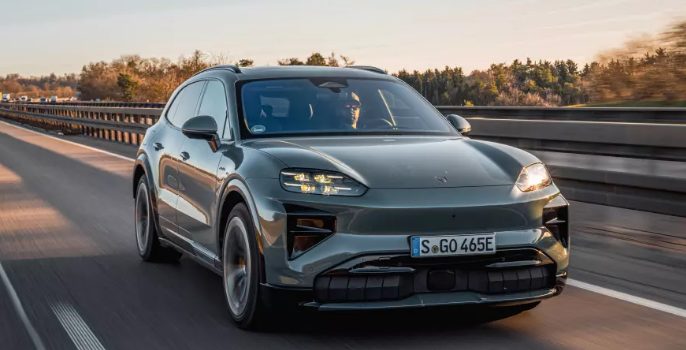
To understand how a road-going SUV managed to match strides with the world’s largest aircraft, we must look under the skin of the Porsche Cayenne Electric. Generating a staggering 1,139 horsepower on tap, this vehicle represents the absolute pinnacle of current EV powertrain development. In the realm of high-speed EV testing, raw horsepower is only part of the equation; torque delivery, thermal management, and aerodynamic stability are what truly dictate success.
The Porsche Cayenne Electric utilizes an advanced dual-motor all-wheel-drive architecture that delivers instantaneous torque to all four corners. Unlike internal combustion engines, which must build RPMs to access their powerband, the electric motors in the Cayenne provide peak torque from a standstill. This characteristic is precisely what allowed the SUV to seamlessly match the acceleration curve of the Pratt & Whitney-powered aircraft all the way up to its rotation speed.
Furthermore, high-speed stability in a luxury electric SUV weighing over two tons requires active aerodynamic systems and sophisticated adaptive air suspension. At speeds exceeding 160 mph, air resistance becomes a solid wall. The Porsche Cayenne Electric cuts through this resistance using dynamic aero elements that adjust in real-time, effectively pressing the vehicle into the tarmac to ensure maximum tire contact and steering responsiveness.
The Ultimate Performance EV Test Drive at Mojave Air and Space Port
The setting for this coordinated testing stunt was the Mojave Air and Space Port, a premier hub for aerospace innovation and high-speed testing in California. To execute this flawless run, Porsche enlisted the expertise of former Porsche factory driver Patrick Long. Behind the wheel of the Porsche Cayenne Electric, Long was tasked with pacing the Stratolaunch Roc through two full takeoff runs, pushing the electric SUV to speeds exceeding 160 mph down the massive desert runway.
But the takeoff was only the beginning. The truly harrowing phase of the test came during the landings. Long was required to pace the aircraft as it descended, eventually threading the Porsche Cayenne Electric directly between the aircraft’s massive twin-fuselage setup. This is a maneuver that demands absolute precision, nerves of steel, and a vehicle that responds intuitively to micro-adjustments at terminal velocities.
To ensure safety and synchronization, the crew chiefs of the six-engined airplane, Shauntel Williams and John McKinney, rode shotgun in the Porsche Cayenne Electric. Their presence was vital for maintaining constant radio communication with the flight crew above. Mixing an experimental aircraft with a high-speed run in an electric car requires military-grade logistical coordination, and having the aerospace chiefs embedded within the luxury electric SUV ensured that both the driver and the pilots were acting as a single, unified entity.
Reflecting on the experience, Patrick Long provided insights that resonate deeply with anyone familiar with high-limit vehicle dynamics. “I had no doubts about the power of the Cayenne, but I was a bit apprehensive regarding how reactive the car would be to inputs, especially at speed,” Long remarked. “Surprisingly, the landings were a lot harder to time just right. The plane is so big that you don’t really have effective visual references for timing when to merge with the plane onto the runway. I’m grateful that we had the crew chiefs ride along and communicate directly with the flight crew so we wouldn’t under- or over-shoot the plane.”
Aerodynamics, Slipstreams, and High-Speed Stability
One of the most fascinating engineering takeaways from this event was the aerodynamic interaction between the Porsche Cayenne Electric and the Stratolaunch Roc. When threading between the twin fuselages of the aircraft during the landing rollout, the Porsche actually benefited from a unique aerodynamic phenomenon.
Engineers on site noted that the SUV operated within an “aerodynamically quiet area” created between the two massive fuselages. In fluid dynamics, this is akin to a slipstream or a localized low-pressure pocket where crosswinds and turbulent wakes are effectively blocked or channeled away by the aircraft’s structures. For the Porsche Cayenne Electric, this meant that despite traveling at speeds where aerodynamic buffeting is usually severe, the vehicle experienced enhanced high-speed stability. This quiet zone allowed Long to maintain pinpoint steering accuracy without constantly fighting the wheel against disrupted airflow.
This specific data point is invaluable for the future of electric vehicle aerodynamics. Understanding how a large luxury electric SUV behaves in highly manipulated aerodynamic environments can lead to better active aero systems, improving both performance and efficiency for consumer vehicles on standard highways.
Battery Management and Endurance: A Deep Dive
Perhaps the most impressive metric to emerge from the Mojave Air and Space Port was regarding electric car battery range and efficiency. High-speed EV testing is notoriously brutal on battery reserves. Pushing an electric vehicle past 100 mph traditionally results in exponential energy consumption, rapid thermal degradation, and a plummeting state of charge. Sustained runs at 160 mph should, theoretically, drain a battery pack in a matter of minutes.
However, during this rigorous testing session, the Porsche Cayenne Electric defied expectations. Over the course of four flat-out, high-speed runs—including the blistering acceleration required to match the Roc’s rotation speed—the vehicle consumed only 13 percent of its total battery charge.
This statistic is a testament to the thermal management systems and energy density engineered into the modern Porsche Cayenne Electric. When a battery is discharged rapidly to feed ,1139 horsepower to the wheels, it generates immense heat. If this heat is not managed, the system will pull power to protect the cells—a phenomenon known as thermal throttling. The fact that the Porsche Cayenne Electric could execute four back-to-back 160 mph sprints while maintaining optimal operating temperatures and sipping only 13 percent of its battery is a monumental achievement in electric SUV performance.
For the everyday consumer, this translates to profound confidence in electric car battery range. If the Porsche Cayenne Electric can sustain aerospace-level pacing runs in the unforgiving heat of the California desert with minimal energy degradation, its capability to handle long-distance highway cruising, mountain ascents, and spirited weekend driving is beyond question.
The Broader Implications for the Automotive Industry
What Porsche accomplished alongside the Stratolaunch team is more than just a visually spectacular marketing stunt; it is a validation of the electric powertrain’s dominance. For years, skeptics of electric vehicles have pointed to sustained high-speed performance and high-load battery endurance as the Achilles’ heel of the EV movement. By subjecting the Porsche Cayenne Electric to the extreme environment of hypersonic flight testing facilities and pairing it against the world’s largest flying plane, Porsche has effectively silenced those criticisms.
The data gathered regarding torque vectoring under high aero loads, battery thermal stability during rapid discharge, and communication systems integration will undoubtedly trickle down into the next generation of consumer vehicles. We are witnessing the evolution of the luxury electric SUV from a mere status symbol into a bona fide performance instrument capable of feats previously reserved for specialized hypercars.
Furthermore, having an FAA coordinator on site for the test runs underscores the serious, heavily regulated nature of this endeavor. This was an exercise in absolute precision, showcasing that the safety systems, braking capabilities, and structural integrity of the Porsche Cayenne Electric are operating at an aerospace-grade level of reliability.
A New Benchmark in Electric SUV Performance
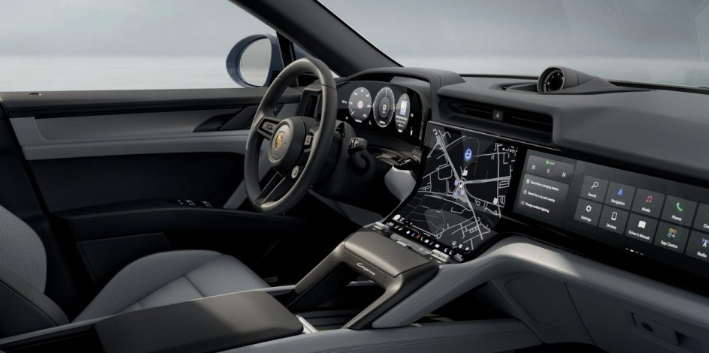
As we look toward the remainder of the decade, the standards for what constitutes a high-performance vehicle are rapidly shifting. It is no longer just about 0-60 times or lap records at the Nürburgring. The new benchmark is holistic capability: the ability to deliver hypercar acceleration, opulent luxury, advanced technological integration, and unyielding reliability in the most extreme conditions imaginable.
The Porsche Cayenne Electric has planted its flag firmly at the summit of this new paradigm. By successfully pacing the gargantuan Stratolaunch Roc, handling the aerodynamic complexities of the Mojave runway, and doing so with incredible battery efficiency, this vehicle has proven that the transition to electric mobility does not require a sacrifice in visceral performance. Regardless of your stance on the electrification of the automotive industry, mixing an experimental aerospace titan with a high-speed run in an electric SUV is the kind of ambitious, boundary-pushing stunt that gives us immense hope for the future of driving.
The automotive world is advancing at a breakneck pace, and staying informed is the key to making the best decisions for your next luxury or performance vehicle investment. If you found this deep dive into the engineering and performance of the Porsche Cayenne Electric valuable, don’t miss out on our upcoming analyses. Subscribe to our newsletter today to get the latest expert reviews, high-speed EV testing breakdowns, and industry insider news delivered directly to your inbox. Take the next step into the future of automotive excellence with us!