
The Unprecedented Single-Vehicle 2026 Toyota Tundra Recall: A Deep Dive into GVWR, Aftermarket Accessories, and Strict Truck Safety Standards
In my ten years of analyzing the automotive industry, auditing manufacturing logistics, and tracking federal compliance, I’ve seen recalls of every shape and size. We are accustomed to sweeping mandates involving millions of vehicles, such as the infamous airbag inflator fiascos or massive powertrain software updates. However, July 2026 has delivered one of the most statistically improbable events in modern automotive manufacturing: a 2026 Toyota Tundra recall that affects exactly one single pickup truck.
Yes, you read that correctly. A single unit.
While the general public might chuckle at the absurdity of a multi-billion-dollar global automaker issuing federal paperwork for one solitary customer, automotive industry professionals know that this incredibly niche 2026 Toyota Tundra recall highlights something much more profound. It exposes the razor-thin margins of error in federal safety compliance, the intricacies of Gross Vehicle Weight Rating (GVWR), and the cascading legal and financial liabilities tied to aftermarket truck accessories.
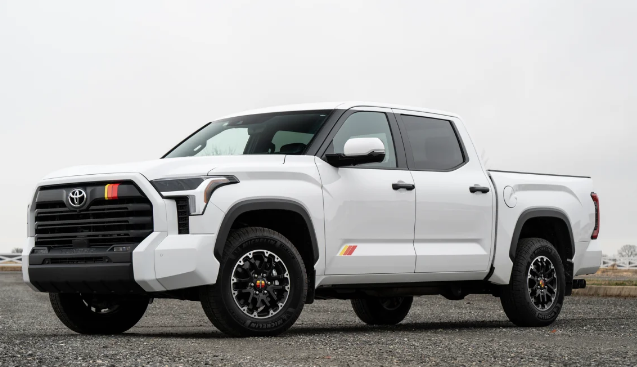
Today, we are going to break down exactly why this highly specific Toyota Tundra recall happened, how independent distributors manage accessory weight compliance, and what truck owners need to understand about load carrying capacity modifications, commercial auto insurance coverage, and vehicle safety standards.
The Origin of the One-Truck Toyota Tundra Recall
The bizarre saga of this 2026 Toyota Tundra recall traces back to a regional operational hub known as Southeast Toyota Distributors. For those outside the logistics sector of the auto industry, Southeast Toyota Distributors is a massive independent franchise distributor based in Florida. They process, accessorize, and distribute Toyota vehicles to dealerships across the southeastern United States.
In April 2026, a dealership in their network flagged an anomaly. A 2026 Toyota Tundra arrived on the lot featuring an aftermarket accessory package that had been inadvertently deleted from the truck’s official digital build sheet. As a result, the physical accessories bolted onto the truck—which could include anything from running boards and bed extenders to heavy-duty skid plates—were not accounted for in the vehicle’s final weight certification.
To rectify the oversight, a label was printed to acknowledge that weight had been added to the vehicle. Unfortunately, due to the administrative glitch, the mathematical calculation printed on that load carrying capacity modification label was incorrect.
According to official documents filed with the National Highway Traffic Safety Administration (NHTSA) on July 6, 2026, this specific Toyota Tundra recall centers entirely on federal labeling regulations. The certified gross vehicle weight rating of the truck remained unchanged mechanically, but the label failed to reflect a value accurate to within the federally mandated margin of one percent (1%) of the total weight of accessories installed between final factory certification and the first retail sale.
Understanding Gross Vehicle Weight Rating (GVWR) and Payload
To understand why a simple sticker triggers a federal Toyota Tundra recall, we must explore the physics and legality of truck weight ratings. When a truck leaves the assembly line in Texas, it comes with a strict Gross Vehicle Weight Rating (GVWR). The GVWR is the absolute maximum safe operating weight of the vehicle, which includes the truck’s curb weight, all passengers, fuel, fluids, and the payload resting in the bed or cabin.
Here is where many truck owners make critical errors: every single aftermarket accessory you add to your vehicle eats directly into your available payload capacity.
If a 2026 Toyota Tundra has a payload capacity of 1,940 pounds, and you add a 150-pound steel bumper, a 200-pound camper shell, and 50 pounds of all-weather floor mats and under-seat storage boxes, your new functional payload capacity has shrunk to 1,540 pounds.
Federal law dictates that if a distributor or dealer installs accessories before the first retail sale that exceed a certain weight threshold (usually 1.5% of the vehicle’s curb weight or 100 pounds, whichever is lesser), they must affix a supplemental “Load Carrying Capacity Modification” label to the door jamb. This ensures the end consumer knows exactly how much weight they can safely put in the bed. In the case of this solitary Toyota Tundra recall, the math on that crucial sticker was wrong.
The Severe Safety Risks of Overloading
You might wonder why a minor sticker error necessitates a formal NHTSA recall. The answer lies in the severe safety risks associated with overloading a vehicle. The NHTSA does not treat payload limits as gentle suggestions; they are hard engineering limitations.
When a truck is loaded beyond its certified GVWR, several critical mechanical failures become imminent:
Braking Distance and Fade: Truck brakes are calibrated to halt a specific amount of mass. Overloading significantly extends stopping distances and causes brake fluid to boil (brake fade) on steep downgrades.
Suspension Geometry: Excessive weight alters the truck’s suspension travel, changing the pinion angle of the driveshaft, which can lead to catastrophic drivetrain failure at highway speeds.
Tire Blowouts: Tires are load-rated. Exceeding that load rating generates immense heat within the tire carcass, drastically increasing the risk of a high-speed blowout.
The NHTSA’s primary concern with this single Toyota Tundra recall is thatThe Rarest Toyota Tundra Recall: Why a Single Truck’s Weight Sticker Triggered a Federal Action
In the sprawling, heavily regulated world of automotive manufacturing, recall campaigns are a standard part of doing business. On any given day, millions of vehicles might be called back to dealerships for software patches, airbag replacements, or mechanical inspections. However, it is extraordinarily rare to witness an official campaign targeting a single unit. Yet, that is exactly what happened with a highly unusual Toyota Tundra recall. Authorized by the National Highway Traffic Safety Administration (NHTSA), a recent Toyota Tundra recall has made industry headlines not for a catastrophic mechanical failure, but for a simple mathematical discrepancy involving a single truck’s weight sticker.
As an automotive industry professional with over a decade of experience analyzing vehicle safety compliance and manufacturing regulations, I view this solitary Toyota Tundra recall as a fascinating case study. It perfectly illustrates the uncompromising nature of federal motor vehicle standards. This article will deconstruct how a single Florida Toyota distributor ended up initiating a formal Toyota Tundra recall, dive into the engineering math behind a vehicle’s Gross Vehicle Weight Rating (GVWR), and explain why aftermarket accessories carry heavy implications for payload capacity and truck accident liability.
Anatomy of the Single-Vehicle Toyota Tundra Recall
The automotive supply chain is a complex web of factory assembly lines, regional distributors, and local dealerships. This particular Toyota Tundra recall stems from the distribution level. According to NHTSA documents filed in July 2026, Southeast Toyota Distributors—an independent Toyota distributor based in Florida—discovered an anomaly in their internal tracking database. The anomaly affected exactly one 2026 Toyota Tundra pickup.
What triggered this exclusive Toyota Tundra recall? It came down to federal regulations regarding the GVWR tag and the calculation of aftermarket accessories. When a truck rolls off the assembly line in Texas, it has a certified base weight and payload capacity. However, trucks are rarely sold in their base configurations. Distributors and dealers frequently add accessories before the first retail sale.
In April 2026, a dealer notified the distributor about a truck equipped with an accessory package that was mysteriously absent from its original build sheet. Due to an inadvertent accessory package deletion in the tracking system, these extra parts were installed but completely omitted from the truck’s final weight certification. The original truck weight sticker indicated that some mass had been added, but the final calculation missed the mark. Because the load-carrying capacity modification label did not accurately reflect the installed accessory weight to within a 1% margin of error, a formal Toyota Tundra recall was mandated.
Why the GVWR Tag is Sacred in the Trucking Industry
To understand why a 1% labeling error necessitates a federal Toyota Tundra recall, we must explore the concept of the Gross Vehicle Weight Rating. The GVWR is the absolute maximum safe operating weight of a vehicle. It includes the truck’s curb weight, all passengers, fuel, cargo, and the tongue weight of any towed trailer.
When engineers design a pickup, the GVWR isn’t a mere suggestion; it is a hard structural and dynamic limit. The braking system, suspension geometry, tire load ratings, and frame rigidity are all calibrated to perform safely up to this exact number. If you exceed the GVWR, you venture into dangerous territory where vehicle safety compliance is compromised. Stopping distances increase exponentially, suspension components risk catastrophic failure, and tire blowouts become a severe hazard.
The reason this specific Toyota Tundra recall happened is due to the erosion of payload capacity. Payload capacity is calculated by subtracting the truck’s curb weight from its GVWR. When Southeast Toyota Distributors added unrecorded aftermarket accessories to this single vehicle, the truck’s curb weight increased. Consequently, its true payload capacity decreased. Because the new GVWR tag was mathematically incorrect, a consumer relying on that sticker might unknowingly overload the bed, increasing the risk of a crash.
Aftermarket Accessories and Payload Math
The truck accessory market is a multi-billion-dollar industry, but many consumers fail to realize how heavily modifying their vehicle impacts its legal and mechanical limits. In the context of this Toyota Tundra recall, the issue arose prior to the first retail sale, placing the liability squarely on the distributor.
Common aftermarket accessories include heavy-duty steel bumpers, winches, bed caps, oversized all-terrain tires, and spray-in bed liners. A steel front bumper and winch combo can easily add 250 pounds to the front axle. A fiberglass bed cap might add another 200 pounds to the rear. Suddenly, a truck with an advertised payload of 1,600 pounds is reduced to just 1,150 pounds of usable capacity.
If a truck is modified after the factory but before the customer takes delivery, federal law requires a load-carrying capacity modification label to be affixed to the door jamb. This label alerts the buyer that the original payload capacity has been reduced by a specific amount. The isolated Toyota Tundra recall was initiated because the modified label provided to the buyer was inaccurate. Even though the undisclosed weight did not actually push the vehicle over its physical limits in its unloaded state, the lack of transparency violated strict NHTSA regulations.
Truck Accident Liability and the Legal Stakes
As an expert who has consulted on numerous automotive product liability cases, I cannot overstate the legal importance of an accurate truck weight sticker. Vehicle safety compliance is not just about keeping the driver safe; it is heavily tied to litigation.
Imagine a scenario where a business owner purchases a modified pickup. They check the door jamb, read the GVWR tag, and load the vehicle right up to its stated maximum payload with heavy equipment. Because of an error identical to the one that caused our single-vehicle Toyota Tundra recall, the truck is actually overloaded by 300 pounds. The driver hits the highway, experiences a blown rear tire due to excessive load strain, and causes a multi-car collision.
In the aftermath of such a crash, an auto defect lawyer would immediately scrutinize the vehicle’s certification labels. If it is discovered that the dealership or regional distributor installed aftermarket accessories without properly updating the load-carrying capacity modification label, the legal ramifications are immense. The distributor could face severe truck accident liability for failing to maintain vehicle safety compliance. The plaintiff’s counsel would argue that the inaccurate label directly contributed to the crash.
This stringent legal environment explains why Toyota and its distributors do not take chances, even with a single unit. Issuing a Toyota Tundra recall for one vehicle may seem slightly comical on the surface, but it is a highly calculated risk management strategy designed to eliminate potential automotive product liability before it can ever manifest on the road.
Dealership Compliance and NHTSA Regulations
The National Highway Traffic Safety Administration operates with zero tolerance for certification errors. Commercial vehicle regulations and light-duty truck standards dictate that any weight addition exceeding the lesser of 1.5% of the GVWR, or 100 pounds, must trigger a recalibration of the weight sticker. However, the rule cited in this Toyota Tundra recall dictates an even tighter standard for modified capacity labels: they must be accurate to within 1% of the actual added weight.
Maintaining auto dealership compliance in Florida—or any state—requires meticulous record-keeping. When a truck arrives at a regional port or distribution hub, technicians often install “port-installed options” (PIO). These are distinct from factory-installed options. The distributor uses sophisticated inventory management software to track every floor mat, running board, and tonneau cover added to a specific VIN.
In the case of this solitary Toyota Tundra recall, a glitch occurred—an “inadvertent accessory package deletion.” The parts went on the truck, but the computer system erased the data, preventing the final weight certification algorithm from capturing the added mass. It is a testament to the robust auditing processes at Southeast Toyota Distributors that they caught this digital ghost months later. They cross-referenced physical inventory with digital build sheets, identified the single orphaned truck out of thousands sold, and initiated the Toyota Tundra recall proactively.
The Overloading Risk: Engineering Perspectives
Let’s delve deeper into the mechanical reality of an overloaded pickup, which is the exact scenario this Toyota Tundra recall aims to prevent. When a consumer reads a truck weight sticker, they trust the engineering behind it. Modern trucks like the 2026 Tundra feature sophisticated multi-link rear suspensions with coil springs (or optional air suspensions). These systems offer superior ride quality compared to traditional leaf springs, but they must operate within tightly defined compression thresholds.
If a vehicle is overloaded because of a faulty payload capacity label, the suspension bottoms out. The bump stops ride directly on the axle, eliminating all shock absorption. Every pothole and bridge expansion joint sends violent kinetic energy directly into the truck’s frame and the driver’s spine. Furthermore, the front end of the truck lifts slightly, reducing the contact patch of the front tires. This compromises steering geometry, making the truck floaty and unresponsive.
Simultaneously, the brakes are subjected to thermal loads they were not designed to handle. A truck hauling excess weight requires significantly more kinetic energy to be converted into heat via the brake pads and rotors. This can lead to brake fade, where the fluid boils, the pedal goes to the floor, and the vehicle fails to stop. By strictly enforcing NHTSA regulations through this Toyota Tundra recall, safety regulators are actively preventing these cascading mechanical failures from endangering the public.
How the Single-Vehicle Toyota Tundra Recall is Resolved
One of the most amusing aspects of this particular automotive incident is the simplicity of the remedy. Usually, a vehicle recall involves scheduling a service appointment, leaving the car at a dealership for hours or days, and replacing expensive mechanical components like steering racks or fuel pumps.
Because this Toyota Tundra recall is entirely administrative, no wrenches are required. The fix is remarkably low-tech. The distributor simply generated a correct load-carrying capacity modification label and mailed it directly to the owner alongside an official notice of noncompliance. The owner is instructed to peel off the backing of the new sticker, place it over the old, incorrect one on the driver’s side door jamb, and the recall is complete. Once that label is swapped, the truck is instantly restored to full road-legal status and total regulatory compliance.
While the remedy is easy, the corporate machinery required to get that single sticker mailed is vast. It involves internal audits, drafting legal notifications, interfacing with federal regulators, and publishing public documentation. It proves that the system works. Even if only one consumer is at risk of misunderstanding their vehicle’s payload capacity, the regulatory safety net deploys to correct the oversight.
Looking Ahead: The Future of Vehicle Weight Compliance
As the automotive industry pivots toward more advanced powertrains, the issues highlighted by this Toyota Tundra recall will only become more prominent. We are seeing heavy battery packs, complex hybrid systems (like the Tundra’s i-FORCE MAX), and heavy advanced driver-assistance systems (ADAS) eating into base payload capacities. Every pound matters more now than it did a decade ago.
Automakers and distributors will need to implement even stricter digital guardrails to ensure that accessory weights are tabulated flawlessly. An auto defect lawyer evaluating a crash in 2025 or 2026 will look closely at exactly how much weight a dealership added before sale. Consumers, too, are becoming savvier. Truck buyers who tow travel trailers or haul heavy slide-in campers are highly protective of their payload numbers. A truck weight sticker is no longer just fine print; it is a critical deciding factor for buyers comparing the Tundra against domestic rivals.
The meticulous nature of this one-unit Toyota Tundra recall serves as a warning shot to all automotive distributors. You cannot afford to let aftermarket accessories slip through the cracks of your inventory management systems. Compliance is binary—you are either legally certified, or you are facing a federal mandate to correct your mistakes.
Final Thoughts on a Historic Automotive Oddity
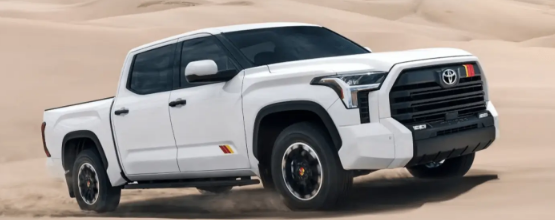
Ultimately, the tale of the solitary Toyota Tundra recall will likely be relegated to a footnote in automotive trivia. Yet, for those of us who spend our careers analyzing vehicle safety compliance and automotive product liability, it stands as a shining example of regulatory diligence. It reinforces the fact that safety standards are blind to volume. Whether an engineering defect affects one million vehicles or an administrative error affects just one, the mandate to protect the consumer remains absolute.
The next time you open the driver’s side door of your pickup or SUV, take a moment to look at the GVWR tag and the payload capacity sticker. The numbers printed there are the culmination of millions of dollars of engineering research, stringent NHTSA regulations, and rigorous internal compliance audits. If a manufacturer is willing to execute a federal Toyota Tundra recall over a margin of error of less than one percent on a single vehicle, you can trust that those numbers are there to keep you, your cargo, and your family safe on the road.
If you have recently purchased a new or used pickup truck—especially one equipped with port-installed or dealer-installed aftermarket accessories—it is crucial to ensure you are operating within your true payload limits. Don’t leave your safety or legal liability up to chance. Take a moment today to run a car recall check on your vehicle’s VIN through the official NHTSA database, and consult with a certified weight master or dealership service expert to verify exactly how much capacity your specific truck was built to handle. Ensure your load is legal, your truck is safe, and your peace of mind is secure before you hit the highway.