
Inside the Toyota Land Cruiser Commercial: The Ultimate Off-Road Cargo Van Built for Business
Spend a decade evaluating utility vehicles and fleet operations, and you quickly learn that few nameplates command as much universal respect as the Toyota Land Cruiser. From the sun-scorched trails of the Australian Outback to the relentless dunes of the Sahara Desert, this platform has forged a legendary status built on sheer, unyielding reliability. In environments where a mechanical failure isn’t just an inconvenience but a genuine threat to survival, the Land Cruiser has consistently been the vehicle of choice.
However, as the automotive landscape shifts into the 2025 and 2026 model years, we are seeing specialized offshoots designed to conquer an entirely different kind of hostile environment: the corporate tax code. Enter the Toyota Land Cruiser Commercial, a dedicated two-seat cargo rig based on the highly acclaimed J250 platform. While it retains every ounce of its wilderness-conquering DNA, the primary mission of this specific J250 Land Cruiser isn’t just to haul heavy gear over broken terrain—it is masterfully engineered to slash business tax bills.
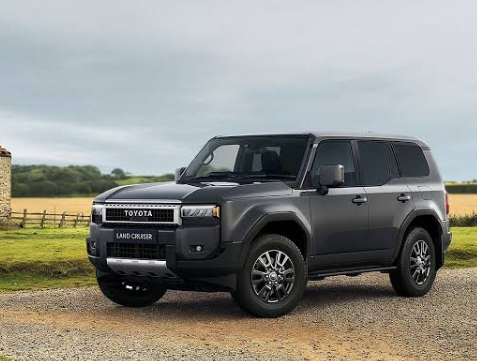
As a unique SUV cargo conversion, the Toyota Land Cruiser Commercial occupies a fascinating space in the European market. It perfectly blends the raw capability of a heavy-duty diesel 4×4 with the financial pragmatism required by modern enterprise fleets.
The Business Case: Fleet Vehicle Tax Benefits
To understand why the Toyota Land Cruiser Commercial exists, you have to look past its rugged exterior and examine the financial incentives driving its popularity in the U.K., the Republic of Ireland, and select European markets. Traditional passenger SUVs are heavily penalized by emissions and purchase taxes. However, when a vehicle is classified as a commercial off-road vehicle, the financial mathematics change drastically.
In Britain, business owners and fleet managers utilizing vans for work purposes are subjected to substantially lower purchase taxes and benefit-in-kind rates for personal use. The business vehicle tax deductions available for a homologated cargo vehicle are massive. To put this in perspective, a standard passenger Land Cruiser buyer in the U.K. is hit with a punishing Vehicle Excise Duty (VED) charge of £5,490 (roughly $7,340). Conversely, the Toyota Land Cruiser Commercial qualifies for a commercial VED rate of just £345 (around $460).
This staggering disparity is exactly why the commercial SUV for sale market is experiencing a massive boom. Competitors like Land Rover and Ineos are already offering similar fleet conversions of the Defender and the Grenadier. But the Toyota Land Cruiser Commercial brings Toyota’s undeniable pedigree into the mix, making it an incredibly attractive proposition for businesses that need to access remote job sites without triggering exorbitant tax liabilities.
The Derbyshire Conversion: Building an Off-Road Cargo Van
What makes the Toyota Land Cruiser Commercial particularly interesting from a manufacturing standpoint is its origin story. This vehicle does not roll off the primary assembly line in Japan as a stripped-out cargo van. Instead, it ships to the United Kingdom as a standard, fully equipped passenger model. Upon arrival, it is sent to Toyota’s specialized factory in Derbyshire—the very same facility responsible for producing U.S.-bound GR Corollas—for an extensive, meticulous SUV cargo conversion.
The transformation from luxury family hauler to heavy-duty off-road cargo van is comprehensive. The second and third-row seats are completely removed to make way for a sprawling, flat load floor. If you inspect the vehicle closely, you will see exactly how dedicated Toyota is to ensuring this vehicle retains its commercial classification. The rear doors still feature exterior glass, but the windows are permanently fixed. Behind the glass, robust hard covers are installed to protect the windows from shifting cargo.
Inside the rear doors, the original window motors remain, but Toyota has installed specialized blanking plates over the switches to disable them. The rear window controls on the driver’s door are similarly permanently covered. All rear seatbelts and grab handles are stripped out.
Most importantly, Toyota knows that some buyers might be tempted to purchase the Toyota Land Cruiser Commercial for the fleet vehicle tax benefits and subsequently attempt to reinstall the rear seats illegally. To prevent this, the factory physically cuts away the rear seat mounting points, sealing them beneath the new commercial floor. A full-height, heavy-duty mesh bulkhead is securely bolted in place behind the front seats, separating the driver from the 66.4-inch-long cargo bay. Interestingly, amid all this utilitarian stripping, the commercial rig still incongruously features the old third-row cupholders integrated into the rear side moldings.
A Commercial Rig Wrapped in Luxury
Because the Toyota Land Cruiser Commercial begins its life as a premium, well-equipped European-spec passenger model, it possesses an array of high-end features you would never expect to find in a traditional panel van.
Despite being an off-road cargo van, the cabin experience for the driver and passenger is decidedly first-class. The vehicle retains its power-operated, heated, and ventilated front seats, providing exceptional comfort for operators spending long days on remote sites. You also get the standard model’s premium high-fidelity audio system, advanced radar cruise control, and modern infotainment suite.
The rear of the vehicle, however, presents a few structural anomalies due to its passenger-car origins. The Toyota Land Cruiser Commercial retains the original power-operated tailgate, complete with a separately opening upper glass section. While this split-tailgate design is fantastic for grabbing groceries in the standard J250 Land Cruiser, it is practically useless in the commercial variant. Because the traditional trunk space has been replaced by an elevated, flat cargo floor, reaching through the upper glass simply drops your cargo onto a hard surface. Furthermore, the top-hinged tailgate requires significant clearance to open, making it noticeably less practical in tight loading bays compared to the dual side-hinged doors of a standard work van.
Powertrain and Performance: The True Diesel 4×4 Experience
For automotive purists and fleet operators alike, driving the European-market Toyota Land Cruiser Commercial offers a chance to experience a powertrain that is highly coveted but unavailable in the United States: the legendary 2.8-liter turbocharged inline-four diesel engine.
Enhanced with an onboard 48-volt mild-hybrid system, this diesel 4×4 powertrain generates 202 horsepower and a robust 369 lb-ft of torque. On paper, those figures might seem modest when tasked with moving a vehicle boasting a staggering unladen mass of 5,200 pounds. However, peak torque is available from just 1,600 rpm. Paired with a brilliantly calibrated eight-speed automatic transmission, the Toyota Land Cruiser Commercial rarely feels underpowered.
That said, as an expert who has tested countless commercial off-road vehicles, I must note that this engine is unapologetically gruff. Compared to the ultra-smooth inline-six diesels found in the commercial variants of the Defender and Grenadier, the four-cylinder Toyota feels a bit agricultural. There is noticeable vibration at idle, and the cabin fills with significant mechanical noise under heavy acceleration.
The transmission programming is heavily biased toward low-end torque. If left in automatic drive, the gearbox refuses to rev past 3,800 rpm before upshifting, even with your foot pinned to the floor. To actually reach the digital tachometer’s marked 4,400-rpm redline, you have to engage the transmission’s manual mode. Toyota claims a 0-62 mph sprint of 10.2 seconds—a benchmark that fleet drivers will rarely care about, especially since hard acceleration causes the heavy rig to squat noticeably on its rear suspension, pointing the nose toward the sky.
Highway cruising is a mixed bag. Once up to speed, the refinement is leagues ahead of a standard contractor’s panel van. However, the Toyota Land Cruiser Commercial is not meant for the fast lane. Equipped with Dunlop AT23 Grandtrek tires, it exhibits a tendency to wander within highway lanes at elevated speeds, and the windshield wipers noticeably begin to struggle against the wind resistance above 75 mph.
Uncompromised Off-Road Capability and Heavy-Duty Hauling
Where the Toyota Land Cruiser Commercial absolutely dominates the competition is in the dirt. Like many heavy-duty trucks, the suspension is aggressively sprung and heavily damped, meaning it rides rather harshly when unladen. Over broken pavement without a payload, the ride can feel jagged.
However, load up the cargo bay, and the vehicle’s dynamic character transforms entirely. During our testing, strapping a 220-pound piece of industrial equipment into the back settled the suspension beautifully, allowing the Toyota to absorb severe undulations and ruts with exceptional composure.
Because it retains the exact same advanced off-road hardware as the standard model, this commercial SUV for sale is virtually unstoppable in the wild. It boasts a traditional two-speed transfer case, a manually locking center differential, and Toyota’s world-class traction-management system designed to artificially route power to the wheels with grip when traversing slippery terrain. Whether you are navigating deep, sun-baked mud ruts or hauling equipment to a remote cell tower, the Toyota Land Cruiser Commercial executes the task with effortless confidence.
When it comes to doing actual work, the specifications speak for themselves. The cargo area measures 66.4 inches long, 50.6 inches wide, and 42.9 inches tall. While the elevated load floor makes lifting heavy objects slightly more strenuous than in a low-riding Transit, the sheer capacity is impressive. Toyota rates the rear bed for a maximum payload of 1,780 pounds. More impressively, the rig is rated to tow up to 7,700 pounds—the absolute maximum legally permissible for a vehicle of this footprint under European transport regulations.
The Final Verdict on the Toyota Land Cruiser Commercial
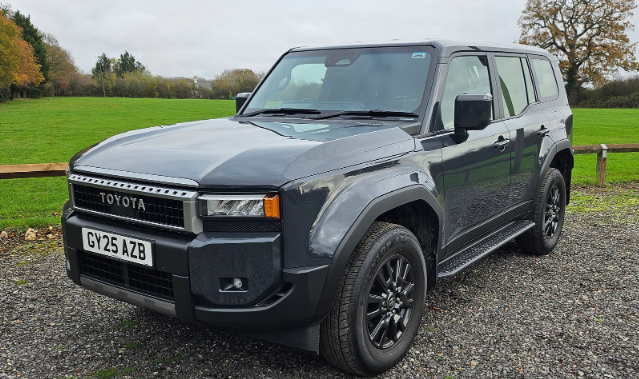
At its core, the Toyota Land Cruiser Commercial is an eccentric but highly calculated masterpiece of market positioning. Is it the perfect cargo van? No. The high load floor and single-piece upward-swinging tailgate make it less practical for inner-city delivery routes than a dedicated box van.
But nobody is cross-shopping this vehicle with a standard city delivery van. Businesses looking at commercial off-road vehicles need something that can carry heavy equipment through mud, snow, and gravel, while simultaneously offering substantial business vehicle tax deductions.
Priced at £50,640 (roughly $67,800) before tax, the commercial variant undercuts the cheapest passenger-carrying Land Cruiser by nearly £9,000 ($12,000) in Britain. When you factor in the massive savings on road tax and benefit-in-kind rates, the financial logic becomes undeniable. It is a supremely comfortable, ruthlessly capable off-road tool that just happens to be an accountant’s best friend.
If you manage a fleet that operates far beyond the limits of paved asphalt, or if your business requires a dependable, heavy-duty tow rig that offers incredible tax advantages, it’s time to rethink your vehicle strategy. Contact your local commercial fleet dealership today to schedule a demonstration of the Toyota Land Cruiser Commercial, and see firsthand how this purpose-built off-road cargo van can optimize both your fieldwork and your bottom line.