
The Polestar US Sales Ban: Why the EV Maker is Exiting America Without an Appeal
In my decade of working inside automotive trade compliance and global supply chain strategy, I’ve seen regulatory shifts reshape markets overnight. I’ve watched tariffs force assembly lines to relocate and emissions standards rewrite long-term product roadmaps. But the finality of the impending Polestar US sales ban represents something entirely different. It marks a watershed moment where corporate ownership and software provenance have officially superseded physical manufacturing locations in the global automotive industry.
Following intense and ultimately fruitless dialogue with the U.S. Department of Commerce, the Swedish electric vehicle brand Polestar has formally decided it will not appeal the regulatory ruling barring it from the domestic market starting with the 2027 model year. Despite having an avenue to challenge the decision, the automaker’s leadership recognized the writing on the wall. Instead of a prolonged legal fight, Polestar is reallocating its capital and strategic focus toward Europe and Asia, where its brand equity and path to profitability remain relatively unobstructed.
But to view the Polestar US sales ban as merely an isolated compliance failure is to miss the broader macroeconomic picture. This is the first major casualty of a profound legislative realignment. The days when a car was simply a mechanical asset assembled from global parts are over. Today, automobiles are mobile data centers, and the regulatory frameworks governing them are being rewritten with national security at the forefront.
The Regulatory Catalyst: Unpacking the U.S. Department of Commerce Automotive Policy
To understand why the Polestar US sales ban is happening, we have to look closely at the Bureau of Industry and Security (BIS) and its recently enacted Connected Vehicle Rule. Finalized in early 2025 and taking full effect for the 2027 model year, this policy prohibits the import and sale of vehicles equipped with specific Vehicle Connectivity Systems (VCS) and Automated Driving Systems (ADS) that have a sufficient nexus to foreign adversaries, primarily China and Russia.
The logic behind the rule is straightforward, even if the execution is highly complex. The Commerce Department, alongside various national security agencies, concluded that malicious access to connected car cyber security software could allow foreign governments to harvest sensitive driver data. Even more concerning to regulators is the theoretical risk of remote vehicle manipulation on American infrastructure. If a foreign entity could push a malicious Over-The-Air (OTA) update to thousands of vehicles simultaneously, the resulting disruption would be catastrophic.
Polestar, despite its Swedish heritage and Scandinavian design ethos, is majority-owned by the Chinese automotive conglomerate Geely. Under the stringent definitions of the new U.S. Department of Commerce automotive policy, that corporate ownership alone triggers the restriction. It does not matter if a Polestar vehicle is physically assembled in a factory in South Carolina or imported from Europe; if the software architecture, connectivity modules, or ultimate corporate governance trace back to China, the vehicle is barred.
This represents a massive shift for the industry. For years, automotive executives built their expansion strategies around factory locations to avoid import duties. Now, they must completely map their technology origins and conduct rigorous audits of their Software Bill of Materials (SBOM). The Polestar US sales ban is the ultimate proof that an automaker’s digital supply chain is now just as heavily policed as its physical one.
Why Polestar Chose Not to Appeal the Connected Vehicle Technology Restriction
When news of the Polestar US sales ban first broke, many in the industry expected the automaker to deploy an army of lobbyists and every automotive trade compliance attorney it could find to fight the ruling. After all, abandoning one of the world’s largest automotive markets is an incredibly bitter pill to swallow. Yet, Polestar spokesman Michael Ofiara confirmed that the company would not pursue an appeal, stating that leadership engaged in “significant dialogue” with U.S. authorities and simply lacked confidence in a successful outcome.
From a business perspective, the decision to walk away is pragmatic. Fighting a national security designation in federal court is notoriously difficult, expensive, and time-consuming. Furthermore, Polestar’s relationship with the American market was already on thin ice. Last year, the brand was forced to discontinue its volume-seller, the Polestar 2 sedan, on American shores due to crippling 100 percent EV national security tariffs levied against Chinese-built electric vehicles.
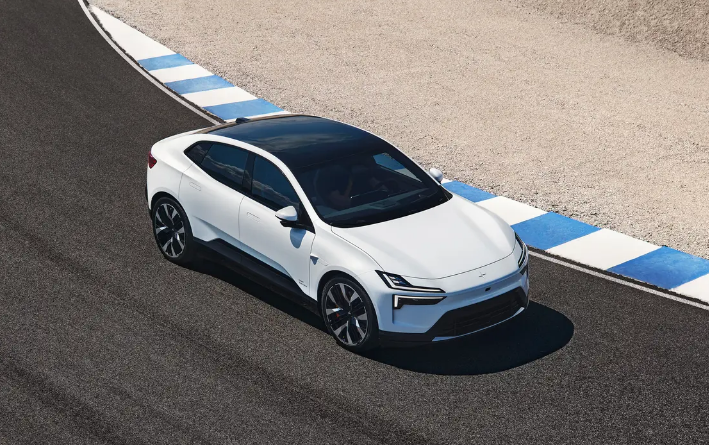
With the brand only moving slightly over 5,300 units in the United States in 2025, the return on investment for a protracted legal battle simply wasn’t there. Instead, Polestar is pivoting its resources. The brand recently announced that the highly anticipated Polestar 4 SUV will be exclusively redirected to European and Asian markets to ensure immediate capital flow and market penetration where they don’t face sudden regulatory blockades. For an automaker that needs to preserve its cash reserves and demonstrate a clear path to profitability to its investors, cutting its losses in the U.S. is the most logical, albeit painful, strategy.
The Geely Paradox: How Volvo Escaped the Ban
One of the most fascinating aspects of the Polestar US sales ban is the stark contrast with its sister company, Volvo. Both Volvo and Polestar share the same corporate parent, Geely, and both lean heavily into the same platform architectures and software-defined vehicle paradigms. Yet, while Polestar is being forced to pack its bags, Volvo was granted a crucial exemption in May of this year, allowing it to continue selling its connected vehicles in the United States.
How did two brands under the same Chinese umbrella experience such drastically different outcomes? The answer lies in the Office of Information and Communications Technology and Services (OICTS).
Federal regulators have explicitly stated that exemptions to the connected vehicle technology restriction are granted on a strict, case-by-case basis. To secure its lifeline, Volvo engaged in an unprecedented level of corporate transparency. The automaker submitted incredibly granular details regarding its corporate governance, data routing protocols, and proprietary technology stacks directly to the OICTS. Volvo successfully demonstrated that its connected car cyber security software was effectively walled off from its parent company, ensuring that data generated by American drivers remained localized and inaccessible to foreign jurisdictions.
Polestar, heavily reliant on shared Geely technology for its upcoming software integrations and lacking the massive legacy infrastructure of Volvo, seemingly could not provide the same structural guarantees. The divergence between Volvo and Polestar serves as a masterclass in regulatory maneuvering. It shows that while the government is taking a hardline stance on corporate ownership, there is a narrow path forward for companies that can definitively prove their data sovereignty.
The Ripple Effect on American Soil: Dealers, Inventory, and Franchise Laws
The fallout from the Polestar US sales ban is not confined to corporate boardrooms in Gothenburg or Beijing; it is currently spilling into showroom floors across America. Polestar operates 32 franchised dealerships in the United States, and these business owners are now facing the sudden evaporation of their future product pipelines.
Exiting a market is incredibly messy. Dealerships have invested millions of dollars into physical retail spaces, charging infrastructure, and staff training based on the promise of long-term vehicle allocations. When an automaker pulls the plug, it triggers a complex web of state-level car dealership franchise laws. In many jurisdictions, automakers that depart a market without filing for bankruptcy are legally obligated to compensate their franchisees.
This means Polestar could be on the hook to repurchase millions of dollars in unsold inventory, specialized service tools, and branded signage. In some states, they may even be required to pay out the fair market value of the franchise itself. Polestar has publicly stated that it is not terminating its dealership agreements immediately and intends to “manage this transition,” continuing to support existing owners with parts and service. However, running a service-only operation is rarely sustainable for standalone retail footprints.
For the dealers left holding 2025 and 2026 inventory, the immediate challenge is moving metal under a dark cloud of brand uncertainty. Consumers are naturally hesitant to purchase a vehicle from a departing brand, heavily impacting electric vehicle financing rates as lenders adjust residual value projections downward. Furthermore, dealers must secure specific EV commercial insurance to cover grounded, unsold stock that might sit on lots much longer than originally projected. The logistical untangling of Polestar’s American retail presence will likely take years and cost the automaker a significant portion of the capital it hoped to save by not appealing the ban.
Software-Defined Vehicles and Data Privacy: The New Battleground
To truly grasp the magnitude of the Polestar US sales ban, we must examine the evolution of the automobile itself. We are rapidly moving away from hardware-centric engineering toward the era of software-defined vehicles (SDVs). In an SDV, the steering, acceleration, braking, and infotainment are all deeply integrated into a centralized compute architecture.
This centralization requires constant connectivity. Modern EVs rely on vast arrays of external sensors, cameras, LIDAR, and radar to feed data into Automated Driving Systems (ADS). They utilize cellular modems and satellite uplinks to download patches, update navigation routing, and transmit telemetry back to the manufacturer. The sheer volume of data harvested by a modern connected vehicle rivals that of a smartphone.
This is exactly why software-defined vehicles data privacy has become a paramount national security issue. The U.S. government is no longer just worried about where a car’s battery is manufactured; it is terrified of who holds the encryption keys to the vehicle’s external communications. If a foreign entity mandates access to a manufacturer’s data servers, they could theoretically track the real-time movements of government officials, map the layouts of secure military facilities using the car’s built-in cameras, or, in a worst-case scenario, remotely disable the vehicle.
The Polestar US sales ban is the Commerce Department drawing a line in the sand. It is a declaration that the origin of code is now just as critical as the quality of the code. Automakers are now being forced to implement deep packet inspection and source code vulnerability scanning to guarantee that not a single subcomponent of their software library was developed by a prohibited entity. For global OEMs relying on thousands of Tier 1 and Tier 2 software suppliers, achieving this level of transparency is an operational nightmare.
Automotive Supply Chain Decoupling: A Warning for the Industry
The exit of Polestar from the United States is the loudest alarm bell yet for the ongoing trend of automotive supply chain decoupling. For the past four decades, the automotive industry has been the poster child for globalization, seamlessly moving raw materials, microchips, and finished goods across borders to optimize costs. That era is decisively over.
We are entering a fractured, regionalized automotive ecosystem. On one side, Western governments are using legislation to incentivize local production and freeze out geopolitical rivals. The Inflation Reduction Act (IRA) successfully utilized lucrative EV battery manufacturing incentives to onshore battery production, and now the BIS Connected Vehicle Rule is doing the same for software and connectivity hardware.
On the other side, Chinese OEMs are achieving terrifying economies of scale, producing highly advanced electric vehicles at price points Western legacy automakers simply cannot match. Because the U.S. has effectively walled off its market through the Polestar US sales ban and massive EV national security tariffs, the battleground is shifting. Markets in Europe, South America, and Southeast Asia are now the primary arenas where this global automotive proxy war will be fought.
For CEOs of legacy automakers like General Motors, Ford, and Volkswagen, the Polestar US sales ban is a dire warning. If their supply chains rely heavily on Chinese software, telemetry modules, or even fleet management software architectures, they must begin the painful and expensive process of untangling those ties immediately. If they wait until compliance deadlines approach, they risk finding themselves locked out of their own domestic market. The regulatory environment has proven it will not hesitate to sacrifice a brand in the name of national security.
The Road Ahead
The narrative surrounding the Polestar US sales ban is a sobering reminder of how rapidly the rules of global commerce are rewriting themselves. Polestar built genuinely excellent cars; the Polestar 2 and the upcoming SUVs were widely praised by critics for their driving dynamics, minimalist design, and robust build quality. But in 2026, building a good car is no longer enough to guarantee market access.
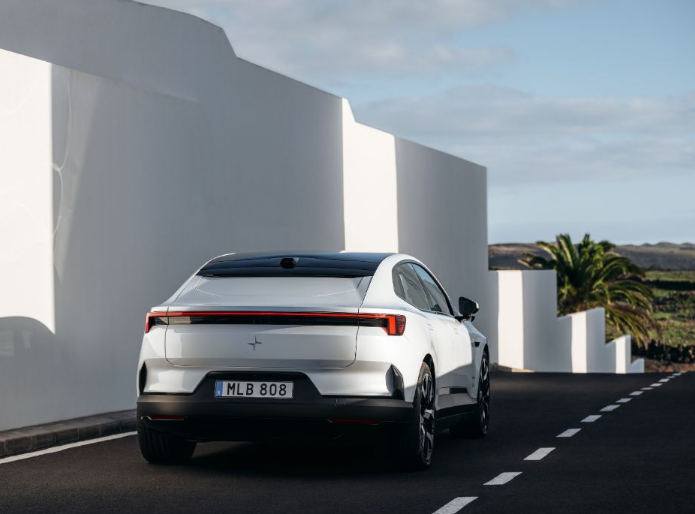
As the 2027 model year approaches, Polestar will quietly sell down its remaining American inventory, transitioning into a support-only role for the thousands of early adopters who believed in the brand’s vision. Those owners will continue to receive software updates and service, but the prospect of trading up to a newer model has vanished.
The automotive industry is fundamentally changed. The vehicles we drive are no longer just transportation; they are critical nodes in a nation’s digital infrastructure. Automakers that fail to adapt their supply chains and corporate governance to this new reality will face the exact same fate as Polestar.
If you are navigating the complexities of modern vehicle procurement, fleet transitions, or compliance in this rapidly shifting regulatory landscape, you cannot afford to be caught off guard. Subscribe to our weekly industry newsletter below to receive expert, deep-dive analyses on automotive trade policies, supply chain intelligence, and the future of the connected vehicle market delivered straight to your inbox.