The 2026 Chevrolet Corvette ZR1X: Redefining the American Hypercar Landscape
If you have spent a decade evaluating the world’s most elite performance vehicles, you eventually develop a recalibrated sense of speed. You become accustomed to the G-forces, the blurring scenery, and the violent thrust of exotic machinery. However, nothing quite prepares you for the sheer, unadulterated violence of the 2026 Chevrolet Corvette ZR1X. When Chevrolet first initiated its mid-engine revolution back in 2019, the automotive industry knew the ceiling had been raised. The standard C8 Stingray brought legitimate supercar dynamics to the masses. But the arrival of the 2026 Chevrolet Corvette ZR1X has officially pushed the legendary American nameplate out of the supercar bracket and squarely into hypercar territory.
To understand the magnitude of the 2026 Chevrolet Corvette ZR1X, we have to trace the rapid evolution of the C8 platform. The base Stingray gave us near-perfect weight distribution and a formidable 495 horsepower for less than the cost of a well-equipped luxury sedan. Next, the Z06 arrived, bringing a naturally aspirated, flat-plane crank 5.5-liter V8 that screamed to redline and shamed European exotics on the track. Following that, the E-Ray introduced hybrid all-wheel drive, proving that a battery pack nestled within the chassis spine could drastically improve off-the-line grip. Then, just last year, the ZR1 bolted twin 76-millimeter turbochargers to that Z06 engine, delivering a jaw-dropping 1,064 horsepower.
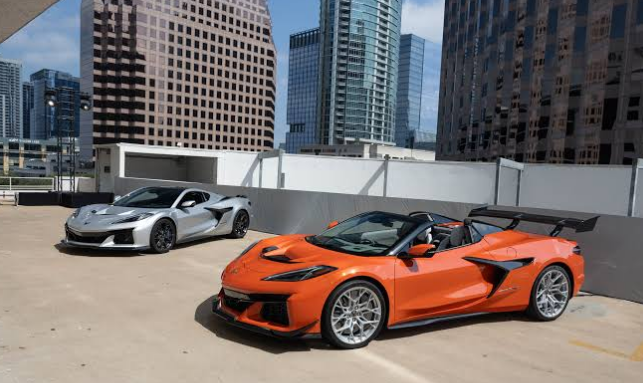
But General Motors was not finished. By effectively marrying the aerodynamic and turbocharged dominance of the ZR1 with the electrified front-axle traction of the E-Ray, they created this: the 2026 Chevrolet Corvette ZR1X. With a combined output of 1,250 horsepower, this vehicle represents a paradigm shift in automotive engineering. It is an all-wheel-drive monster that dramatically undercuts the price of any European counterpart while delivering power figures that were once reserved exclusively for million-dollar garage queens.
In the high-stakes world of automotive manufacturing, keeping production costs relatively accessible usually results in a compromise elsewhere, most notably in vehicle weight. The standard ZR1 carries a dry weight north of 3,500 pounds. When you add the electric motors, the battery pack, and top off the fluids, the 2026 Chevrolet Corvette ZR1X edges dangerously close to the 4,000-pound mark with a driver in the seat. For a track-focused vehicle, that number is generally a red flag.
Yet, during my initial exposure to the car at the Circuit of the Americas (COTA) in Texas—a venue that demands absolute dynamic precision—the 2026 Chevrolet Corvette ZR1X hid its mass with supernatural ability. The rumor mill has been churning for months about this car setting blistering, unverified lap times at the Nürburgring, trading blows with Ford’s highly anticipated Mustang GTD. After feeling the front axle pull the car out of COTA’s tightest hairpins while the rear tires hunted for traction, those rumors suddenly felt entirely credible.
But track days are only half the story. The true test of any modern hypercar is how it behaves on public roads. When a Sebring Orange 2026 Chevrolet Corvette ZR1X loaner arrived in my Los Angeles driveway, complete with a massive high-wing carbon fiber aero package, I knew subtlety was off the table. My goal was simple: evaluate whether this 1,250-horsepower missile could handle daily Los Angeles traffic, canyon carving in Malibu, and the occasional highway pull without rattling my teeth out of my skull.
Let us address the acceleration first. Utilizing the vehicle’s Launch Control system is an exercise in sensory overload. Hitting full throttle in the 2026 Chevrolet Corvette ZR1X delivers a specific brand of thrust that I have only ever experienced in high-end electric vehicles like the Lucid Air Sapphire or the Rimac Nevera. However, unlike a pure EV, the Corvette provides a profoundly mechanical, visceral soundtrack.
As you pin the throttle, the front electric motors provide instant, neck-snapping torque. A fraction of a second later, the massive twin turbos spool up. You can hear the high-pitched whine of the compressors forcing air into the V8, followed by the tires desperately squealing as they fight the pavement. The traction control system works overtime, subtly cutting and feeding power, until the exhaust note cresends into a deafening, bass-heavy roar near redline. It is terrifying, hilarious, and utterly breathtaking. Triple-digit speeds arrive so fast that you have to consciously remind your brain to process the visual information ahead of you.
For context, I had just finished testing a Lamborghini Revuelto a week prior. The Italian flagship utilizes a V12 and three electric motors to generate 1,001 horsepower. Tossing the Lamborghini through the winding switchbacks of the Angeles Crest Highway, I thought I had found the pinnacle of hybrid performance. I was wrong. The 2026 Chevrolet Corvette ZR1X makes the Revuelto feel remarkably tame and almost sluggish by comparison. The only internal combustion vehicle that rivals this level of acceleration is the ultra-exclusive Czinger 21C. The Czinger shares the same 1,250 horsepower figure and weighs slightly less, but it lacks the highly refined traction management of the Corvette, often struggling to put its power down cleanly at lower speeds.
Despite its ability to warp space and time in a straight line, I am not a drag racer at heart. My passion lies in lateral G-forces, technical cornering, and the rhythm of a winding road. This is where the 2026 Chevrolet Corvette ZR1X presents its most fascinating dichotomy. When left in its standard “Tour” driving mode, it behaves much like a base C8 Stingray. Navigating through dense Los Angeles traffic, the car is surprisingly docile.
Yes, there are compromises. The cartoonishly wide tires tend to tramline on grooved pavement, and the aggressive cooling systems required for the hybrid setup and twin turbos completely eliminate the front trunk space. Furthermore, that towering carbon fiber rear wing makes rearward visibility almost non-existent. But the cabin itself is a fantastic place to spend time. The supportive, ventilated seats make stop-and-go commuting comfortable. The 2026 model year brings a redesigned center console that finally fixes the awkward button layout of earlier C8s, replacing it with a more intuitive interface and a dedicated performance telemetry screen. The front axle lift system is an absolute necessity, raising the nose by 50 millimeters to protect the expensive exposed carbon fiber front splitter from aggressive California driveways.
Venturing into the tight, twisting canyon roads of Malibu required switching the 2026 Chevrolet Corvette ZR1X into “Sport” mode. Here, the sheer scale of the vehicle’s power and weight became apparent. The MagneRide suspension does an incredible job managing the mass transfer under heavy braking and cornering, but the sheer, easily accessible power overpowers the road. Every brief straightaway vanishes in the blink of an eye. You find yourself dipping hard into the ABS system at the entrance of every corner simply because you arrived 30 miles per hour faster than your brain anticipated.
In these technical sections, I found myself wishing for the stickier Michelin Pilot Sport Cup 2 tires, rather than the standard Pilot Sport 4 S rubber equipped on my tester. While the 4 S provides excellent all-weather drivability—likely a conscious choice by Chevrolet to complement the all-wheel-drive system—a car with 1,250 horsepower demands maximum grip.
Switching over to “Track” mode completely transforms the car’s personality yet again. The electronic nannies step back, allowing for more leniency and slip angle. Driven aggressively, the 2026 Chevrolet Corvette ZR1X takes on the characteristics of an oversized tarmac rally car. You can dive deep toward an apex, point the nose, and use the front electric motors to physically claw the car out of the corner with a few degrees of controllable oversteer.
It is also worth noting that Chevrolet’s engineering team has completely eradicated the strange torque-steer sensations that plagued early prototypes of the E-Ray. Because there is no physical mechanical linkage between the rear twin-turbo V8 and the front electric motors, coordinating the two powertrains relies entirely on complex software programming. In the 2026 Chevrolet Corvette ZR1X, that integration is flawless. The transition between electric pull and internal combustion push is seamless, resulting in a cohesive, unified driving experience that puts this car on an entirely different planet dynamically.
Driving this car near its limit is an incredibly physical experience. After just 20 minutes of hard canyon carving, I found myself genuinely fatigued. The adrenaline dump, combined with the extreme lateral and longitudinal G-forces, takes a toll on the body. Yet, I simply dialed the selector back to Tour mode, turned on the ventilated seats, cranked up the premium audio system, and cruised back down the Pacific Coast Highway in absolute serenity.
From a financial perspective, the 2026 Chevrolet Corvette ZR1X disrupts the exotic car market entirely. My test vehicle carried a window sticker of $242,060, built upon a base MSRP of $216,400. While that is undeniably a significant amount of money, it represents a mere fraction of what you would pay for comparable performance from a European marque. It is roughly a third of the cost of a Revuelto, a fifth of an Aston Martin Valhalla, and a tenth of the price of a Czinger.
For buyers navigating the logistics of luxury vehicle ownership, this presents a unique value proposition. When seeking exotic car financing, securing a loan for a $240,000 vehicle is vastly more straightforward than securing funding for a seven-figure hypercar. Similarly, when shopping for high-performance auto insurance, the Corvette badge—despite the hypercar performance metrics—often yields significantly more favorable premium rates than a boutique exotic brand. Furthermore, the robust Chevrolet dealer network ensures that maintenance and parts availability will not require flying a specialized technician across the country, a common headache for boutique hypercar owners.
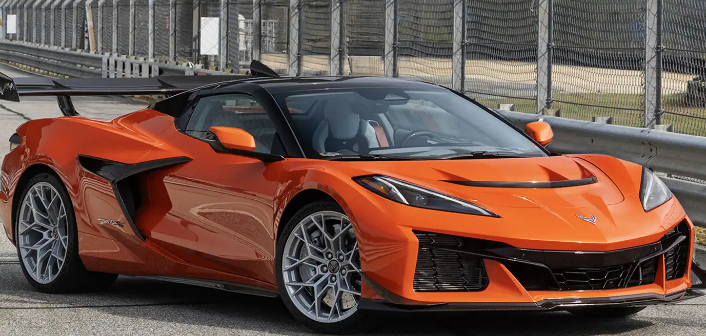
If I were to specify my own 2026 Chevrolet Corvette ZR1X, I would lean heavily into the car’s dual personality. I would skip the vibrant orange paint and the $10,495 carbon aero package, opting instead for a subtle metallic silver finish without the high wing. My goal would be to fly under the radar as much as possible on the street. Because the ultra-sticky Cup 2 tires are locked behind the track-focused ZTK package—which brings a stiffer suspension setup that compromises daily comfort—I would stick with the base suspension and simply swap the tires myself through a local shop.
In this configuration, you are left with the ultimate automotive sleeper. It is a comfortable, reliable, and approachable daily driver that just happens to harbor the power to decimate nearly anything else with license plates. The 2026 Chevrolet Corvette ZR1X is not just a triumph of American engineering; it is a wake-up call to the global supercar establishment. It proves that you do not need to spend a million dollars to experience the absolute pinnacle of automotive performance.
Are you ready to experience the future of American performance for yourself? Do not just take my word for it. Contact your local Chevrolet dealership today to inquire about allocation availability, or visit their official website to build and price your own 2026 Chevrolet Corvette ZR1X, and prepare to have your expectations of speed permanently rewritten.