
The Evolution of the Porsche 911 Carrera GTS: 992 T-Hybrid vs 997 GTS in 2025
To truly understand where Stuttgart’s most revered sports car is going, we have to look back at exactly where it came from. The automotive landscape has shifted violently over the last decade, and standing on the precipice of 2025, the conversation surrounding the modern sports car is dominated by electrification, stringent emissions, and digital integration. Yet, amidst this chaotic transition, one nameplate remains a vital anchor for driving purists: the Porsche 911 Carrera GTS.
There was a time when the GTS badge was viewed as a clever marketing exercise—a parts-bin special designed to clear out inventory. Today, it represents the bleeding edge of the brand’s engineering prowess. Looking at the monumental shift from the original, naturally aspirated 997 generation to the ballistic, electrified 992 T-Hybrid reveals a fascinating story. It is a tale of how a modern classic evolved into a technological juggernaut, reshaping the American luxury car market in the process.
The Birth of an Icon: What Made the Original 997 GTS So Special
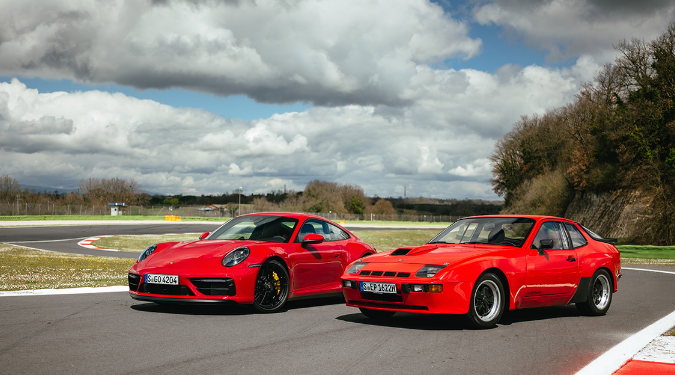
I can almost picture the boardroom in Stuttgart back in 2010. The 996 and 997 generations—the pioneers of the water-cooled 911 era—were preparing for a gentle retirement. The looming 991 generation promised an extended wheelbase, a radically redesigned cabin, and the highly debated introduction of electric power steering. Porsche needed a graceful exit strategy for the 997, a way to keep sales flowing steadily out of US showrooms and European dealerships alike before the new platform took over.
While low-volume masterpieces like the GT2 RS, the ultra-rare GT3 RS 4.0, and the retro-styled Sport Classic kept the automotive press buzzing, those halo cars didn’t pay the bills on a mass scale. Porsche needed a high-margin, low-R&D product. By dusting off the “GTS” moniker—a badge originally made famous by the legendary 904 GTS racer of the 1960s and last seen on the V8-powered 928 GTS in the 1990s—they struck gold.
Instead of diving into the expensive motorsport development bin reserved for the GT3, Porsche’s engineers played a masterstroke of restraint. The original Porsche 911 Carrera GTS became the first non-GT production model to marry the muscular, wide-body stance with a pure rear-wheel-drive layout. They borrowed the upgraded 3.8-liter flat-six from the exclusive Sport Classic (essentially a standard Carrera S with the factory Powerkit) and made the sports exhaust and PASM adaptive dampers standard equipment. To keep costs in check, the really aggressive hardware—like carbon-ceramic brakes, an aggressive limited-slip differential, and the hard-edged sport suspension—remained firmly on the options list.
The resulting package offered a stunning visual upgrade: a revised front splitter, motorsport-inspired center-lock alloy wheels, a thicker Sport Design steering wheel, generous swathes of Alcantara, and subtle GTS badging. The true genius? The premium over a standard Carrera S was roughly $3,000 at the time. It was a no-brainer. Today, collectors actively seeking luxury sports car financing to acquire a pristine 997 GTS are paying massive premiums, recognizing it as the absolute sweet spot of the analog era.
Enter the 992 T-Hybrid: A Mid-Spec Model with Hypercar Ambitions
Fast forward to 2025. The philosophy behind the Porsche 911 Carrera GTS has transformed from a clever run-out special to the technological spearhead of the entire brand. To understand the sheer gravity of this vehicle, you only need to look at the launch strategy. The hybrid GTS wasn’t an afterthought released at the end of the 992’s lifecycle; it was the vanguard of the “992.2” generation.
The performance delta between a modern Carrera S and the new Porsche 911 Carrera GTS T-Hybrid is staggering. While the standard S relies on the familiar, highly capable twin-turbo 3.0-liter flat-six, the GTS introduces a brand-new 3.6-liter powertrain augmented by an innovative electrically exhaust-gas-driven turbocharger and a hybrid motor integrated directly into the transmission. The output? A monstrous 533 horsepower and 450 lb-ft of torque.
Out on the pavement, this translates to a 0-60 mph sprint that is three-tenths of a second faster than its predecessor. In the traction-limited physics of a rear-wheel-drive sports car, three-tenths is a lifetime. The financial gap has widened just as significantly as the performance gap. The price jump from a Carrera S to a GTS is now a substantial leap, though it includes standard rear-axle steering and hybrid architecture. For those looking to buy a Porsche online today, configuring a 992 GTS quickly pushes the sticker price into territory once reserved for the Turbo variants.
Every seasoned automotive journalist who climbs out of the new 992 T-Hybrid says the exact same thing: the sheer velocity is difficult to comprehend. During my first week testing the car on twisting California canyon roads, the instant torque delivery provided by the hybrid system made it feel quicker off the line than a 911 Turbo S. It completely redefines point-to-point speed. In fact, this current GTS produces more horsepower than the ultimate 997 Turbo S of fifteen years ago.
However, this relentless march of progress comes with a bitter pill for purists: the manual transmission is dead. Because a traditional stick-shift cannot be mechanically integrated with the hybrid electric motor housed within the transmission bell housing, the 992 GTS is strictly a PDK affair. From an engineering standpoint, it makes perfect sense. From an emotional standpoint, it’s a tough loss for the community.
Versatility Meets Raw, Brutal Speed
The genius of the new Porsche 911 Carrera GTS lies in its duality. It is a car with a split personality. When you want to commute, it behaves impeccably. Despite a more aggressive setup—especially if you option the carbon bucket seats, lightweight glass, and remove the rear seats—it wafts through city traffic with the civility of a luxury grand tourer. The digitized dashboard is a tech marvel, fully integrated with modern app ecosystems. And, crucially for those dealing with soaring luxury auto insurance rates, it features a suite of advanced safety and collision avoidance systems that you can easily bypass via shortcut buttons when you reach a canyon road.
But when you twist the steering-wheel-mounted drive mode dial to ‘Sport,’ the car morphs into a weapon. The throttle response, sharpened by the electric motor filling in the turbo lag, is telepathic. Because the powertrain is so eager, I highly recommend using the paddle shifters; left in automatic, the gearbox is aggressively proactive, kicking down multiple cogs the moment you breathe on the accelerator.
Pushing through the initial wave of torque reveals a top-end rush that is frankly startling. It feels almost absurd to refer to this as a “mid-tier” 911. The sheer brutality of the acceleration, the way it compresses time between corners, makes you question what the eventual 992.2 GT2 RS could possibly feel like. For owners interested in Porsche performance tuning, the T-Hybrid architecture presents a completely new, highly complex frontier, fundamentally changing how aftermarket power is extracted.
Stepping Back in Time: The Analogue Purity of the 997 GTS
To understand what we’ve gained—and what we’ve lost—I spent an afternoon with a flawlessly maintained 2011 Porsche 911 Carrera GTS. It was the Holy Grail specification: a rear-wheel-drive coupe featuring a six-speed manual gearbox, completely devoid of heavy luxury options. With just 45,000 miles on the odometer, it served as a perfect time capsule.
Visually, the 997 has aged into a beautiful modern classic. The footprint is remarkably compact compared to the swollen, muscular arches of the 992. The cabin is refreshingly austere. There are no massive touchscreens dominating the dashboard, just an Alcantara-wrapped steering wheel completely free of buttons, a traditional five-dial gauge cluster, and physical climate controls. You start the engine by physically inserting a key and twisting it—a beautifully tactile ritual that feels remarkably foreign in 2025.
The moment you engage the clutch, the contrast is stark. The six-speed manual possesses a mechanical, oily, deliberate action that modern transmissions simply cannot replicate. The naturally aspirated 3.8-liter flat-six is smoother, quieter at idle, and distinctly less aggressive in its baseline timbre than the hybrid setup. Because this engine is from the revered “997.2” era, it utilizes the reliable DFI (Direct Fuel Injection) block, completely free from the infamous IMS bearing issues that plagued the earlier 996 models.
On paper, the performance of the 997 GTS is modest by today’s standards. For the first two-thirds of the tachometer, it feels identical to a standard Carrera S of its era, plotting the exact same horsepower and torque curves. The magic only happens past 6,000 RPM. That’s when the resonant intake flaps snap open, the engine takes a massive gulp of air, and it screams its way to a glorious 7,300 RPM redline.
The Ultimate Confrontation: New Age Tech vs. Golden Era Soul
Taking both cars back-to-back on a winding, isolated mountain road highlights a fundamental shift in automotive philosophy. When I first reviewed the 997 GTS fifteen years ago, I appreciated it, but judged it harshly against the uncompromising GT3. Today, viewed through the lens of modern, heavyweight supercars, the 997 GTS reveals its greatest asset: it weighs nearly 400 pounds (175 kg) less than the new 992 T-Hybrid.
This weight penalty in the new car is unavoidable. The 992 is physically massive, laden with mandatory crash structures, heavier wheels, beefier suspension components, rear-wheel steering actuators, and of course, the hybrid battery and motor system.
The 997, featuring a wheelbase nearly 4 inches shorter and traditional hydraulic power steering, doesn’t just feel lighter—it feels alive. It breathes with the tarmac. The steering chatters in your hands, telegraphing the exact texture of the road surface. If the 992 T-Hybrid is a modern F-35 fighter jet—relying on massive thrust and complex computers to bend physics to its will—the 997 GTS is a WWII Spitfire. It relies on lightness, mechanical grip, and organic balance.
On a tight, twisting road, the new Porsche 911 Carrera GTS can actually feel a bit caged. The performance is so immense that you are restricted to micro-bursts of acceleration before having to aggressively test the massive brakes for the next hairpin. It is a car that demands a racetrack to fully stretch its legs. The 997, conversely, allows you to wring it out. You can use all the revs, row through the gears, and dance the car on its limits at speeds that won’t result in an immediate jail sentence. It delivers a deeply satisfying, endorphin-spiking experience that has nothing to do with raw lap times and everything to do with emotional connection.
The Curveball: Driving the 911 S/T on Damp Roads
During this retrospective test, I also had the opportunity to slide behind the wheel of the highly coveted Porsche 911 S/T. With its heritage-inspired tweedy interior and ultra-lightweight clutch, it is ostensibly the modern spiritual successor to the analogue driver’s car. When the GT3-derived engine ignites, it’s surprisingly subdued.
However, my test occurred on damp mountain roads after a light morning rain. Porsche equips the S/T exclusively with Michelin Pilot Sport Cup 2 track tires. In these conditions, the S/T was terrifying. The rubber, while sticky enough to provide impressive lateral Gs when warm, snaps violently when it loses traction on damp asphalt. There are no progressive, hero-making slides here—just a sudden loss of grip that spikes your heart rate for all the wrong reasons. It begs the question: why does a car explicitly marketed for pure road enjoyment, one that Porsche explicitly refused to set a Nürburgring lap time for, come wearing track-day slicks? If I were lucky enough to own an S/T, my very first move would be swapping those out for high-performance street tires like the Michelin PS4S. Grip is only fun when it’s accessible.
The Verdict: Which Porsche Belongs in Your Garage?
The evolution of the Porsche 911 Carrera GTS is a mirror reflecting the automotive industry’s broader trajectory. The 2025 992 T-Hybrid is an engineering triumph. It seamlessly blends electrification with explosive internal combustion, delivering hypercar levels of speed while remaining exceptionally usable on a daily basis. It is the ultimate expression of modern capability.
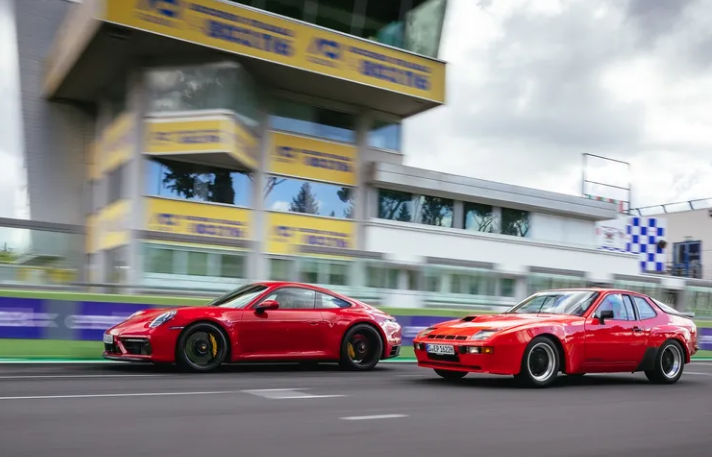
Yet, the 997 GTS remains an untouchable masterpiece of a bygone era. It captures the exact moment right before cars became too big, too fast, and too digital. It asks for your involvement, rewards your precision, and thrills you at legal speeds.
Choosing between them isn’t a matter of deciding which is “better”—it’s a matter of deciding what kind of driver you are. Do you crave the earth-shattering G-forces and seamless technological integration of tomorrow, or do you yearn for the mechanical, analogue heartbeat of yesterday?
Whether you are exploring premium sports car lease deals on the blistering new T-Hybrid, or seeking out specialized luxury sports car financing to secure a pristine 997 classic for your collection, the GTS badge has never meant more than it does today. If you’re ready to experience this incredible lineage for yourself, I highly recommend reaching out to your local Porsche specialist or checking current inventory online to get behind the wheel. The road is waiting, and there is simply no substitute for experiencing a GTS firsthand.