
The End of an Era: The Final Mistral and the Legacy of the Bugatti W-16 Engine
As an automotive industry analyst and hypercar specialist with over a decade of experience observing the world’s most exclusive automakers, I have witnessed countless shifts in engineering paradigms. Yet, few moments feel as monumental as the one we are currently experiencing in Molsheim, France. The automotive world is collectively holding its breath as a definitive chapter in hypercar history officially closes. The very last Bugatti Mistral has just rolled off the pristine assembly lines, signaling the twilight of the legendary Bugatti W-16 engine for road-going production vehicles.
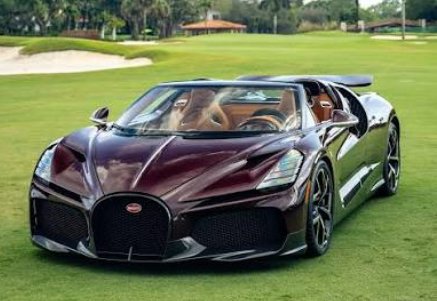
This specific vehicle, bearing chassis number 99 out of a highly exclusive 99-unit production run, has been appropriately dubbed “The last of its kind.” While the world watched Bugatti produce 500 units of the formidable Chiron over the last several years, the Mistral—the definitive open-roof iteration of the Chiron platform—is significantly rarer. At the heart of this ultra-exclusive roadster beats the revered quad-turbo powertrain, marking the final road-legal application of the Bugatti W-16 engine. It is a bittersweet moment for purists, collectors, and engineers alike, as the Bugatti W-16 engine has fundamentally defined the absolute pinnacle of internal combustion performance for nearly two decades.
The Engineering Marvel Behind the Bugatti W-16 Engine
To truly understand the gravity of this transition, we must first look back at what made the Bugatti W-16 engine such an inescapable force of nature. When it first debuted in the Veyron, the automotive industry was stunned. The sheer audacity of engineering a 16-cylinder engine, bolstered by four massive turbochargers, seemed like a feat of science fiction. The Bugatti W-16 engine challenged every preconceived notion about thermal dynamics, aerodynamics, and structural rigidity.
Over the years, the Bugatti W-16 engine evolved, shedding weight, increasing its redline, and vastly improving its thermal efficiency. By the time it found its way into the Mistral, the Bugatti W-16 engine was producing a staggering 1,578 horsepower. This relentless pursuit of perfection culminated in the Mistral capturing the title of the world’s fastest open-roof production vehicle, setting an astonishing top speed record of 282 mph at the Papenburg testing facility in Germany in 2024. Generating that kind of power is one thing; engineering a chassis and an open-air aerodynamic profile capable of remaining stable at 282 mph while housing the Bugatti W-16 engine is a completely different echelon of automotive mastery.
The Bugatti W-16 engine is not merely a motor; it is a meticulously crafted symphony of thousands of individual components moving in perfect, violent harmony. The quad-turbo layout ensures that the Bugatti W-16 engine delivers a relentless, linear surge of torque that feels less like acceleration and more like the deployment of localized gravity. For ten years, I have tested, analyzed, and critiqued the finest powertrains on the planet, but the visceral, mechanical roar of the Bugatti W-16 engine at full throttle remains entirely peerless.
The Final Mistral: A Masterclass in Bespoke Craftsmanship
The 99th and final Mistral is a rolling tribute to the legacy of the Bugatti W-16 engine. Bugatti’s Sur Mesure customization division has ensured that this farewell vehicle is nothing short of breathtaking. The exterior is finished in a highly sophisticated two-tone colorway known as Pearl and Sparkle. While the transition between these two exquisite shades might appear subtle in standard photography, under the harsh lights of hypercar showrooms in Beverly Hills or the brilliant sun at exotic car shows in Miami, the meticulous depth of the paintwork becomes undeniably apparent.
Stepping into the cabin is akin to entering a masterclass in modern luxury. The interior palette is beautifully executed in Magnolia and Grey Carbon Matt, providing a sophisticated, tactile contrast that perfectly complements the brutal performance of the Bugatti W-16 engine sitting just inches behind the driver’s head. Bugatti has spared no expense in the final detailing. Ettore Bugatti’s signature is elegantly etched into the headrests, across the bespoke aluminum door sills, and directly onto the carbon fiber engine cover that shrouds the Bugatti W-16 engine.
Perhaps the most poetic touch inside this final Mistral is the delicate, frozen crystal glass plate seamlessly integrated into the center armrest. Emblazoned with the phrase “Spirit of the Wind,” this intricate centerpiece is a direct nod to Bugatti’s enduring, century-long partnership with the renowned French glassmaker, Lalique. It serves as a stark, beautiful contrast: fragile, artisanal glass sitting in the cockpit of a vehicle propelled by the earth-shattering force of the Bugatti W-16 engine. While it may not possess the polarizing, porcelain-heavy aesthetics of the Blanc Eternal Bugatti that made headlines earlier this month, this final Mistral is a deeply dignified, historically significant milestone.
Hypercar Ownership: The Economics of the Bugatti W-16 Engine
From a purely analytical standpoint, vehicles housing the Bugatti W-16 engine represent far more than just engineering achievements; they are formidable financial assets. As the Bugatti W-16 engine officially ceases production for road-going cars, the secondary market is already bracing for a massive shift in valuation. Historically, when a flagship manufacturer ends production of a legendary powertrain, depreciation curves invert, and the vehicles transition rapidly into high-yield alternative investments.
For high net worth individuals managing hypercar investment portfolios, a vehicle powered by the Bugatti W-16 engine is considered a blue-chip asset. However, managing these assets requires a highly specialized financial infrastructure. Securing exotic car financing for a multi-million dollar Mistral or Chiron is vastly different from traditional auto loans, often requiring bespoke collateralized lending structures. Furthermore, protecting an asset of this magnitude necessitates highly specialized luxury auto insurance. Underwriters must calculate the risk of a vehicle that possesses a Bugatti W-16 engine capable of nearly 300 mph, often demanding agreed-value policies that adjust annually to match the appreciating hypercar market.
Logistics also play a crucial role in the ecosystem of the Bugatti W-16 engine. Moving these vehicles between private collections, New York high-end auto auctions, and exclusive track events requires premium car shipping services. These enclosed, climate-controlled exotic auto transport solutions in Los Angeles and globally ensure that the delicate carbon fiber bodywork and the highly sensitive cooling systems of the Bugatti W-16 engine remain uncompromised during transit. The ecosystem surrounding the Bugatti W-16 engine is a massive, high-stakes financial sector in its own right, and the end of the production run will only increase the exclusivity and net worth demands of this market.
Looking Forward: The Transition from the Bugatti W-16 Engine to the V-16
Bugatti’s official communication states that the final Mistral represents the “closing chapter” of the “road-going story” for the Bugatti W-16 engine. As a seasoned industry expert, I find this phrasing incredibly deliberate. It leaves the door slightly ajar for the Bugatti W-16 engine to potentially reappear in a track-only application or a highly limited non-homologated project. However, for all intents and purposes regarding street-legal production, the era of the Bugatti W-16 engine has decisively ended.
Nature abhors a vacuum, and Bugatti is not resting on its laurels. The immense void left by the departure of the Bugatti W-16 engine is already being filled by a completely distinct, yet equally mesmerizing powertrain: an 8.3-liter, naturally-aspirated V-16 engine. This new mechanical masterpiece will serve as the heartbeat of the next generation of Bugatti hypercars, making its inaugural debut in the highly anticipated Bugatti Tourbillon.
The shift from the quad-turbo forced induction of the Bugatti W-16 engine to a high-revving, naturally-aspirated V-16 (augmented by a cutting-edge high-performance hybrid system) represents a radical shift in Bugatti’s engineering philosophy. While the Bugatti W-16 engine relied on massive turbochargers to deliver its sledgehammer-like torque, the new V-16 promises a sharper, more linear, and aurally distinct driving experience. Just days before the final Mistral was completed, Bugatti proudly inaugurated La Manufacture, the brand-new, state-of-the-art production facility dedicated exclusively to the assembly of the V-16 and the upcoming Tourbillon.
The Enduring Legacy of the Bugatti W-16 Engine
As we look toward 2026 and beyond, the hypercar landscape is rapidly changing. Electrification, advanced aerodynamics, and synthetic fuels are dominating the conversation. Yet, the Bugatti W-16 engine will forever stand as a monument to a specific era of automotive excess—a time when engineers were tasked with conquering the wind, the road, and the laws of physics using purely mechanical ingenuity and internal combustion.
For those of us who have spent our careers analyzing the ebb and flow of the automotive industry, the Bugatti W-16 engine will be remembered not just for the top speed records it shattered, but for how it forced the entire supply chain—from tire manufacturers to aerodynamicists—to elevate their standards. The Bugatti W-16 engine demanded the impossible, and in doing so, it elevated the entire concept of what a motor vehicle could be.
The final Mistral is a fitting, beautiful conclusion to this narrative. It takes the Bugatti W-16 engine, exposes it to the open air, and lets it sing its quad-turbo forced-induction symphony one last time. As this magnificent roadster takes its place in the annals of history, it carries with it the spirit of an entire era. The Bugatti W-16 engine may no longer be rolling off the production line, but its impact on automotive engineering, luxury vehicle design, and the high-end collector market will echo for generations to come.
Are you preparing to transition your own collection or looking to invest in the rapidly evolving hypercar market as the combustion era shifts? I’d love to hear your thoughts on where the market is heading next. Leave a comment below with your predictions for the upcoming V-16 Tourbillon, or reach out directly to our advisory team for a private consultation on navigating exotic car investments and high-net-worth vehicle asset management in this new era.