The Ultimate 2025 Porsche 911 Comparison: GT3 RS 4.0 vs 911 R vs S/T
As a veteran automotive journalist with over a decade of wringing out the world’s most elite high-performance sports cars on tracks and canyon roads alike, I am frequently asked a seemingly impossible question. Which modern, water-cooled model represents the absolute pinnacle of Stuttgart’s engineering prowess? For years, arguments have raged across automotive forums, at Miami exotic car meets, and inside the private garages of Los Angeles Porsche collectors. Everyone has an opinion, but very few have had the privilege of driving the defining trinity of the modern era back-to-back.
Today, we are putting an end to the debate. This definitive Porsche 911 comparison pits the visceral 997-generation GT3 RS 4.0 against the sophisticated 991-generation 911 R, and the highly coveted 992-generation 911 S/T. These three analogue supercars are united by their naturally aspirated flat-six engines, mandatory manual gearboxes, and a singular obsession with driver engagement over raw digital lap times. However, their distinct personalities reveal fascinating differences in how Porsche interprets driving nirvana.
By executing a comprehensive Porsche 911 comparison in the real world—far away from the sterile numbers of a spec sheet—we aim to crown the undisputed king of the water-cooled era. Let us dive deep into the mechanics, the market, and the magic of these three legendary machines.
The Genesis of the Ultimate Porsche 911 Comparison
I distinctly recall my first proper shakedown of the 911 S/T. It was late summer, and I had just navigated the car out of a premier Porsche dealership in California. Pointing its nose toward the twisting, sun-baked asphalt of Southern California canyon roads, I was immediately struck by its dynamic brilliance. In my review at the time, I boldly declared the S/T to be untouched by any contemporary vehicle. Its suspension damping felt like it had been custom-tuned by wizards for that exact stretch of pavement.
But hyperbole is a dangerous thing in this industry. When you declare a car “the best,” you must be prepared to defend that title against the titans of the past. That realization is what sparked the concept for this specific Porsche 911 comparison. The S/T is undoubtedly an engineering marvel, but it is not the only limited-production, driver-focused special edition Porsche has blessed us with. The GT3 RS 4.0 and the 911 R were previously crowned as the greatest drivers’ cars of their respective decades.
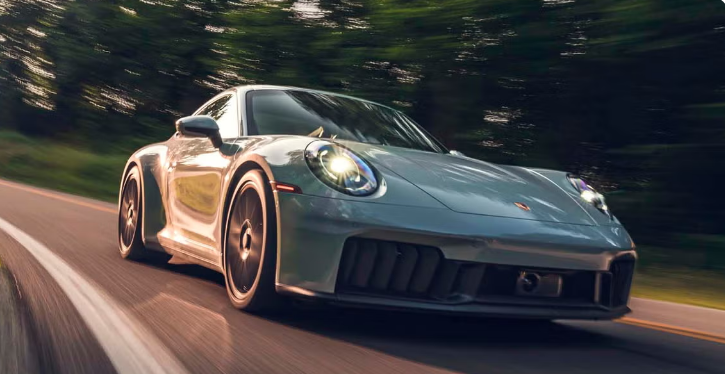
Through sheer luck and the generosity of a private collector who didn’t need to worry about luxury car financing to fill his hangar, we secured impeccable examples of the RS 4.0 and the 911 R. Porsche kindly delayed the defleeting of their S/T press car just long enough for us to orchestrate this ultimate Porsche 911 comparison. Having these three icons idling side-by-side on a misty morning was a sight that would make any automotive purist weak at the knees.
Tale of the Tape: How They Stack Up on Paper
To truly appreciate this Porsche 911 comparison, one must first look at the hardware. Despite being separated by over a decade of relentless technological advancement, the blueprints of these three cars are remarkably similar. All three displace a potent 4.0 liters. All three channel their fury exclusively through a beautifully weighted six-speed manual transmission to the rear wheels.
Yet, the subtle evolution of the platform is where the narrative deepens. The 997-era GT3 RS 4.0 utilizes the legendary ‘Mezger’ engine architecture, characterized by a slightly wider bore and shorter stroke than the modern powerplants found in the R and the S/T. Astonishingly, across two distinct generational shifts, the 2024 S/T carries only about 45 pounds (20 kg) more mass than the older RS 4.0, with the 911 R sitting comfortably in the middle. In an era where modern vehicles are bloated with heavy hybrid batteries and autonomous safety tech, Porsche’s obsessive weight management on these limited editions is a triumph.
However, their underlying philosophies differ wildly, which is a core element of this Porsche 911 comparison. The RS 4.0 was birthed as a homologation-style track weapon, proudly wearing massive aero wings and aggressive splitters. Conversely, the 911 R and the S/T are unabashed street cars, ditching the giant rear wings for deployable spoilers and a more understated silhouette.
Furthermore, the physical footprint has changed. Between the 997 and 991 generations, Porsche extended the wheelbase by over four inches to enhance high-speed stability. To claw back the lost agility, the 911 R employs rear-wheel steering. Interestingly, for the S/T, Porsche engineers completely ditched the rear-steering system. They opted instead to shed the weight of the actuators, returning to a pure, unadulterated mechanical setup. It is these granular engineering decisions that make a proper Porsche 911 comparison so vital.
The 997 GT3 RS 4.0: An Unforgiving Mechanical Masterpiece
Dropping into the carbon fiber bucket seats of the GT3 RS 4.0 is like stepping into a time machine. There is no getting around it—the cabin feels delightfully analogue, bordering on vintage. The switchgear and dials are distinct relics of the late 1990s architecture that birthed the first water-cooled 911s. But you do not buy a Porsche 911 GT3 RS for its infotainment screen; you buy it for what happens when you turn the key.
The 4.0-liter Mezger barks to life with a gritty, metallic clatter. There is zero sound deadening to isolate you from the mechanical symphony occurring behind your head. Engaging the heavy clutch requires genuine quadriceps strength, and slotting the stubby alcantara shifter into first gear feels like locking the bolt of a sniper rifle. This unapologetic mechanical heft sets the baseline for our Porsche 911 comparison.
Out on the road, the RS 4.0 makes no compromises. The hydraulic power steering—a feature entirely absent in its modern electric-rack siblings—transmits the texture of the asphalt directly into your palms. You can literally feel the painted lines on the road. The suspension is undeniably stiff, jiggling over mid-corner bumps, constantly reminding you of its motorsport DNA.
But when you push it, the rewards are stratospheric. Above 6,000 RPM, the exhaust note morphs from a deep growl into a spine-tingling wail that pierces the soul, egging you on to its 8,500 RPM redline. The feedback is so pure, so immediate, that the car feels hardwired into your nervous system. For many purists looking into luxury sports car investment, the sheer authenticity of the RS 4.0 makes it the undisputed holy grail. Any thorough Porsche 911 comparison must acknowledge that modern cars, for all their speed, have largely engineered out this level of raw, intimidating feedback.
The 911 R: The Sophisticated Gentleman’s Racer
Switching from the brutalist 997 into the 991-generation 911 R delivers the biggest shock of this Porsche 911 comparison. If the RS 4.0 is a shot of straight tequila, the 911 R is a remarkably smooth, aged bourbon.
Porsche heavily marketed the 911 R as the ultimate road-biased driver’s car, but I was still entirely unprepared for just how refined it feels. The clutch is beautifully light. The gearbox is slicker, allowing for rapid-fire shifts with minimal physical exertion. But it is the damping that truly sends your eyebrows into your hairline. The 911 R glides over road imperfections that would have rattled your teeth loose in the RS 4.0. You could genuinely drive this car across the country in total comfort, perhaps only stopping to arrange secure exotic car transport for the journey back.
When the road gets twisty, the 911 R proves it is no soft touring car. It carves through canyons with a clinical, breathtaking precision, aided significantly by the rear-axle steering that virtually shrinks the car’s longer wheelbase. It possesses an auto-blip rev-matching feature (which can be turned off), making heel-and-toe downshifts accessible to mere mortals.
However, the real controversy of this Porsche 911 comparison lies in the engine bay. I am fully aware that writing this might get me banned from certain Porsche purist forums, but as an expert with a decade of skin in the game, I must speak my truth: I prefer the engine in the 911 R over the legendary Mezger. It spins up with an eagerness that borders on the telepathic. It feels slightly freer, less encumbered by internal inertia, and the intake howl resonating through the cabin is nothing short of operatic. The 911 R does not demand perfection from its driver like the RS 4.0 does, but it rewards you with an incredibly accessible, joyous driving experience.
The 911 S/T: The Apex of Modern Analogue
So, where does that leave the newest contender in our Porsche 911 comparison? Prior to this test, I had placed the 911 S/T on a pedestal. Driving its two legendary ancestors back-to-back certainly chipped away at that pedestal, but as soon as I fired up the S/T, its sheer brilliance shone through once again.
The S/T takes the very best elements of the 911 R and the modern 992 GT3 RS and blends them into a flawless cocktail. Thanks to a staggeringly lightweight clutch and single-mass flywheel, the engine revs and drops with the ferocity of a superbike. Combined with a shortened final drive ratio, the S/T feels significantly more explosive off the line than the other two cars.
Porsche’s decision to remove the rear-wheel steering pays massive dividends in how the car communicates. The S/T relies on a sophisticated double-wishbone front suspension setup—a massive upgrade over the simple MacPherson struts found in the RS 4.0 and 911 R. This gives the front end an unbelievable amount of bite and precision, rendering the rear-steering obsolete. It turns in with a crispness that defies logic, anchoring the front tires into the pavement with supreme authority.
In terms of ride quality, it perfectly bridges the gap. It is significantly more compliant than the track-stiff RS 4.0, yet slightly more locked-down and aggressive than the luxurious 911 R. In the context of this Porsche 911 comparison, the S/T represents the absolute bleeding edge of what is mechanically possible for a road-legal, manual-transmission sports car in 2025.
Market Reality: Investment and Ownership in 2025
We cannot conduct a comprehensive Porsche 911 comparison without addressing the elephant in the room: valuation and ownership logistics. These are not just cars; they are blue-chip assets. There were only 600 units of the GT3 RS 4.0 ever produced, making it a unicorn. The 911 R saw a production run of 991 units, while the S/T was capped at 1,963 units to honor the 911’s birth year.
For those analyzing luxury sports car investment trends, the RS 4.0 has proven to be an incredibly lucrative asset, often trading hands for astronomical sums behind closed doors. Owning any of these requires a robust financial infrastructure, from securing specialized sports car insurance that covers agreed-value replacement, to budgeting for top-tier Porsche maintenance costs. These are not vehicles you take to a local quick-lube; they require master technicians. But for the dedicated enthusiast, the cost of entry buys you an experience that no modern EV hypercar will ever replicate.
The Final Verdict: Which Key Goes in My Pocket?
Concluding a high-stakes Porsche 911 comparison is a painful task because choosing a favorite implies that the others are somehow lacking. Let me be clear: all three of these vehicles are sublime. They are the apex predators of the sports car world.
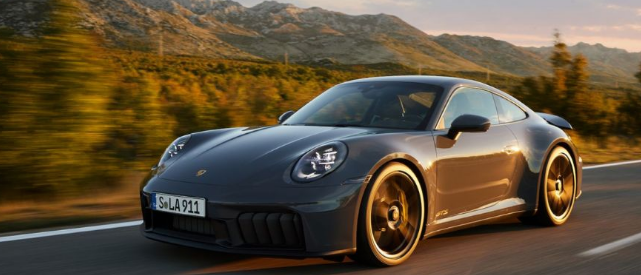
If you want the ultimate, highly usable daily driver that can comfortably cruise to dinner and then obliterate a mountain pass on Sunday morning, the 911 R is your champion. If you want the absolute fastest, most technologically refined analogue experience money can buy, the 911 S/T is an untouchable masterpiece of modern engineering.
But my choice—the car that I would permanently park in my dream garage—is the 997 GT3 RS 4.0.
In an increasingly digitized, insulated world, the RS 4.0 asks the most of you. It is stubborn, loud, and physically demanding. But because it demands your absolute focus, the euphoric high it delivers when you get it right is simply unmatched by the newer cars. It is not just the greatest car in this Porsche 911 comparison; it is, in my professional estimation, one of the greatest road cars built in this century. When you turn off the engine of the RS 4.0, you don’t just get out and walk away. You sit there, listening to the exhaust tick as it cools, your hands still tingling from the hydraulic steering rack, desperate to engrave every microsecond of the drive into your permanent memory.
Are you ready to elevate your garage and experience the pinnacle of automotive engineering? Whether you are looking to source a rare GT model, exploring luxury car financing for your next blue-chip investment, or simply wanting to optimize your current collection, you need expert guidance. Reach out to our specialized concierge team today to discover exclusive off-market listings, secure premium sports car insurance, and take the first step toward owning a piece of Porsche history. Your dream drive is waiting.