
The McLaren 788HS: The Definitive V-8 Supercar Evolution and 2026 Market Analysis
Over the past decade of reviewing, analyzing, and driving the world’s most elite performance vehicles, I have watched the automotive industry undergo a radical transformation. Hybridization and electrification have fundamentally rewritten the rulebook for performance. Yet, amid this paradigm shift, a select few manufacturers still recognize the visceral appeal of a pure, unadulterated internal combustion engine. The McLaren 788HS is the ultimate manifestation of this philosophy. Positioned as the definitive and final evolution of the celebrated 720S lineage, this hyper-exclusive, limited-run supercar stands as a towering achievement in modern automotive engineering.
With production strictly capped at just 200 units globally, the McLaren 788HS is not just a track-focused weapon; it is a blue-chip automotive asset. As buyers secure allocations and prepare to bring these marvels to the streets of Beverly Hills, Miami, and London, understanding the engineering, the legacy, and the financial mechanics behind the McLaren 788HS is essential for serious collectors and enthusiasts alike.
The Lineage: From the 720S to the Ultimate Apex
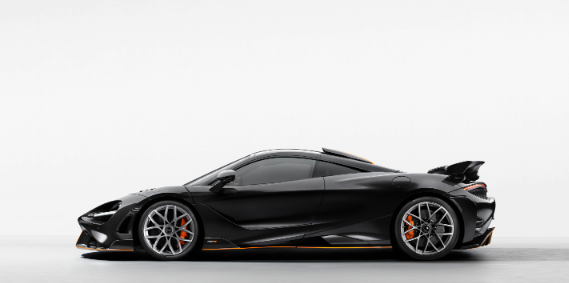
To truly understand the magnitude of the McLaren 788HS, we have to look back at the foundation upon which it is built. In 2011, McLaren Automotive re-launched its road car division with the MP4-12C, a carbon-tubbed marvel that put the established Italian exotic manufacturers on notice. However, it was the debut of the 720S in 2017 that fundamentally altered the supercar hierarchy. The 720S was an aerodynamic masterpiece, later spawning the track-dominating 765LT and, subsequently, the refined 750S.
Now, we arrive at the McLaren 788HS. Woking has explicitly stated that this model serves as the final, absolute peak of this long-lived generation of supercars. For collectors evaluating high-net-worth vehicle investments, this “final edition” status is a massive value driver. The McLaren 788HS takes the already staggering capabilities of the 750S and sharpens them to a razor’s edge, closing the performance gap between traditional supercars and multimillion-dollar hypercars.
Under the Hood: Engineering the McLaren 788HS
At the beating heart of the McLaren 788HS sits the familiar, yet heavily optimized, 4.0-liter twin-turbocharged V-8 engine. As the nomenclature implies, this powerplant has been massaged to deliver an astonishing 788 metric horsepower (equivalent to 777 imperial horsepower). Backed by 590 lb-ft of torque, the powertrain provides relentless, linear acceleration that challenges the very limits of rear-wheel-drive traction.
The performance metrics of the McLaren 788HS are nothing short of breathtaking. The sprint from 0 to 60 miles per hour is dispatched in a blistering 2.8 seconds, placing it squarely in the territory of all-wheel-drive electric hypercars, yet it achieves this with the dramatic, soulful howl of a flat-plane crank V-8. Keep your foot pinned to the floor, and the McLaren 788HS will continue to surge toward a verified top speed of 205 mph.
However, straight-line speed is only a fraction of the equation. In my ten years of testing high-performance exotics, I’ve found that power is useless without the chassis dynamics to manage it. The engineering team in Woking understands this implicitly. The McLaren 788HS boasts a staggering dry weight of just 2,789 pounds. By meticulously shaving weight through advanced carbon fiber composites and lightweight components, the McLaren 788HS achieves an awe-inspiring power-to-weight ratio of 279 horsepower per 1,000 pounds. This is the metric that dictates how a car breathes, turns, and stops, and it is here that this final evolution truly outshines its predecessors.
Chassis Dynamics and the “High Sport” Designation
The “HS” in McLaren 788HS stands for “High Sport,” a highly coveted designation utilized only twice before in the brand’s modern history. Crucially, the “High Sport” badge does not imply the integration of a heavy hybrid system. In stark contrast to the upcoming 1,258-horsepower McLaren W1—which relies heavily on electrification—the McLaren 788HS remains a purist’s machine. By eschewing heavy battery packs and electric motors, the engineers successfully kept the vehicle under the critical 3,000-pound threshold.
This commitment to lightweight purity is complemented by a suite of mechanical enhancements exclusive to the McLaren 788HS. The vehicle features ultra-lightweight center-lock wheels, a technology lifted directly from top-tier motorsport, which reduces unsprung mass and allows for rapid wheel changes during track days. Furthermore, the front ride height has been dropped by two-tenths of an inch to aggressively rake the car, improving front-end aerodynamic bite and turn-in response.
McLaren’s signature linked-hydraulic suspension system—one of the most advanced active damping setups in the industry—has received unique, model-specific tuning for the McLaren 788HS. This bespoke calibration ensures that the supercar remains remarkably compliant on public roads while offering race-car levels of roll stiffness and body control when attacking the apex of a racetrack.
Bespoke Brilliance: McLaren Special Operations (MSO)
Exclusivity is a major driving force in the 2026 luxury automotive market. With production strictly capped at 200 units, the McLaren 788HS is destined to be a rare sight. McLaren has confirmed that production will be split evenly, with 100 coupe iterations and 100 convertible (Spider) variants featuring a retractable hardtop.
What truly elevates the McLaren 788HS from a mere production car to a bespoke work of art is the heavy involvement of McLaren Special Operations (MSO). MSO is the elite division responsible for one-of-one builds and highly personalized specifications. Because of the limited production run, it is highly likely that no two examples of the McLaren 788HS will be identical. Buyers are actively collaborating with MSO to select custom visual carbon fiber tints, unique heritage paint colors, and personalized Alcantara and leather interior schemes.
When analyzing the long-term value of a vehicle like the McLaren 788HS, the MSO pedigree cannot be overstated. Highly optioned, unique specifications consistently command significant premiums on the secondary market. A unique MSO livery or a bespoke interior material choice not only enhances the ownership experience but effectively acts as a multiplier for the vehicle’s future appraisal value.
The Economics of Exotics: Protecting and Maximizing Your Asset
Acquiring a limited-run masterpiece like the McLaren 788HS is only the first step; managing it as a financial asset requires a sophisticated approach. In the current ultra-high-net-worth automotive landscape, the logistics of funding, protecting, and maintaining a multimillion-dollar hypercar are just as complex as the engineering of the car itself.
For many buyers, capital preservation is key, which is why exotic car financing has become a primary tool even for cash-rich buyers. Specialized lenders offer structured exotic car loans with balloon payments, allowing owners of the McLaren 788HS to keep their capital deployed in higher-yield investments while enjoying the vehicle. Similarly, bespoke supercar lease deals are increasingly popular for those who prefer to cycle through limited-edition models every few years without dealing with the friction of private sales or dealer trade-ins.
Securing proper luxury auto insurance is another critical factor. Standard auto policies are entirely inadequate for a vehicle with the pedigree of the McLaren 788HS. Owners must seek out agreed-value exotic car insurance policies from specialized underwriters. These policies ensure that in the event of a total loss, the owner is compensated for the true market value of the McLaren 788HS—which will likely exceed its original MSRP—rather than a depreciated book value. Furthermore, these premium policies often include provisions for diminished value protection, covering the financial hit an owner takes if the vehicle is repaired after a minor collision.
Protection extends beyond the financial realm into the physical. If you are taking delivery of a McLaren 788HS in high-traffic exotic hubs like Los Angeles, Miami, or Dubai, elite auto detailing and full-body paint protection film (PPF) are mandatory investments. Advanced ceramic coatings and self-healing PPF preserve the expensive, bespoke MSO paintwork from rock chips and road debris. When the vehicle is not being driven, utilizing climate-controlled exotic car storage facilities ensures the delicate carbon fiber and advanced electronics remain in pristine condition, safeguarding the vehicle’s long-term investment profile. Finally, for owners who plan to showcase their vehicle at prestigious events like the Pebble Beach Concours d’Elegance or track days at Laguna Seca, utilizing enclosed luxury auto transport services guarantees the McLaren 788HS arrives flawlessly without accumulating unnecessary miles.
The Aerodynamic Mastery of the McLaren 788HS
Beyond the powertrain and the financials, we must discuss how the McLaren 788HS cuts through the air. McLaren’s design philosophy has always been dictated by aerodynamics—form ruthlessly following function. The 720S was famous for its “eye-socket” intakes and double-skin doors that channeled turbulent air into the high-temperature radiators. The McLaren 788HS takes these concepts to their extreme logical conclusion.
The front splitter is more aggressive, extending further to increase front-axle downforce. Along the flanks, reshaped carbon fiber side skirts manage the turbulent wake from the front wheels, smoothing the airflow before it reaches the massive rear diffuser. At the rear, the active wing—a staple of the Super Series—has been optimized. Not only does it deploy as an airbrake under heavy deceleration, but its DRS (Drag Reduction System) functionality has been refined to allow the McLaren 788HS to hit that 205-mph top speed with minimal aerodynamic drag.
Every vent, crease, and louver on the McLaren 788HS serves a distinct thermodynamic or aerodynamic purpose. The larger engine bay louvers evacuate the intense heat generated by the 788-horsepower V-8, ensuring consistent performance even during grueling, multi-lap track sessions. This meticulous attention to thermal management is what separates true track weapons from mere garage queens.
The McLaren 788HS in the Context of 2026
As we navigate the automotive landscape of 2026, the McLaren 788HS occupies a fascinating, highly coveted niche. The hypercar market has largely transitioned to heavy, complex plug-in hybrid systems capable of 1,000+ horsepower. While those vehicles are technological marvels in their own right, they often sacrifice tactile feedback and agility in the name of outright power.
The McLaren 788HS represents a defiant pushback against this trend. By keeping the dry weight under 2,800 pounds and relying strictly on internal combustion, the McLaren 788HS delivers a raw, analog driving experience that is rapidly disappearing from the new car market. It requires skill, respect, and engagement from the driver. It is this exact purity that will cement the McLaren 788HS not just as a spectacular supercar today, but as a highly sought-after classic in the decades to come.
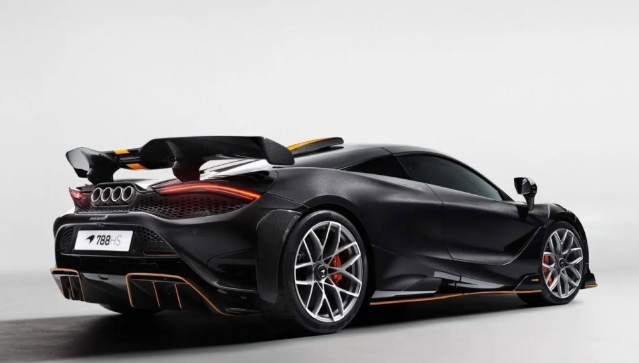
It is the culmination of everything McLaren has learned over the last fifteen years of building road cars. From the revolutionary MP4-12C to the universally acclaimed 750S, every lesson in chassis dynamics, engine mapping, and aerodynamic efficiency has been distilled into this single, 200-unit production run.
Final Thoughts on a Modern Masterpiece
After a decade of evaluating the finest performance machines on the planet, I do not use the term “definitive” lightly. Yet, the McLaren 788HS has earned that title. It is the swan song of a legendary chassis and one of the finest twin-turbo V-8 engines ever produced. It balances savage, relentless performance with an astonishing level of physical lightness and dynamic precision.
Whether you are looking at it purely from a driver’s perspective or analyzing it as a strategic high-net-worth vehicle investment, the McLaren 788HS commands ultimate respect. It is a reminder of what is possible when brilliant engineers are allowed to refine a platform to its absolute limit without the burden of heavy hybrid batteries.
If you are fortunate enough to be in the market for a pinnacle-tier exotic, the window to secure one of these 200 examples is closing rapidly. Given the historical appreciation of McLaren’s previous “High Sport” and “Longtail” variants, hesitating could mean missing out on one of the most significant driver’s cars of this decade. I highly recommend reaching out to your preferred exotic car broker or dedicated McLaren specialist today to discuss allocation availability, bespoke MSO options, and tailored exotic car financing solutions before this final V-8 masterpiece passes into automotive history.