
The Polestar US Sales Ban: Why the Swedish Automaker is Leaving America and Pivoting to Europe
As an automotive industry analyst with over a decade of experience tracking global supply chains, regulatory frameworks, and electric vehicle market trends, I have witnessed countless market shifts. However, the recent confirmation of the Polestar US sales ban stands out as a watershed moment for the global automotive industry. The Swedish electric vehicle manufacturer, operating as a corporate sibling to Volvo, has officially decided it will not appeal the U.S. government’s decision to block its sales. Instead, the brand is abandoning its stateside ambitions to refocus its capital and strategic energy on the European market.
For industry insiders, the finality of the Polestar US sales ban is both shocking and inevitable. It highlights a rapidly changing regulatory environment where geopolitics and automotive engineering collide. This comprehensive analysis will break down exactly why this happened, the intricacies of the new federal regulations, what this means for current vehicle owners, and how the broader landscape of luxury EV SUVs is shifting in 2026 and beyond.
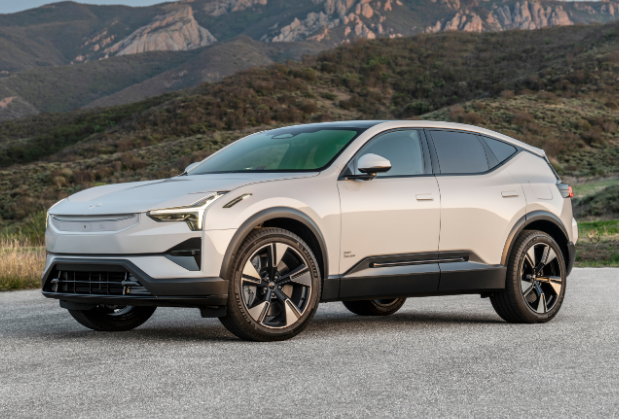
The Catalyst Behind the Polestar US Sales Ban: The Connected Vehicles Rule
To understand the core reasons driving the Polestar US sales ban, we have to look directly at the United States Department of Commerce and its recently implemented U.S. Connected Vehicles Rule. In our modern era, an electric vehicle is no longer just a battery and a motor; it is essentially a highly advanced, rolling data center. Today’s vehicles rely heavily on constant internet connectivity, high-definition exterior cameras, sophisticated GPS tracking, and continuous over-the-air software updates.
The U.S. Connected Vehicles Rule restricts the import and sale of any internet-connected vehicle that possesses deep technological or ownership ties to China or Russia. The Department of Commerce cited severe national security threats, arguing that the vast amounts of data collected by these vehicles—ranging from the geographic movements of U.S. citizens to detailed infrastructural mapping captured by onboard cameras—could be exploited by foreign adversaries.
Because Polestar is majority-owned by the China-based Geely auto group, the automaker fell squarely into the crosshairs of this new regulation. The Polestar US sales ban is a direct result of the brand’s inability to untangle its software, hardware, and corporate ownership structure from its Chinese parent company in a way that satisfied U.S. federal regulators. As connected vehicle cybersecurity becomes a paramount concern for governments worldwide, this ruling establishes a strict precedent that will likely affect other international automakers in the coming years.
The Geely Auto Group Dilemma: Why Volvo Stayed While Polestar Fell
One of the most fascinating aspects of the Polestar US sales ban is the contrasting fate of its sister company, Volvo. Both automakers are deeply integrated into the Geely auto group, with Geely holding majority stakes in both brands. So, how did Volvo manage to maintain its footing in the American market while Polestar was shown the door?
The answer lies in localized manufacturing, legacy infrastructure, and aggressive regulatory lobbying. Back in May, Volvo was granted specific authorization to continue importing and selling its vehicles. This was largely due to Volvo’s long-established manufacturing footprint in the United States, notably its plant in South Carolina, and its ability to prove that its localized data servers and software architectures were sufficiently insulated from its Chinese parent company.
Polestar, on the other hand, relies much more heavily on Chinese manufacturing facilities and shared platforms that triggered red flags for the Department of Commerce. Following what industry insiders described as “significant dialogue” between Polestar executives and U.S. officials, it became abundantly clear that an appeal would be a waste of resources. The structural changes required to reverse the Polestar US sales ban would take years and cost billions, making the decision to walk away a painful but mathematically logical choice for the boardroom.
What the Polestar US Sales Ban Means for Current Owners
If you currently have a Polestar sitting in your driveway, the headlines regarding the Polestar US sales ban might understandably cause a spike in anxiety. What happens to the car you already paid for?
Fortunately, according to direct statements from a Polestar spokesperson, the company is committing to full support for its existing consumer base. The Polestar US sales ban specifically targets the marketing and selling of new vehicles from the 2027 model year onward under the current regulatory framework.
For current owners, the company has stated that supporting existing customers remains their highest priority. Existing owners and those who took advantage of top EV lease deals prior to the ban will continue to receive the exact same level of support. All existing warranties will remain in effect and will be honored according to their original terms and conditions.
From a practical standpoint, this means you will not have to scramble to find independent mechanics. When you search for “EV service centers near me,” authorized Volvo and Polestar service bays will still possess the diagnostic tools, OEM parts, and software access required to maintain your vehicle.
However, current owners should pay close attention to secondary market effects. The Polestar US sales ban may lead to accelerated depreciation for used models. Furthermore, consumers should monitor their auto insurance for electric cars. Insurance carriers rely on long-term parts availability and repair network density to calculate premiums. While Polestar guarantees service, a shrinking footprint in the U.S. could eventually lead to slightly higher premiums for auto insurance for electric cars as specialized body panels or bespoke components become harder to source locally in the latter half of the decade.
A Strategic Pivot: Why Europe is Polestar’s Safe Haven
While the Polestar US sales ban dominates the American automotive news cycle, viewing this solely as a death knell for the company would be analytically incorrect. In reality, Polestar was already operating with a massive skew toward international markets.
When we look at the financial and delivery data from the first quarter of 2026, a staggering 94 percent of Polestar’s global sales originated outside of the United States. While the American market is undeniably lucrative and prestigious, it was representing a mere 6 percent of the brand’s actual volume.
The European continent offers a vastly different landscape. European nations have aggressively invested in charging infrastructure, heavily subsidized electric vehicle adoption, and maintained a more open trade relationship regarding Chinese-linked connected vehicle cybersecurity. In countries like Norway, Sweden, Germany, and the UK, Polestar commands strong brand loyalty and impressive market share.
By accepting the Polestar US sales ban, the automaker is stopping the financial bleed of trying to fight an unwinnable regulatory war in Washington D.C. Reallocating those legal and marketing funds toward European expansion allows the company to focus on regions where its vehicles are not just legal, but highly sought after. It is a classic corporate retreat and fortify strategy—sacrificing a difficult territory to dominate a friendlier one.
The Vehicles Left Behind: Mourning the Polestar 4 and Polestar 6
The most tangible casualty of the Polestar US sales ban is the loss of some genuinely spectacular automotive engineering on American roads. The brand had positioned itself as a premier designer of minimalist, high-performance EVs, and their upcoming lineup was highly anticipated.
The Polestar 4 SUV coupé will likely be remembered as the last of the marque’s vehicles to grace American dealership floors. Known for its radical design—famously omitting the rear window in favor of a high-definition digital camera feed—the Polestar 4 was meant to capture a significant slice of the luxury EV SUVs segment.
Even more tragic for automotive enthusiasts is the loss of the Polestar 6. This stunning electric roadster, boasting a hardtop convertible design and targeting 884 horsepower, was set to be a halo car for the electric era. With the Polestar US sales ban now firmly in place, the chances of the Polestar 6 ever seeing the canyons of Malibu or the coastal highways of Florida are virtually zero. American consumers looking for that specific blend of Scandinavian design and brutal electric performance will have to look elsewhere.
Shifting Electric Vehicle Market Trends in the Post-Ban Era
The ripple effects of the Polestar US sales ban will be felt across the entire automotive sector as competitors rush in to fill the void. This regulatory action changes the calculus for any consumer looking to buy EV online or step into a dealership in 2026.
As Polestar exits, domestic and allied-nation automakers are poised to capitalize. We are seeing major shifts in electric vehicle market trends, particularly in states with high EV adoption rates. For instance, drivers researching the best electric cars in California will now see a market aggressively dominated by Tesla, Rivian, Lucid, and legacy German automakers like Porsche and BMW.
Without Polestar driving competitive pricing in the premium segment, consumers might see a temporary tightening of incentives. However, as the end of the year approaches, we still expect dealerships to push aggressive top EV lease deals to capture the exact demographic that Polestar is leaving behind—the affluent, tech-forward, eco-conscious buyer.
Furthermore, the Polestar US sales ban forces other international manufacturers to ruthlessly audit their own supply chains. Any brand with ties to the Geely auto group, or relying on Chinese-developed infotainment and battery management systems, is currently rewriting their software architectures. The U.S. government has made it abundantly clear that connected vehicle cybersecurity is non-negotiable. If your vehicle pings a server in a restricted nation, it will not be sold in America.
How Consumers Can Navigate the New Landscape
For the everyday driver, the Polestar US sales ban serves as a reminder that purchasing a modern vehicle involves more than just evaluating range, horsepower, and cargo space. You are buying into a software ecosystem heavily regulated by international trade laws.
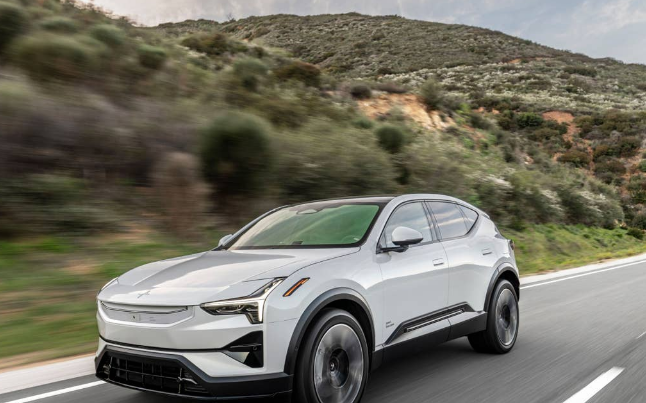
If you were on the fence about purchasing a Polestar, the decision has essentially been made for you. For those pivoting to other brands, the current market still offers incredible variety. When evaluating alternatives in the luxury EV SUVs space, prioritize manufacturers with localized battery production to ensure you qualify for any remaining federal or state tax incentives.
Additionally, as connected vehicle technology advances, always inquire about data privacy. Ask dealers where the vehicle’s telemetry data is stored and processed. The same government concerns that led to the Polestar US sales ban should also be personal privacy concerns for the modern consumer. Ensure that when you buy EV online, you are selecting a brand that is transparent about its digital infrastructure and has a secure, domestic-based network.
The Future of Global Automotive Trade
Ultimately, the Polestar US sales ban is a defining moment of the 2026 automotive year. It firmly draws a line in the sand regarding technology, national security, and automotive manufacturing. While it is undoubtedly a disappointment for American fans of sleek Swedish design and sustainable engineering, it highlights the immense complexities of building and selling connected cars in a fragmented geopolitical landscape.
Polestar will survive this setback. By leveraging the strength of the Geely auto group and leaning heavily into its home continent, the brand will likely thrive in Europe and Asia. But for the American market, this chapter is officially closing, leaving behind a legacy of what could have been.
If you are currently navigating these massive shifts in the automotive market and want to ensure your next vehicle purchase is secure, future-proof, and financially sound, you do not have to do it alone. Subscribe to our industry newsletter below for weekly updates on the best electric cars in California, exclusive access to the top EV lease deals in your area, and expert advice on finding the best auto insurance for electric cars in this rapidly changing landscape. Join our community today and stay one step ahead of the market.